🌱 Mint (Mentha spp.)
🧾 Quick Facts
Mint, a popular herb, is adored not only for its refreshing aroma and flavor but also for its ease of care and adaptability as a houseplant. While multiple species exist within the Mentha genus, they share common traits that make them suitable for indoor cultivation.
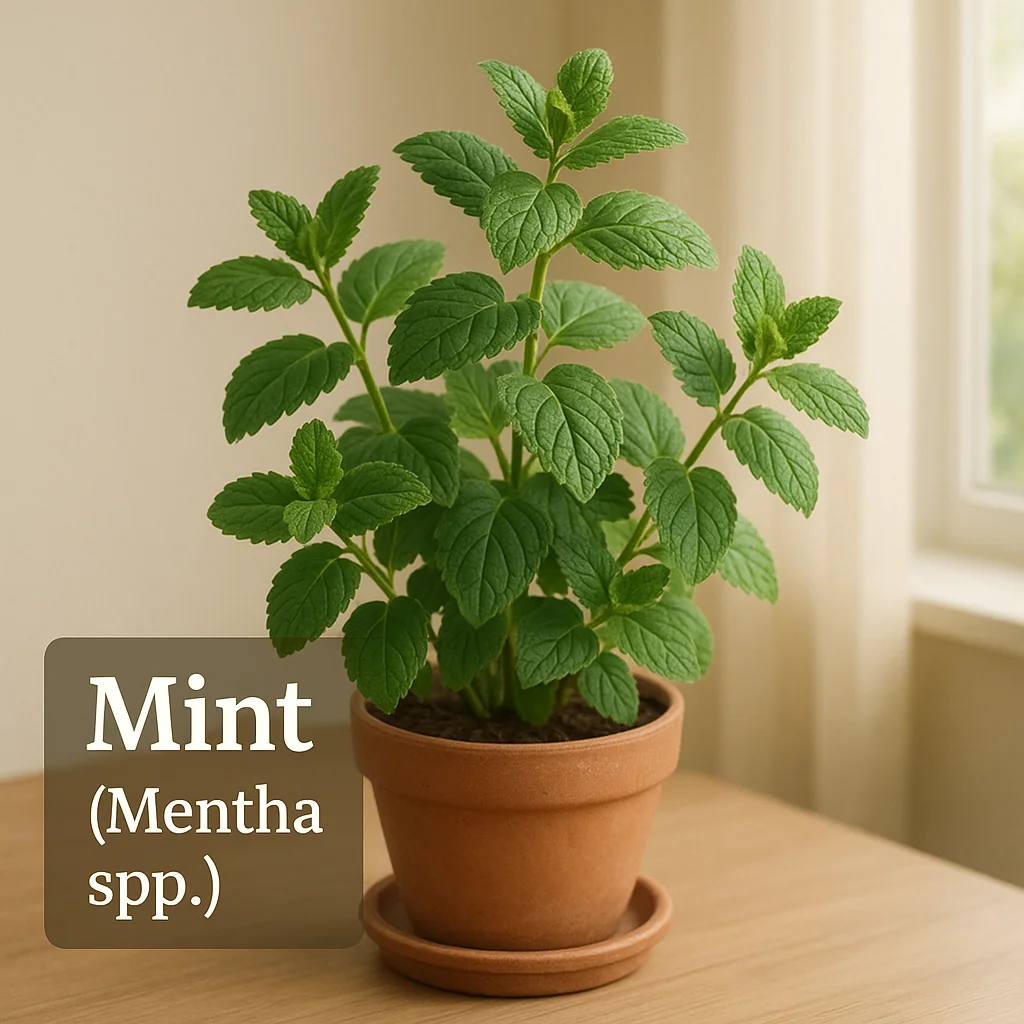
- Common names: Mint, Peppermint, Spearmint
- Scientific name varies: Commonly listed as Mentha spp.
- Plant type: Herb
- Growth habit: Upright and spreading
- Typical indoor size range: 1-3 feet tall, similar spread
- Growth speed: Fast
- Lifespan: Can live many years with care
- Origin: Europe, Asia; commonly found in moist areas
- Light preference: Bright indirect light
- Water needs: Moderate, prefers steady moisture levels
- Temperature & humidity preference: Cool to average indoor temperatures; moderate humidity
- Pet safety: Generally considered pet-friendlier, but some species may mildly irritate
- Difficulty: Easy
🔍 Identification & Look-Alikes
Mint plants are characterized by their vibrant green, aromatic leaves and square stems, a common feature in the Lamiaceae family. The leaves are typically serrated and arranged in opposite pairs. The plants produce small, light purple to white flowers, although they are primarily grown for their foliage.
Common look-alikes include other herbs like basil and oregano, which have different leaf textures and aromas.
- Leaves are aromatic with a minty scent
- Opposite leaf arrangement
- Serrated leaf edges
- Square stems
- Light purple to white flowers
- Generally non-variegated but vary in green hues
- Pot displays entire plant with typical form
- Aromatic when crushed or brushed
- Dense foliage indicates healthy growth
🌍 Origin & Natural Habitat
Mint plants are native to Europe and Asia, thriving in moist, cool environments. They are often found in natural habitats with ample moisture, such as riverbanks and wetlands. Understanding mint's preference for these environments helps growers replicate similar conditions indoors, ensuring a healthy plant.
☀️ Light Requirements
Mint loves bright, indirect light. It can tolerate some direct sunlight, particularly in the morning, but avoid harsh afternoon sun. South or east-facing windows are ideal for mint. Bright indirect light can be achieved near a window with sheer curtains or by placing the plant in bright rooms away from direct rays.
- Prefers bright, indirect light
- Avoid harsh midday direct sun
- Can tolerate some morning sun
- South or east-facing windows recommended
- Sheer curtains help filter light
- Rotate plant for even growth
- Signs of too much light: scorched leaves
- Signs of insufficient light: leggy growth
💧 Watering & Humidity
Mint requires regular watering to remain lush and healthy. Water when the top inch of soil feels dry, using the soak-and-drain method for even moisture without waterlogging. Mint appreciates humidity, which can be supplemented by misting or using a humidity tray.
- Water when the top inch of soil is dry
- Soak-and-drain to avoid root rot
- High humidity preferred; mist as needed
- Check soil moisture regularly
- Pots with good drainage are crucial
- Signs of overwatering: yellowing leaves, root rot
- Signs of underwatering: wilting, dry soil
🐛 Soil, Pot & Repotting
Mint thrives in a well-draining, moisture-retentive potting mix. Consider using a mix intended for herbs or general houseplants. Choose pots with drainage holes to prevent waterlogged soil. Mint may require repotting annually to provide fresh soil and space for its rapidly growing roots. Look for signs of being rootbound or water quickly draining through.
- Use well-draining potting mix
- Ensure pots have drainage holes
- Repot annually or when rootbound
- Gently untangle roots when repotting
- Increase pot size only slightly
- Avoid compacted soil; ensure aeration
- Choose terracotta pots for better breathability
🌡️ Temperature, Airflow & Seasonal Care
Mint prefers cool to average indoor temperatures, ideally between 65-75°F (18-24°C). Ensure sufficient airflow to prevent fungal issues. Mint's growth may slow in winter, so reduce watering frequency. Protect the plant from drafts or sudden temperature changes, like those from AC or heating vents.
- Ideal temperature: 65-75°F (18-24°C)
- Avoid cold drafts and hot, dry air
- Ensure good air circulation
- Water less in winter due to slower growth
- Stable indoor temperatures prevent shock
- Proximity to vents can cause issues
🌸 Flowers, Fruit & Growth Cycle
While mint can flower indoors, it is infrequent unless the plant receives optimal conditions. Flowers are small, ranging from white to light purple. Mint grows actively in the warm months, producing new leaves and runners, which can be pruned to maintain shape and encourage bushiness.
🧬 Propagation & Reproduction
Mint is easily propagated through stem cuttings or division. For stem cuttings, select a healthy stem, and remove the lower leaves before placing it in water or soil. Dividing rootbound plants during repotting is also effective.
- Take 4-6 inch stem cuttings
- Remove lower leaves for rooting
- Root in water or directly in soil
- Division during repotting invigorates growth
- Plant divisions in fresh soil
🌿 Common Problems, Pests & Prevention
Common mint issues include yellow leaves from overwatering or brown tips from dryness. Keep an eye out for pests such as spider mites and aphids. Prevent issues by cleaning leaves, ensuring proper airflow, and maintaining stable care conditions.
- Check for yellow or brown leaves regularly
- Maintain cleanliness to prevent pests
- Quarantine new plants before introducing
- Encourage stable conditions
- Provide consistent care to minimize stress
- Inspect regularly for signs of pests
🐾 Pet & Home Safety Notes
Mint is generally considered pet-safe, although some animals may find its strong aroma irritating. Place plants out of reach of playful pets, especially if ingestion is a concern. If ingestion occurs, monitor your pet's reaction and contact a professional or local poison control resources if worried.
🏡 Styling Ideas & Best Room Placement
Mint's aromatic qualities and vibrant green leaves make it a perfect fit for kitchens, sunrooms, or bright living areas. Use hanging baskets, elevated planters, or shelves for a decorative touch. Mint pairs well with other herbs like basil or houseplants like pothos that enjoy similar light conditions.
📌 Summary
- Mint has aromatic, serrated leaves and square stems
- Originates from Europe and Asia, thrives in moist habitats
- Prefers bright indirect light, some morning sun
- Water regularly, ensure humidity, avoid waterlogging
- Use well-draining soil, repot annually for growth
- Keep temperatures steady; avoid drafts and vents
- Easy propagation through cuttings or division
- Cleanliness and air circulation prevent pest issues
- Generally pet-safe but monitor if ingested
- Flexible styling for kitchens, living rooms, with other herbs