🌱 Parsley (Petroselinum crispum)
🧾 Quick Facts
Parsley, scientifically known as Petroselinum crispum, is a popular herb both for its culinary uses and its potential as a charming indoor plant. It's known for its vibrant green foliage and subtle peppery taste, adding flavor and freshness to various dishes. As a houseplant, parsley is relatively easy to grow indoors with the right care and lighting conditions.
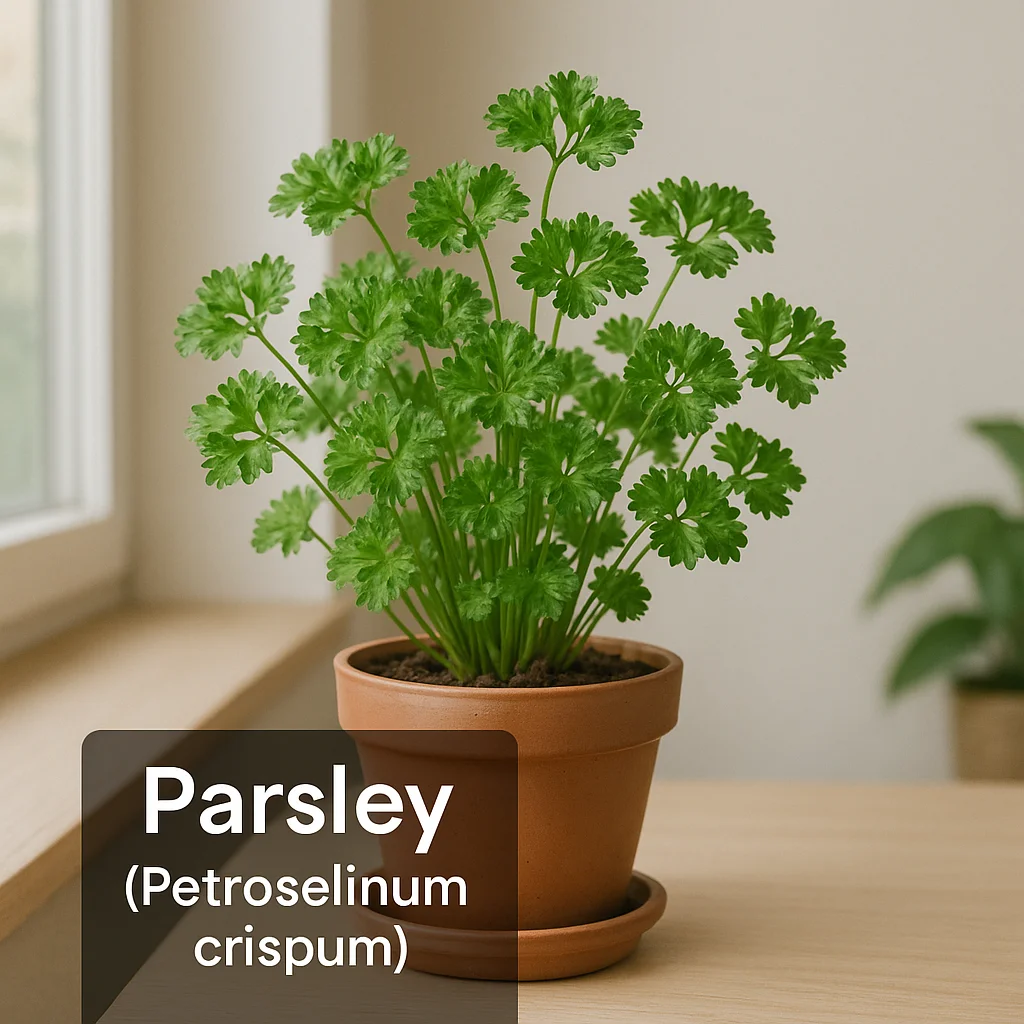
- Common names: Parsley, garden parsley
- Scientific name: Petroselinum crispum
- Plant type: Herb
- Growth habit: Upright rosette
- Typical indoor size range: 6–12 inches tall, with a similar spread
- Growth speed: Moderate to fast
- Lifespan: Biennial in nature; harvested for leaves in the first year
- Origin: Mediterranean region, thriving in sunny habitats
- Light preference: Bright indirect light, tolerates some direct sun
- Water needs: Moderate, prefers consistent moisture
- Temperature & humidity preference: Prefers cooler temperatures and moderate humidity
- Pet safety: Generally considered pet-friendlier
- Difficulty: Easy to medium
🔍 Identification & Look-Alikes
Parsley is recognized by its lush, flat to curly leaves that are deeply lobed, possessing a fresh green color. The leaves grow from central stalks in a clustered rosette form. Stems are sturdy and can become somewhat woody as the plant matures. When exposed to sufficient light, the vibrant green leaves retain their lush coloration, indicative of good plant health.
Parsley is often grown for its foliage rather than flowers, particularly under indoor conditions where flowering is rare. However, the plant may produce small, inconspicuous yellow-green flowers if allowed to complete its biennial growth cycle.
Parsley can be confused with cilantro (coriander), particularly the flat-leaf variety. Cilantro leaves tend to be more rounded and are softer in texture, whereas parsley leaves are usually firmer and have a more distinct lobed appearance.
- Top ID Tips:
- Look for finely divided, deep green leaves.
- Check for sturdy, erect stems supporting the foliage.
- Identify by the immediate peppery fragrance when leaves are crushed.
- Flat-leaf parsley has angular, broader leaves; curly parsley is tightly curled and compact.
- Avoid confusing with cilantro by snapping a leaf for scent (parsley is milder).
- Inspect for a cluster growth pattern from the base, indicative of parsley's rosette form.
- Note the leaf texture: firm and slightly glossy.
- Flat-leaf varieties might look slightly smoother; curly types distinctly crimped.
🌍 Origin & Natural Habitat
Parsley hails from the Mediterranean region, thriving in regions characterized by mild, sunny climates with good drainage. Naturally found in well-lit environments, parsley enjoys warm days but favors moderate warmth over intense heat, similar to its sun-dappled native environment. Its habitat knowledge informs indoor plant placement, ensuring the provision of similar conditions to encourage healthy growth and vibrant foliage.
Understanding its natural preferences encourages gardeners to provide consistent lighting and avoid excessive heat or drought-like conditions. Such considerations cater to parsley's preference for moderate moisture and reliable lighting, aligning home environments with its innate growth habits.
Parsley's identification with home stripes comes as no surprise, given its ability to adapt to various environments, proving an ideal candidate for both outdoor and indoor cultivation. Its storied history as a seasoning pairs with its reputation for decor, flavoring both dishes and homes alike with grace and warmth.
☀️ Light Requirements
Indoors, parsley thrives best with bright indirect light. West or south-facing windows offer ample bright light, suitable for maintaining the plant's vibrant green color. While parsley does tolerate some direct sunlight, especially morning sun, it’s wise to avoid harsh midday rays, which can lead to leaf scorch.
Proper lighting ensures steady growth and robust leaf production. In low light, parsley may grow leggy and weak, while in overly intense sun, the foliage can fade or curl at the edges. Adjusting light levels helps balance growth, keeping the plant healthy and attractive.
- Light Checklist:
- Position near bright, indirect light sources for optimal growth.
- Avoid intense midday sun; morning sunlight is well-tolerated.
- Insufficient light can result in legginess; seek out brighter spots if growth slows.
- Observe leaf color as an indication of light adequacy; vibrant green affirms good lighting.
- Rotate plant occasionally to ensure even growth and energy distribution.
- Supplement with grow lights if daylight is limited, especially in darker months.
- Less ideal lighting results in slower growth and less dense foliage.
💧 Watering & Humidity
Parsley prefers a consistent watering schedule with balanced soil moisture. A soak-and-drain approach followed by allowing the top inch of soil to dry is ideal. When watering, ensure thorough wetting of the soil but avoid waterlogging, which can provoke root rot.
Humidity levels generally support parsley's needs in typical indoor environments, but during dry months, maintain ambient moisture with simple methods like pebble trays or increased room humidity. Parsley benefits from an average humidity level and is most comfortable in rooms that mimic its natural Mediterranean climate.
Identifying overwatering or underwatering impacts can preserve parsley’s health. Overwatering may manifest as yellowing leaves, whereas crisp, under-watered foliage needs immediate watering intervention.
- Watering Tips:
- Follow a "soak-and-drain" approach for moisture consistency.
- Let the top inch of soil dry out between waterings.
- Avoid letting parsley sit in waterlogged conditions—well-draining pots are essential.
- Increase humidity slightly for optimal comfort during dry seasons.
- Signs of overwatering include yellow, limp leaves; underwatering causes crisping at edges.
- Smaller pots might necessitate more frequent watering; adjust by pot type.
- Decrease watering frequency in winter or slower growing periods.
- Observe plant cues to adjust watering routine effectively.
🐛 Soil, Pot & Repotting
Parsley thrives in well-draining, rich potting soil that maintains balance between drainage and moisture retention. Choose a pot equipped with drainage holes to prevent roots from soaking in stagnant water. Terracotta pots are preferable for parsley, supporting air circulation around the roots.
Repotting is advisable when parsley becomes rootbound or shows slowed growth. Generally, this occurs once annually with an early spring refresh. Slightly increasing pot size assists in sustained plant health.
The repotting process includes gently easing the plant from its current pot, assessing root health, and repotting into fresh soil with expanded room for growth.
- Repotting Checklist:
- Select a well-draining potting mix suitable for herbs.
- Use pots with adequate drainage holes to prevent waterlogging.
- Repot annually in early spring, following root-bound signs.
- Increase pot diameter modestly to avoid oversized pots.
- Ensure roots have uninterrupted air circulation for optimal growth.
- Choose terracotta over plastic pots for breathability.
- Gently remove parsley from current pot, taking care not to damage delicate roots.
- Settle parsley evenly into its new pot, spreading roots uniformly.
🌡️ Temperature, Airflow & Seasonal Care
Parsley prefers a cool and steady climate, thriving best between temperatures of 60°F to 75°F (15°C to 24°C). Avoid exposing the plant to drafts, heater vents, or sudden temperature shifts.
Even as winter may slow its growth, reducing watering frequency is key to prevent over-saturation, as plant metabolism naturally decreases. Adequate airflow encourages healthy leaves, minimizing pest intrusion.
- Seasonal Notes:
- Maintain temperatures around 60°F to 75°F for ideal parsley growth.
- Shield from sudden drafts and HVAC systems; position with stability in mind.
- Reduce watering during the dormant winter season to moderate levels.
- Adequate airflow helps deter pests and promotes leaf health.
- If exposed to cold snaps, parsley may exhibit temporary slowing in leaf production.
- Regularly refresh air circulation without exposing the plant to harsh elements directly.
🌸 Flowers, Fruit & Growth Cycle
While primarily grown for its leaves, parsley blooms in its second year as it seeks to complete its biennial cycle. Under optimal conditions, expect humble yellow-green blooms that gather into umbels.
Indoor flowering is often limited. In focused herb gardening, pruning should keep parsley tightly in leaf production, allowing harvest to proliferate. Pruning dead and yellowing leaves preserves plant energy and encourages vigorous green output.
🧬 Propagation & Reproduction
Propagating parsley is straightforward, suited to division or cultivating from seeds. Seeds germinate within 14–30 days after sowing, while division enables rooted segments to be separated and potted again. While growing from seeds is standard, choosing mature parsley is sometimes more rewarding given the environmental effort required.
- Propagation Tips:
- Sow seeds in early spring, maintaining consistent moisture for near 3–4 weeks.
- Division involves separating clumps gently and repotting separate groups.
- When propagating indoors, use a humidity dome to boost germination.
- Ensure gentle handling of seedlings to avoid disturbances.
- Fence or isolate developing young plants until well-rooted and established.
- Plant seeds at proper temperature ranges, avoiding extremes.
- Harvest established plants rather than overfocusing on spreading young shoots.
- Use tidy, clean equipment to avoid contamination during propagation.
🌿 Common Problems, Pests & Prevention
Common issues with parsley include yellowing leaves, browning leaf tips, and leggy growth due to improper lighting or nutritional deficiencies. Overwatering might introduce pestilence, with succoring environments fostering pests such as spider mites, mealybugs, scale insects, and occasional fungus gnats.
Prevention can be proactive through consistent care strategies, beginning with quarantine of new plants to deter infestations and regularly cleaning leaves.
- Prevention Basics:
- Quarantine new plants before integrating into herb gardens.
- Regularly cleaning leaves enhances light exposure and deters pests.
- Maintain consistent soil moisture and lighting to strengthen plant immunity.
- Encourage stable air circulation around parsley in its growth space.
- Avoid compacted soil to minimize root rot risk.
- Inspect leaves with care for any early pest activity.
- Moderate humidity within medium ranges discourages pest habitation.
- Prune any old, decomposing foliage to invigorate new growth.
🐾 Pet & Home Safety Notes
While parsley is generally considered non-toxic to pets and children, consuming large quantities is not advisable. To prevent ingestion, positioning the plant out of easy reach protects against curious tastes.
If accidental ingestion occurs, it's best to contact a professional or local poison control for guidance and assistance. Proactivity with placement smartly avoids similar issues.
🏡 Styling Ideas & Best Room Placement
Parsley is versatile in its placement possibilities, integrating into spaces like kitchens or living areas, offering fresh air and a dash of greenery. Positioned on kitchen windowsills, they serve dual purposes of utility and decoration.
Hanging baskets or potted arrangements on shelves further customize parsley's integration, harmonizing with other herbs or visually complementary houseplants. Its compact size enables groupings without overshadowing smaller plants.
📌 Summary
- Parsley, Petroselinum crispum, boasts vibrant rosette foliage, valued for its culinary and aesthetic contributions.
- Native to the Mediterranean, this herb thrives under bright, indirect light.
- Maintain moderate soil moisture; avoid excessive dryness.
- Rich, draining soils paired with terracotta pots support healthy growth.
- Ideal temperatures range between 60°F to 75°F, favoring cooler climates.
- Simple propagation through seed sowing or plant division.
- Common issues include overwatering, yellow leaves, pest attraction.
- Overall low difficulty, parsley suits diverse growing environments.
- Use caution with pets; future-proof plant placement safety.
- Perfect for kitchens and living rooms, where light supports growth.
- Group with other herbs for enhanced visual and utilitarian impact.