🌱 Rosemary (Salvia rosmarinus)
🧾 Quick Facts
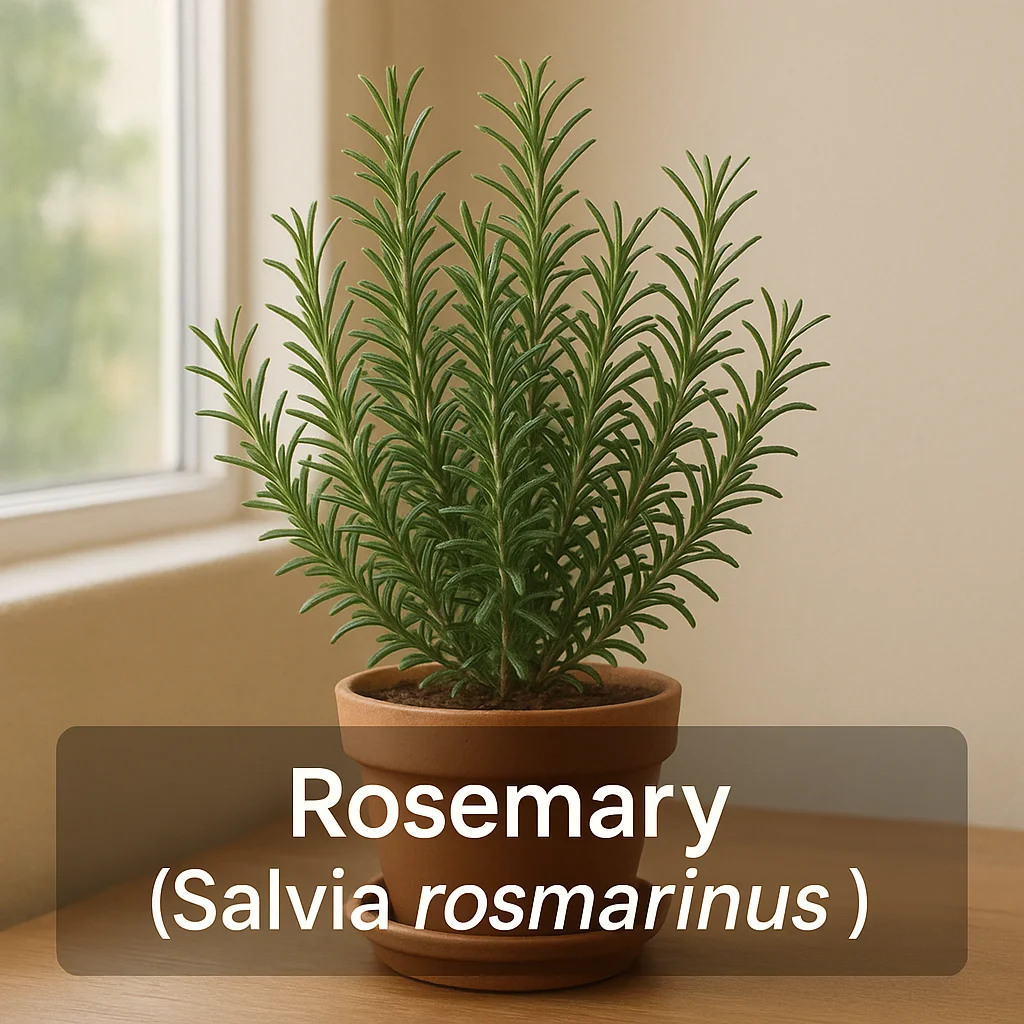
Rosemary, botanically known as Salvia rosmarinus, is a popular aromatic herb commonly grown both outdoors and indoors for its culinary uses and vibrant green foliage. Recognizable by its needle-like leaves and strong, woody fragrance, rosemary makes an excellent addition to any indoor garden.
- Common names: Rosemary, Herb Rosemary
- Scientific name: Salvia rosmarinus
- Plant type: Herb
- Growth habit: Shrub-like
- Typical indoor size range: 1-3 feet in height, 1-2 feet in spread
- Growth speed: Moderate
- Lifespan: Can live many years with proper care
- Origin: Mediterranean region
- Light preference: Bright indirect light to full sun
- Water needs: Moderate; prefers soil to dry out between waterings
- Temperature & humidity preference: Prefers warm, dry conditions
- Pet safety: May be irritating/toxic to pets if ingested in large quantities
- Difficulty: Medium
🔍 Identification & Look-Alikes
Recognizing rosemary involves examining its unique, pungent aroma and slender, needle-like leaves that resemble conifer needles. The leaves are glossy on top with a slightly fuzzy underside and grow in opposite pairs along thick, woody stems. These stems often become woody as the plant matures. The plant remains predominantly green, although some variegated cultivars exist.
Rosemary occasionally blooms indoors, but this depends on the growing conditions. Should it bloom, expect small blue to purple flowers. Not to confuse it with other plants, rosemary shares similarities with thyme and lavender, but the differences in leaf shape and texture are easily noticeable.
- Needle-like leaves with opposite arrangement
- Woody stems on mature plants
- Strong, distinctive fragrance
- Occasional small blue or purple flowers
- Glossy upper leaf surface with dull underside
- Distinguishable from thyme and lavender by leaf shape
🌍 Origin & Natural Habitat
Rosemary hails from the Mediterranean region, where it naturally grows in sunny, well-drained areas. It is commonly found on hillsides, chalky soils, and rocky climates typical of this region. Its native environment provides clues for its indoor care, emphasizing the need for bright light and excellent drainage.
Understanding the native habitat aids in providing conditions that mimic its wild preferences, essential for healthy indoor growth. While rosemary is drought-tolerant, it favors environments that allow for drying between waterings, reflecting its adaptation to occasional dry spells in its native terrain.
☀️ Light Requirements
For optimal growth indoors, place your rosemary near a south-facing window where it can receive bright, direct sunlight. Rosemary thrives in bright conditions and full sun ensures vigor and compact growth. However, while it prefers such bright conditions, it can tolerate partial shade for some periods.
Insufficient light may cause leggy growth and a reduction in aromatic oil concentration in the leaves, while too much light might cause leaf scorching. Monitor for signs of light stress by observing leaf color and overall plant health.
- Place near south or west-facing windows
- Bright, indirect light mimicked by sheer curtains
- Compact growth with adequate sunlight
- Avoid scorch from afternoon summer sun
- Yellow leaves may indicate too little sunlight
- Rotate plant periodically for even growth exposure
💧 Watering & Humidity
A consistent watering schedule is essential, allowing the soil to dry out between each session can help mimic the natural environment of rosemary. Overwatering is a common mistake and should be avoided. Aim to use pots with drainage holes and water until it seeps from the bottom.
Humidity levels for rosemary can be managed at typical indoor ranges; extra humidity is generally unnecessary. Signs of overwatering include yellowing leaves and woody stems, while underwatering shows as faded green or falling leaves.
- Allow soil to dry between waterings
- Use pots with drainage holes to prevent waterlogging
- Water less in cooler months
- Signs of overwatering: yellow leaves, rotting stems
- Signs of underwatering: brittle leaves, slow growth
- Avoid misting the leaves directly
🐛 Soil, Pot & Repotting
Rosemary thrives in a well-draining soil mix. A cactus or succulent soil mix with added sand or perlite enhances drainage, preventing root rot. Choose clay or terracotta pots to allow soil moisture to evaporate, further reducing overwatering risks.
Repot when you notice roots emerging from drainage holes or when growth slows. Typically, repotting is necessary every couple of years. Gently loosen tangled roots and select a pot one size larger to provide safe room for growth.
- Well-draining soil with sand or perlite
- Preferably use terracotta or clay pots
- Repot every 2-3 years or when rootbound
- Increase pot size gradually
- Ensure fresh soil and remove excess roots during repotting
- Avoid pots without drainage holes
🌡️ Temperature, Airflow & Seasonal Care
Rosemary enjoys temperatures ranging from 60-80°F (15-27°C), tending to grow best in warm environments. Avoid exposure to cold drafts or sudden temperature changes, which may stress the plant. In the colder months, a reduction in watering reflects the slower growth pace, while airflow remains critical throughout the year.
Though not traditionally dormant, rosemary's growth can slow in winter, aligning your care with less frequent watering and stable, warm indoor temperatures in winter conditions.
- Maintain temperatures between 60-80°F for best results
- Avoid placing near intense drafts or AC vents
- Water less frequently in winter months
- Ensure moderate airflow year-round
- Protect from severe temperature fluctuations
- Pre-winter pruning can manage size and promote spring growth
🌸 Flowers, Fruit & Growth Cycle
Although rosemary is grown primarily for its foliage, it can produce small, beautiful blue to purple flowers indoors under ideal conditions, usually in spring or summer. These blooms enhance its decorative appeal and are often visited by pollinators when grown outdoors.
Pruning rosemary encourages a bushier form and can be done lightly throughout its growing season. Remove dead or overly woody stems to promote new, fragrant leaf growth.
🧬 Propagation & Reproduction
Propagation of rosemary is typically done through stem cuttings, which is a straightforward and effective method. Select healthy, non-flowering stems of 4-6 inches in length and remove the lower leaves. Plant the cuttings in a moist, well-draining medium and maintain humidity to encourage rooting.
An alternative option is propagation by division, though less common due to the plant’s woody nature. Seed propagation is also possible but slower and less reliable for beginners.
- Stem cuttings root in 2-4 weeks with humidity
- Remove lower leaves from cuttings to encourage rooting
- Root in perlite or a sand mix for best results
- Divisions require a mature plant and care
- Lightly mist or cover for humidity during rooting
- Propagation through seeds may require more patience
🌿 Common Problems, Pests & Prevention
Rosemary, like many herbs, can encounter issues with yellowing leaves, brown tips, and leaf drop, primarily from improper watering. Common pests include spider mites, mealybugs, and fungus gnats. Ensure regular plant inspection and quarantine new plants to prevent infestations.
Consistent care routines such as regular cleaning of leaves, stable watering schedules, and maintaining airflow hinder pest problems. Avoid stress by keeping rosemary from extreme temperature changes and sudden shifts in conditions.
- Monitor for yellowing leaves: check water levels
- Inspect for pest signs: webbing, white deposits
- Clean leaves to prevent dust and mite buildup
- Use distilled or purified water to avoid mineral spots
- Plant separations help contain pests
- Stable, predictable care prevents stress-induced issues
🐾 Pet & Home Safety Notes
Rosemary is known for its culinary uses and is relatively safe; however, ingestion in significant amounts by pets or children may cause mild irritation or discomfort. To prevent accidental ingestion, consider placing rosemary out of easy reach or using physical barriers.
In any case of suspected ingestion, promptly contacting a professional or local poison control resources is advised. Rosemary essential oils should specifically be kept away from children and pets due to their concentrated nature.
🏡 Styling Ideas & Best Room Placement
Rosemary adapts well to various indoor settings. Consider placing it in kitchens or sun-filled living room corners where its fragrance can be enjoyed. Keep in mind the plant’s light needs when selecting placement. Rosemary can be placed on shelves, window sills, or countertops that receive substantial light.
Pair rosemary with other Mediterranean plants such as lavender or thyme for a thematic herb garden. As a versatile herb, it also harmonizes with a range of foliage plants.
📌 Summary
- Rosemary (Salvia rosmarinus) is a Mediterranean herb with needle-like leaves.
- Recognizable by its aroma, glossy foliage, and occasional small blooms.
- Prefers bright, direct to indirect sunlight for best growth.
- Allow soil to dry between thorough waterings; avoid humidity extremes.
- A well-draining soil mix and terracotta pots mitigate root rot risks.
- Thrives at indoor temperatures between 60-80°F (avoid cold drafts).
- Propagation is straightforward via stem cuttings in a humid environment.
- Watch for pests; maintain moderate humidity and regular inspections.
- Practically a medium-difficulty plant with a fragrant, rewarding nature.
- Consider pet safety: those parts can be mildly irritating if ingested.