🌱 Sage (Salvia officinalis)
🧾 Quick Facts
Sage, known scientifically as Salvia officinalis, is a popular herb both in culinary and indoor gardening settings. Often cultivated for its aromatic leaves, sage can be a delightful addition to an indoor plant collection.
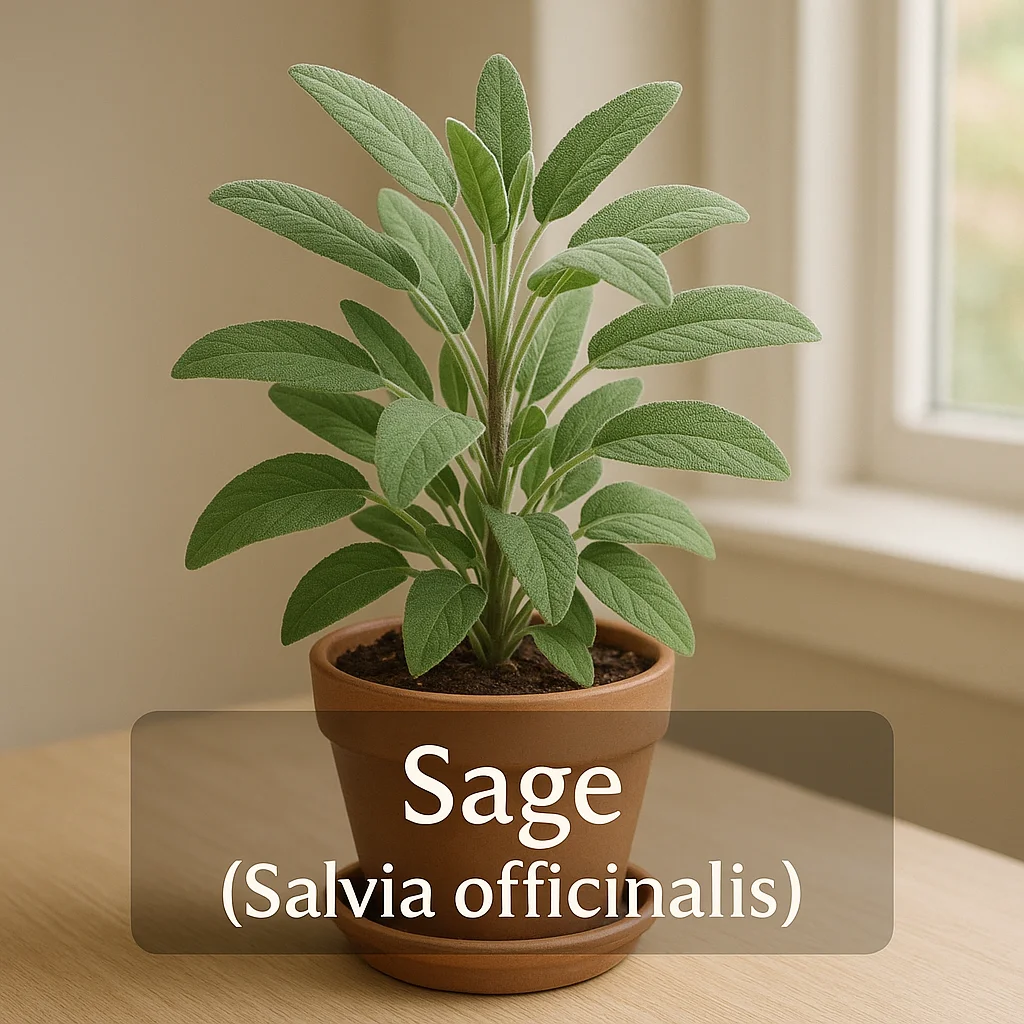
- Common Names: Sage, Common Sage, Kitchen Sage
- Scientific Name: Salvia officinalis
- Plant Type: Herb
- Growth Habit: Shrub-like
- Typical Indoor Size Range: 12–24 inches high, 12–24 inches wide
- Growth Speed: Moderate
- Lifespan: Can live many years with care
- Origin: Mediterranean region; coastal, rocky habitats
- Light Preference: Bright indirect light; tolerates direct sun
- Water Needs: Moderate; prefers to dry out slightly between waterings
- Temperature & Humidity Preference: Warm temperatures, moderate humidity
- Pet Safety: May be irritating to pets if ingested
- Difficulty: Medium
🔍 Identification & Look-Alikes
Sage is easily identifiable by its gray-green, velvety leaves which are often slightly wrinkled. The leaves are oblong and are arranged oppositely on a square stem, characteristic of the mint family. While sage typically blooms in the late spring to early summer, indoor flowering can be rare. When it does flower, small purplish-blue blooms may appear.
Sage has some similar looking plants which can cause confusion, especially with its varied cultivars like Purple Sage or Tricolor Sage, which have distinct foliage colors.
- Top ID Tips:
- Gray-green oblong leaves
- Fuzzy leaf texture
- Square stems
- Opposite leaf arrangement
- Purple-blue flowers in blooming season
- Distinct herby aroma when leaves are crushed
- Variations in foliage coloration among cultivars
- Typically found as compact, bushy form
🌍 Origin & Natural Habitat
Native to the Mediterranean region, sage is accustomed to a climate that varies from seasonally cool, wet winters to hot, dry summers. It grows in rocky or coastal areas, often thriving in nutrient-poor soils.
Understanding its origins helps gardeners provide conditions that mimic its natural environment, promoting healthy indoor growth. The need for well-draining soil, moderate water, and good air circulation reflects its origins.
☀️ Light Requirements
Sage thrives in bright indirect light, although it can tolerate some direct sunlight, especially in regions with less intense sun. A south or east-facing window is ideal. Too little light can lead to leggy growth and a lack of blooming, while excessive direct sunlight might scorch the leaves.
- Light Checklist:
- Place near a bright window
- Avoid prolonged direct midday sun
- Watch for legginess due to low light
- Monitor leaf color for sun damage
- Turn plant regularly for even growth
- Consider supplementary light in dark rooms
💧 Watering & Humidity
Sage prefers a soak-and-drain watering method where soil dries slightly between waterings. Overwatering can be detrimental, leading to root rot. Adjust the frequency based on seasons; water more often in summer and reduce in winter.
While sage doesn't demand high humidity, ensuring some moderate level by misting occasionally or using a pebble tray can be beneficial. Signs of overwatering include yellowing leaves and wilting despite wet soil, while underwatering might show as wilting with dry soil.
- Watering Tips:
- Allow top inch of soil to dry out
- Reduce watering in cooler, darker months
- Increase accuracy with moisture meters
- Look for wilting signs for issues
- Use drainable pots to prevent water logging
- Watch for root rot or fungal issues
🐛 Soil, Pot & Repotting
Use an airy, well-draining potting mix, enriched with sand or perlite for sage. When choosing a pot, ensure adequate drainage holes. Sage typically needs repotting every couple of years or when growth slows or water runs through too quickly. Repot gently, moving up one pot size only.
- Repotting Checklist:
- Use a well-draining, sandy mix
- Select pots with drainage holes
- Repot every 2–3 years or so
- Look for roots through drainage holes
- Be cautious of overly large pots
- Handle roots with care when repotting
🌡️ Temperature, Airflow & Seasonal Care
Sage prefers warm temperatures, generally comfortable in the range of 60–75°F (15–24°C). Avoid placing it near drafts or air conditioning vents which might stress the plant. During winter, growth may slow, and watering should be decreased accordingly.
- Seasonal Notes:
- Maintain stable warm climate
- Avoid sudden temperature changes
- Decrease watering in winter months
- Watch for stress signs near vents
- Consider using fans for airflow
🌸 Flowers, Fruit & Growth Cycle
While sage can flower indoors, it’s less common than in outdoor settings. Flowers appear as small purple-blue blossoms in favorable conditions. Sage doesn't fruit indoors, and its main growth focus while growing indoors remains leaf production. Pruning the tips encourages bushier growth and can promote fresh leaf growth.
🧬 Propagation & Reproduction
Propagation of sage indoors is typically done through stem cuttings. Select a healthy stem and place it in water until roots develop, then transfer to soil. Division is less common but possible if the plant is mature. Seed propagation is viable but slower and requires more care.
- Propagation Tips:
- Choose healthy stems for cuttings
- Root cuttings in water before potting
- Use rooting hormone if desired
- Ensure good humidity for new cuttings
- Monitor for mold or rot in early stages
🌿 Common Problems, Pests & Prevention
Sage can face issues like yellow leaves, droop, or browning at leaf edges due to improper care. Maintain adequate watering and lighting and be vigilant for pests like spider mites or mealybugs. Prevention includes periodic cleaning and quarantine of new plants.
- Prevention Basics:
- Quarantine new arrivals
- Regularly clean leaves to deter pests
- Ensure good air circulation
- Avoid overwatering to prevent rot
- Monitor for sudden changes in leaves
- Act early on pest suspicion
🐾 Pet & Home Safety Notes
Sage may cause minor irritation if ingested by pets, although it is generally not considered highly toxic. It's advisable to place the plant out of reach of pets and children. If ingestion is suspected, contact a professional or local poison control resources for guidance.
🏡 Styling Ideas & Best Room Placement
Sage is versatile indoors and performs well in bright kitchens due to the ambient humidity and light conditions. It can also be attractive in living rooms near bright windows. Pair it with other Mediterranean herbs for a homely herb garden style.
📌 Summary
- Recognizable by velvety, gray-green leaves
- Native to the Mediterranean, prefers warm, bright indirect light
- Allow soil to dry between waterings
- Use well-draining soil, repot every couple of years
- Tolerates moderate temperatures; protect from drafts
- Can be propagated by stem cuttings
- Common issues include improper watering and pests
- Not highly toxic, but best kept out of reach of pets