🌱 Thyme (Thymus vulgaris)
🧾 Quick Facts
Thyme (Thymus vulgaris) is a delightful herb commonly grown for its culinary uses and aromatic qualities. It is also appreciated as a houseplant due to its low maintenance and compact growth habit.
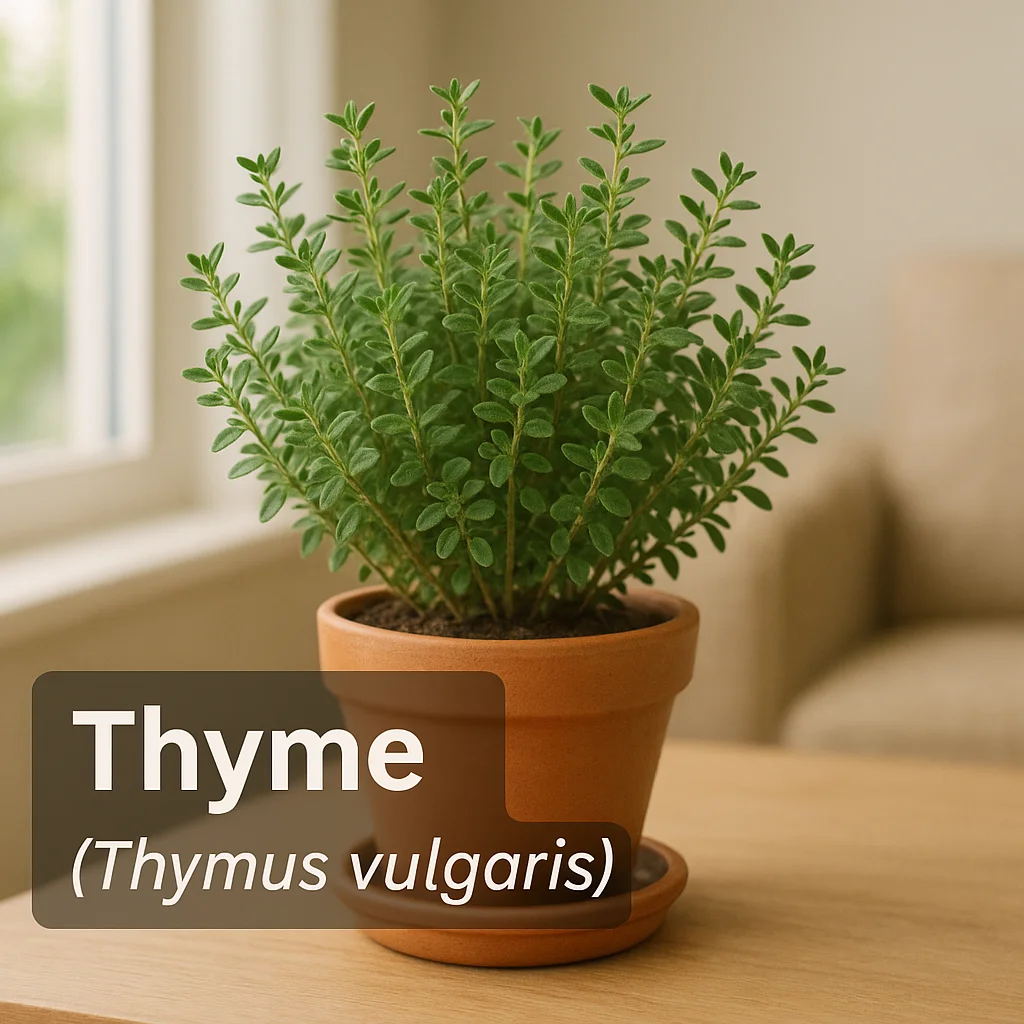
- Common names: Common Thyme, Garden Thyme
- Scientific name: Thymus vulgaris
- Plant type: Herb
- Growth habit: Shrub-like
- Typical indoor size range: 6–12 inches in height, spreading 12–18 inches
- Growth speed: Moderate
- Lifespan: Can live many years with proper care
- Origin: Mediterranean region
- Light preference: Bright indirect to direct sunlight
- Water needs: Moderate; prefers to dry out between watering
- Temperature & humidity preference: Prefers moderate temperatures and low to moderate humidity
- Pet safety: Generally considered pet-friendlier, but some sources may list it as mildly irritating
- Difficulty: Easy
🔍 Identification & Look-Alikes
Thyme is recognized by its small, aromatic leaves and compact, woody stems. The leaves are typically small, oval, and arranged oppositely along the stem. The foliage is a muted green, sometimes with a silvery hue, which can vary based on light exposure. While thyme does bloom, it is mostly appreciated for its leaves in indoor settings.
Common look-alikes include other members of the Lamiaceae family such as Oregano and Marjoram, but Thyme can be distinguished by its smaller leaf size and distinct aroma.
- Top ID Tips:
- Small, oval leaves
- Woody stems with a shrub-like form
- Muted green foliage with potential silvery hue
- Characteristic herbaceous aroma
- Leaves arranged oppositely
- Fine, dense leaf coverage
- Occasional small, pink to purple flowers
- Often use the aroma to differentiate from similar herbs
🌍 Origin & Natural Habitat
Originating from the Mediterranean region, Thyme thrives in sunny, well-drained environments. Its wild natural habitat includes rocky hillsides and dry, grassy areas, which have shaped its preference for similar conditions indoors.
Understanding its natural habitat allows cultivators to mimic these conditions indoors, providing bright light and allowing the soil to dry between watering, thereby promoting healthy growth.
☀️ Light Requirements
Thyme thrives in bright indirect to direct sunlight. For best results, place it near a south-facing window where it can receive ample light. Bright indirect light can be achieved by a curtain filtering the harsher direct rays, while direct light is tolerable if not extended all day.
Too little light may result in leggy growth, while too much direct light can scorch leaves. Observe the plant for cues to adjust placement accordingly.
- Light Checklist:
- South-facing window is ideal
- Tolerates both bright indirect and direct light
- Monitor for leggy growth (too little light)
- Watch for leaf scorch (too much direct light)
- Rotate plant for even growth
- Avoid full-day harsh midday sun
- Adjust curtain or blind for filtered light
- Consider LED grow lights in poor lighting conditions
💧 Watering & Humidity
Moderate watering is key for Thyme, allowing the soil to dry out between thorough waterings. A soak-and-drain method is optimal, where excess water freely exits the pot, ensuring the roots do not sit in moisture. Pot size and environmental conditions, such as season and light, will alter watering frequency.
Thyme prefers lower humidity levels, similar to its native habitat. If your home environment is extremely humid, ensure good airflow and avoid excessive misting.
- Watering Tips:
- Allow soil to dry between watering
- Avoid overwatering; check bottom drainage
- Humidity needs are low to moderate
- Consider a pebble tray for water drainage
- Observe droop for signs of underwatering
- Overwatering leads to yellowing leaves
- Pot should provide excellent drainage
- Adjust watering frequency seasonally
🐛 Soil, Pot & Repotting
Thyme needs well-draining soil, typically achieved with a mixture of standard potting soil and a portion of sand or perlite. Ensuring excellent drainage is critical. Choose pots with substantial drainage holes, and terracotta pots can be beneficial for airflow around the roots.
Repotting should occur when roots become bound or growth slows significantly, usually every 1-2 years. A careful increase in pot size is recommended, with steps involving loosening the root ball and providing fresh soil.
- Repotting Checklist:
- Choose an airy, well-draining soil mix
- Use pots with drainage holes
- Terracotta pots can help with aeration
- Repot every 1-2 years or when rootbound
- Monitor growth and water flow as repot indicators
- Size up pot conservatively
- Refresh soil during repotting
- Gently detangle roots during repot
🌡️ Temperature, Airflow & Seasonal Care
Thyme prefers moderate indoor temperatures ranging from 60-75°F (15-24°C). It is not tolerant of extreme temperature fluctuations or drafts, such as those near air conditioning or heating vents.
In winter, reduce watering as growth slows. Ensuring that the plant is not exposed to cold, drafty spots helps maintain its health through seasonal changes.
- Seasonal Notes:
- Maintain consistent room temperature
- Avoid placement near drafts
- Reduce watering in winter
- Monitor for dormant periods in winter
- Ensure good airflow around the plant
- Protect from frosty winter windows
- Adapt water and light with seasons
🌸 Flowers, Fruit & Growth Cycle
While Thyme may flower indoors, usually small pink to purple blooms, it is primarily grown for its flavorful foliage. The flowering typically occurs in late spring to early summer, primarily under optimal light conditions.
Regular pruning encourages bushier growth and may prevent leggy stems. Prune after flowering to maintain shape and promote new growth.
🧬 Propagation & Reproduction
Propagation is straightforward via stem cuttings. In the growing season, cut healthy, non-flowering shoots and root them in water or soil. Seed propagation is less common indoors due to the time and patience required but is possible if desired.
- Propagation Tips:
- Best done with stem cuttings
- Choose healthy, non-flowering tips
- Root in water or directly in soil
- Provide humidity with a cover initially
- Ensure adequate light for cuttings
- Regularly mist new cuttings
- Seed propagation is possible but slower
🌿 Common Problems, Pests & Prevention
Common issues with Thyme include yellow leaves from overwatering, brown tips from dry air, and leggy growth from insufficient light. Regularly check for pests such as spider mites and scale; maintain stable care to prevent infestations.
Implement prevention through consistent watering practices, regular plant checks, and good sanitation.
- Prevention Basics:
- Regularly inspect foliage for pests
- Isolate new plants before introduction
- Ensure even watering practices
- Provide adequate light to prevent legginess
- Clean leaves to prevent dust buildup
- Increase airflow to reduce pest infestation risk
- Maintain stable environmental conditions
- Manage watering frequency and duration
🐾 Pet & Home Safety Notes
Thyme is generally considered safe for pets, although some sources suggest it can be mildly irritating if ingested or in high quantities. As a precaution, keep it out of reach of pets, particularly curious cats and dogs, by placing it on higher shelves or using barriers.
If ingestion occurs, contact a professional or local poison control resources for guidance.
🏡 Styling Ideas & Best Room Placement
Ideal placements for Thyme include sunny windowsills in kitchens or living rooms. Its aromatic leaves can be part of a fragrant herb garden, complemented with other herbs such as Basil or Rosemary. Consider placing Thyme in hanging baskets or elevated pots to prevent ingestion risks with pets and children.
Pairing thyme with other Mediterranean herbs like Oregano and Rosemary creates a visually attractive and cohesive herb display.
📌 Summary
- Thyme, an easy-to-care herb, offers aromatic leaves
- Originates from the Mediterranean; appreciates similar indoor conditions
- Thrives in bright indirect to direct sunlight
- Moderate watering; allow soil starvation between waterings
- Prefers well-draining soil with adequate airflow
- Moderate indoor temperatures; avoid drafts
- Common propagation via stem cuttings
- Yellow leaves indicate overwatering; address promptly
- Considered pet-friendlier; caution advised
- Enhance kitchen or sunny indoor herb spaces with thyme