🌱 Cast Iron Plant (Aspidistra elatior)
🧾 Quick Facts
The Cast Iron Plant (Aspidistra elatior) is celebrated for its exceptional durability, making it a popular choice for homes and offices with less-than-ideal lighting and care conditions.
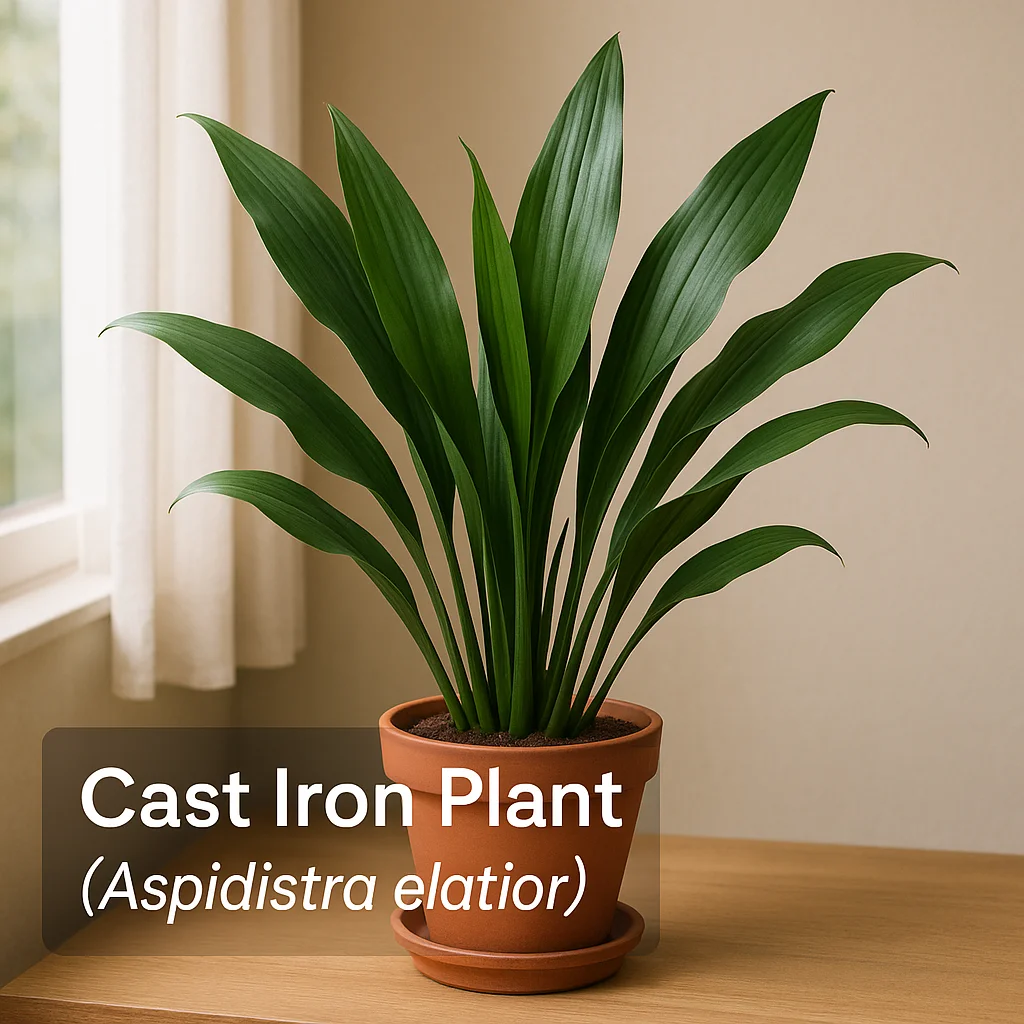
- Common names: Cast Iron Plant, Bar Room Plant
- Scientific name: Aspidistra elatior
- Plant type: Foliage
- Growth habit: Upright
- Typical indoor size: 1–2 feet in height, similar spread
- Growth speed: Slow
- Lifespan: Can live many years with care
- Origin: East Asia, thriving in forest understories
- Light preference: Low to medium indirect light
- Water needs: Low to moderate; prefers drying out between waterings
- Temperature & humidity preference: Prefers average room temperatures and moderate humidity
- Pet safety: Generally considered pet-friendlier
- Difficulty: Easy
🔍 Identification & Look-Alikes
The Cast Iron Plant is easily recognized by its broad, elongated, lance-shaped leaves that are a deep, glossy green. Leaves grow directly from the rhizome and can reach up to 2 feet long. This plant does not have a prominent stem structure; instead, leaves appear to grow in clusters from the soil.
- Leaf shape: Elongated, lance-shaped
- Texture: Glossy and leathery
- Color: Dark green, sometimes with variegated patterns
- Flower traits: Rarely flowers indoors; small, brownish-purple flowers near the base
- Common look-alikes: Peace lily, snake plant
- Look for lance-shaped leaves emerging directly from the soil
- Note the glossy texture and deep green color
- Observe the dense cluster growth habit
- Identify any subtle variegations - usually seen in lighter stripes
- Check for absence of prominent stems
- Remember, flowers are a rare appearance
🌍 Origin & Natural Habitat
Native to the forest understories of East Asia, the Cast Iron Plant thrives in shaded, humid environments. It often grows among leaf litter and decomposing organic matter, which helps it manage in low-light conditions. Familiarity with its natural habitat can guide indoor care, suggesting the need for low light and well-draining, organic-rich soil.
- Originates from the shady understory of East Asian forests
- Thrives in environments with substantial organic matter
- Accommodates low light due to shaded forest growth
☀️ Light Requirements
The Cast Iron Plant prefers low to medium indirect light, making it adept at thriving away from windows. It is tolerant of low-light conditions but enjoys brighter indirect light as well. Avoid direct sunlight, as it can scorch the leaves.
- Best placed in rooms with indirect or filtered light
- Avoid direct sun exposure to prevent leaf burn
- In dim corners, plant grows more slowly
- Brighter spots enhance growth vigor
- Monitor light levels and adjust placement as needed
- Locate near east or north-facing windows
- Ensure light is filtered through sheer curtains if placed near south or west-facing windows
- For increased growth, provide brighter indirect light
- Watch for bleaching or browning tips, a sign of too much light
- Allow plant to adjust gradually if relocating to new light conditions
💧 Watering & Humidity
It's important to allow the Cast Iron Plant's soil to dry out between waterings. This plant prefers the soak-and-drain method, where you water thoroughly and then allow the topsoil to dry entirely before the next watering session. The plant can withstand lower humidity levels, but moderate humidity is beneficial.
- Allow soil to dry out completely between waterings
- Adjust watering based on season and pot size
- Increased watering when the plant receives brighter light
- Overwatering leads to root rot; underwatering causes leaf discoloration
- Conduct a finger test: check top 2 inches of soil for dryness
- Ensure excess water drains completely after watering
- Consider using pebble trays or humidifiers in dry environments
- Monitor leaf tips for browning, suggesting either too much dryness or excess water
- Water less frequently in winter due to slower growth
- Use tepid water to avoid shocking the roots
🐛 Soil, Pot & Repotting
The Cast Iron Plant prospers in well-draining, aerated soil that mimics its natural, organic-rich habitat. A good potting mix might include peat with added perlite or sand for drainage. Choose pots with adequate drainage holes to prevent water accumulation.
- Ensure soil remains airy and rich in organic matter
- Select pots with several drainage holes
- Repot every 2–3 years or when roots outgrow the pot
- Avoid repotting during the plant’s dormant winter period
- Check for roots encircling the pot or projecting through drain holes
- Repot in late spring or early summer when growth resumes
- Move to a slightly larger pot, no more than 2 inches wider
- Be gentle with roots during repotting to avoid damage
- Refresh soil with new, nutrient-rich growing medium
🌡️ Temperature, Airflow & Seasonal Care
The Cast Iron Plant thrives in typical home temperatures of 60–75°F (15–24°C) and can tolerate occasional dips down to 50°F (10°C). Avoid placing it in drafty areas or near AC/heater units. During winter, expect reduced growth and decrease watering frequency.
- Comfortable at average room temperatures
- Protect from cold drafts and hot air flows
- Slow down watering routine in cooler months
- Avoid moving plant frequently between different environments
- Maintain stable temperatures and avoid extremes
- Avoid immediate proximity to air conditioners or heaters
- Consider temperature consistency where the plant sits
- Reduce watering when growth slows in winter months
- Increase attention to air circulation to prevent stagnation
🌸 Flowers, Fruit & Growth Cycle
While the Cast Iron Plant does occasionally flower in its natural setting, indoors it is largely grown for its foliage. If it does bloom, flowers appear near the soil surface and are usually overlooked. Its growth is characterized by slow development, producing new foliage particularly during active growing seasons.
- Indoor flowering is rare; small blooms may appear near soil
- Focus on healthy leaf growth instead
- Minimal pruning necessary; remove damaged leaves to prevent disease
🧬 Propagation & Reproduction
Cast Iron Plants can be propagated by division, a process suited to mature plants during spring or early summer. Seeds are rarely used due to the plant’s slow growth and typical non-flowering indoors.
- Propagate via rhizome division in warmer months
- Handle divisions gently to avoid stressing the plant
- Ensure each division has multiple leaves and roots
- Select strong, mature plants for division
- Divide the plant into sections with careful handling
- Replant segments in fresh soil with adequate drainage
- Water divided sections sparingly until new growth appears
- Place in stable, indirect light during recovery period
🌿 Common Problems, Pests & Prevention
Common issues with Cast Iron Plants include yellowing leaves due to overwatering and brown tips from under-watering or excess fluoride. Spider mites can occasionally be a problem, but generally, this plant is pest-resistant.
- Overwatering causes yellow leaves and root rot
- Under-watering results in brown leaf tips
- Maintain consistent care to prevent stress
- Inspect for signs of mites; wash leaves regularly to deter pests
- Observe leaves for early yellowing or discoloration
- Quarantine new plants to prevent pest spread
- Clean leaves to remove dust and promote health
- Ensure appropriate watering to avoid soggy or dry soil
- Monitor for spider mites using magnification when needed
🐾 Pet & Home Safety Notes
The Cast Iron Plant is generally considered safer for pets and children. However, ingestion should be discouraged; if it occurs, contact a professional or local poison control for advice.
- Considered largely non-toxic but best to keep out of reach
- Train pets and children to avoid chewing on foliage
- Use decorative barriers or strategic placement to discourage contact
🏡 Styling Ideas & Best Room Placement
Due to its tolerance for low light, the Cast Iron Plant is well-suited for darker corners of living rooms, offices, and hallways. It can add greenery to areas without direct sun, making it a versatile decorator’s choice.
- Place in low-light areas like offices, hallways, or bath areas
- Ensure exploratory pets can't access by placing on elevated shelves or stands
- Compliments well with contrasting plants like ferns and snake plants
- Suited for large pots; use as a standalone statement piece
- Pair with decorative containers that accentuate leaf color
📌 Summary
- ID Highlights: Lance-shaped, glossy green leaves directly from soil
- Origin: East Asian forest understories
- Light: Prefers indirect, low to medium light
- Watering: Allow to dry out between waterings
- Soil/Repotting: Well-draining, organic mix; repot every 2–3 years
- Temperature: Best in consistent room temperatures, avoiding extremes
- Propagation: Rhizome division is most effective
- Common Issues: Yellowing from overwatering, brown tips from dryness
- Difficulty: Easy care and low maintenance
- Key Cautions: Watch for overwatering and keep out of reach of pets