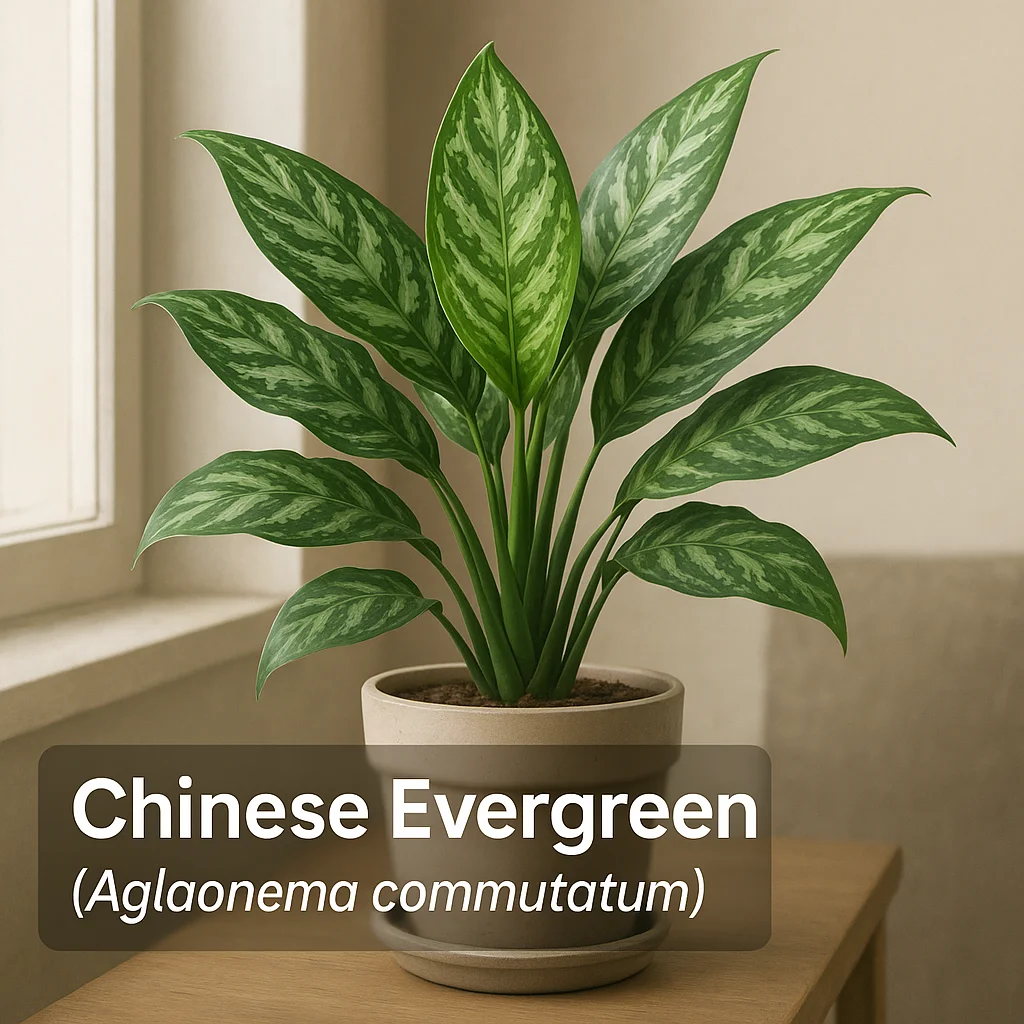
🌱 Chinese Evergreen (Aglaonema commutatum)
🧾 Quick Facts
The Chinese Evergreen (Aglaonema commutatum) is a popular houseplant known for its striking foliage and adaptability to various indoor conditions. Here's what you should know:
- Common Names: Chinese Evergreen, Aglaonema
- Scientific Name: Aglaonema commutatum
- Plant Type: Foliage
- Growth Habit: Upright
- Typical Indoor Size Range: 1-3 feet tall, 1-2 feet spread
- Growth Speed: Slow to moderate
- Lifespan: Can live many years with proper care
- Origin: Southeast Asia; tropical forests
- Light Preference: Low to medium indirect light
- Water Needs: Moderate; prefers to dry out slightly between waterings
- Temperature & Humidity Preference: Warm, humid conditions
- Pet Safety: May be irritating/toxic to pets
- Difficulty: Easy
🔍 Identification & Look-Alikes
Chinese Evergreens are easily identifiable by their lush, broad leaves, which are often spotted or variegated with white, cream, or silver. The leaves are elliptic to lance-shaped, growing from a stocky, upright stem. Aglaonema plants are primarily grown for their foliage, as they rarely flower indoors. Common look-alikes include Dieffenbachia and Dracaena, which can often be differentiated by leaf shape and pattern.
- Elliptic to lance-shaped leaves
- Variegated with white, cream, or silver patterns
- Sturdy, upright stems
- Rarely flowers indoors
- Grown mainly for ornamental foliage
- Typically confused with Dieffenbachia and Dracaena
- Look for leaf texture and variegation patterns
🌍 Origin & Natural Habitat
Chinese Evergreens originate from the tropical and subtropical regions of Southeast Asia, including parts of Thailand, Indonesia, and Malaysia. They grow naturally in the forest understory, thriving in the filtered light and humid conditions of these environments. Understanding this natural habitat can help inform proper indoor care, particularly with providing the right light and moisture levels.
☀️ Light Requirements
Chinese Evergreens thrive in low to medium indirect light, making them perfect for spaces without direct sunlight. Ideally, place them a few feet away from north or east-facing windows. Bright, indirect light can enhance leaf variegation, though too much sunlight may cause leaf burn. Conversely, too little light can slow growth and dull leaf color.
- Avoid direct sunlight
- Place near north or east-facing windows
- Bright indirect light enhances variegation
- Watch for signs of leaf burn or color dulling
- Monitor growth rate and adjust light exposure
- Move closer to light if growth stalls
💧 Watering & Humidity
Chinese Evergreens prefer a soak-and-dry watering technique, allowing the soil to dry out slightly between waterings. Depending on pot size and light exposure, water every 1-2 weeks. High humidity is ideal, though they can tolerate average home levels. Consider a pebble tray or humidifier to raise humidity safely. Watch for drooping leaves as a sign of watering issues.
- Allow soil to dry slightly between waterings
- Water every 1-2 weeks, adjusting for conditions
- Favors high humidity environments
- Use pebble trays or humidifiers when needed
- Look for drooping or yellowing leaves
- Be mindful of overwatering signs
🐛 Soil, Pot & Repotting
An airy, well-draining potting mix is ideal for Chinese Evergreens. A mixture of peat, perlite, and sand is recommended. Use pots with drainage holes to prevent waterlogging. Repotting is generally needed every 1-2 years or when roots appear crowded. Opt for a pot one size up and repot gently to minimize stress on the plant.
- Use airy, well-draining soil
- Pots should have drainage holes
- Repot every 1-2 years or when rootbound
- Mild pot size increase during repotting
- Watch for slow growth as a repotting cue
- Repot gently to avoid plant stress
🌡️ Temperature, Airflow & Seasonal Care
Chinese Evergreens prefer temperatures between 65-85°F (18-29°C). Avoid placing them near cold drafts, AC/heater vents, or areas with sudden temperature changes. Expect slower growth during winter, when watering needs may decrease. Ensure airflow is sufficient to prevent fungal issues while avoiding direct drafts.
- Ideal temperature: 65-85°F (18-29°C)
- Avoid cold drafts and direct airflow from vents
- Growth slows in winter; adjust watering accordingly
- Monitor temperature fluctuations in placements
- Provide gentle, consistent airflow
- Beware of fungal issues from stagnant air
🌸 Flowers, Fruit & Growth Cycle
While Chinese Evergreens can produce small, greenish-white flowers, they are uncommon indoors and are primarily grown for foliage. If flowering does occur, it typically happens during the growing season when conditions are optimal. The plant has a consistent growth cycle, producing new leaves and sometimes developing multiple stems for a bushier appearance. Pruning involves removing dead or yellowing leaves to maintain plant health and aesthetics.
🧬 Propagation & Reproduction
Chinese Evergreens are commonly propagated through division during repotting or through stem cuttings. Dividing crowded plants into smaller sections can encourage robust growth. Stem cuttings should include multiple nodes and can be rooted in water or soil. Propagation by seed is generally not practical for home growers.
- Divide during repotting for best results
- Use healthy stem cuttings with nodes
- Root cuttings in soil or water
- Propagation by seed is uncommon
- Look for natural offsets as viable new starts
🌿 Common Problems, Pests & Prevention
Issues like yellow leaves, brown tips, or droopiness are typically due to watering or lighting mishaps. Common pests include spider mites, mealybugs, and scale. Prevent these by regularly cleaning leaves and maintaining stable plant care. Also, keeping your plant in a well-ventilated area can help deter pests.
- Yellow leaves often from overwatering
- Brown tips could indicate low humidity
- Spider mites and mealybugs can be common
- Clean leaves regularly to deter pests
- Ensure stable and consistent care
- Provide adequate airflow to prevent mildew
🐾 Pet & Home Safety Notes
Some sources list Chinese Evergreens as potentially irritating to pets and children. It's prudent to keep them out of reach if possible. If ingestion is suspected, contact a professional or local poison control resources for advice. Proactive measures such as training pets away from plants or using barriers can add a layer of safety.
🏡 Styling Ideas & Best Room Placement
Chinese Evergreens are versatile and can thrive in a variety of indoor spaces. They suit low-light areas like bathrooms or living rooms and can also enhance office decor. Consider using floor pots or pairing with other tropical plants like ferns or peace lilies for a lush display. Avoid hanging baskets as they prefer being grounded for best growth.
📌 Summary
- Distinctive broad, variegated leaves
- Originates from Southeast Asian tropical forests
- Best in low to medium indirect light
- Water moderately, allowing soil to dry slightly
- Use well-draining soil in pots with drainage
- Prefers warm, humid environments
- Propagation through division or stem cuttings
- Watch for common pests like spider mites
- May be irritating/toxic to pets
- Place in decorative floor pots for maximum effect