🌱 Dieffenbachia (Dieffenbachia seguine)
🧾 Quick Facts
Dieffenbachia, commonly known as Dumb Cane, is a popular ornamental houseplant appreciated for its attractive foliage. It is favored for its lush leaves and resilience in various indoor environments.
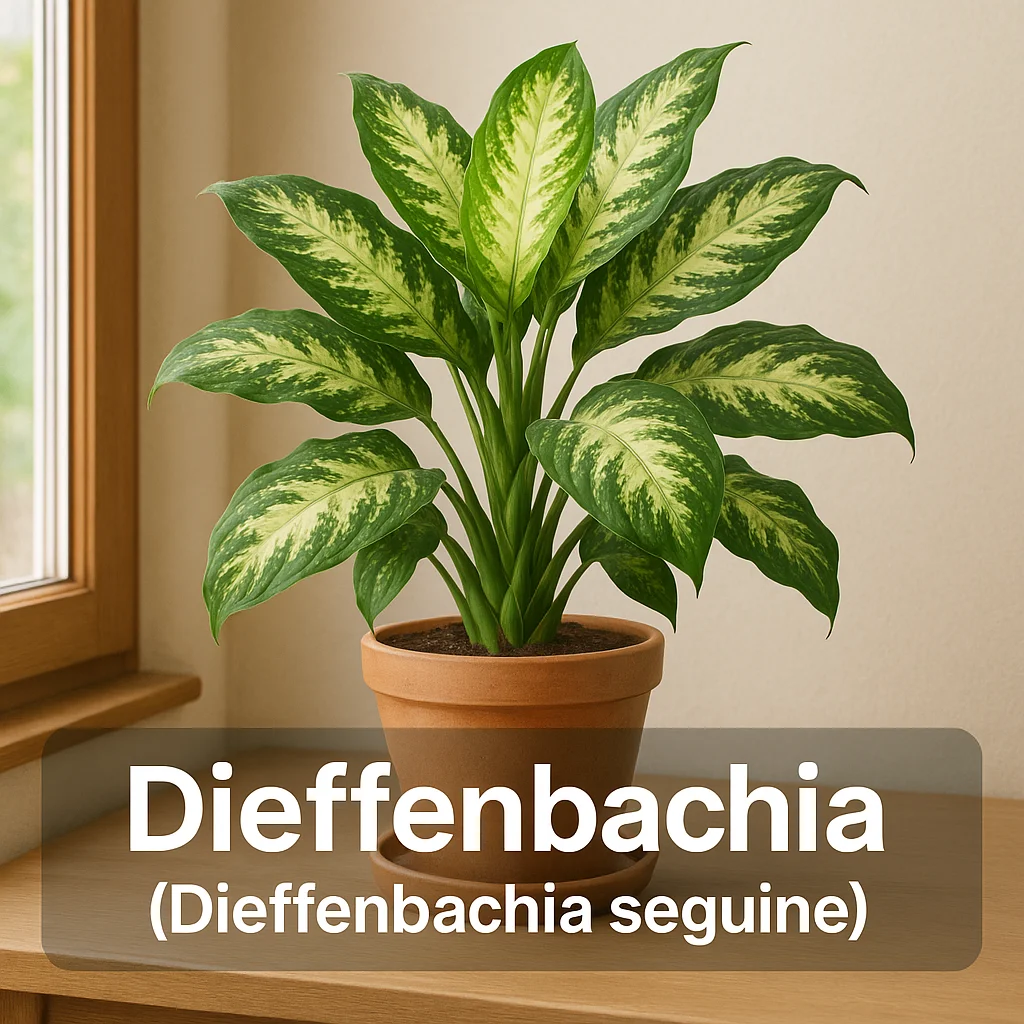
- Common Names: Dumb Cane
- Scientific Name: Dieffenbachia seguine
- Plant Type: Foliage
- Growth Habit: Upright, bushy
- Typical Indoor Size Range: 2-6 feet tall, 1-3 feet wide
- Growth Speed: Moderate
- Lifespan: Can live many years with care
- Origin: Central and South America; rainforest understory
- Light Preference: Bright indirect light; tolerates low light
- Water Needs: Moderate; allow top inch to dry out between waterings
- Temperature & Humidity Preference: Prefers warmth and moderate-to-high humidity
- Pet Safety: May be irritating/toxic to pets and humans
- Difficulty: Medium
🔍 Identification & Look-Alikes
Dieffenbachia is recognizable by its large, showy leaves that often feature a mix of green, white, and yellow variegation. The leaves are typically broad, elliptic, and may feel waxy or smooth to the touch. The plant grows from a thick, cane-like stem, and while it is mostly grown for its foliage, it can occasionally flower, although this is rare indoors.
Look-alikes include Aglaonema and Spathiphyllum (Peace Lily), but Dieffenbachia can be distinguished by its thicker canes and the more dramatic contrasts in its leaf variegation.
- Top ID Tips:
- Large, elliptic leaves with vibrant variegation
- Cane-like stems
- Leaf texture: smooth, sometimes waxy
- Growth pattern: upright, bushy
- Color variations: mix of green, white, and yellow
- Unlikely to flower indoors
- Common look-alikes: Aglaonema, Spathiphyllum
- Check for thicker canes to distinguish
- Monitor under variegated lighting conditions
🌍 Origin & Natural Habitat
Dieffenbachia is native to Central and South America, thriving in the rainforest understorey where it enjoys shaded light and high humidity. It naturally grows in warm, humid conditions and is accustomed to the diffused light beneath the forest canopy.
Understanding its habitat helps in simulating similar conditions indoors, ensuring the plant receives adequate warmth, humidity, and light to mimic its natural growth environment.
☀️ Light Requirements
Dieffenbachia thrives in bright indirect light but can tolerate lower light conditions, although it may result in slower growth and reduced variegation intensity. Positioning near an east or north-facing window works well. Too much direct sunlight can scorch the leaves, while too little light leads to legginess.
- Light Checklist:
- Place near east or north-facing windows
- Bright indirect light is ideal
- Avoid direct midday sun
- Monitor leaf color for light adjustments
- Signs of too much light: leaf scorching
- Signs of too little light: leggy growth
- Variegation depends on adequate light
- Adjust position as needed with seasonal changes
💧 Watering & Humidity
Water Dieffenbachia when the top inch of soil feels dry. A regular soak-and-drain approach helps, ensuring the pot isn't left in standing water. Watering needs vary with pot size, light, and season. Maintaining humidity by placing the plant on a pebble tray or using a humidifier is beneficial.
Signs of overwatering include yellowing leaves and root rot, whereas underwatering might cause browning tips and drooping.
- Watering Tips:
- Water when the top inch is dry
- Soak-and-drain watering approach
- Increase frequency in warmer months
- Use a humidifier for dry environments
- Overwatering: yellow leaves, mushy roots
- Underwatering: brown tips, droop
- Use pots with proper drainage
- Adjust frequency based on pot size and light conditions
- Humidity aim: moderate to high
🐛 Soil, Pot & Repotting
Dieffenbachia prefers an airy, well-draining soil mix that retains moisture without becoming waterlogged. A standard houseplant potting mix with added perlite or orchid bark works well. Terracotta pots help manage moisture levels, but plastic pots suffice if attentively monitored.
Repotting is generally necessary every two to three years or when roots begin circling the pot or cause drainage issues. Opt for the next pot size up and carefully transfer to avoid root damage.
- Repotting Checklist:
- Use well-draining soil with perlite
- Choose pots with drainage holes
- Repot every 2-3 years or when rootbound
- Go for gentle replanting and minimal disturbance
- Choose slightly larger pot size on repotting
- Terracotta pots aid moisture control
- Inspect roots: healthy should be white/cream
- Repot if water drains too quickly/slowly
🌡️ Temperature, Airflow & Seasonal Care
Maintain Dieffenbachia in environments with a temperature range of 65-75°F (18-24°C) for optimal growth. It can endure slightly cooler or warmer spells, but avoid cold drafts or proximity to heating/cooling vents.
In winter, expect slower growth and adjust watering to prevent excessive moisture. Keep a stable environment to avoid causing stress on the plant.
- Seasonal Notes:
- Ideal temperatures: 65-75°F
- Avoid direct contact with cold drafts
- Maintain consistent conditions
- Reduced watering in winter months
- Consider supplementary lighting during shorter days
- Be alert to temperature changes near windows
- Raised humidity aids during heating season
🌸 Flowers, Fruit & Growth Cycle
Dieffenbachia typically does not flower indoors, as its primary attraction lies in its foliage. However, when conditions are optimal, white spathe-like flowers may emerge, though infrequently.
The plant grows primarily through new leaves that unfurl from the top of the canes. Managing its size and shape is mainly through pruning. Regular cleaning of the leaves and removal of dead or damaged foliage is recommended for appearance and health.
🧬 Propagation & Reproduction
Propagation of Dieffenbachia is commonly achieved through stem cuttings. Select healthy segments with at least one growth node and root in water or a light soil mixture. Division during repotting can also be successful if the plant is large enough.
- Propagation Tips:
- Use stem cuttings with nodes
- Root in water or soil
- Maintain humidity with a plastic cover
- Observe nodal growth before transplanting
- Divide mature plants during repotting
- Avoid leaf propagation; focus on stem sections
🌿 Common Problems, Pests & Prevention
Common issues with Dieffenbachia include yellowing leaves, brown tips, and leggy growth. Pests like spider mites, mealybugs, and scale insects occasionally affect the plant. Regular inspection, stable environmental conditions, and dusting the leaves help prevent such problems.
- Prevention Basics:
- Monitor for yellow leaves or leaf drop
- Avoid overwatering to prevent root rot
- Inspect for pests regularly
- Keep leaves clean and dust-free
- Provide airflow to prevent mold/fungi
- Quarantine new plants before introduction
- Promote healthy growth with proper light and care
🐾 Pet & Home Safety Notes
Dieffenbachia contains calcium oxalate crystals which can be irritating if ingested by pets or humans. Symptoms may include oral irritation, drooling, and discomfort. Position the plant out of reach from curious pets and children and train them to avoid contact. If ingestion is suspected, contact a professional or local poison control resources for advice.
🏡 Styling Ideas & Best Room Placement
Dieffenbachia can make a beautiful statement in living rooms or offices where indirect light is available. They thrive in areas that simulate their natural environment, such as bathrooms or kitchens with the desired humidity levels. Consider floor pots or elevated stands to showcase their dramatic foliage and pair with other low-light plants like Pothos or Philodendron.
📌 Summary
- ID highlights: Large, variegated foliage
- Origin: Central and South America rainforests
- Light: Prefers bright indirect light
- Watering: Moderate, allowing top layer to dry
- Soil & Repotting: Well-draining mix, repot every 2-3 years
- Temperature: Enjoys 65-75°F, avoid drafts
- Propagation: Stem cuttings, division during repotting
- Common Issues: Check for pests, yellowing leaves
- Difficulty: Medium care level
- Safety caution: Potential irritant to pets