🌱 Parlor Palm (Chamaedorea elegans)
🧾 Quick Facts
The Parlor Palm, known for its graceful appearance and ease of care, is a popular choice among houseplant enthusiasts. Native to the rainforests of Southern Mexico and Guatemala, it adds a touch of the tropics to any indoor setting.
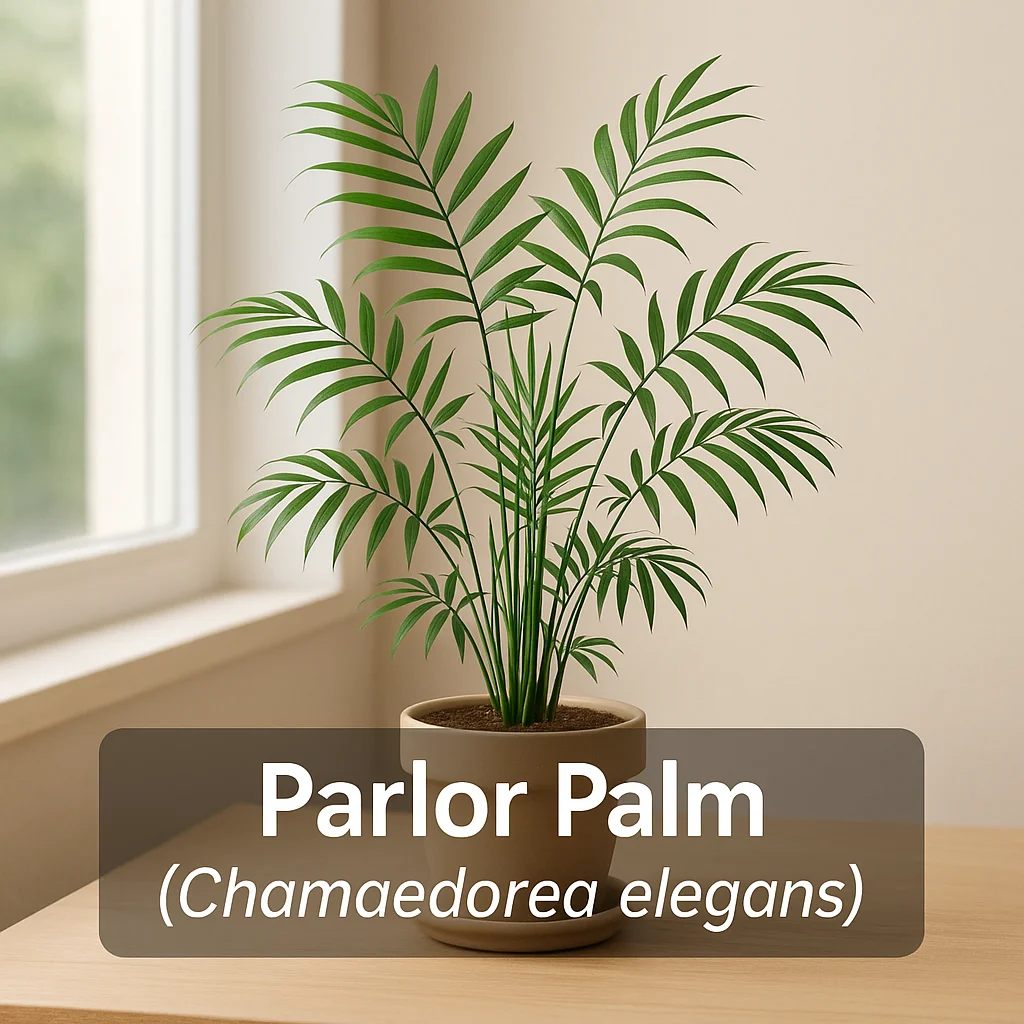
- Common names: Parlor Palm, Neanthe Bella Palm
- Scientific name: Chamaedorea elegans
- Plant type: Palm
- Growth habit: Upright, clumping
- Typical indoor size: 2-6 feet in height
- Growth speed: Slow to moderate
- Lifespan: Can live many years with proper care
- Origin: Rainforests of Southern Mexico, Guatemala
- Light preference: Low to medium, indirect light
- Water needs: Moderate, allow top soil to dry between waterings
- Temperature & humidity preference: Prefers warmer temps and higher humidity
- Pet safety: Generally considered pet-friendlier
- Difficulty: Easy
🔍 Identification & Look-Alikes
The Parlor Palm is recognized by its elegant, feathery fronds that arch out from thin, green stems. The leaflets are slender and lance-shaped, creating a soft, lush appearance. Mature plants can produce small, yellow flowers indoors but are mainly grown for their foliage. The Parlor Palm can be mistaken for other palms like the Bamboo Palm; however, its thinner stems and smaller stature help distinguish it.
- Feathery, arching fronds
- Slender, lance-shaped leaflets
- Green, thin stems
- Small, yellow flowers if grown indoors
- Common look-alikes: Bamboo Palm, Areca Palm
- Light affects leaf color; deep green in lower light, lighter in brighter areas
- Frond density can vary with light conditions
🌍 Origin & Natural Habitat
The Parlor Palm is native to the lush, humid rainforests of Southern Mexico and Guatemala. Typically found at elevations ranging from sea level to about 4,600 feet, it thrives in the understory of its natural habitat. Understanding its origin helps explain its preference for indirect light and higher humidity levels, making it well-suited for indoor conditions that mimic its native environment.
☀️ Light Requirements
The Parlor Palm thrives in low to medium, indirect light, typical of its native rainforest understory. It's best placed near north or east-facing windows. Avoid direct sunlight, as it can scorch the leaves. In low light, its growth may slow, and leaves could become leggy, while too much light may cause yellowing or browning.
- Prefers low to medium, indirect light
- Ideal near north or east-facing windows
- Avoid direct sun exposure
- Observe foliage color change for light cues
- Noticeable slower growth in poor light
- Too much light results in leaf yellowing or browning
- Adjust placement based on leaf response
- Use sheer curtains to diffuse light if necessary
💧 Watering & Humidity
Water the Parlor Palm when the top inch of the soil feels dry. Use a soak-and-drain method, ensuring water drains completely to prevent root rot. Frequency varies with season and pot size. Higher humidity suits the Parlor Palm best; misting or a pebble tray can help. Common signs of overwatering include yellowing leaves, while underwatering may result in brown, dry leaf tips.
- Soak-and-drain watering method
- Water when the top inch of soil is dry
- Humidity-boost with misting or pebble trays
- Yellowing leaves indicate overwatering
- Brown tips suggest underwatering
- Adjust watering with season and environment
- Larger pots dry slower
- Watch for signs of root rot (soggy soil, odor)
- Consider humidity levels when heating/air conditioning is on
🐛 Soil, Pot & Repotting
Use a well-draining, peat-based potting mix, slightly acidic, to encourage healthy growth. Choose a pot with drainage holes, leaning toward terracotta for airflow, or plastic for moisture retention if humidity is low. Repotting every 2-3 years is typical, indicated by slowed growth or roots emerging from drainage holes. Gently transfer to a slightly larger pot, taking care not to damage roots.
- Well-draining, peat-based, slightly acidic soil
- Pots with drainage holes recommended
- Terracotta for airflow; plastic for moisture
- Repot every 2-3 years or if rootbound
- Signs for repotting: slow growth, roots visible
- Carefully remove from old pot; untangle roots
- Increase pot size minimally
- Avoid disturbing root ball excessively
🌡️ Temperature, Airflow & Seasonal Care
The Parlor Palm enjoys temperatures between 65-80°F. Protect it from cold drafts and sudden temperature changes, which can cause stress. It benefits from moderate airflow but keep it away from direct AC or heater vents. During winter, growth slows, reducing water requirements, but maintain humidity as indoor air becomes drier.
- Optimal temperature: 65-80°F
- Avoid cold drafts and sudden changes
- Moderate airflow ideal
- Avoid direct exposure to vents
- Reduced watering in winter
- Maintain humidity even in colder months
- Check proximity to doors and windows in winter
- Roll or cover floor pots in drafty areas
🌸 Flowers, Fruit & Growth Cycle
While known mainly for its foliage, the Parlor Palm may occasionally produce small, yellow flowers indoors if conditions are favorable. However, it's rare. Its growth pattern involves sending up new leafy shoots or canes as it matures but is not commonly cultivated for fruiting indoors. Pruning isn't typically necessary, save for removing old or dead fronds at their base.
🧬 Propagation & Reproduction
Propagation of the Parlor Palm is usually done through division, given its clumping growth habit. This method is best during repotting, splitting the plant into smaller sections with roots intact. Seed propagation is possible but less common due to germination challenges and time requirements.
- Best method: division
- Propagate during repotting
- Ensure each division has sufficient roots
- Seed propagation possible, but difficult
- Use sterile tools to avoid plant disease
- Successful propagation aids plant renewal
- Divided sections adapt better in acclimated environment
🌿 Common Problems, Pests & Prevention
The Parlor Palm may encounter yellow leaves, brown tips, or droop due to care inconsistencies. It's susceptible to pests like spider mites, mealybugs, and scale. Preventive measures include cleaning leaves, maintaining stable conditions, and ensuring good airflow. Always quarantine new plants to prevent infestations.
- Preventive leaf cleaning
- Stable care routines reduce stress
- Good airflow discourages pests
- Quarantine new plants
- Recognize pest signs: webbing, sticky residue
- Ensure plants aren't overly crowded
- Avoid water-logged soil, which attracts fungus gnats
- Remove affected leaves minimally
🐾 Pet & Home Safety Notes
The Parlor Palm is generally considered non-toxic to pets and children, making it a safer choice for homes with curious animals and youngsters. Despite this, placing it out of reach is a sensible approach, as ingestion of any plant material can cause irritation. In case of accidental ingestion, contact local poison control or a professional for advice.
🏡 Styling Ideas & Best Room Placement
Thanks to its versatility, the Parlor Palm can enhance the ambiance of various indoor settings. It thrives in bathrooms and kitchens due to the naturally higher humidity but also does well in living rooms and office spaces with indirect light. Utilize floor pots for larger specimens, or group smaller palms on shelves for a layered look. Pair with other houseplants like Snake Plants or Pothos for varied texture and interest.
📌 Summary
- Distinctive for feathery, arching fronds
- Native to Southern Mexico and Guatemala rainforests
- Prefers low to medium, indirect light, humidity
- Soak-and-drain watering; allow topsoil to dry
- Well-draining soil; repot every 2-3 years
- Thrives in temperatures of 65-80°F
- Division most common propagation method
- Watch for spider mites, mealybugs; maintain cleanliness
- Easier care; generally non-toxic
- Complements various indoor decor styles