🌱 Pothos Golden Pothos (Epipremnum aureum)
🧾 Quick Facts
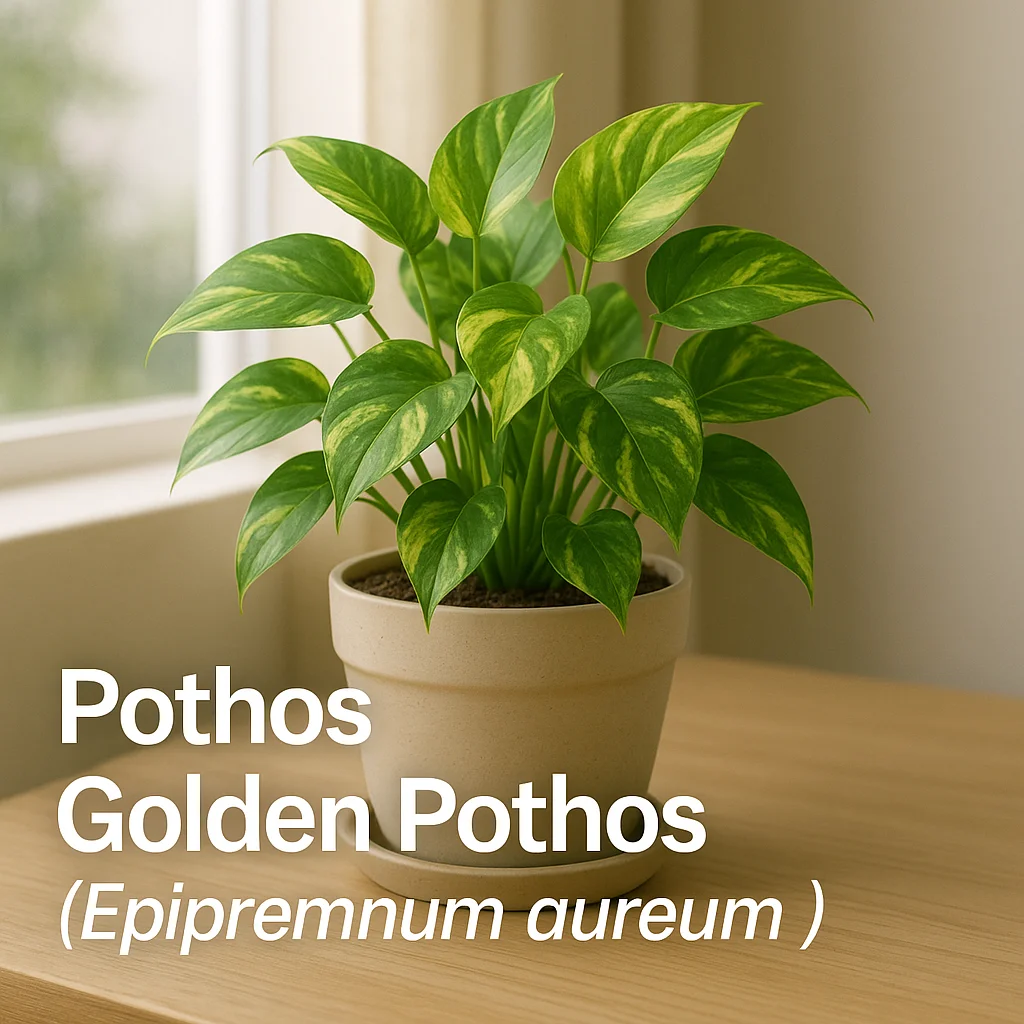
The Golden Pothos, scientifically known as Epipremnum aureum, is one of the most popular houseplants due to its hardiness and visual appeal. This vine is cherished for its lush, trailing stems and variegated leaves, making it a favorite choice for both novice and experienced plant enthusiasts.
- Common Names: Golden Pothos, Devil's Ivy, Money Plant
- Scientific Name: Epipremnum aureum
- Plant Type: Foliage Vine
- Growth Habit: Climbing and Trailing
- Typical Indoor Size: 6 to 10 feet in length
- Growth Speed: Fast
- Lifespan: Can live many years with care
- Origin: Native to Southeast Asia
- Light Preference: Bright indirect light; tolerates low light
- Water Needs: Moderate; allow to dry between watering
- Temperature & Humidity Preference: Prefers warm and humid environments
- Pet Safety: May be irritating/toxic to pets
- Difficulty: Easy
🔍 Identification & Look-Alikes
The Golden Pothos is easily identified by its heart-shaped leaves that are green with splashes of yellow or cream variegation. The leaves grow alternately along the vine and can be quite glossy. Stems are long and flexible, making this plant excellent for hanging baskets or training onto support structures.
Variegation is more pronounced with adequate light, and leaves may lose some of their lighter patterns in lower light conditions. Though this plant is unlikely to flower indoors, it is mainly valued for its striking foliage.
Common look-alikes include the Philodendron hederaceum (Heartleaf Philodendron), but Pothos leaves are typically thicker and have a waxy sheen.
- Top ID Tips:
- Heart-shaped, variegated leaves
- Trailing or climbing stem habit
- Glossy leaf texture
- Yellow-green variegation intensified by light
- Thicker leaves compared to philodendrons
- Often sold as a hanging plant
- Vines can reach several feet in length
- Stem rooting nodes visible for propagation
🌍 Origin & Natural Habitat
Originating from the warm, tropical forests of Southeast Asia, the Golden Pothos thrives in the wild as an understory plant. It uses its aerial roots to climb trees, allowing it to access dappled light filtered through the forest canopy. Its adaptability to varying levels of light and humidity makes it a resilient houseplant.
Understanding its natural habitat helps in mimicking those conditions indoors: indirect light and a supportive environment for trailing or climbing. Knowing it thrives in humid areas suggests that maintaining some humidity around the plant can enhance its health and appearance.
☀️ Light Requirements
Golden Pothos prefers bright, indirect light but is remarkably adaptable and can thrive in low light conditions, although growth may slow and variegation may diminish. Ideal placement is near a window with filtered light. Direct sunlight should be avoided as it can scorch the leaves.
Signs of too little light include leggy growth and loss of variegation, while too much light can result in burned leaves. Always aim for a balance, adjusting placement to encourage healthy foliage.
- Light Checklist:
- Place near bright, filtered windows
- Avoid south-facing direct sun exposure
- Low light slows growth but is tolerated
- Variegation fades in insufficient light
- Watch for burned tips in excessive light
- Reposition if leaves appear pale
- Rotate plant periodically for even light exposure
💧 Watering & Humidity
Golden Pothos prefers a "soak-and-drain" watering routine where the soil is allowed to dry out slightly between waterings. The finger test is a reliable method: water when the top inch of the soil feels dry. During growth spurts or in larger pots, more frequent watering might be necessary.
This plant appreciates moderate humidity, which can be enhanced through occasional misting or by placing a tray of water nearby. Overwatering can lead to root rot, characterized by yellowing leaves and a soggy stem base, while underwatering causes wilting and dry tips.
- Watering Tips:
- Water when top inch of soil is dry
- Avoid excess water sitting in pot saucer
- Reduce watering frequency in winter
- Increase humidity with pebble trays
- Watch for yellow leaves indicating overwatering
- Adjust watering based on pot size and material
- Consider seasonal changes in watering needs
🐛 Soil, Pot & Repotting
Golden Pothos thrives in a well-draining, peat-based soil mix. A general indoor potting mix supplemented with perlite or sand enhances drainage capabilities. It can be grown in terracotta or plastic pots, each affecting moisture retention differently.
Repotting should occur every 1-2 years or when the plant becomes rootbound. Signs include roots encircling the pot and water quickly flowing through drainage holes. Choose a pot one size larger and transplant gently to avoid root damage.
- Repotting Checklist:
- Choose well-draining potting soil
- Use pots with adequate drainage holes
- Repot once roots outgrow pot size
- Remove excess soil gently during repotting
- Select pots slightly larger only
- Avoid deep pots that retain moisture
- Repot in spring for optimal growth
🌡️ Temperature, Airflow & Seasonal Care
Golden Pothos performs best in temperatures ranging from 65°F to 85°F (18°C to 29°C). It does not tolerate cold drafts and should be kept away from heaters or air conditioners which might cause shock due to temperature swings.
During winter, growth will slow, and water needs decrease. Ensure steady airflow without exposing the plant to sudden changes in temperature or humidity.
- Seasonal Notes:
- Maintain temperatures above 65°F
- Avoid cold drafts and heat vents
- Reduce watering in winter
- Encourage ventilation without drafts
- Monitor for slower growth in colder months
- Protect from sudden temperature changes
🌸 Flowers, Fruit & Growth Cycle
Golden Pothos rarely flowers indoors, with blooms being an uncommon sight. Thus, it is enjoyed primarily for its foliage. Outdoor conditions, in native environments or botanical gardens, might induce flowering.
The plant exhibits a vigorous growth pattern, with new leaves emerging from the vine tips. Pruning back leggy vines periodically encourages bushier growth and prevents the plant from becoming too sparse or top-heavy.
- Trim dead or overly long vines regularly
- Focus growth with strategic pruning
- Expect vigorous growth in optimal conditions
🧬 Propagation & Reproduction
Golden Pothos is easily propagated through stem cuttings. Select a healthy vine and cut a section below a node (where leaves attach). Place in water or soil to encourage root development, typically occurring within a few weeks.
While division or leaf propagation are less common, cutting is effective, quick, and accessible for most home growers.
- Propagation Tips:
- Use clean scissors to prevent disease
- Root cuttings in water or directly in soil
- Choose cuttings with multiple leaves
- Ensure nodes are submerged to form roots
- Transplant rooted cuttings into pots
🌿 Common Problems, Pests & Prevention
Common problems for Golden Pothos include yellowing leaves from overwatering and brown tips from inadequate humidity. Remain attentive to signs of distress such as drooping or leaf drop.
Pests may include mealybugs and spider mites, requiring manual removal or increased humidity to deter infestations. Maintaining stable care routines and cleaning leaves can prevent most issues.
- Prevention Basics:
- Inspect new plants for pests
- Quarantine new arrivals temporarily
- Wipe leaves to remove dust and pests
- Maintain steady watering practice
- Provide consistent lighting conditions
- Ensure good airflow around plants
- Monitor for early signs of distress
🐾 Pet & Home Safety Notes
Golden Pothos may be toxic if ingested, potentially causing irritation in pets and children. It’s prudent to place the plant out of reach, train pets, or use barriers, such as shelves or hanging planters, to prevent contact.
In case of ingestion, contact a veterinarian or local poison control for guidance.
🏡 Styling Ideas & Best Room Placement
Golden Pothos thrives in various rooms with moderate humidity and indirect light. It can be displayed in hanging baskets for a cascading effect, placed on high shelves, or let to climb up moss poles.
Pairing it with other foliage plants can create a lush, natural look conducive to living rooms, kitchens, or bathrooms. Ensure the plant's spillover enhances its surroundings without overwhelming the space.
📌 Summary
- Recognizable for its variegated, heart-shaped leaves
- Native to Southeast Asia's tropical forests
- Thrives in bright indirect light but tolerates low light
- Water infrequently, allowing soil to dry between drinks
- Plant in well-draining soil and containers with drainage
- Ideal temperatures range from 65°F to 85°F
- Propagation is easy by stem cuttings
- Prone to overwatering, leading to root issues
- May irritate pets; placement needs consideration
- Stylishly suited to hanging or trailing from heights