🌱 ZZ Plant (Zamioculcas zamiifolia)
🧾 Quick Facts
The ZZ Plant, often synonymous with resilience in the indoor plant world, is a go-to favorite for plant enthusiasts seeking a tough yet visually appealing houseplant. Known for its ability to thrive in less-than-ideal indoor conditions, it's an excellent choice for both newbie and seasoned plant parents.
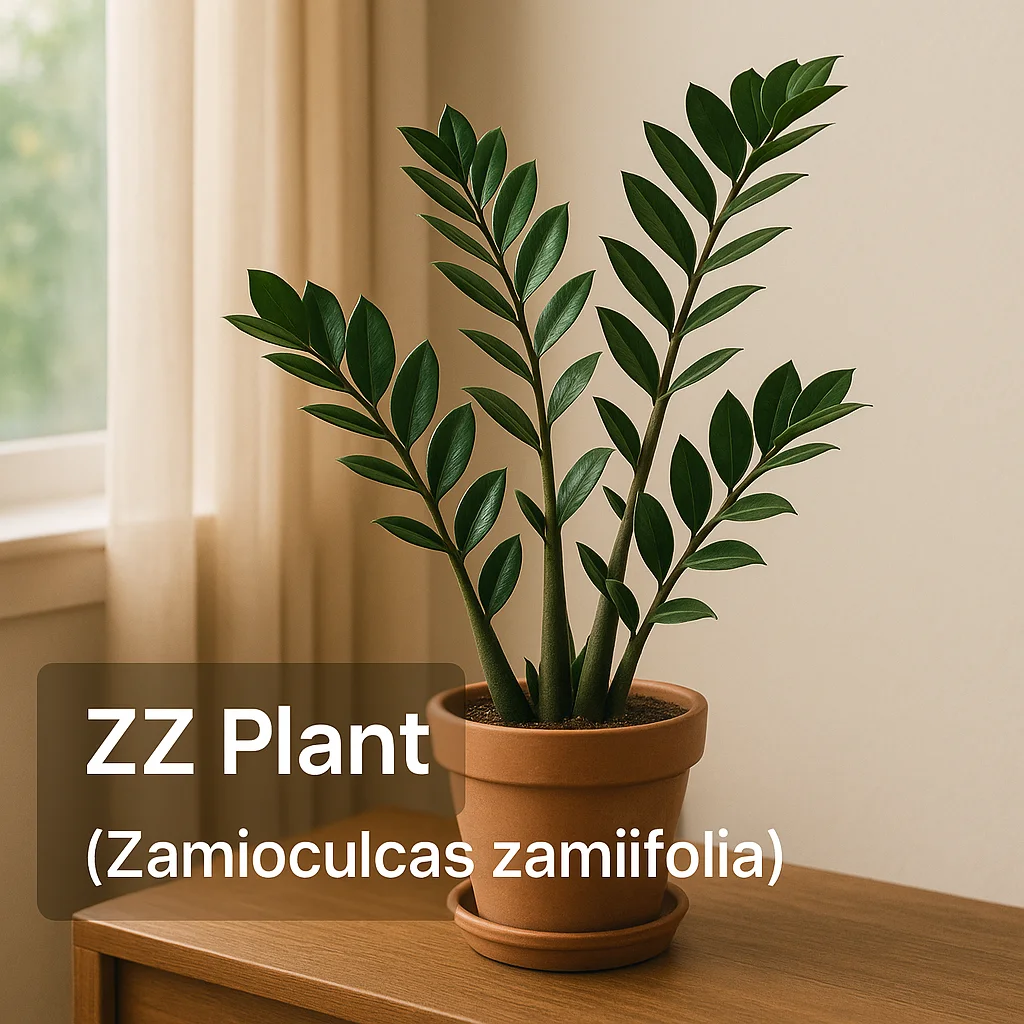
- Common names: Zanzibar Gem, ZZ Plant
- Scientific name: Zamioculcas zamiifolia
- Plant type: Foliage
- Growth habit: Upright
- Typical indoor size range: 2 to 4 feet tall
- Growth speed: Slow to moderate
- Lifespan: Can live many years with proper care
- Origin: Eastern Africa, primarily in regions like Kenya and Tanzania
- Light preference: Low to bright indirect light
- Water needs: Low; prefers to dry out between waterings
- Temperature & humidity preference: Average home temperatures (60-75°F); tolerates low humidity
- Pet safety: May be irritating/toxic to pets; keep out of reach
- Difficulty: Easy
🔍 Identification & Look-Alikes
The ZZ Plant is distinguished by its glossy, dark green leaves arranged in a feather-like pattern along its upright stems. Each leaf is oval-shaped and usually smooth with a waxy surface that helps reduce water loss. The stems are fleshy and bulbous at the base, a characteristic sign of its succulent properties
While the ZZ Plant is mainly grown for its attractive and durable foliage, it is sometimes mistaken for other succulent or similar foliage plants. It rarely blooms indoors, and when it does, the flowers are small, ivory-colored spadices at the base of the plant—almost inconspicuous.
Common look-alikes include some varieties of pothos or syngonium, but these have trailing habits and different leaf shapes that distinguish them from the ZZ.
- Glossy leaves with an ovate shape
- Upright stems with a fleshy texture
- Typically dark green, but variegated forms exist
- Rarely flowers indoors; blooms are small and ivory
- Maintains a compact, easily recognizable growth form
- Distinctive waxy leaf surface
🌍 Origin & Natural Habitat
The ZZ Plant is native to the eastern regions of Africa, such as Kenya and Tanzania. Its natural habitat consists of low-light forest floors where it experiences seasonal droughts. It grows in arid grasslands and thrives in areas with poorer soils, which contribute to its hardiness as a houseplant.
Understanding the plant's native environment helps to replicate suitable indoor conditions: low to moderate light and infrequent watering. Its adaptation to drought conditions allows it to store water in its rhizomes, making it ideal for those who may forget to water regularly.
☀️ Light Requirements
The ZZ Plant is versatile regarding light conditions, thriving in anything from low to bright indirect light. However, it does best when placed in a location that receives bright, indirect sunlight, such as near a north or east-facing window. Direct sunlight, especially prolonged exposures, can scorch its leaves.
Too little light can slow its already moderate growth rate and lead to leggier stems, while too much light can lead to leaf burn and discoloration.
- Thrives in low to bright indirect light
- Avoid direct sunlight to prevent leaf burn
- Can tolerate low-light positions but grows slower
- Observe for leggy growth as a sign of low light
- Use sheer curtains to diffuse intense sunlight
- Reposition periodically to ensure even growth
💧 Watering & Humidity
Given its drought-tolerant nature, the ZZ Plant prefers a soak-and-dry watering method. Allow the top inch or two of soil to dry out between watering sessions. Water less frequently during the cooler months when growth slows.
Humidity is not a major concern as ZZ thrives in typical home environments with low to moderate humidity. Overwatering is the most common problem, leading to root rot and leaf yellowing.
- Let soil dry out between waterings
- Water sparingly in autumn and winter
- Watch for yellowing leaves as overwatering signs
- Pot size impacts drying speed; smaller pots dry faster
- No need for high humidity environments
- Use a moisture meter if uncertain about soil dryness
🐛 Soil, Pot & Repotting
The ZZ Plant benefits from a well-draining soil mix, similar to those used for succulents. Incorporating perlite or sand can enhance drainage. The pot should have drainage holes to prevent waterlogging.
Repotting is seldom necessary, as ZZ Plants prefer slightly root-bound conditions. Consider repotting every 2-3 years or when roots are visibly outgrowing the pot or water drains too quickly through the soil. Move up only one pot size per repotting session.
- Use well-draining soil with perlite or sand
- Pot must have drainage holes
- Repot every 2-3 years or when root-bound
- Choose a pot only marginally larger at repot time
- Avoid excessively deep pots; prefer wide over deep
- Check for root health during repotting
🌡️ Temperature, Airflow & Seasonal Care
The ZZ Plant thrives at average indoor temperatures between 60°F and 75°F. It is not frost-tolerant and should be kept away from cold drafts, air conditioning, or heating vents that may cause sudden temperature fluctuations.
During winter, expect slower growth and adjust watering accordingly. Ensure stable environmental conditions to maintain plant health.
- Prefers temperatures of 60–75°F
- Avoid placing near drafts or vents
- Accepts temperature shifts but not extremes
- Reduce watering frequency in colder seasons
- Ensure consistent airflow without direct blasts
- Expect slower growth in winter
🌸 Flowers, Fruit & Growth Cycle
While mature ZZ Plants can produce flowers, indoor blooming is a rare exception. The flowers are small, whitish, and located close to the plant's base. They do not produce fruit indoors.
The plant's growth pattern involves the slow development of thick, upright stems. It occasionally requires pruning for minor aesthetic adjustments, removing yellowed leaves or trimming leggy growth.
🧬 Propagation & Reproduction
ZZ Plants can be propagated through leaf cuttings or division. Leaf propagation involves placing cut leaves or leaflet's base in moist soil, although results can be slow. Division is more straightforward during repotting, where the rhizome can be split into new plants.
Propagation may be slow, but patience yields multiple new plants over time.
- Propagate via leaf cuttings or division
- Dividing rhizomes is more effective than leaf cuttings
- Use well-draining soil for root establishment
- Avoid high expectations for quick growth
- Maintain consistency in care for propagates
🌿 Common Problems, Pests & Prevention
The most frequent issues with ZZ Plants involve overwatering, leading to leaf yellowing and root rot. Brown tips and drooping may indicate inconsistent watering or environmental stress.
ZZ Plants are generally pest-resistant but can occasionally attract spider mites, mealybugs, and scale. Fungus gnats may also occur in overly wet soil.
Prevention involves stable care, occasional leaf cleaning, and proper watering practices.
- Maintain consistent watering intervals
- Leaf yellowing often signals overwatering
- Inspect for pests regularly, especially at leaf joints
- Quarantine new plants to avoid introducing pests
- Healthy plants are more resistant to issues
- Avoid overcrowding to ensure airflow
🐾 Pet & Home Safety Notes
Parts of the ZZ Plant may be irritating or toxic if ingested by pets and children. Keeping the plant out of reach or using barriers can prevent accidental consumption. The sap can cause skin irritation, so it's advisable to wear gloves during handling.
If ingestion is suspected, contact a professional or local poison control resources promptly.
🏡 Styling Ideas & Best Room Placement
The ZZ Plant's architectural form makes it suitable for modern and minimalist spaces. It works well in living rooms, offices, and bathrooms where lighting conditions are varied. Styling in a nice decorative pot or planter basket enhances its aesthetic appeal.
Paisr well with taller plants or trailing types like pothos or spider plants.
📌 Summary
- Identified by glossy, waxy, feather-like leaves
- Native to Eastern African regions
- Handles low to bright indirect lighting
- Low watering needs; allow soil to dry out
- Prefers well-draining soil; infrequent repotting
- Tolerates typical indoor temperatures
- Propagate via division or leaf cuttings
- Be cautious of overwatering to avoid root rot
- Easy difficulty level; suitable for beginners
- Keep away from pets and small children due to potential toxicity