🌱 Dracaena fragrans ‘Lemon Lime’
🧾 Quick Facts
Dracaena fragrans ‘Lemon Lime’, commonly known for its stunning striped foliage, is a popular choice among indoor plant enthusiasts. This plant is known for its ability to thrive in various indoor environments with minimal care.
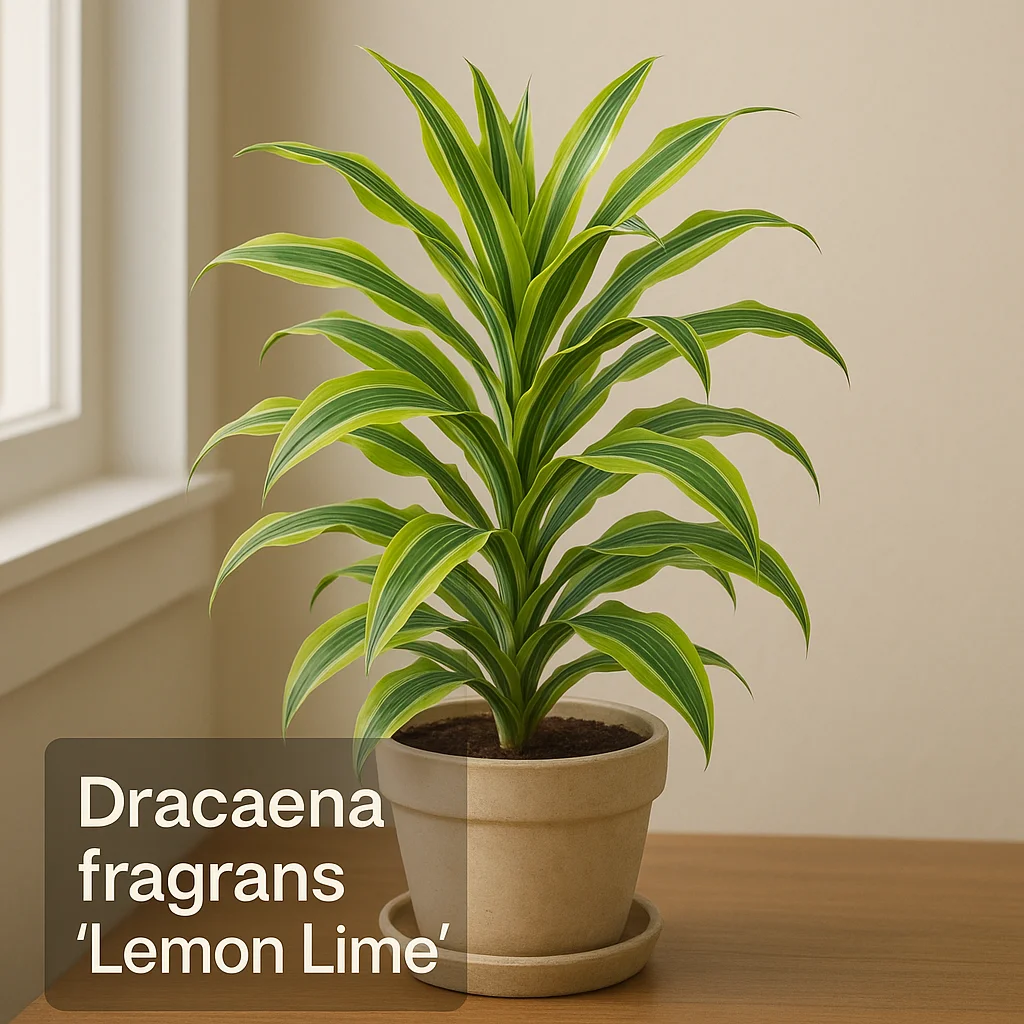
- Common names: Lemon Lime Dracaena, Corn Plant
- Scientific name: Dracaena fragrans ‘Lemon Lime’
- Plant type: Foliage
- Growth habit: Upright
- Typical indoor size range: 2-5 feet in height, 2-3 feet in spread
- Growth speed: Moderate
- Lifespan: Can live many years with care
- Origin: Tropical Africa
- Light preference: Bright indirect light
- Water needs: Moderate; prefers soil to dry slightly between waterings
- Temperature & humidity preference: Prefers warmth and moderate humidity
- Pet safety: May be irritating/toxic to pets
- Difficulty: Easy
🔍 Identification & Look-Alikes
The Dracaena fragrans ‘Lemon Lime’ is characterized by its striking foliage, which features broad leaves with vibrant green edges and yellowish-green stripes running down the center. The leaves are long and lance-shaped, growing in an arching rosette fashion from the central stem. This plant typically has an upright growth habit with woody stems or canes.
Common look-alikes include other Dracaena varieties, such as Dracaena fragrans ‘Massangeana’, which has a similar habit but with different variegation, predominantly yellow stripes along the leaf center.
- Top ID Tips:
- Look for long, lance-shaped leaves.
- Note the vibrant green and yellow variegation.
- Leaves grow in an arching rosette from the stem.
- Woody, often grayish stems or canes.
- Bright variegation intensifies with good light.
- Typically does not flower indoors.
- Upright, shrub-like growth habit.
- Similar to other Dracaenas, but variegation is distinct.
🌍 Origin & Natural Habitat
The Dracaena fragrans originates from tropical Africa, where it thrives in warm, humid environments. It is commonly found in forest understories, making it well-adapted to lower light conditions found indoors.
Understanding its native habitat helps in replicating similar conditions at home, especially regarding temperature and humidity. Avoid placing it in direct sunlight as its natural habitat is shaded.
☀️ Light Requirements
Dracaena fragrans ‘Lemon Lime’ prefers bright indirect light. It can adapt to lower light levels but the variegation might be less pronounced. The ideal indoor placement would be near an east or west-facing window where it receives diffused sunlight.
Avoid direct sunlight, which can cause leaf scorch. In low light, watch for weak growth and pale leaves, indicators of insufficient light.
- Light Checklist:
- Place near windows with filtered light.
- Avoid direct sunlight to prevent leaf burn.
- Monitor leaf color for variegation clarity.
- Adjust position if growth appears leggy or weak.
- South exposure with sheer curtain can be suitable.
- Too little light may dull leaf colors.
- Variegation more vivid with ample light.
💧 Watering & Humidity
Water Dracaena fragrans ‘Lemon Lime’ when the top inch of soil feels dry to the touch. Use a soak-and-drain method, ensuring excess water drains out to prevent root rot. Adjust watering frequency based on pot size, season, and light exposure. More frequent watering is needed during growth spurts or high temperatures.
This plant prefers moderate humidity. You can increase humidity safely by placing it on a pebble tray or using a humidifier. Be cautious of overwatering, which often leads to yellowing leaves and root issues.
- Watering Tips:
- Check soil moisture before watering.
- Ensure pots have drainage holes.
- Allow the top inch of soil to dry out.
- Use room-temperature water.
- Increase humidity in dry indoor climates.
- Brown tips often indicate low humidity.
- Readjust watering in cooler months.
- Monitor for root rot in overly saturated soil.
🐛 Soil, Pot & Repotting
The preferred soil mix for Lemon Lime Dracaena is well-draining and slightly loamy, such as a standard houseplant mix enriched with perlite for airiness. Choose pots with drainage holes to prevent water accumulation.
Repotting is typically necessary every 2-3 years or when roots become visibly bound, with water quickly flowing through the pot without moistening the soil. Incrementally increase the pot size, choosing one that is only about 1-2 inches larger in diameter.
- Repotting Checklist:
- Repot every 2-3 years.
- Look for roots emerging from drainage holes.
- Use fresh, well-draining soil mix.
- Choose a pot 1-2 inches larger in diameter.
- Avoid excessively large pots to reduce overwatering risk.
- Gently loosen any compacted roots before repotting.
- Water thoroughly after repotting to settle the soil.
- Be gentle with roots during the process.
🌡️ Temperature, Airflow & Seasonal Care
Dracaena fragrans ‘Lemon Lime’ thrives in temperatures between 65-80°F (18-27°C). Avoid cold drafts and sudden temperature fluctuations, which can stress the plant. During winter, growth slows, so adjust watering and care accordingly.
Avoid placing near AC vents or in the path of excessive airflow. Ensure stable conditions to maintain health and vigor.
- Seasonal Notes:
- Keep away from cold drafts and frosty windows.
- Maintain consistent indoor temperatures.
- Reduce watering during dormant winter period.
- Avoid placing near heating vents.
- Monitor for signs of cold stress like wilting.
- Adjust watering if the plant slows its growth.
- Consider using a humidifier during winter months.
🌸 Flowers, Fruit & Growth Cycle
While Dracaena fragrans ‘Lemon Lime’ occasionally flowers under optimal conditions, it is uncommon indoors due to environmental constraints. Flowers are fragrant and small if they do appear.
The growth cycle includes producing new leaves at the top while older leaves at the bottom may yellow and drop, a natural cycle signifying healthy growth. Pruning is beneficial to remove dead leaves and encourage a fuller shape.
🧬 Propagation & Reproduction
Propagation of Dracaena fragrans ‘Lemon Lime’ is commonly done through stem cuttings. Use clean, sharp scissors to cut a healthy section with at least a couple of nodes. Remove the lower leaves and place the cutting in water or soil to root.
While seed propagation is possible, it is less common and takes considerably longer to establish a mature plant.
- Propagation Tips:
- Use stem cuttings for best results.
- Ensure tools are sterile before cutting.
- Choose a stem section with multiple nodes.
- Place cuttings in water or directly in soil.
- Change water regularly if rooting in water.
- Provide warmth and humidity to encourage rooting.
- Expect roots to develop in 4-8 weeks.
🌿 Common Problems, Pests & Prevention
Some common issues with Dracaena fragrans ‘Lemon Lime’ include yellowing leaves, brown tips, and droopiness. These can often be traced back to watering habits or environmental stresses. Pests such as spider mites, mealybugs, and scale can occasionally occur; maintaining plant hygiene helps in prevention.
Ensure regular monitoring and isolation of new plants to prevent pest outbreaks. Stable care routines, especially concerning watering, significantly contribute to minimizing common problems.
- Prevention Basics:
- Inspect new plants before bringing them home.
- Keep plant leaves dust-free with gentle wipes.
- Quarantine newly acquired plants.
- Reduce watering frequency during cooler months.
- Check for pest signs on leaves and stems.
- Maintain consistent care for plant health.
- Increase airflow to reduce stagnant conditions.
- Use neem oil or soap solutions for mild pest issues.
🐾 Pet & Home Safety Notes
Parts of the Dracaena fragrans ‘Lemon Lime’ can be mildly toxic to pets if ingested, potentially causing digestive discomfort. Keep plants out of reach from pets and small children to mitigate risk. In cases of ingestion, contacting a veterinarian or local poison control resource is recommended for guidance.
Position the plant in areas less accessible to pets like higher shelves or in rooms they do not frequent.
🏡 Styling Ideas & Best Room Placement
The Lemon Lime Dracaena is versatile, fitting well in areas with bright indirect light such as living rooms, offices, or near hallway windows. Its upright growth makes it suitable for floor pots or elevated on plant stands to emphasize its height and form.
Consider pairing it with other shade-tolerant houseplants like Snake Plants or ZZ Plants for a lush, varied green space. In humid environments, they can also adorn the bathroom’s bright spots.
📌 Summary
- Identifiable by its green and yellow striped leaves.
- Originates from tropical Africa, adapts well indoors.
- Best in bright indirect light; avoid direct sunlight.
- Moderate water needs; allow top soil to dry out.
- Prefers well-draining soil and periodic repotting.
- Tolerates standard indoor temperatures, watch for drafts.
- Propagate through stem cuttings.
- Common issues: yellow leaves, pests, overwatering.
- Easy care plant but mildly toxic to pets.
- Ideal for indoor styling with other adaptable houseplants.