🌱 Dracaena reflexa ‘Song of India’
🧾 Quick Facts
The Dracaena reflexa ‘Song of India’ is a popular houseplant known for its dramatic variegated foliage and ease of care. Here's a quick overview of the essential facts every indoor plant enthusiast should know:
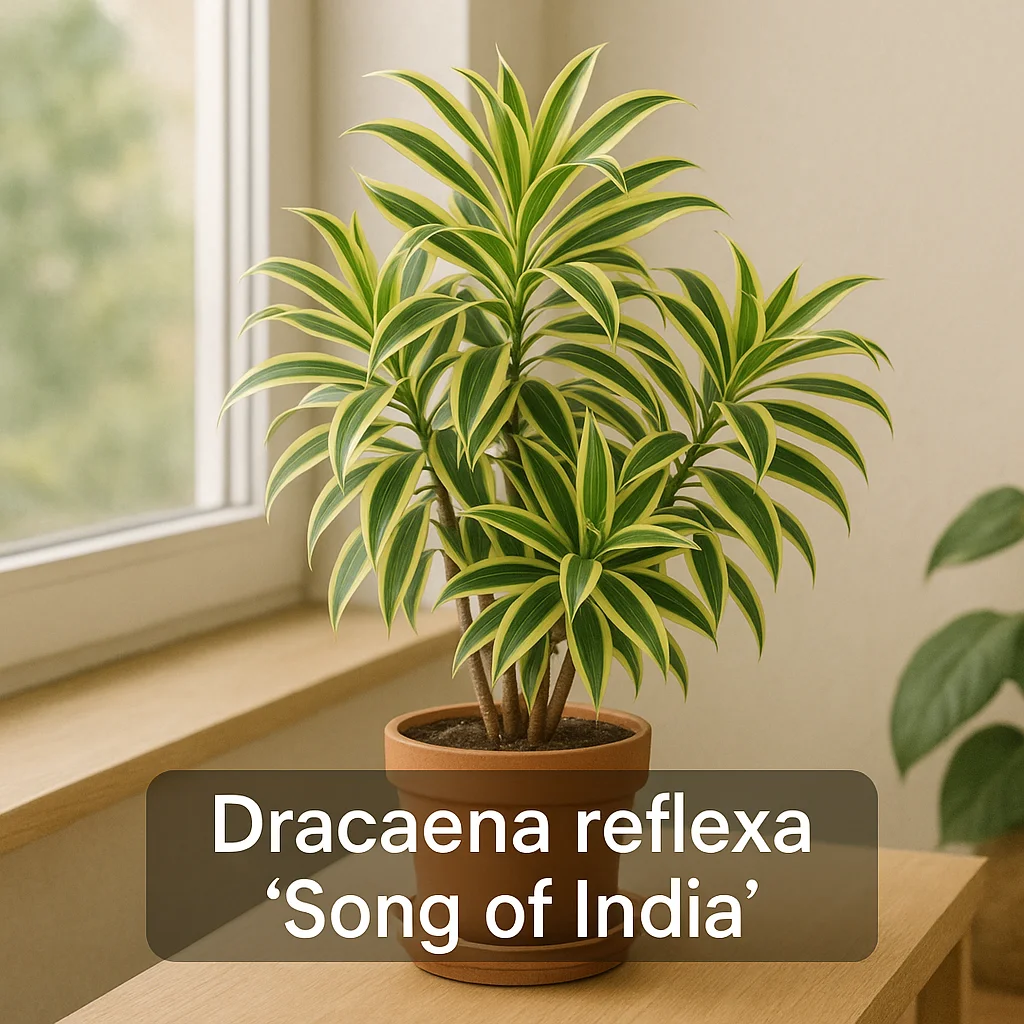
- Common Names: Song of India, Pleomele
- Scientific Name: Dracaena reflexa ‘Song of India’
- Plant Type: Foliage
- Growth Habit: Upright, shrub-like
- Typical Indoor Size Range: 3 to 6 feet in height
- Growth Speed: Moderate
- Lifespan: Can live many years with care
- Origin: Madagascar, Indian Ocean islands
- Light Preference: Bright indirect light
- Water Needs: Moderate; allow top inch to dry out
- Temperature & Humidity Preference: Prefers warm, humid conditions
- Pet Safety: May be irritating/toxic to pets
- Difficulty: Easy
🔍 Identification & Look-Alikes
The Dracaena reflexa ‘Song of India’ is easily recognized by its striking leaves, which are narrow, lance-shaped, and display a delightful variegation. The leaves are often bright green with creamy-white to yellow edges. This unique foliage pattern makes it a standout choice among other houseplants. The upright cane structure is somewhat woody and adds to its architectural appeal.
This species is commonly mistaken for other Dracaena variants, such as Dracaena marginata, due to similar cane-like stems. However, the ‘Song of India’ can be distinguished by its more compact and full-bodied foliage arrangement, coupled with clearly variegated leaves.
- Long, narrow, lance-shaped leaves
- Bright green variegation with creamy edges
- Upright woody stems
- Compact, bushy growth compared to other Dracaenas
- Grown mainly for its foliage
- Common look-alikes: Dracaena marginata, Dracaena fragrans
- Thicker leaf clusters compared to similar species
- Heightened color contrast in bright light
- Unmistakable bushy appearance
🌍 Origin & Natural Habitat
Native to the Indian Ocean islands and Madagascar, Dracaena reflexa ‘Song of India’ grows naturally in tropical climates where it thrives in warm, humid environments. In its natural habitat, this plant is a part of the forest understory and is adapted to receiving filtered sunlight through the forest canopy. This understanding helps in recreating the ideal indoor conditions for it by providing diffused bright light, warmth, and humidity that mimics its native ecosystem.
☀️ Light Requirements
For optimal growth, place the ‘Song of India’ in a position that receives bright, indirect light. Direct sunlight might scorch its variegated leaves, hence it's best suited for east or west-facing windows or a bright room set back from the window. Light levels significantly affect variegation: bright, indirect light reinforces vibrant leaf coloring, while low light can cause the leaves to become more uniform green.
Indicators of inadequate lighting include stunted growth and loss of variegation, while too much light may lead to leaf scorching and faded coloration.
- Position in bright, indirect light areas
- Avoid direct sun exposure
- Preference to east or west-facing windows
- Monitor leaf variegation in response to light
- Rotate plant regularly for even growth
- Signs of insufficient light: diminished variegation, leggy growth
- Signs of excessive light: leaf browning or scorch
💧 Watering & Humidity
The ‘Song of India’ thrives in a well-draining environment where the soil can dry out slightly between waterings. Water thoroughly, allowing excess to drain and ensuring no water sits in the saucer, and wait until the top inch of the soil becomes dry before the next watering. Seasonal variations may change the frequency; in brighter, warmer months, water more often and reduce during cooler seasons.
Since this plant prefers a humid climate, increasing indoor humidity using a tray of pebbles with water, grouping plants together, or using a humidifier can be beneficial. Avoid overwatering, which can result in root rot, and watch for underwatering signs like drooping or brown-tipped leaves.
- Follow a soak-and-drain watering method
- Let the top inch of soil dry out between waterings
- Increase watering frequency in warm, bright seasons
- Decrease watering in cooler months
- Raise humidity levels via practical methods
- Signs of overwatering: yellowing leaves
- Signs of underwatering: crispy, brown tips, or drooping
🐛 Soil, Pot & Repotting
Use a well-draining potting mix for the Dracaena reflexa ‘Song of India’. A mix of regular potting soil with added perlite or pumice will improve aeration and drainage. Select a pot with drainage holes to prevent water accumulation, opting for terracotta for moisture control or plastic for lighter handling.
Repotting is suggested every two to three years or when the plant appears rootbound or experiences slow growth. Choose a pot that's one size larger and replace as much of the old soil as possible. This process helps rejuvenate the plant with fresh nutrients.
- Use a well-draining soil mix
- Incorporate perlite or pumice for aeration
- Select pots with drainage capabilities
- Consider terracotta for moisture control
- Repot every two to three years
- Look for signs of rootbound growth
- Upsize the pot conservatively
- Repotting improves growth vigor with fresh soil
🌡️ Temperature, Airflow & Seasonal Care
The ‘Song of India’ prefers consistent warmth and should be kept in temperatures ranging between 65°F to 80°F (18°C to 27°C). Avoid placing it in drafty areas or near heaters and AC vents to prevent temperature stress. During the winter, growth may slow, requiring reduced watering and a stable environment. It's important to shield the plant from sudden temperature swings, which can lead to stress and damage.
- Maintain temperatures of 65°F to 80°F (18°C to 27°C)
- Avoid drafts and sudden temperature changes
- Keep away from heaters and air conditioning vents
- Reduce watering during slower growth in winter
- Protect from extreme cold and frost
- Stability is key for seasonal care
🌸 Flowers, Fruit & Growth Cycle
While flowering indoors is rare, Dracaena reflexa occasionally produces small, inconspicuous flowers that are typically white. The primary focus is on its foliage rather than blooms. Indoor environments might not support fruit production. Growth involves developing new leaves seasonally and maintaining a bushy appearance. Prune back lanky branches to encourage fullness and perform regular cleaning of older leaves for plant health.
🧬 Propagation & Reproduction
Propagation of the Dracaena reflexa ‘Song of India’ is most effectively done through stem cuttings, a popular choice among home growers. Cut sections of the cane just below a node, then root them in water or soil. Regular misting assists with root development. Division can also work when repotting if the plant has grown additional stalks.
- Best propagated through stem cuttings
- Can be rooted in water or soil
- Choose cuttings with multiple nodes
- Ensure cuttings remain moist for rooting
- Experiment with division during repotting
- Methods improve plant volumes
🌿 Common Problems, Pests & Prevention
Common issues experienced with Dracaena reflexa ‘Song of India’ include yellowing due to overwatering and brown leaf tips due to low humidity or too much direct sunlight. It may also be susceptible to pests like spider mites, mealybugs, and scale. Prevention involves maintaining stable care, avoiding waterlogged conditions, and cleaning leaves regularly. Capture and treat pest outbreaks early to minimize impact.
- Monitor for leaves yellowing due to high moisture
- Brown tips from low humidity or too much sun
- Spider mites and mealybugs are common pests
- Scale insects may appear on stems
- Regular leaf cleaning aids in pest prevention
- Ensure proper airflow around the plant
- Quarantine new plants before introduction
- Stable care minimizes environmental stress
🐾 Pet & Home Safety Notes
Parts of the Dracaena reflexa ‘Song of India’ may be considered irritating or mildly toxic to pets if ingested. It is advisable to keep it out of reach of curious pets and children, either by placing it in elevated areas or using barriers. If ingestion is suspected, contacting a professional or local poison control resources is recommended.
🏡 Styling Ideas & Best Room Placement
The ‘Song of India’ enhances home interiors with its lush, tropical appearance suitable for bathrooms and kitchens, given its higher humidity needs. It's also an excellent choice for living rooms or offices due to its upright form. Ideal for floor pots or large plant stands, it pairs well with other Dracaenas or low-light tolerant plants. Positioning in areas that receive filtered light creates a vibrant and lively space.
📌 Summary
- Recognizable by distinctive variegated foliage
- Native to Madagascar, thrives in bright indirect light
- Allow soil to dry before rewatering
- Well-draining soil essential to preventing root rot
- Comfortable in warm, humid conditions
- Propagation primarily through stem cuttings
- Monitor for common pest problems proactively
- Can be mildly toxic to pets
- Simple care makes it ideal for plant enthusiasts
- Elegant addition to bright indoor settings