🌱 Ficus benghalensis ‘Audrey’
🧾 Quick Facts
Ficus benghalensis ‘Audrey’ is a popular and elegant houseplant choice for many indoor gardens. Known for its striking foliage, it’s part of the renowned Ficus family, prized for its relatively easy care and aesthetic appeal. Below are some key characteristics and care guidelines to help you understand and nurture this plant effectively.
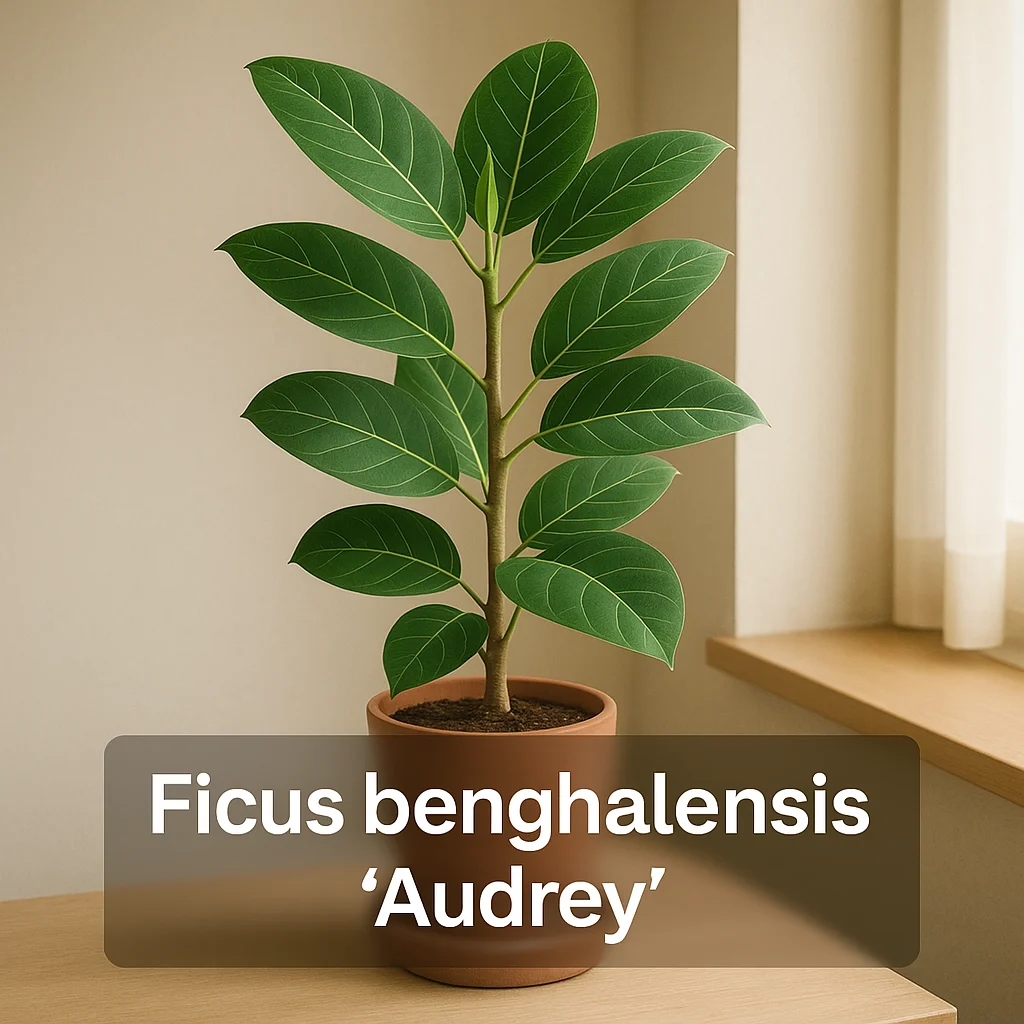
- Common names: Audrey Ficus, Banyan Tree
- Scientific name: Ficus benghalensis ‘Audrey’
- Plant type: Foliage
- Growth habit: Upright, tree-like
- Typical indoor size: 4 to 8 feet high, 2 to 4 feet spread
- Growth speed: Moderate
- Lifespan: Can live many years with proper care
- Origin: South Asia, primarily India
- Light preference: Bright indirect light
- Water needs: Moderate; prefers to dry slightly between waterings
- Temperature & humidity preference: Warm, moderate to high humidity
- Pet safety: May be irritating/toxic to pets
- Difficulty: Medium
🔍 Identification & Look-Alikes
The Ficus benghalensis ‘Audrey’ is recognized by its broad oval leaves, which are dark green with a velvety texture and clear veining. The leaves grow in an alternate arrangement along thick, upright stems, giving it a tree-like silhouette. Although it can produce small, fig-like flowers, it is mainly grown for its foliage.
Look-alikes often include other Ficus species like Ficus elastica (rubber plant), which has thicker, glossier leaves. A closer inspection of the leaf texture and growth habit can help differentiate them.
- Leaves: Broad, oval, dark green
- Texture: Velvety, with clear veining
- Stem Structure: Thick and upright
- Light Effect: Helps maintain vibrant leaf color
- Common Look-alikes: Ficus elastica, Ficus lyrata
- Best Identifier: Leaf texture and tree-like form
- Usually grown for foliage
🌍 Origin & Natural Habitat
Native to South Asia, primarily India, the Ficus benghalensis grows in the subtropical and tropical climates. It is a banyan tree that often starts its life as an epiphyte, anchoring itself onto a host before developing into a self-supporting tree. It thrives in environments with seasonal monsoon rains, adapting to both wet and dry periods.
Understanding its natural habitat helps mimic its adaptive traits indoors, such as providing indirect light similar to a forest canopy and allowing periods of drying between waterings to simulate seasonal changes.
☀️ Light Requirements
Ficus benghalensis ‘Audrey’ thrives in bright indirect light, which means plenty of light that is diffused rather than direct sun exposure. Placing it near east or north-facing windows ensures it receives adequate light without direct sun damage. Bright indirect light can be exemplified by soft shadows cast by your hand between the light source and the plant.
Insufficient light can lead to slower growth, while too much direct sunlight may scorch its leaves. If you notice leggy growth or leaf scorch, adjust its placement accordingly.
- Place near bright windows, away from direct sun
- East or north-facing windows are ideal
- Avoid prolonged direct sun, which can scorch leaves
- Soft light ensures healthy growth
- Signs of too little light: Slow growth, pale leaves
- Signs of too much light: Scorched or crispy leaf edges
💧 Watering & Humidity
Water the Ficus ‘Audrey’ thoroughly and allow the top 1-2 inches of its soil to dry out between waterings. During active growth seasons (spring and summer), you may water more frequently, while reducing the frequency in the cooler months. Larger pots retain moisture longer, so adjust your watering accordingly.
This plant prefers moderate to high humidity. If the air in your home is particularly dry, occasional misting or using a humidifier can be helpful. Check regularly for signs of overwatering (yellowing leaves, root rot) and underwatering (drooping, dry edges).
- Water when top inch of soil is dry
- Adjust frequency based on pot size and season
- Opt for higher humidity levels if possible
- Look for overwatering signs: Yellow leaves
- Underwatering signs: Drooping foliage
- Utilize a moisture gauge for accurate watering
🐛 Soil, Pot & Repotting
The ideal soil for Ficus benghalensis ‘Audrey’ is a well-draining mix that holds some moisture but allows excess water to escape, protecting the roots. A general purpose indoor potting mix with added perlite or coarse sand works well.
Choose pots with drainage holes to prevent waterlogging. Although terracotta pots offer excellent breathability, they also dry out faster than plastic pots, requiring more frequent watering. Consider repotting every few years or when you notice signs like roots growing out of the drainage holes or water passing through the soil too quickly.
When repotting, gently loosen the root ball and choose a new pot just a bit larger — around 1-2 inches wider. Refresh the soil, and ensure the plant is at the same depth as before.
- Use an airy, well-draining soil mix
- Pots must have drainage holes
- Watch for rootbound signs to know when to repot
- Opt for terracotta for breathability
- Repot gently to avoid shock
- Refresh soil when repotting
🌡️ Temperature, Airflow & Seasonal Care
This plant enjoys warm temperatures ranging from 65°F to 75°F (18°C to 24°C). Avoid placing it near drafty windows or vents where temperature fluctuations are frequent. During the cooler months, growth may slow down, necessitating less frequent watering.
Ensure there is adequate airflow to minimize risk of fungal issues, but avoid cold draughts directly on the plant. If you notice a slowdown in growth, reduce watering frequency and stop any fertilization.
- Maintain temperatures of 65°F to 75°F indoors
- Avoid cold drafts and temperature spikes
- Adapt care routine with seasonal changes
- Avoid vent-induced dry air
- Balance airflow without cold exposure
🌸 Flowers, Fruit & Growth Cycle
While the Ficus ‘Audrey’ can technically flower, it rarely does so in indoor conditions and is primarily appreciated for its foliage. It may occasionally bear small, green figs, yet it's not common in home settings.
Sustaining a steady growth cycle involves new leaf emergence from the tips of the branches. Adequate pruning can help shape the plant, maintaining a compact structure. Pruning is best done during its active growth period in spring or early summer and involves cleaning tools to prevent disease transfer.
🧬 Propagation & Reproduction
Propagation of Ficus benghalensis 'Audrey’ can be done through stem cuttings, although it may require patience and ideal conditions to root successfully. Take cuttings in spring or early summer, using sections with 2-3 nodes.
Allow the cut end to callous before placing it in a mix of moist soil and perlite. Keep the cutting covered with a clear plastic bag to maintain humidity, and unveil occasionally to allow for air circulation.
- Spring is the best time for propagation
- Take stem cuttings with multiple nodes
- Allow cut ends to callous
- Use moist, well-draining soil
- Maintain high humidity with covered cuttings
🌿 Common Problems, Pests & Prevention
Common issues for Ficus ‘Audrey’ include yellow leaves from overwatering or brown tips from lack of humidity. Leggy growth often indicates insufficient light. Pests such as spider mites and mealybugs can appear, particularly in dry conditions.
Prevent issues by quarantining new plants, cleaning leaves regularly to avoid dust buildup, maintaining stable care routines, and ensuring proper airflow. Promptly handle pest infestations by washing leaves with water or applying safe remedies like neem oil.
- Dust leaves regularly to maintain health
- Ensure even airflow to prevent mildew
- Monitor for overwatering: Check soil moisture
- Quarantine new plants to prevent pest spread
- Regular checks for pests like spider mites
- Handle droop by observing water needs
🐾 Pet & Home Safety Notes
The Ficus benghalensis ‘Audrey’ may be mildly toxic to pets and children if ingested. Its sap can cause irritation, so it's best to place it out of reach. Consider using training techniques for pets or employing barriers to prevent accidental nibbling.
If ingestion is suspected, it's important to contact a professional or local poison control resources promptly. With strategic placement and monitoring, you can ensure your home is safe for both your plants and family.
🏡 Styling Ideas & Best Room Placement
The impressive stature of Ficus ‘Audrey’ makes it an excellent choice for living rooms or offices where it can be a focal point. Due to its preference for humidity, it also suits bathrooms and kitchens well.
Employ various displays: place it in a decorative floor pot, pair it with taller plants for a lush corner setup, or use a moss pole to support vertical growth. Combine with low-light tolerant plants like snake plants to create an appealing variety.
📌 Summary
- Recognizable by its dark green, velvety leaves
- Native to the tropical regions of South Asia
- Thrives in bright indirect light environments
- Moderate water needs with slight drying in between
- Requires a rich, well-draining soil mix
- Prefers warm temperatures and moderate humidity
- Propagation through stem cuttings with patience
- Watch for common pests like spider mites
- May be mildly irritating/toxic to pets if ingested
- Medium difficulty, with proper humidity management