🌱 Ficus microcarpa ‘Ginseng’
🧾 Quick Facts
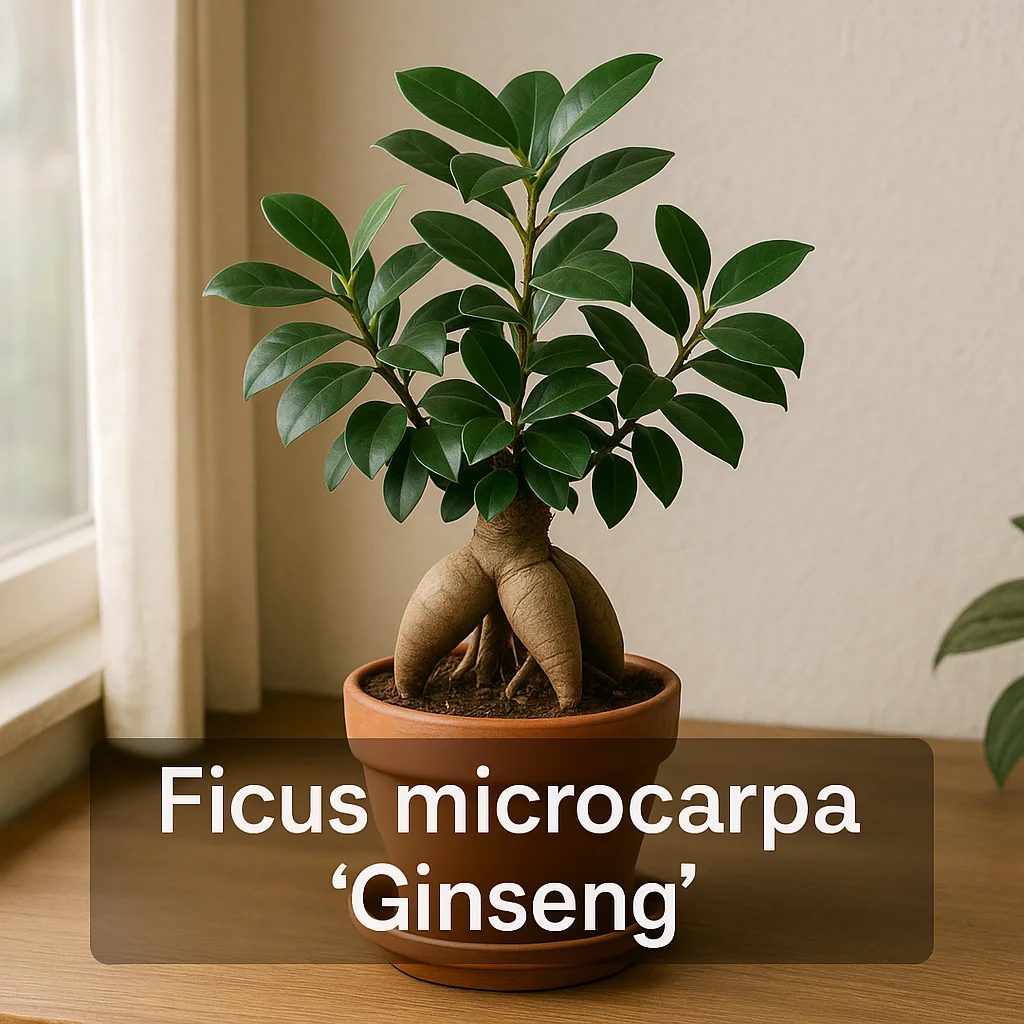
The Ficus microcarpa ‘Ginseng’, commonly known simply as Ginseng Ficus, is a popular choice for indoor plant enthusiasts. Its intriguing, bonsai-like appearance sets it apart, with thick, swollen roots that are often mistakenly thought to be the actual plant trunk. This plant combines ornamental beauty with relatively straightforward care needs.
- Common names: Ginseng Ficus, Banyan Bonsai, Laurel Fig
- Scientific name: Ficus microcarpa ‘Ginseng’; often listed interchangeably with Ficus retusa
- Plant type: Foliage, small tree, bonsai-like architecture
- Growth habit: Upright, shrub-like
- Typical indoor size range: 1-3 feet tall, 1-2 feet wide
- Growth speed: Moderate
- Lifespan: Can live many years with care
- Origin: Southeast Asia; typically tropical and subtropical regions
- Light preference: Medium to bright indirect light; tolerates direct morning or late afternoon light
- Water needs: Moderate; prefers soil to slightly dry between waterings
- Temperature & humidity preference: Warm, prefers humidity
- Pet safety: May be irritating/toxic to pets
- Difficulty: Medium
🔍 Identification & Look-Alikes
To recognize the Ficus microcarpa ‘Ginseng’, these plants often display thick, uniquely shaped roots that emerge above the soil, mimicking a bonsai form. The leaves are glossy, dark green, and elliptically shaped, arranged in a manner that provides a dense canopy over the roots.
While primarily grown for its foliage, the Ficus microcarpa is occasionally confused with other Ficus varieties or bonsai trees. The robust root structure is a distinguishing feature. It’s less likely to produce flowers indoors, where its main appeal is the foliage.
- Leaf shape: Glossy, elliptic
- Root structure: Thick, above-ground (bonsai-like appearance)
- Color: Dark green leaves
- Light effects: Abundant light encourages dense foliage
- Common look-alikes: Ficus binnendijkii, Ficus benjamina (smaller, more traditional bonsai forms)
- Top ID Tips
- Unique thick, swollen roots
- Dark, glossy foliage
- Compact, top-heavy leaf arrangement
- Standout bonsai mimicry
🌍 Origin & Natural Habitat
Ficus microcarpa ‘Ginseng’ originates from Southeast Asia, thriving in tropical and subtropical climates. In the wild, it often grows as an understory tree, benefiting from dappled sunlight and high humidity. This preference informs its indoor care needs: it thrives in warm environments with indirect sunlight and requires consistent moisture but good drainage.
Understanding its natural habitat helps replicate its preferred conditions indoors, guiding decisions on light, watering, and humidity for optimal growth and appearance.
☀️ Light Requirements
The Ginseng Ficus thrives in medium to bright indirect light, similar to what it's accustomed to in its native understory. Position it near an east or north-facing window, or filtered light from a sheer curtain. Direct sunlight, especially morning or late afternoon, is manageable but should be monitored to prevent leaf scorch.
Too little light may result in leggy growth with fewer leaves, while too much direct sun can cause them to scorch and brown.
- Light Checklist
- Place near east or north-facing window
- Provide bright indirect light
- Avoid prolonged direct midday sun
- Monitor for leaf browning (too much light)
- Watch for sparse growth (too little light)
- Consider moving light sources seasonally
- Rotate plant for even light exposure
💧 Watering & Humidity
Adopt a soak-and-drain watering method, allowing the soil to dry slightly between waterings. Overwatering is a more frequent issue than underwatering, given the plant’s affinity for well-drained soil.
Humidity preferences are moderate to high, but standard indoor humidity is often sufficient. Enhance humidity with a pebble tray or by misting in drier months. Watch for overwatering signs such as yellowing leaves and root rot, and underwatering issues like dry, brittle leaves.
- Watering Tips
- Let soil slightly dry between waterings
- Use porous pots with drainage holes
- Avoid standing water in saucers
- Increase watering in summer, reduce in winter
- Mist foliage in dry climates
- Check soil moisture a few inches below surface
- Look for signs of root rot in consistently wet soil
🐛 Soil, Pot & Repotting
Ficus microcarpa ‘Ginseng’ prefers a well-draining soil mixture that retains some moisture. A mix of standard potting soil with sand or perlite meets these needs. Choose pots with drainage holes, considering terracotta for porous breathability, or plastic for moisture retention.
Repot every 1-2 years or when roots appear confined, especially when growth slows. A conservative approach to pot upsizing helps, moving only one size up to avoid shock.
- Repotting Checklist
- Repot in spring or early summer
- Check for roots circling the pot
- Minimize root disturbance when repotting
- Use fresh soil mix each repot
- Gently prune any damaged roots
- Transition gradually to larger pots
🌡️ Temperature, Airflow & Seasonal Care
The Ginseng Ficus enjoys temperatures between 60°F and 75°F. It should be protected from sudden temperature shifts and drafts, especially from windows and doorways. In winter, the plant's growth slows, requiring adjustments to watering frequency and light exposure. Ensure good airflow to prevent fungal issues.
- Seasonal Notes
- Avoid placing near drafty areas
- Monitor for signs of temperature stress (leaf drop)
- Adjust watering when growth slows in winter
- Ensure steady temperature environment
- Alternate positions for balanced exposure
🌸 Flowers, Fruit & Growth Cycle
The Ficus microcarpa ‘Ginseng’ rarely flowers indoors, primarily enjoyed for its verdant canopy. Its growth emerges from a central trunk, spreading out as a dense cluster of leaves. Occasional pruning of dead or excess branches promotes healthier, fuller growth and maintains its characteristic appearance.
🧬 Propagation & Reproduction
Propagation of Ficus microcarpa ‘Ginseng’ is typically by stem cuttings, although it can be challenging. Expect variable success, as root development may require specific conditions like warmth and humidity.
- Propagation Tips
- Take cuttings in spring or early summer
- Include at least one node when trimming
- Use a rooting hormone to increase success
- Maintain warm conditions for cuttings
- Keep the soil consistently moist (not wet)
- Favor indirect light exposure
🌿 Common Problems, Pests & Prevention
Common issues with Ficus microcarpa ‘Ginseng’ include yellow leaves from overwatering, brown tips from underwatering, and occasional leaf drop. Pests like spider mites, mealybugs, and scale can also be concerns. Combat issues with consistent care, as well as preventive measures such as occasional leaf cleaning and ensuring adequate airflow.
- Prevention Basics
- Inspect new plants before introducing them indoors
- Regularly clean leaves to avoid pest attraction
- Quarantine new plants for observation
- Monitor moisture levels to prevent root issues
- Avoid excessive fertilizer use
- Maintain stable care routines to decrease stress-related symptoms
🐾 Pet & Home Safety Notes
The sap from Ficus microcarpa may irritate pets and children if ingested. To minimize risk, position this plant out of reach, perhaps on elevated shelves or window ledges. In case of accidental ingestion, seeking advice from professionals or poison control resources is recommended.
🏡 Styling Ideas & Best Room Placement
This plant's architectural elegance suits a variety of rooms, from living areas to home offices. It can thrive on surfaces near windows with indirect light. Consider using decorative pots or placing them on plant stands to highlight their unique form. Pair with humidity-loving plants like ferns or peace lilies for aesthetic and environmental harmony.
📌 Summary
- Unique identification: Bonsai-like roots, glossy dark leaves
- Origin: Southeast Asia, tropical climates
- Light: Medium to bright indirect
- Watering: Allow drying slightly, avoid overwatering
- Soil/Repotting: Well-draining, repot every 1-2 years
- Temperature: 60°F to 75°F, avoid drafts
- Propagation: Stem cuttings, with moderate difficulty
- Common issues: Overwatering, pests (mites, mealybugs)
- Difficulty: Generally medium care
- Cautions: Sap may irritate pets, keep out of reach