🌱 Kentia Palm (Howea forsteriana)
The Kentia Palm, scientifically known as Howea forsteriana, is a staple in the world of indoor plants due to its graceful, arching fronds and its ability to thrive in varying light conditions. Known for its resilience and elegant appearance, it's often sought after by both novice and experienced plant enthusiasts. Originating from Lord Howe Island in the Pacific Ocean, this palm has become a symbol of sophisticated interior decor and a favorite for many looking to add a touch of the tropics to their homes.
🧾 Quick Facts
An overview of key information about the Kentia Palm:
- Common names: Kentia Palm, Thatch Palm
- Scientific name: Howea forsteriana
- Plant type: Palm
- Growth habit: Upright
- Typical indoor size range: 3 to 10 feet tall
- Growth speed: Slow to moderate
- Lifespan: Can live many years with proper care
- Origin: Lord Howe Island, Australia
- Light preference: Medium to bright indirect light
- Water needs: Moderate; prefers to dry out between waterings
- Temperature & humidity preference: Enjoys warm temperatures and moderate humidity
- Pet safety: May be irritating to pets; caution advised
- Difficulty: Easy to medium
🔍 Identification & Look-Alikes
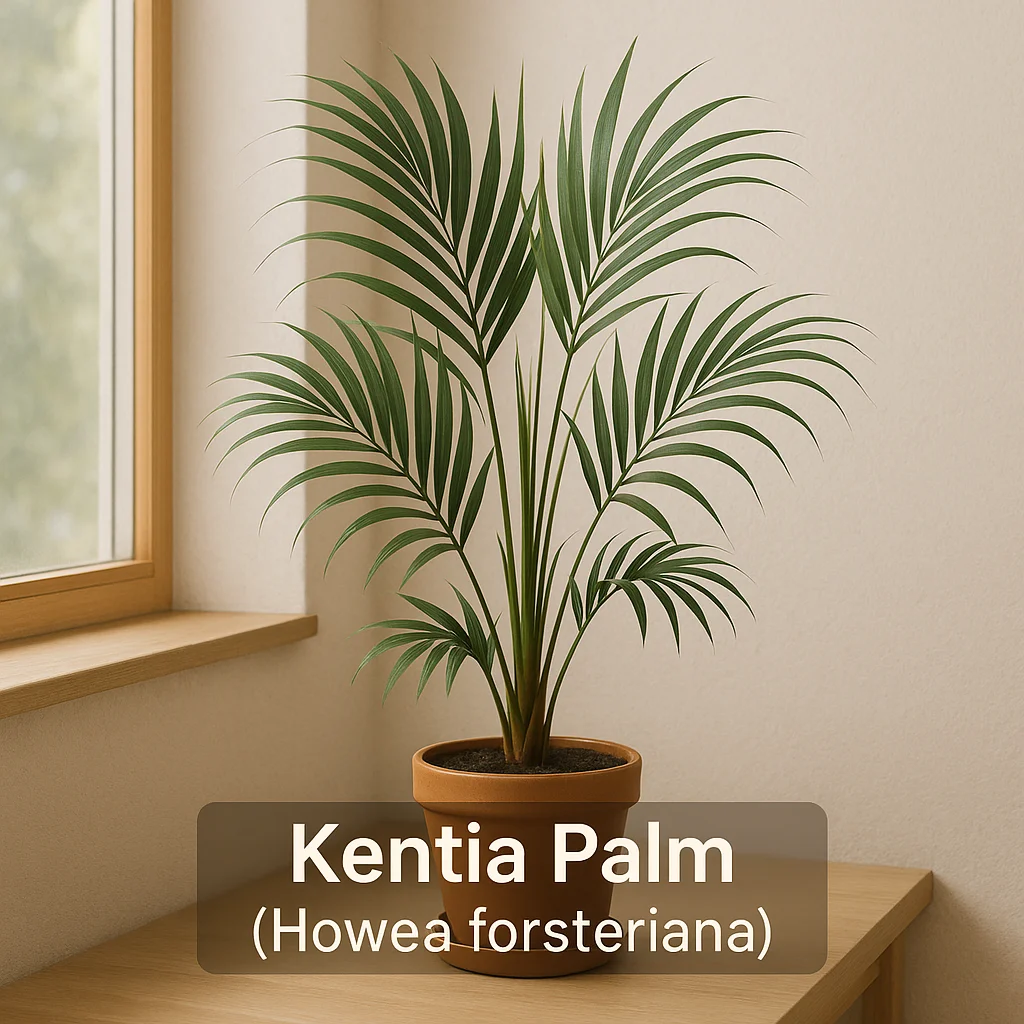
Recognizing the Kentia Palm is straightforward, thanks to its iconic, feather-like fronds that arch gracefully from a slender trunk. The leaves are typically dark green, but their shade can vary based on light levels, becoming a lighter green in brighter conditions. Kentia Palms are mostly grown for their foliage, as indoor blooming is rare.
It's important to note that Kentia Palms are sometimes confused with other palm varieties like the Areca Palm. The main distinction is in the leaf structure; Kentia leaves are broader and more spaced apart. Other look-alikes include the Parlor Palm, which is much smaller and has denser foliage.
- Top ID Tips:
- Look for gracefully arching, feather-like fronds
- Dark green leaves, lighter green in more light
- Distinguished by a slender trunk
- Broad, spaced-apart leaves
- Rare indoor blooms, primarily grown for foliage
- Avoid confusion with Areca or Parlor Palms
🌍 Origin & Natural Habitat
The Kentia Palm is native to Lord Howe Island, a small, subtropical island in the Tasman Sea. In its natural habitat, it grows in the understories of forests, thriving in partial shade with high humidity. This background informs its adaptability to indoor environments where similar conditions can be mimicked, making it an excellent choice for homes with indirect light.
Understanding its natural habitat aids in providing the right indoor care: keeping it out of direct sun, maintaining moderate humidity, and ensuring gradual light changes reflect its forest understory origins.
☀️ Light Requirements
Kentia Palms prefer medium to bright indirect light. Place them near a window with filtered light or a few feet away from a north or east-facing window. Avoid direct sunlight, as it can scorch the leaves and cause browning. Under low light, the growth may slow, and the plant could develop leggy fronds.
Signs of inadequate lighting include yellowing fronds and stretched growth, while too much light causes brown, scorched leaves.
- Light Checklist:
- Avoid direct sun exposure
- Best near filtered north/east windows
- Yellow tips indicate low light
- Brown tips indicate too much light
- Rotate plant occasionally for even growth
💧 Watering & Humidity
The Kentia Palm requires a soak-and-drain watering technique. Allow the soil to dry out slightly between waterings, particularly in less active growth periods. The amount and frequency should be adjusted based on the pot size and environmental conditions.
Kentias enjoy moderate humidity. While they can adapt to typical indoor levels, using a humidifier or pebble tray can enhance their growth conditions. Overwatering is a common mistake; watch for root rot signs like yellowing leaves, and for underwatering, look for browning tips or fronds.
- Watering Tips:
- Allow soil to dry between waterings
- Reduce watering in winter
- Use humidity trays in dry environments
- Pebble trays can help with humidity
- Brown tips usually mean low humidity
🐛 Soil, Pot & Repotting
A well-draining potting mix is essential for the Kentia Palm, ideally a blend that retains some moisture but allows excess to drain away. When selecting a pot, ensure it has adequate drainage holes.
Repotting should be performed every couple of years or when the plant becomes rootbound, evidenced by roots circling the pot or water running straight through the pot. When repotting, choose a pot only slightly larger than the current one to avoid overwhelming the roots.
- Repotting Checklist:
- Use a well-draining potting mix
- Ensure pot has drainage holes
- Repot every 2-3 years
- Look for roots escaping pot
- Conservative pot upsizing
🌡️ Temperature, Airflow & Seasonal Care
Kentia Palms thrive in temperatures between 65°F to 85°F. They are susceptible to cold drafts, so avoid placing them near AC vents or open windows during cold weather.
During winter, the growth rate slows, which means less watering is required. Ensure good airflow to avoid fungal issues but avoid placing them in direct paths of fans or heaters.
- Seasonal Notes:
- Keep between 65°F to 85°F
- Avoid cold drafts and AC vents
- Reduce watering in winter
- Ensure steady airflow
- Avoid direct exposure to heaters
🌸 Flowers, Fruit & Growth Cycle
While the Kentia Palm can flower in nature, it rarely blooms indoors. It's primarily valued for its lush foliage. When it grows, new fronds unfurl from the center, adding to its height over time.
As for pruning, it's mostly for removing dead or damaged fronds to keep the plant looking tidy. Regularly cleaning leaves can also enhance its overall health and appearance.
🧬 Propagation & Reproduction
Propagating a Kentia Palm at home is uncommon and challenging due to its slow growth and specialized seed germination requirements. Commercially, they're often grown from seeds under controlled conditions.
Home growers are advised to purchase mature plants rather than attempting propagation.
- Propagation Tips:
- Propagation from seeds is rare for home growers
- Purchase mature plants for best results
- Understand that propagation is slow
- Professional environments are ideal for germination
🌿 Common Problems, Pests & Prevention
Kentia Palms can face issues like yellowing leaves, brown tips, and drooping if overwatered, underwatered, or placed in inadequate light. Common pests include spider mites and mealybugs. To mitigate these issues, ensure stable care: clean leaves regularly, maintain consistent watering, and ensure proper light exposure.
Routine inspections can help catch and prevent these issues before they escalate.
- Prevention Basics:
- Check for yellowing (overwatering)
- Inspect for pests like spider mites
- Regularly clean the leaves
- Ensure stable light conditions
- Quarantine new plants before introduction
🐾 Pet & Home Safety Notes
While the Kentia Palm is generally considered less harmful than other houseplants, some sources list it as potentially irritating to pets if ingested. It's prudent to keep it out of reach using barriers or placing it in elevated pots.
If ingestion is suspected, contact a professional or local poison control resources for guidance.
🏡 Styling Ideas & Best Room Placement
The Kentia Palm makes an impressive statement piece in living rooms or offices, especially where there is ample vertical space. It is adaptable to bathrooms and kitchens if humidity levels are higher, although its size needs consideration. Pairing it with smaller plants in varying textures can create depth and visual appeal.
Consider floor pots for a bold impact or a corner feature.
📌 Summary
- Iconic for its arching, feather-like fronds
- Native to Lord Howe Island; tropical origins
- Thrives in medium to bright indirect light
- Prefers moderate watering and humidity levels
- Requires well-draining soil; repot every few years
- Maintain temperatures between 65°F and 85°F
- Not common for home propagation
- Watch for pests and practice stable care
- Caution with pets regarding ingestion
- Combines well with other textured houseplants