🌱 Majesty Palm (Ravenea rivularis)
🧾 Quick Facts
The Majesty Palm is a popular houseplant known for its graceful and tropical appearance. This indoor palm can add a soothing touch of green to any space while being relatively easy to care for once its preferences are understood.
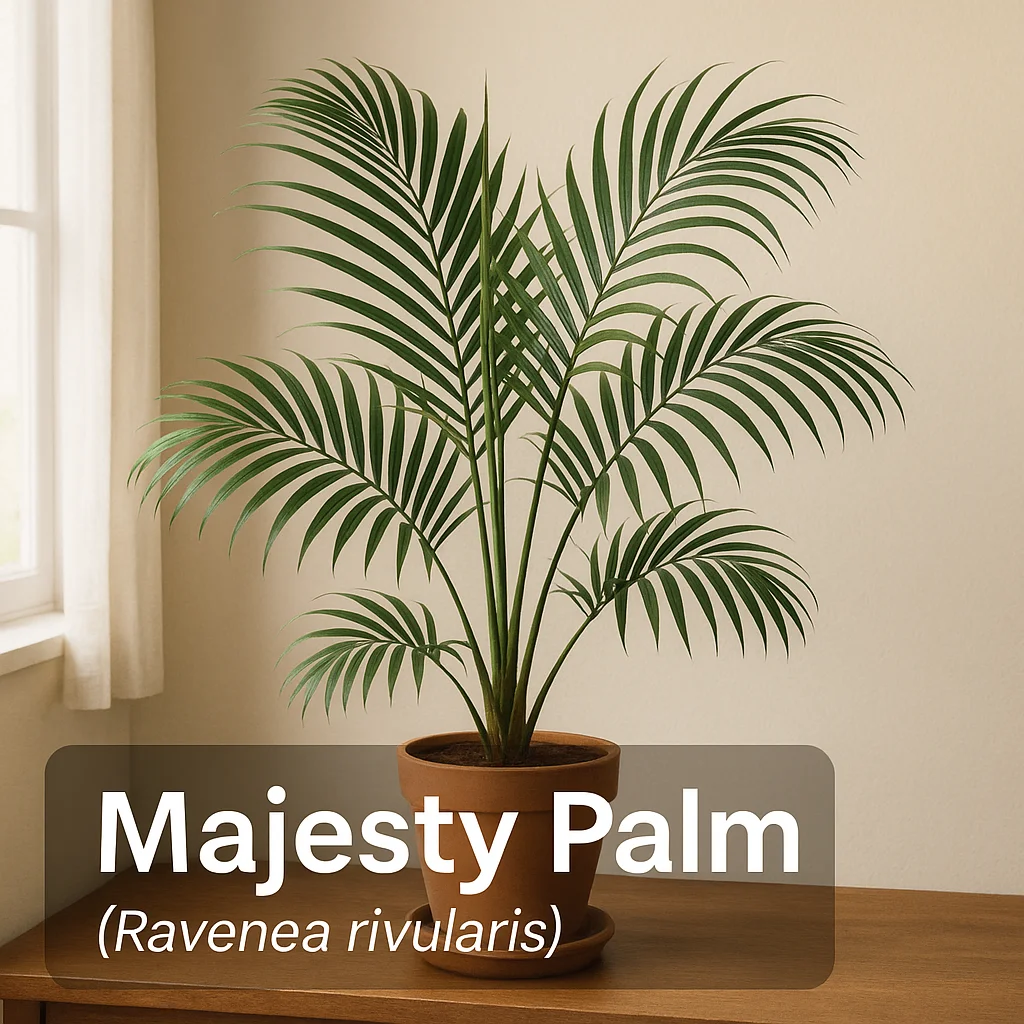
- Common names: Majesty Palm, Majestic Palm
- Scientific name: Ravenea rivularis
- Plant type: Palm, foliage
- Growth habit: Upright, tree-like
- Typical indoor size range: 3 to 8 feet in height, 3 to 5 feet in spread
- Growth speed: Moderate
- Lifespan: Can live many years with proper care
- Origin: Madagascar; riparian zones
- Light preference: Bright indirect to medium light
- Water needs: Moderate; prefers consistent moisture
- Temperature & humidity preference: Warm temperatures; high humidity
- Pet safety: May be irritating to pets if ingested
- Difficulty: Medium
🔍 Identification & Look-Alikes
Recognizing a Majesty Palm involves observing its distinct foliage and structure. The leaves are long, arching, and feather-like, typical of palms, with a rich green color that can brighten any indoor setting. The plant usually lacks a trunk but may develop a pseudo-trunk over time as old leaf bases compact.
This palm is most commonly grown for its foliage, as it rarely flowers indoors. In terms of look-alikes, the Majesty Palm can sometimes be confused with other indoor palms such as the Areca Palm or Kentia Palm. Differentiating them involves noting the Majesty Palm's more substantial upright growth and thicker leaves.
- Feather-like fronds, long and arching
- Pseudo-trunk that forms over time
- Rich green leaf color without variegation
- Typically lacks blooms indoors
- Commonly mistaken for Areca or Kentia Palms
- More robust and upright compared to similar palms
🌍 Origin & Natural Habitat
The Majesty Palm is native to the island of Madagascar, where it grows along riverbanks and in other riparian zones. Its natural habitat is characterized by high humidity, rich soil, and plenty of indirect light. In the wild, these palms are often found in regions that experience seasonal rains, contributing to their love for consistent moisture.
Understanding the natural habitat of the Majesty Palm can greatly aid in providing proper indoor care. Simulating conditions of warmth, indirect sunlight, and moderate humidity will help this plant thrive. Knowing that it comes from a region with distinct wet and dry seasons can also inform watering routines indoors.
☀️ Light Requirements
Majesty Palms prefer bright, indirect light. They thrive near east- or north-facing windows where they receive ample light without direct sun, which can scorch their leaves. If a Majesty Palm receives too little light, it might grow slowly or produce leggy, weak fronds. Conversely, overexposure to direct sun can cause browning and leaf burn.
If placing near a south- or west-facing window, use sheer curtains to filter the sunlight. A healthy Majesty Palm will have vibrant green leaves and a steady growth rate.
- Prefers bright, indirect light
- Avoid direct sunlight to prevent leaf burn
- East or north windows are ideal
- Sheer curtain can help diffuse strong sunlight
- Grow lights can supplement in low light areas
- Watch for slow growth as a sign of insufficient light
💧 Watering & Humidity
The Majesty Palm enjoys a consistent watering routine. It prefers the soil to remain slightly moist but not waterlogged. Allow the top inch of soil to dry out between waterings. Larger pots may require less frequent watering than smaller ones. Be cautious of overwatering, as stagnant water can lead to root rot.
This plant appreciates high humidity levels, similar to its native habitat. If the air in your home is dry, consider misting your plant or placing it near a humidifier. Signs of insufficient humidity include browning leaf tips or edges.
- Let the top inch of soil dry out before watering
- Avoid water sitting in the saucer; ensure drainage
- Adjust watering based on pot size and season
- Misting can help increase humidity
- Watch for browning tips as a sign of dry air
- Humidity trays or room humidifiers can assist
🐛 Soil, Pot & Repotting
The right soil for a Majesty Palm should be well-draining yet moisture-retentive. A mix of potting soil with perlite or sand is often ideal. When choosing a pot, ensure it has adequate drainage holes to prevent water accumulation.
Repot the plant every couple of years or when you notice roots growing through drainage holes or wrapping around the pot. During repotting, select a pot that is only slightly larger than the current one to prevent excessive soil moisture.
- Use a well-draining mixture with perlite or sand
- Ensure pots have drainage holes
- Repot every 2–3 years or as the plant outgrows its pot
- Watch for roots emerging from drainage holes
- Only go up one pot size during repotting
- Gently loosen root ball when repotting
🌡️ Temperature, Airflow & Seasonal Care
Majesty Palms prefer temperatures between 65-85°F (18-29°C), mimicking their native warm climate. They should be kept away from cold drafts and sudden temperature fluctuations, which can stress the plant.
During winter, the growth of the Majesty Palm slows down, requiring less water. Ensure good airflow around the plant to prevent pest infestations and promote healthy growth.
- Ideal temperatures: 65-85°F (18-29°C)
- Avoid placing near drafts or vents
- In winter, reduce watering frequency
- Ensure proper air circulation
- Monitor for temperature swings
- Position away from direct heater or AC ducts
🌸 Flowers, Fruit & Growth Cycle
While the Majesty Palm does not typically flower indoors, it continues to produce new fronds throughout the year. The growth rate can slow but remains steady with optimal care. Pruning should be minimal, confined to removing dead or damaged fronds to maintain aesthetics and health.
Indoors, the palm is generally grown solely for its elegant foliage rather than flowers or fruit, which are rarely produced in home environments.
🧬 Propagation & Reproduction
Propagation of Majesty Palms is primarily done through seeds, as it does not readily produce offsets or pups like some other palm varieties. This process can be challenging and time-consuming for home growers and is not typically attempted outside of nurseries.
Its propagation is considered difficult for casual indoor gardeners due to the long germination period and specific environmental needs required for seedling growth.
- Propagation mainly through seeds
- Offsets or pups do not typically form
- Germination can take several months
- Requires consistent warmth and humidity for seeds
- Often propagated commercially by growers
🌿 Common Problems, Pests & Prevention
The Majesty Palm can face several indoor challenges, such as yellowing leaves from overwatering, brown tips from low humidity, and pests like spider mites and mealybugs. Regularly wiping leaves and maintaining stable conditions helps prevent issues.
Avoid leaving the plant in standing water and ensure it is receiving proper light to reduce stress and infestation risks. Quarantining new plants before introducing them helps keep infestations at bay.
- Regular leaf cleaning helps prevent pests
- Spot yellowing from overwatering
- Ensure stable temperature and humidity
- Check for spider mites and mealybugs
- Use sticky traps for fungus gnats
- Isolate new plants temporarily
🐾 Pet & Home Safety Notes
The Majesty Palm is generally considered pet-friendly and non-toxic to both pets and humans. However, it might cause mild irritation if ingested in large quantities. It is always best to place plants out of reach of curious pets and children.
If accidental ingestion occurs, it is advisable to contact a veterinarian or local poison control center for guidance.
🏡 Styling Ideas & Best Room Placement
The Majesty Palm's tropical flair makes it ideal for living rooms, office spaces, or bathrooms where there is enough light and humidity. A large floor pot complements the palm's size and gently arches its fronds, creating a focal point.
Pair it with plants like the Peace Lily or Pothos to enhance a jungle vibe. Its clean, upright structure means it can accent entryways or brighten dull corners effectively.
📌 Summary
- ID: Feather-like, rich green fronds
- Origin: Native to Madagascar's riparian zones
- Light: Prefers bright, indirect light
- Watering: Keep soil slightly moist; high humidity
- Soil: Well-draining mix; repot as needed
- Temperature: Thrives at 65-85°F (18-29°C)
- Propagation: Mainly by seed; challenging
- Issues: Yellow leaves, brown tips, spider mites
- Difficulty: Medium; moderate care needs
- Safety: Generally pet-friendly; mild irritation possible