🌱 Norfolk Island Pine (Araucaria heterophylla)
🧾 Quick Facts
The Norfolk Island Pine, known scientifically as Araucaria heterophylla, is a popular indoor plant often mistaken for a true pine. Despite its name, it is not actually a pine tree, yet its evergreen nature and symmetrical beauty make it a cherished houseplant. Here are some quick facts:
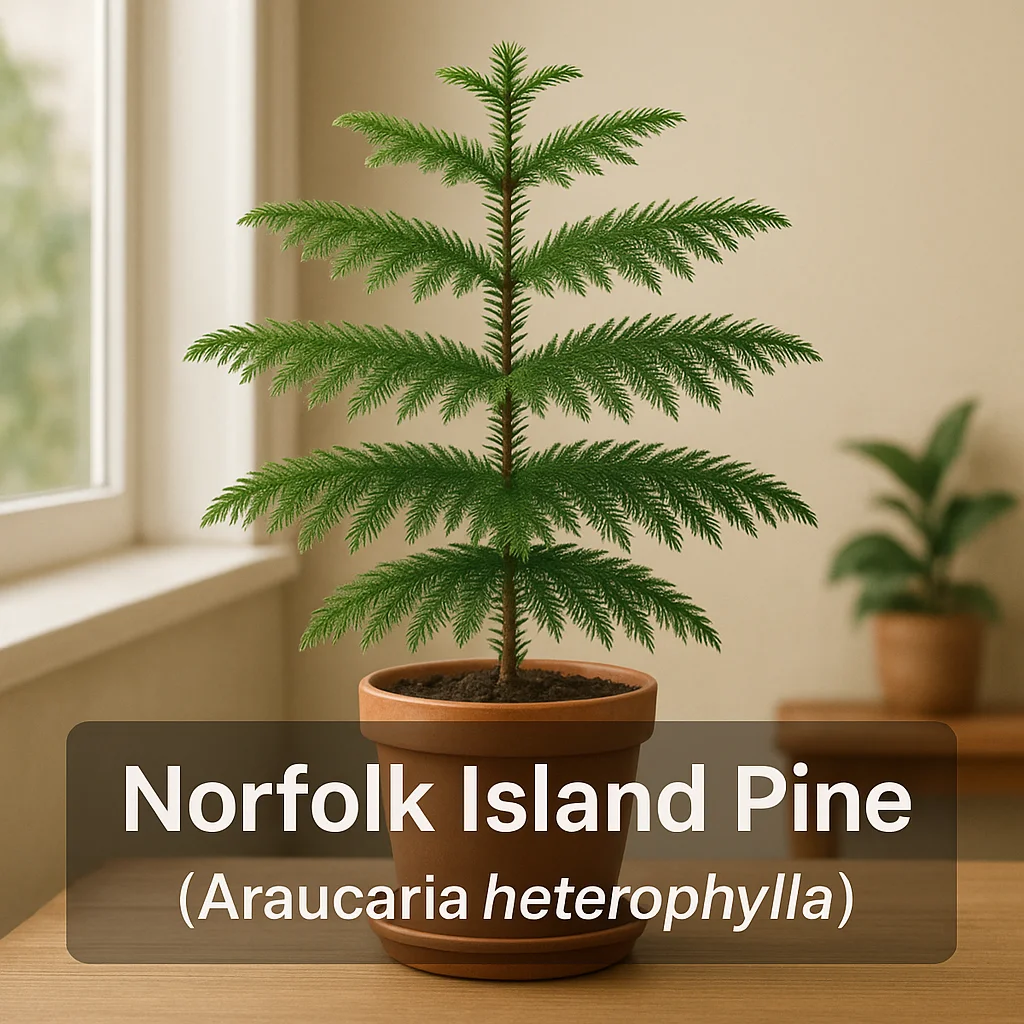
- Common Names: Norfolk Island Pine, Star Pine, Triangle Tree
- Scientific Name: Araucaria heterophylla
- Plant Type: Foliage
- Growth Habit: Upright, symmetrical
- Typical Indoor Size: 3 to 10 feet tall and 2 to 4 feet wide
- Growth Speed: Slow to moderate
- Lifespan: Can live many years with care
- Origin: Norfolk Island, Pacific Ocean
- Light Preference: Bright indirect light
- Water Needs: Moderate; prefers some drying out between waterings
- Temperature & Humidity Preference: Prefers moderate temperatures; enjoys humidity
- Pet Safety: May be irritating to pets if ingested
- Difficulty: Medium
🔍 Identification & Look-Alikes
The Norfolk Island Pine has a distinct appearance, characterized by its soft, dark green needles arranged in symmetrical tiers. Its branches grow in a tiered, whorled pattern around the central trunk, forming a beautifully conical shape typical of classic Christmas trees.
Although mostly grown for its foliage and symmetrical structure, it’s important to know the common look-alikes. One such look-alike is the Cook Pine (Araucaria columnaris), which is more columnar and less tiered. The Norfolk Island Pine’s needles are soft to touch, unlike the sharper needles of true pines.
- Top ID Tips:
- Soft, green needles that are not sharp
- Symmetrical, conical shape
- Branch arrangement in horizontal tiers
- Central trunk with peelable bark
- No significant seasonal color change
- Commonly mistaken for Cook Pine
- Does not produce cones indoors
- Thrives with moderate care indoors
🌍 Origin & Natural Habitat
The Norfolk Island Pine is native to Norfolk Island in the Pacific Ocean. It naturally grows in coastal environments with consistent humidity and mild temperatures. In its native habitat, the tree can grow up to 200 feet tall, thriving in the rich volcanic soils of the island.
Understanding its natural origin helps indoor gardeners provide the right care. The Norfolk Island Pine is accustomed to mild, humid conditions, suggesting the need for regular humidity boosts and stable indoor temperatures. Avoid exposing it to extreme cold or dry conditions.
☀️ Light Requirements
The Norfolk Island Pine thrives in bright, indirect light. It is best to place it near an east-facing window, where it can receive morning sunlight, or near a north-facing window with consistent dappled light. Avoid placing it directly under harsh, midday sun, which can scorch its delicate needles.
Inadequate light can result in sparse foliage and elongated branches, while too much direct sunlight may cause browning at the tips of the needles.
- Light Checklist:
- Bright, indirect light is ideal
- Avoid harsh midday sun exposure
- Watch for yellowing if light is too low
- Rotate the plant regularly to promote even growth
- Consider supplemental lighting in low light areas
- Monitor needle color for light-related issues
💧 Watering & Humidity
Water the Norfolk Island Pine deeply until the excess drains from the pot, allowing it to dry out slightly before the next watering. Overwatering can lead to root rot, while underwatering may cause needle drop.
Humidity is crucial for this plant. To maintain suitable humidity levels, consider using a humidity tray or a humidifier, especially during dry winter months. Misting can also help, but avoid drenching the needles.
- Watering Tips:
- Use a soak-and-drain method
- Allow the top inch of soil to dry out
- Adjust watering frequency with seasonal changes
- Maintain humidity with trays or humidifiers
- Mist, but do not drench the needles
- Watch for yellowing as a sign of overwatering
🐛 Soil, Pot & Repotting
The Norfolk Island Pine prefers a well-draining potting mix that retains just enough moisture without becoming soggy. A general-purpose mix with added sand or perlite works well. Choose pots with good drainage holes to prevent water from accumulating.
Repotting is typically needed every 2-3 years or when roots become bound. Opt for a pot only slightly larger each repotting to avoid water sitting in the soil. During repotting, gently tease out any encircled roots and refill with fresh soil.
- Repotting Checklist:
- Use well-draining potting mix
- Select a pot with drainage holes
- Repot every 2-3 years
- Choose a pot slightly larger than the root ball
- Gently loosen any bound roots
- Avoid root disturbance unless necessary
🌡️ Temperature, Airflow & Seasonal Care
The Norfolk Island Pine prefers temperatures ranging from 60 to 75°F (15 to 24°C). Protect it from drafty windows and sudden temperature changes. Avoid placing it near heating or cooling vents.
During winter, reduce watering since growth slows and the plant may partially enter dormancy. Ensure it still receives adequate light and humidity to prevent stress.
- Seasonal Notes:
- Maintain temperatures of 60-75°F
- Keep away from drafts and vents
- Adjust watering during winter dormancy
- Ensure ongoing humidity through the year
- Monitor for signs of cold stress or frost damage
🌸 Flowers, Fruit & Growth Cycle
Norfolk Island Pines rarely flower indoors and are primarily cultivated for their elegant foliage. When grown outdoors in suitable climates, they may produce small, inconspicuous flowers. Indoor plants generally do not bear fruit or cones.
These plants exhibit an upright, steady growth pattern. New growth occurs at the top of the plant, resulting in a gradually elongating central shaft. Pruning is not commonly needed beyond removing dead or yellowing branches. If pruning is necessary for shaping, it should be done minimally to avoid disrupting the plant's natural balance.
🧬 Propagation & Reproduction
Propagation of Norfolk Island Pine via cuttings is difficult and not typically successful for home growers, but propagation can be attempted through seeds, though it is a slow process. If seeds are available, sow them in a well-draining mix and maintain stable moisture and warmth.
- Propagation Tips:
- Consider seed propagation for best results
- Use well-draining transplanting medium
- Maintain humidity around seedlings
- Provide ample light for propagation success
🌿 Common Problems, Pests & Prevention
Common issues with the Norfolk Island Pine include yellow or brown leaf tips, often due to improper watering or low humidity. Leggy growth may indicate inadequate light levels. Maintain stable care and avoid letting the soil completely dry out.
Pests such as spider mites and mealybugs can be problematic. Prevent infestations by regularly inspecting and cleaning leaves. Stable indoor conditions and adequate airflow also help in minimizing pest issues.
- Prevention Basics:
- Inspect leaves regularly for pests
- Maintain consistent care practices
- Regularly clean and dust leaves
- Ensure adequate humidity levels
- Avoid overwatering and soggy soil
- Isolate new plants before introducing them
🐾 Pet & Home Safety Notes
While some sources list Norfolk Island Pines as mildly irritating to pets, cases of severe poisoning are not common. All parts of the plant should be kept out of reach from pets as a precaution.
If ingestion is suspected, it's advisable to contact a professional or local poison control resources. Always supervise pets around houseplants and implement barriers or placement strategies if necessary.
🏡 Styling Ideas & Best Room Placement
Norfolk Island Pines are versatile in home styling. Their symmetrical form makes them great focal points for living rooms, offices, or conservatories. They thrive in humid spaces like bathrooms if there's adequate light.
Pair them with other humidity-loving houseplants like ferns and peace lilies to create a lush, indoor environment. Floor pots or large shelves are ideal placements, providing ample room for growth.
📌 Summary
- Recognized by its symmetrical, tiered branching and soft needles
- Native to Norfolk Island; prefers bright, indirect light
- Intermediate watering needs; allow soil to partially dry
- Well-draining soil and pots with drainage holes recommended
- Stable temperature and humidity are crucial
- Difficult to propagate via cuttings; seed propagation is possible
- Common pest issues include spider mites and mealybugs
- Medium difficulty: requires attentive light and humidity management
- Considered mildly irritating to pets; handle with care
- Ideal for focal placement in humid, well-lit rooms