🌱 Olive Tree (Olea europaea)
🧾 Quick Facts
The Olive Tree, scientifically known as Olea europaea, is a beloved houseplant that brings a touch of the Mediterranean to indoor spaces. Known for its distinctive silvery-green leaves and cultural significance, the olive tree can thrive indoors with proper care. Here are some quick facts to get started:
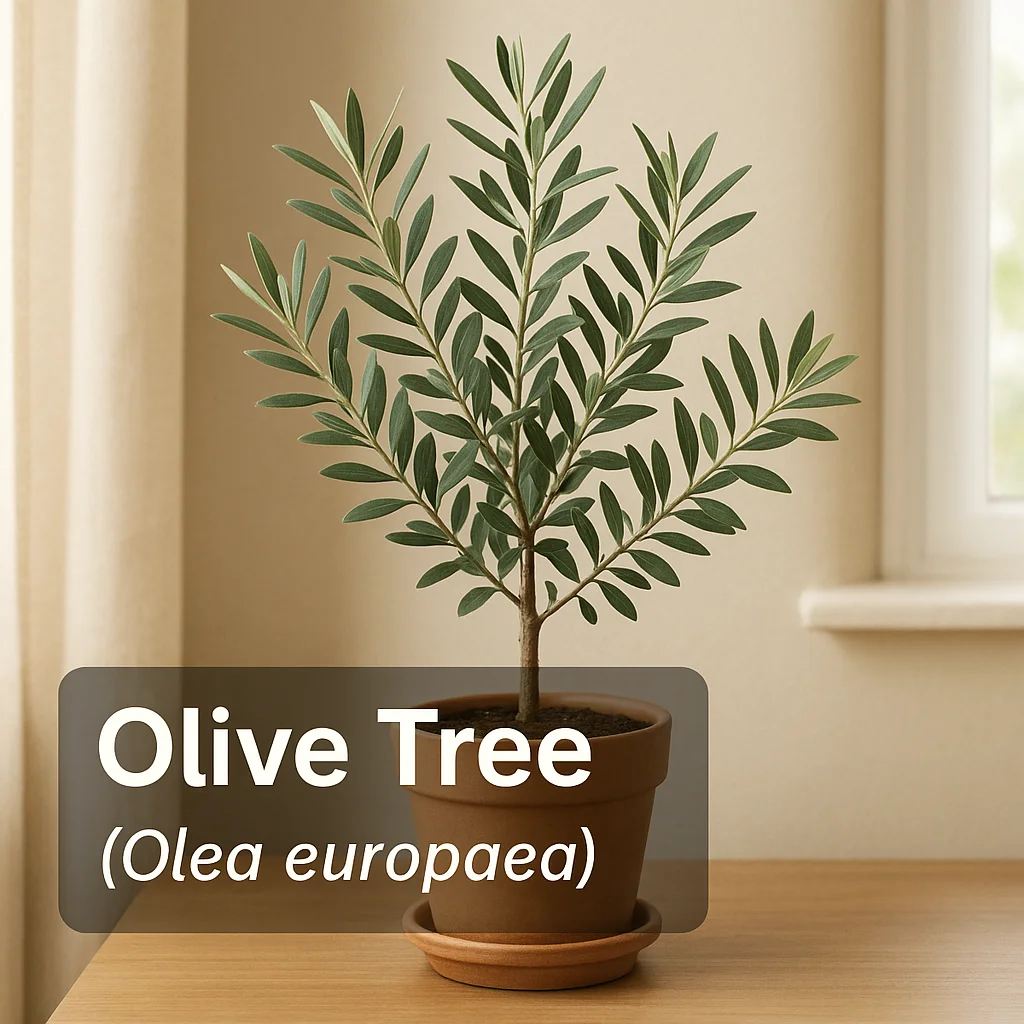
- Common Names: Olive Tree, European Olive
- Scientific Name: Olea europaea
- Plant Type: Foliage/Flowering
- Growth Habit: Shrub-like, Upright
- Typical Indoor Size: 4-6 feet in height, 2-3 feet in spread
- Growth Speed: Moderate
- Lifespan: Can live many years with proper care
- Origin: Mediterranean Basin
- Light Preference: Bright indirect light, tolerates some direct sun
- Water Needs: Moderate, prefers to dry out slightly between watering
- Temperature & Humidity Preference: Prefers warmer temperatures; average indoor humidity is generally sufficient
- Pet Safety: Some parts may be irritating/toxic to pets
- Difficulty: Medium
🔍 Identification & Look-Alikes
Identifying an Olive Tree involves observing its characteristic features such as:
- Leaf Shape & Texture: The leaves of the Olive Tree are narrow, elongated, and have a silvery-green color with a leathery texture.
- Stem Structure: Olive Trees have a woody stem with a rough bark as they mature.
- Color and Variegation: They typically exhibit uniform coloration, with little to no variegation but a distinguished silvery sheen.
- Flowers: While they can flower indoors, it's mainly grown for its foliage. Small, white-yellowish flowers may appear in optimal conditions.
- Common Look-Alikes: It might be mistaken for the Bay Tree (Laurus nobilis) due to similar leaf appearance. Look for the leaf shape and sheen to differentiate.
- Top ID Tips:
- Narrow, elongated leaves
- Silvery-green coloration
- Woody stem with rough bark
- Potential for small, white-yellowish flowers
- Distinctive leathery leaf texture
- Often mistaken for Bay Tree due to leaf shape
🌍 Origin & Natural Habitat
Olive Trees originate from the Mediterranean Basin, thriving in regions characterized by warm temperatures and dry climates. They often grow in rocky, well-drained soils and are accustomed to the intense sunlight found in their native habitat. Knowing that Olive Trees are drought-resistant and sun-loving helps in providing ideal care indoors by simulating these conditions with bright indirect light and allowing soil to dry between waterings.
☀️ Light Requirements
Indoors, Olive Trees thrive best in bright, indirect light, ideally near a south or west-facing window where it can receive a few hours of direct sunlight daily. Bright indirect light involves areas that receive filtered light, such as near sheer-curtained windows. Adequate light affects the plant's growth, maintaining healthy and vibrant leaves. Under low light, leaves may lose vibrancy, whereas excessive direct sun can scorch them.
- Light Checklist:
- Place near south/west-facing window
- Ensure a few hours of direct sunlight
- Avoid overly shaded areas
- Look for vibrant, silvery foliage as a light indicator
- Monitor for leaf scorch from excessive direct sun
- Aim for consistent lighting across seasons
💧 Watering & Humidity
Water the Olive Tree using a soak-and-drain method, allowing the top inch of soil to dry out before rewatering. Pot size affects watering frequency—smaller pots dry out faster. Consider reduced watering during fall and winter when growth slows. Olive Trees are not high-humidity plants, typically functioning well in average home humidity levels. Signs of overwatering include yellowing leaves, while underwatering may cause leaf drop and wilting.
- Watering Tips:
- Use soak-and-drain method
- Dry top inch of soil before rewatering
- Adjust watering based on pot size and season
- Avoid standing water in the saucer
- Average home humidity is suitable
- Watch for yellowing due to overwatering
🐛 Soil, Pot & Repotting
For Olive Trees, use a well-draining potting mix, preferably one that includes sand or perlite to replicate their native rocky soil conditions. Opt for pots with drainage holes and consider terracotta pots for better moisture management. Repot when the plant becomes rootbound, signs being slowed growth or water running straight through. When repotting, choose a pot only slightly larger than the current one to avoid excessive soil retention.
- Repotting Checklist:
- Use well-draining, sandy potting mix
- Select pots with drainage holes
- Consider terracotta for breathability
- Repot when growth slows or roots bind
- Choose pots slightly larger for repotting
- Avoid compacted, non-aerated soils
🌡️ Temperature, Airflow & Seasonal Care
The Olive Tree prefers temperatures between 60-75°F (15-24°C). Avoid placing near drafts, AC/heater vents, or windows with sudden temperature changes. Expect slower growth during winter, requiring less watering as dormancy sets in. Increase airflow with fans, but avoid direct draft paths to prevent stress.
- Seasonal Notes:
- Comfortable at 60-75°F (15-24°C)
- Avoid drafty locations
- Decrease watering in winter
- Use fans for gentle airflow
- Expect reduced growth in cooler months
- Monitor for temperature swings near windows
🌸 Flowers, Fruit & Growth Cycle
While Olive Trees may bear small flowers indoors, fruiting is uncommon due to pollination and light conditions. Flowering typically occurs in spring with very small, white blooms. Olive Trees develop new leaves gradually, with pruning best done minimally to maintain structure and remove any dead or damaged growth. Pruning encourages bushier growth and improves air circulation within the foliage.
🧬 Propagation & Reproduction
Propagation of Olive Trees is commonly done via stem cuttings taken in late spring or early summer. Select healthy, semi-hardwood cuttings and place them in a well-draining soil mix with consistent moisture. Propagation can be challenging due to slow rooting, but it's achievable with humidity maintenance and patience. Seed propagation is less common and highly time-consuming.
- Propagation Tips:
- Use semi-hardwood stem cuttings
- Take cuttings in late spring/early summer
- Maintain moisture without waterlogging
- Expect slow rooting process
- Consider using rooting hormone for encouragement
- Propagate in well-draining, airy soil
🌿 Common Problems, Pests & Prevention
Common issues with Olive Trees include yellowing leaves (often from overwatering), brown tips (low humidity or salt build-up), drooping (underwatering), leaf drop (sudden environmental changes), and leggy growth (insufficient light). Pests such as spider mites, mealybugs, and scale may occasionally affect Olive Trees. To prevent problems, practice good hygiene by cleaning leaves, maintaining consistent care, and ensuring adequate airflow without overwatering.
- Prevention Basics:
- Observe for early signs of pests like scales or mealybugs
- Maintain consistent moisture without overwatering
- Position in stable, bright environments
- Regularly clean and inspect leaves
- Provide adequate yet gentle airflow
- Avoid abrupt environmental changes
🐾 Pet & Home Safety Notes
The Olive Tree may have components that are irritating to pets and humans if ingested. It is advised to place the plant out of reach of pets and children. In cases of ingestion, it's prudent to contact a professional or local poison control resources for guidance. Practicing safety measures such as using barriers or training can help reduce the risk of accidental contact.
🏡 Styling Ideas & Best Room Placement
The Olive Tree is a versatile addition to various indoor settings such as living rooms, offices, or sunrooms. Due to its preference for bright light, a spot near a window is ideal. Floor pots are best suited for medium-sized trees, while smaller plants can find a home on shelves. Pair with succulents or Mediterranean-style plants for a cohesive display.
📌 Summary
- Olive Tree (Olea europaea) is a valued indoor shrub-like plant.
- Originates from the Mediterranean Basin, favoring bright, indirect light.
- Water when the top inch of soil is dry; reduce watering in winter.
- Prefers 60-75°F (15-24°C); be cautious of temperature swings.
- Propagation often through stem cuttings; requires patience for rooting.
- Watch for common pests like spider mites and maintain cleanliness.
- Parts may irritate pets if ingested, so positioning is crucial.
- Styling options include floor pots in bright rooms, pair with other Mediterranean plants.
- Difficulty level: medium, with some consideration towards optimal light and temperature conditions.