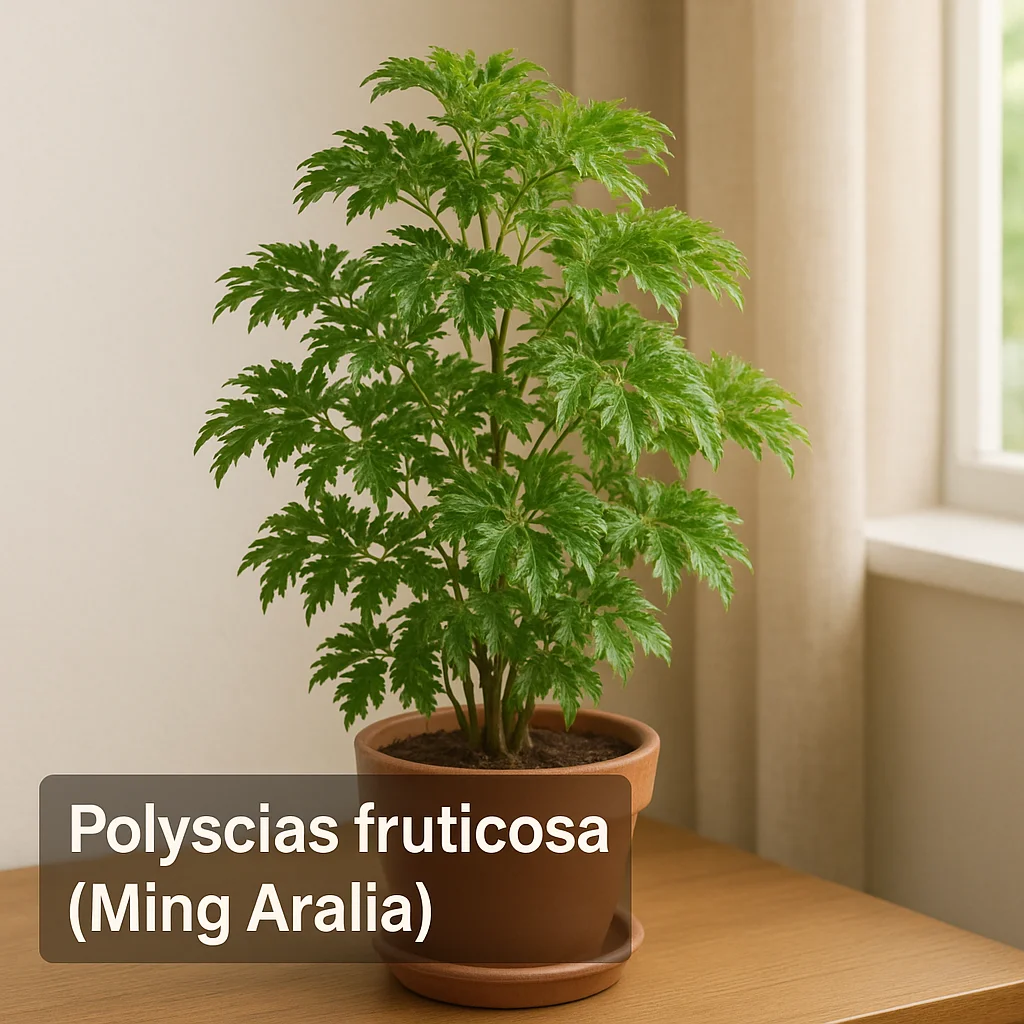
🌱 Polyscias fruticosa (Ming Aralia)
🧾 Quick Facts
The Ming Aralia, known botanically as Polyscias fruticosa, is an elegant houseplant cherished for its lush, intricate foliage. Originating from Southeast Asia, this plant is a delightful addition to any indoor space. Below are some essential facts to get you acquainted with this sophisticated species.
- Common Names: Ming Aralia, Polyscias Bonsai
- Scientific Name: Polyscias fruticosa
- Plant Type: Foliage
- Growth Habit: Upright, shrub-like
- Typical Indoor Size Range: 3 to 6 feet tall
- Growth Speed: Slow
- Lifespan: Can live many years with care
- Origin: Native to Southeast Asia
- Light Preference: Bright indirect light
- Water Needs: Moderate; prefers to dry slightly between waterings
- Temperature & Humidity Preference: Prefers warm temperatures and high humidity
- Pet Safety: May be irritating/toxic to pets
- Difficulty: Medium
🔍 Identification & Look-Alikes
The Ming Aralia is easily identifiable by its finely divided, fern-like leaves arranged in a lush, dense form. The leaves are glossy and typically dark green, occasionally exhibiting lighter green variegations. The plant's stems are woody, even at a young age, and contribute to its bonsai-like appearance.
While primarily grown for foliage, the Ming Aralia rarely flowers when cultivated indoors. Its closest look-alikes in a houseplant collection might be other Polyscias varieties. However, Ming Aralia can be distinguished by its distinct lacey leaf margins and upright growth habit.
- Narrow, finely cut leaves with a glossy surface
- Woody stems that support upright growth
- Dense, lush foliage often in a dark green color
- Rarely blooms indoors; primarily foliage interest
- Often resembles a bonsai due to smaller leaf size and overall form
- Distinguish from other polyscias by its more delicate leaf texture
🌍 Origin & Natural Habitat
Ming Aralia is native to the warm, humid regions of Southeast Asia, thriving particularly in the understory of tropical forests. In its natural habitat, it grows in filtered light with consistent access to moisture and humidity. Understanding its native environment helps us mimic these conditions indoors, maintaining its vibrance and foliage density.
☀️ Light Requirements
Ming Aralia thrives in bright indirect light. Situate it near a window that receives diffused sunlight or provide artificial light if natural sources are limited. Direct sunlight can scorch its delicate leaves, while too little light reduces leaf production and encourages leggy growth. If leaves fade in color or drop, reassess the lighting situation.
- Place near north or east-facing windows for optimal light
- Bright indirect light defined as a soft shadow form with hands
- Leaf fading or drop may signal lack of light
- Rotate plant periodically for even growth
- Direct sunlight can cause leaf scorch
- Supplement with grow lights if necessary
- Monitor for leggy growth as a sign of inadequate light
💧 Watering & Humidity
A moderate watering schedule suits the Ming Aralia, where the top inch of its soil dries out before the next watering. Ensure excess water drains completely to prevent root rot, adapting watering frequency with seasonal changes. Due to its native tropical habitat, high humidity is beneficial, which can be enhanced through misting or using a humidity tray.
- Allow top inch of soil to dry out between waterings
- Ensure pot has drainage holes to avoid waterlogging
- Increased watering needs during active growth periods
- High humidity appreciated; mist or use a humidity tray
- Underwatering signs include drooping leaves
- Leaf yellowing may indicate overwatering
- Adjust watering to account for seasonal changes
🐛 Soil, Pot & Repotting
Use a well-draining potting mix that holds some moisture. A mix formulated for tropical plants or a blend of peat, pine bark, and perlite works well. Choose a pot with adequate drainage holes to prevent water accumulation. Repotting should be done every 2-3 years or when the plant becomes root-bound, moving to a pot just one size larger to support gradual growth.
- Use well-draining soil with moisture retention
- Choose pots with adequate drainage holes
- Repot every 2-3 years or when root bound
- Increase pot size incrementally
- Trim damaged roots before replanting
- Water thoroughly after repotting to settle the soil
🌡️ Temperature, Airflow & Seasonal Care
Ming Aralia prefers temperatures between 65°F and 85°F and dislikes drafts or sudden temperature changes. During cooler months, its growth slows, and watering needs decrease accordingly. Avoid placing near heaters or AC vents, as this can dry out the plant's leaves and reduce humidity.
- Maintain indoor temperatures between 65°F and 85°F
- Avoid cold drafts and sudden temperature shifts
- Reduce watering in the winter months
- Keep away from heating and cooling vents
- Ideal locations are stable temperature zones
- Monitor for slowed growth as natural dormancy
🌸 Flowers, Fruit & Growth Cycle
Indoors, the Ming Aralia rarely flowers, focusing energy primarily on foliage growth. Its natural growth pattern produces woody stems and dense foliage. Pruning may be done to maintain shape and remove dead or damaged leaves. Regular pruning encourages a fuller form and healthier growth.
🧬 Propagation & Reproduction
Propagation of Ming Aralia is commonly achieved through stem cuttings. Take cuttings from healthy and mature stems, and root them in water or directly into soil. Use rooting hormone if desired to increase success rates. As propagation can be challenging, patience and careful attention to cutting conditions are necessary for success.
- Collect stem cuttings from healthy mature plants
- Root cuttings in water or directly in soil
- Use rooting hormone to enhance root growth
- Keep cuttings in a warm, humid environment
- Be patient; rooting can take several weeks
- Transfer to soil when substantial roots have formed
🌿 Common Problems, Pests & Prevention
Ming Aralia is susceptible to yellowing leaves, brown leaf tips, and occasional leaf drop due to improper watering or inadequate lighting. Common pests include spider mites and scale insects. Address issues through consistent care, prompt isolation of infested plants, and leaf cleaning.
- Ensure stable light and watering to prevent yellowing
- Watch for brown tips from dry or drafty conditions
- Look out for pests like spider mites and scale
- Regularly clean leaves to remove dust and deter pests
- Isolate infested plants to prevent spreading
- Maintain consistent environmental conditions
🐾 Pet & Home Safety Notes
Ming Aralia may be irritating or toxic if ingested by pets. It's advised to place the plant out of reach or use barriers to prevent access by pets and children. If ingestion occurs, contacting a professional or local poison control is recommended for guidance.
🏡 Styling Ideas & Best Room Placement
Ming Aralia is a stunning choice for living rooms and offices, providing a touch of tropical elegance. Its upright growth makes it suitable for floor placement, where it can be paired with low-growing plants. Ensure it is placed where it receives adequate light but remains away from cold drafts or hot vents.
📌 Summary
- Identified by its lacey, fern-like leaves and upright growth
- Native to Southeast Asia's tropical forests
- Prefers bright indirect light for best growth
- Moderate watering; let top inch of soil dry
- Requirments: well-draining, moisture-retentive soil
- Maintain consistent temperatures and avoid drafts
- Propagation by stem cuttings, although challenging
- Common pests: spider mites, scale
- Medium difficulty level with potential pet safety concerns
- Ideal for adding a serene, tropical feel to bright indoor areas