🌱 Ponytail Palm (Beaucarnea recurvata) (트리형으로도 분류)
🧾 Quick Facts
The Ponytail Palm, despite its name, is not a true palm. Known for its unique appearance featuring a bulbous base and cascading leaves, it is widely popular as an indoor plant. Let's explore some quick facts about this intriguing plant.
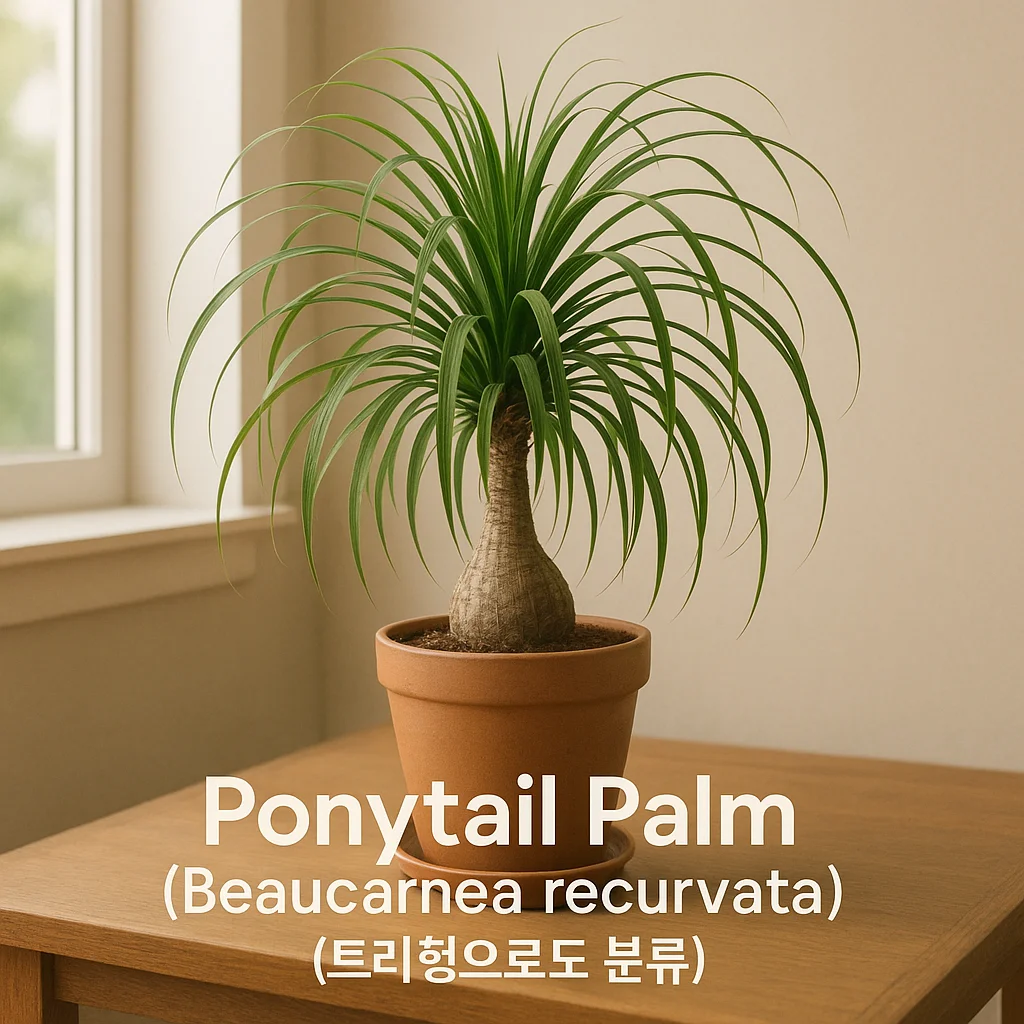
- Common names: Ponytail Palm, Elephant Foot Tree
- Scientific name: Beaucarnea recurvata
- Plant type: Succulent
- Growth habit: Upright, tree-like
- Typical indoor size range: 2-4 feet in height, 1-2 feet in spread
- Growth speed: Slow
- Lifespan: Can live many years with care
- Origin: Eastern Mexico, semi-desert regions
- Light preference: Bright indirect light
- Water needs: Low, allow soil to dry between waterings
- Temperature & humidity preference: Prefers warm, dry conditions
- Pet safety: May be irritating to pets
- Difficulty: Easy
🔍 Identification & Look-Alikes
The Ponytail Palm is characterized by its sturdy trunk with a bulbous base that stores water, and long, thin, arching leaves that resemble a ponytail. The leaves are leathery, dark green, and tend to curl at the ends. This plant is grown primarily for its ornamental foliage rather than flowers, which are rare indoors. Common look-alikes include the Sago Palm and other small tree-like succulents. What distinguishes the Ponytail Palm is its distinctive base and leaf texture.
- Bulbous base resembling an elephant's foot
- Long, thin, arched leaves resembling a ponytail
- Dark green, leathery leaves
- Rarely blooms indoors
- Distinct from Sago Palm by smoother trunk
- Water stored in the trunk base
- Thin leaves with curly ends
- More drought-tolerant than true palms
- Does not spread through runners or offsets
- Firm, upright growth habit
🌍 Origin & Natural Habitat
The Ponytail Palm is native to the semi-desert regions of Eastern Mexico. It thrives in areas of low rainfall and high temperatures, often found growing on rocky, well-drained terrain. Understanding its natural habitat highlights its resilience to dry conditions and preference for bright, indirect light. These characteristics guide indoor care: minimal watering and a sunny spot enhance its well-being, mimicking its wild environment.
☀️ Light Requirements
For optimal growth, place the Ponytail Palm in a location that receives bright, indirect light. A south or west-facing window is ideal. While it can tolerate lower light conditions, growth may slow, and leaves may lose their vibrant color. Signs of insufficient light include lean growth and leaf stretching. Conversely, too much direct sun can scorch the leaves, causing brown tips.
- Preferably in bright, indirect light
- South or west-facing window ideal
- Can tolerate some direct sunlight
- Avoid deep shade to prevent leggy growth
- Monitor for leaf scorch and adjust lighting
- Use sheer curtains to diffuse harsh rays
- Rotate pot regularly for even light exposure
- Consistency in lighting to encourage lush growth
- Leaf vibrancy diminishes with too little light
- Observe plant's response and place accordingly
💧 Watering & Humidity
The Ponytail Palm thrives on a soak-and-dry watering approach. Allow the top inch of its soil to dry before watering thoroughly, ensuring excess drains away. Pot size, season, and indoor climate influence watering frequency; smaller pots dry faster. Though it tolerates low humidity, avoid overly damp environments. Clear overwatering signs include a soggy base and wilted leaves, while dryness manifests as curled leaves and browning tips.
- Avoid frequent watering; let soil dry
- Soak soil thoroughly, letting excess drain
- Less water needed in winter or low light
- Adjust watering based on pot size and room climate
- Avoid misting; low humidity suits it fine
- Ensure drainage to prevent root rot
- Symptoms of overwatering: mushy base
- If underwatered, leaves brown and curl
- Use rainwater or distilled water for best results
- Check soil before re-watering
🐛 Soil, Pot & Repotting
Choose a well-draining soil mix, ideally cactus or succulent mix, for the Ponytail Palm. Pot in a container with drainage holes and consider terracotta for added breathability. Repot infrequently; every 2-3 years or when visibly rootbound. Signs to repot include restricted growth and quick-drying soil. During repotting, gently massage roots and use a slightly larger pot. Avoid burying the bulbous trunk base to prevent rot.
- Cactus or succulent mix recommended
- Ensure pot has drainage holes
- Terracotta pots assist in drying soil
- Repot every 2-3 years
- Repot when roots crowd the pot
- Gently massage roots when repotting
- Choose a pot only slightly larger
- Plant top remains exposed slightly above soil
- Avoid deep pots as roots are shallow
- Be cautious to keep base above soil
🌡️ Temperature, Airflow & Seasonal Care
The Ponytail Palm prefers temperatures ranging from 65-80°F. Protect it from cold drafts, sudden chills, or direct AC vents. It may rest during cooler months, requiring less watering. In winter, provide indirect lighting and moderate warmth to prevent dormancy. Stable conditions year-round result in a healthier plant, minimizing seasonal stress.
- Comfortable between 65-80°F
- Avoid cold drafts and sudden chills
- Reset temperatures in cooler months
- Reduce watering during winter rest
- Keep away from direct heater or AC vents
- Maintains lush growth in stable climates
- Adjust watering as seasons change
- Consistent warmth and light prevent dormancy
- Moderate airflow helps prevent fungal growth
🌸 Flowers, Fruit & Growth Cycle
Ponytail Palms rarely flower indoors due to the confined space and conditions. In their natural habitat, they produce small white panicles of flowers. Instead, admire its maintenance-free foliage growth. New leaves sprout from the center and may need light hygiene pruning to maintain shape. Note its compact form which makes it easy to maintain.
🧬 Propagation & Reproduction
Propagation is challenging, often limited to seeds or pups (offsets) which may be rare indoors. If offsets form, allow them to grow a moderate size before detaching. Use caution with propagation as damage or failure is possible for home growers. Overall, the plant's slow-growing single stem makes regular propagation rarely necessary.
- Propagation often challenging
- Possible through seed or non-frequents offsets
- Sever offsets gently with a clean tool
- Allow seeds or offsets to root in sandy mix
- Little need for routine propagation
- Patience needed for successful rooting
- Rarely produces offsets indoors
- Consult experienced growers if attempting
- Protect parent plant's health during propagation
🌿 Common Problems, Pests & Prevention
The Ponytail Palm faces common issues like yellow leaves, brown tips, and sparse growth. Susceptible to over or underwatering, it benefits from a stable environment. Pests like spider mites and mealybugs occur but can be managed with cleaning. Quarantine new plants to prevent pest outbreaks, and maintain a clean surface free of dust to minimize issues.
- Check for yellowing leaves
- Manage any detected brown leaf tips
- Pest prevention: Spider mites and mealybugs
- Increase airflow for healthy leaves
- Quarantine new plants before joining others
- Maintain stable care to prevent stress
- Check watering techniques if plant droops
- Improve humidity only if leaves curl excessively
- Inspect and clean leaves regularly
- Address growth issues: adjust light or water
🐾 Pet & Home Safety Notes
While Ponytail Palms are not known to be highly toxic, some sources suggest its leaves might irritate pets if ingested. To ensure safety, place the plant out of reach of curious pets or children. If ingestion occurs, consult a professional or contact local poison control resources for guidance. Keeping the environment secure is a proactive best practice.
🏡 Styling Ideas & Best Room Placement
The Ponytail Palm's striking silhouette makes it a focal point in the home. Ideal placements include sunny spots in living rooms or offices where its quirky shape stands out. It fares well in moderately humid environments such as kitchens or bathrooms and pairs well with other succulents or cacti for a tropical feel. Choose glazed ceramic or decorative pots for visual flair.
📌 Summary
- Easily identified by its bulbous base and curling green leaves
- Native to Mexico's semi-desert areas, echoing indoor care needs
- Prefers bright, indirect light; adaptable yet light-sensitive
- Minimal water needs, with a soak and dry cycle
- Thrives in well-draining, cactus-mix soil; infrequent repotting
- Comfortable in temperatures between 65-80°F; limited dormancy
- Propagation is challenging; leaning more on patience
- Monitor for pests like spider mites and ensure stable conditions
- Considered generally non-toxic but handle with care
- Mixes aesthetically with similar succulent varieties