🌱 Schefflera arboricola (Umbrella Plant)
🧾 Quick Facts
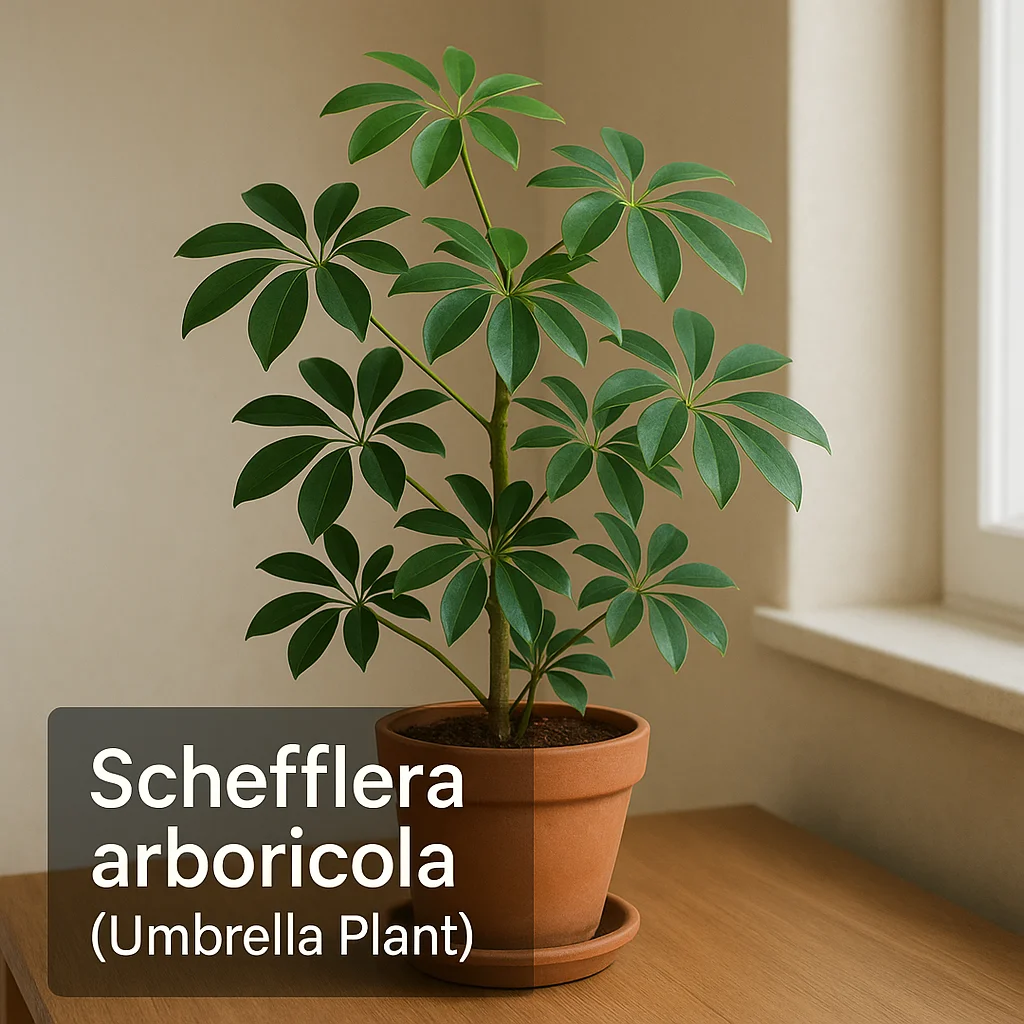
The Schefflera arboricola, commonly referred to as the Umbrella Plant, is a popular houseplant known for its distinctive foliage and easy-going nature. Loved for its lush and tropical appearance, it is often seen gracing homes and offices, adding a touch of greenery to indoor spaces.
- Common names: Umbrella Plant, Dwarf Umbrella Tree
- Scientific name: Schefflera arboricola
- Plant type: Foliage
- Growth habit: Shrub-like
- Typical indoor size range: 3-6 feet tall, 2-3 feet wide
- Growth speed: Moderate
- Lifespan: Can live many years with proper care
- Origin: Taiwan and Hainan Province, China
- Light preference: Bright indirect light
- Water needs: Moderate; likes to dry out slightly between waterings
- Temperature & humidity preference: Warm temperatures and moderate humidity
- Pet safety: May be irritating/toxic to pets
- Difficulty: Easy
🔍 Identification & Look-Alikes
Recognizing the Schefflera arboricola is relatively straightforward due to its unique foliage and overall structure. The leaves are typically glossy, green, and arranged in an umbrella-like pattern. Each leaf is compound, meaning it consists of several smaller leaflets radiating from a central point. The stems are sturdy and support the shrub's bushy growth.
Light conditions can influence the color patterns, with some cultivars displaying variegated or yellowish-green leaves under bright indirect light. While it may produce small blooms in ideal outdoor conditions, it is mainly grown for its attractive leaves indoors.
Common look-alikes include the larger Schefflera actinophylla, which differs primarily in size and leaf structure.
- Top ID Tips:
- Glossy, green, umbrella-shaped leaflets
- Sturdy, shrub-like stems
- Variegated patterns in bright light
- Compound leaves with multiple leaflets
- Typically grown for foliage, not blooms
- Can confuse with larger Schefflera species
🌍 Origin & Natural Habitat
Schefflera arboricola is native to Taiwan and the Hainan province of China. In its natural habitat, it grows as part of the forest understory, thriving in the warm, humid conditions found there. This tropical environment shapes its preferences for warm temperatures and moderate humidity in indoor settings.
Understanding its origin can aid in creating similar conditions indoors, such as providing bright indirect light and maintaining consistent humidity levels.
☀️ Light Requirements
The Umbrella Plant thrives in bright indirect light but can tolerate medium light conditions. Ideally, place it near an east or west-facing window. Bright indirect light is similar to the light filtered through sheer curtains or reflected off walls. Light intensity can affect its appearance; strong light may enhance variegation, whereas too little light can lead to leggy growth.
Signs of inadequate light include pale or dropping leaves, while too much direct sunlight can cause leaf scorching.
- Light Checklist:
- Prefers bright indirect light
- Tolerates medium light
- Can cause variegation with more light
- Leaf scorch in direct sun
- Leggy growth from low light
- Place near east/west windows
- Monitor light changes seasonally
💧 Watering & Humidity
Schefflera arboricola prefers a soak-and-drain watering method. Water thoroughly until it drains out the bottom of the pot, then allow the soil to dry slightly before the next watering. The frequency will vary with the season and light levels, generally more in the growing season and less in winter.
Moderate humidity is ideal, though it's forgiving of typical indoor ranges. Increase humidity with pebble trays or humidifiers if needed. Overwatering leads to root rot and yellowing leaves, while underwatering causes drooping and dry leaf tips.
- Watering Tips:
- Water when the top inch of soil is dry
- Use soak-and-drain method
- Adjust frequency with light/seasons
- Beware of overwatering signs (yellow leaves)
- Raise humidity moderately if needed
- Adjust watering depending on pot size
- Watch for drooping (underwatering)
🐛 Soil, Pot & Repotting
An airy, well-draining soil mix is crucial for the Umbrella Plant. A typical potting mix can be enhanced with perlite or pine bark for better drainage. Ensure the pot has drainage holes to prevent water accumulation. Terracotta pots are beneficial for their porous nature, promoting soil aeration.
Repot when growth slows or if roots appear at the pot's surface or through drainage holes. Repot in spring, moving to a pot only slightly larger than the current one to avoid excessive soil that retains moisture.
- Repotting Checklist:
- Use airy, well-draining soil
- Add perlite for drainage
- Choose pots with drainage holes
- Consider terracotta for better aeration
- Repot when rootbound or growth slows
- Move to slightly larger pot
- Repot in spring for best results
- Avoid over-potting; retains moisture
🌡️ Temperature, Airflow & Seasonal Care
The Schefflera arboricola thrives in temperatures ranging from 65°F to 75°F (18°C to 24°C). It does not tolerate cold drafts, so keep it away from air conditioners and heaters. Sudden temperature changes should be avoided to prevent stress.
In colder months, growth may slow; reduce watering accordingly and maintain stable temperatures. Keep airflow moderate to prevent stagnant air conditions.
- Seasonal Notes:
- Ideal temperature: 65-75°F (18-24°C)
- Avoid sudden temperature changes
- Keep away from cold drafts
- Adjust watering in winter
- Maintain moderate airflow
- Handle with care during seasonal transitions
- Allow slower growth in cold months
🌸 Flowers, Fruit & Growth Cycle
While the Schefflera arboricola can produce flowers and fruit in the wild, it is unlikely to flower indoors. Its growth pattern involves the continuous sprouting of new leaves from the ends of branches, contributing to its bushy appearance.
Pruning can help maintain desired shape and encourage bushier growth. Use clean, sharp pruning tools and remove no more than 20% of the plant at once to avoid stressing it.
🧬 Propagation & Reproduction
Propagation is commonly done through stem cuttings, taken during the growing season. Use a sterilized knife to cut below a node and place the cutting in water or a moist soil mix until roots develop. Patience is key, as root growth may take several weeks.
Though less common, propagation by seeds is possible but challenging due to the difficulty of obtaining viable seeds.
- Propagation Tips:
- Best done with stem cuttings
- Take cuttings in the growing season
- Use a sterilized knife for cutting
- Root in water or moist soil mix
- Be patient; rooting takes weeks
- Seed propagation is rare for amateurs
🌿 Common Problems, Pests & Prevention
The Umbrella Plant can experience issues like yellow leaves, brown tips, and drooping, often related to watering mistakes or inadequate light. Pests such as spider mites, mealybugs, and scale can occasionally affect it.
Prevent problems by regularly cleaning leaves, ensuring stable indoor conditions, and checking for pests. Avoiding overwatering and ensuring good airflow can keep it healthy.
- Prevention Basics:
- Regular leaf cleaning
- Address yellow leaves promptly
- Avoid overwatering; check drainage
- Monitor humidity; adapt as needed
- Keep away from air vents
- Inspect frequently for pests
- Ensure consistent care
🐾 Pet & Home Safety Notes
The leaves of Schefflera arboricola contain compounds that may irritate pets or children if ingested. Prevent this by placing the plant out of reach. If ingestion is suspected, contact a professional or local poison control for advice.
Strategy and prevention are key, not panic. Using barriers or training can help protect curious pets and children.
🏡 Styling Ideas & Best Room Placement
With its lush greenery, the Umbrella Plant is an excellent choice for living rooms or offices, where it can enjoy bright indirect light. In lower humidity areas, consider placing it in kitchens or bathrooms. Its adaptability allows it to fit both floor pots and plant shelves.
Pair it with other tropical houseplants like pothos or peace lilies for a varied display. Its upright growth habit complements trailing and bushier plants.
📌 Summary
- ID highlights: Glossy, umbrella-shaped leaflets
- Native to Taiwan and Hainan; thrives in humid conditions
- Prefers bright indirect light; avoid direct sun
- Water using soak-and-drain; allow the soil to dry slightly
- Use well-draining soil, repot when rootbound
- Best in temperatures between 65-75°F
- Easily propagated via stem cuttings
- Watch for yellow leaves and common pests
- Easy-care, but may irritate pets
- Perfect for enlivening living rooms, offices