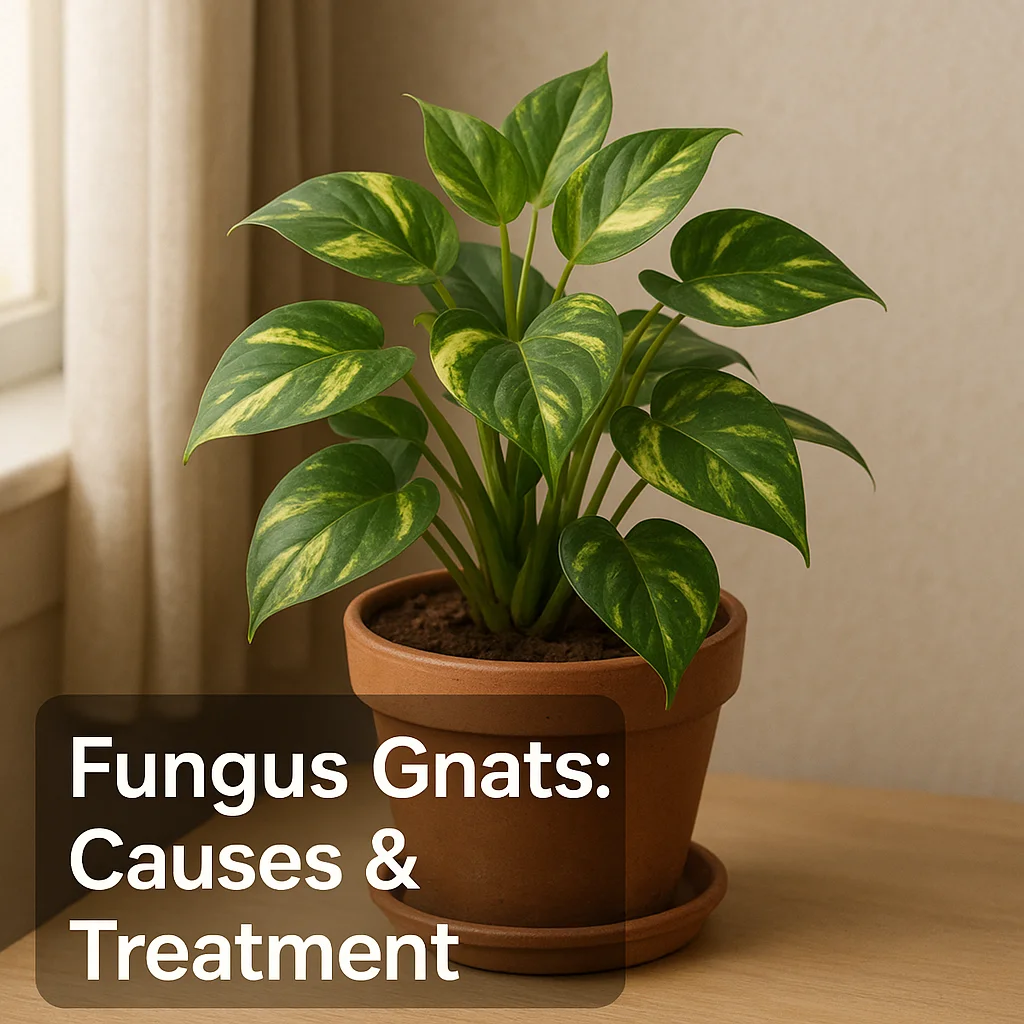
🌱 Fungus Gnats: Causes & Treatment
🧾 Quick Facts
Fungus gnats are tiny flying insects commonly found around houseplants. While they pose minimal risk to healthy plants, their larvae can cause damage to seedlings or young plants. It's crucial to understand their lifecycle and how to effectively manage them indoors.
- Common Names: Fungus gnats, soil gnats
- Scientific Name: Varies / commonly associated with families like Sciaridae
- Plant Type: Not a plant, but a common plant pest
- Growth Habit: Larvae live in soil; adults fly
- Typical Indoor Size Range: Adults are about 1/16 to 1/8 inch long
- Growth Speed: Fast; rapid lifecycle
- Lifespan: Approximately 4 weeks; varies by environmental conditions
- Origin: Cosmopolitan; found worldwide
- Light Preference: No specific plant light preference but attracted to light
- Water Needs: Thrive in moist environments; waterlogged soil
- Temperature & Humidity Preference: Prefer warm and humid conditions
- Pet Safety: Non-toxic to pets, but seek professional advice if ingestion of insect traps occurs
- Difficulty: Easy to moderate to manage with proper care
🔍 Identification & Look-Alikes
Fungus gnats are small, mosquito-resembling flies with long legs and antennae. They are distinguishable by their erratic flying behavior near plants. Their larvae are typically found in the top layer of moist soil.
- Adults have slender bodies and clear wings
- Attracted to light sources; often seen flying near windows
- Larvae are small, transparent, and worm-like with a black head
- Often confused with fruit flies, but generally smaller and found near soil
- Not to be confused with thrips which are generally more harmful
- Top ID Tips:
- Observe flying activity around soil surfaces
- Check soil for small, worm-like larvae
- Confirm attraction to moist soils and organic debris
- Distinguish from adult fruit flies by size and behavior
- Note any plant damage, particularly in seedlings
🌍 Origin & Natural Habitat
Fungus gnats are found worldwide and are especially prevalent in humid and wet environments where organic matter is abundant. They prefer the upper soil layers where decomposing organic material is present, as it provides a suitable habitat for their larvae.
Understanding their natural habitat helps in managing indoor humidity levels and avoiding overwatering, thus reducing the likelihood of infestation.
☀️ Light Requirements
Fungus gnats themselves are not plants but are attracted to bright light conditions. They are often seen hovering around windows or light fixtures indoors, especially those near potted plants.
- Ensure bright indirect light for houseplants to promote healthy growth
- Avoid placing plants in areas where fungus gnats are commonly seen swarming near windows
- Bright, indirect light cues may help attract gnats to sticky traps
- Maintain appropriate lighting for plants to prevent stress and vulnerability
- Regularly clean windowsills to minimize potential habitats for gnats
- Light Checklist:
- Observe gnat activity near indoor light sources
- Adjust plant placement to minimize infestation risks
- Use sticky traps near bright light to trap gnats
- Review light levels to ensure suitable plant health
- Clean regularly to disrupt gnat environments
💧 Watering & Humidity
Fungus gnats thrive in moist environments, making it important to manage watering and humidity levels effectively. Allow the topsoil to dry out before re-watering to disrupt the lifecycle of gnats.
- Use a soak-and-drain watering method
- Ensure pots have drainage holes to prevent excess moisture
- Water less frequently in low light or cooler seasons
- Raise humidity safely with plant groupings or pebble trays
- Watch for signs of overwatering, such as persistent moisture
- Watering Tips:
- Allow 1-2 inches of topsoil to dry between waterings
- Monitor soil conditions regularly
- Avoid letting pots sit in water
- Adjust watering frequency based on light and temperature
- Consider bottom watering to reduce topsoil moisture
🐛 Soil, Pot & Repotting
Proper soil management and pot selection are crucial in managing fungus gnats. Use well-draining, airy soil mixtures to reduce the moisture retention that gnats prefer.
- Choose pots with adequate drainage
- Avoid heavy, moisture-retentive soil mixes
- Repot if soil remains waterlogged or compact
- Consider adding sand or perlite to improve drainage
- Be gentle during repotting to avoid root damage
- Repotting Checklist:
- Check for gnats or larvae in existing soil
- Ensure new pots are clean and free of pests
- Opt for a slightly larger pot if needed
- Loosely fill pots with fresh, pest-free soil
- Inspect roots for signs of damage or pests
🌡️ Temperature, Airflow & Seasonal Care
Fungus gnats prefer warm, humid climates but can survive in typical indoor temperatures ranging from 65°F to 75°F. Ensure proper ventilation to reduce stagnant air, preventing conditions that favor gnats.
- Maintain airflow with fans or open windows
- Avoid positioning plants near vents that cause temperature fluctuations
- Recognize that slower plant growth in winter requires less frequent watering
- Consider reducing humidity during cooler seasons
- Be mindful of temperature spikes near heating sources
- Seasonal Notes:
- Monitor household temperature and humidity year-round
- Facilitate air circulation to deter gnats
- Adjust care routines for seasonal changes
- Use barriers to block drafts or intense heat from appliances
- Plan to increase monitoring and maintenance during spring/summer
🌸 Flowers, Fruit & Growth Cycle
Fungus gnats do not produce flowers or fruits. Their lifecycle includes egg, larva, pupa, and adult stages, with the entire cycle completing in approximately four weeks under optimal conditions.
- Focus on managing the larval stage to prevent future generations
- Understand that warmer temperatures lead to faster lifecycle progression
- Rely on integrated management approaches for effective control
- Know that adult gnats live only for about one week
- Fishing for gnats with homemade traps may reduce their numbers
🧬 Propagation & Reproduction
Due to fungus gnats being a pest, propagation does not apply. Instead, focus on controlling reproduction by targeting larvae in the soil and managing mature populations with traps and environmental adjustments.
- Utilize soil management to create unsuitable conditions for larvae
- Monitor for reoccurrence after initial treatments
- Consider insecticidal soap if natural measures prove insufficient
- Administer sticky traps to capture adults
- Regularly replace or refresh mechanical traps
- Propagation Tips:
- Prevent eggs from hatching by managing soil moisture
- Disturb soil regularly to expose larvae to the surface
- Monitor adjacent plants to prevent spread
- Limit organic matter buildup in soil
- Adopt a sustainable routine to minimize techniques reliance
🌿 Common Problems, Pests & Prevention
Fungus gnats can introduce issues like stunted growth by harming seedling roots but rarely cause serious harm to mature plants. Managing water levels and soil health are key to prevention.
- Observe for yellow leaves which could indicate root damage
- Address brown tips by considering moisture adjustments
- Treat leaf drop occurrences by reviewing environmental factors
- Prevent leggy growth by ensuring enough light
- Prevention Basics:
- Quarantine new plants
- Regularly clean leaf surfaces
- Ensure consistent care routines
- Improve indoor airflow
- Reduce excess watering
🐾 Pet & Home Safety Notes
Fungus gnats are non-toxic to pets and children, although plant-loving pets may find sticky traps appealing, leading to minor irritation if contacted. In the case of ingestion, contact professional resources or poison control.
- Place traps out of reach from curious pets
- Use barriers or elevated plant stands
- Train pets to avoid plant areas
- Encourage spacious, reinforced spaces for plant collections
- Contact a professional if any unusual symptoms appear
🏡 Styling Ideas & Best Room Placement
To prevent fungus gnats, strategically place houseplants in locations beneficial to their growth but disadvantageous to these pests.
- Utilize bathrooms or kitchens if humidity needs balance
- Incorporate hanging baskets away from potential gnat habitats
- Use shelves to protect plants from pet interference
- Pair with plants like succulents to discourage gnat prevalence
- Consider living rooms for optimal light
📌 Summary
- ID highlights: small flying insects, often in moist soil
- Origin: worldwide in humid environments
- Light: bright indirect light attracts gnats
- Water: manage moisture to deter gnats
- Soil/repotting: well-drained soil essential
- Temperature: indoor standard range suitable
- Propagation: control reproduction, no plant propagation
- Common issues: manage water, airflow
- Difficulty: moderate, with proper care techniques
- Key cautions: aware of pest interventions and non-toxic implications