🌱 Signs of Underwatering + Recovery Steps
🧾 Quick Facts
Understanding the signs of underwatering and how to recover your plant is crucial for maintaining healthy indoor greenery. Various houseplants have different indicators of moisture stress, which can guide you in adjusting your care regime.
- Common names: Varies by plant type
- Scientific name: Varies / commonly listed as
- Plant type: Foliage, flowering, succulent, cactus, fern, vine
- Growth habit: Upright, trailing, climbing, rosette, shrub-like
- Typical indoor size range: 1–6 feet (height/spread)
- Growth speed: Slow to moderate, varies by species
- Lifespan: Can live many years with proper care
- Origin: Varied (tropics, desert, temperate regions)
- Light preference: Low to bright indirect; some direct sunlight tolerance
- Water needs: Low to high, depending on type; usually prefers dry-out between waterings
- Temperature & humidity preference: Moderate; some require higher humidity
- Pet safety: May be irritating/toxic to pets, varies by species
- Difficulty: Easy to medium care level
🔍 Identification & Look-Alikes
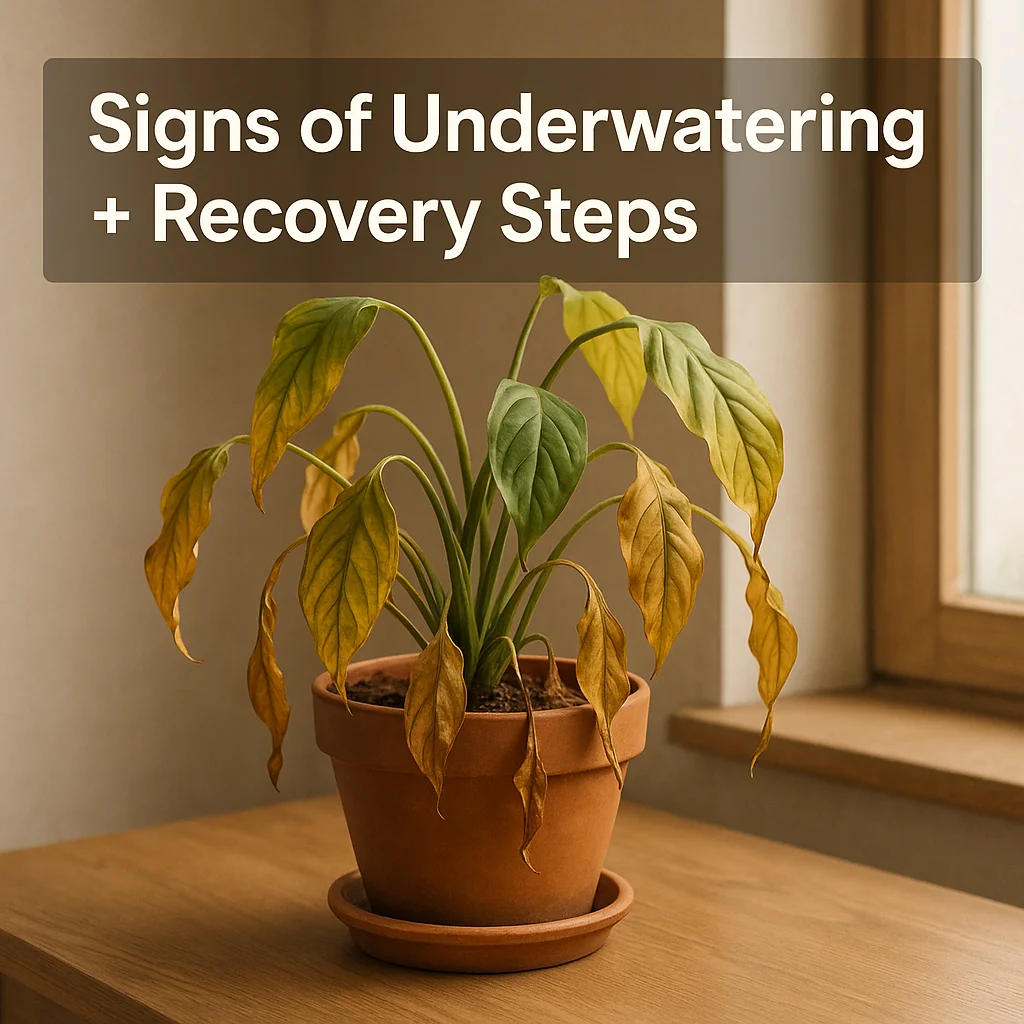
Signs of underwatering can manifest differently across plant types. Common signs include wilting, dry soil and leaves, and browning edges. Succulents and cacti may appear shriveled or have wrinkled leaves, while ferns and softer-leaved plants could wilt and have crisp edges. The overall look of an underwatered plant is usually droopy and lacking turgidity.
- Wilting or drooping leaves or stems
- Crisp, brown leaf edges
- Dry, compacted soil
- Younger leaves may not unfurl properly
- Shriveled appearance in succulents and cacti
- Soil pulling away from the pot edges
- Brittle stems or leaves
- Color fading or dullness
- Growth slowdown or stunted new growth
- Secondary pests attracted to weakened plants
🌍 Origin & Natural Habitat
The natural habitat of a plant offers vital clues about its water preferences. Desert plants like cacti have evolved to withstand long dry spells followed by heavy rain, whereas tropical plants often deal with consistent moisture. Knowing this helps adjust indoor conditions to mimic natural cycles, ensuring optimal plant health.
Houseplants often come from regions like the tropics, deserts, or temperate zones. Understanding these environments, such as the forest understory or arid deserts, helps in predicting how often a plant may need water. Seasonal patterns, such as wet and dry seasons or cooler dormancy periods, guide irrigation adjustments.
☀️ Light Requirements
Depending on the plant, underwatering symptoms can be exacerbated by light conditions. Bright light speeds up soil drying, potentially leading to drought stress. Conversely, lower light can slow drying rates, sometimes masking underwatering signs until plants are severely stressed. Bright indirect light is optimal for most foliage plants, with some like succulents appreciating direct sunlight.
- Place near east or north-facing windows for moderate light
- Avoid south-facing windows unless filtered
- Check for sunburn signs if too much direct light
- Variegation may fade in too-low light
- Monitor shadow patterns when assessing 'bright indirect'
- Rotate plants to ensure even light distribution
- Supplement with artificial grow lights in low-light areas
- Signs of insufficient light include stretched or leggy growth
- Moves closer to windows in winter can provide better light
💧 Watering & Humidity
The key to preventing underwatering is establishing a watering rhythm that aligns with a plant’s natural driest moisture point. Indoor conditions and pot sizes impact water retention, where smaller pots dry faster. Some plants may prefer to dry out completely, while others like consistent moisture. Humidity levels should also be monitored, increasing as needed but always cautiously.
- Water deeply, then allow the top inch of soil to dry
- Adjust water frequency with seasonal changes
- Increase watering during growth periods, usually spring and summer
- Check soil moisture a few inches below for accuracy
- Ensure humidity is above 40% for tropical varieties
- Use saucers or trays to catch excess water, ensuring drainage
- Group plants to create micro-humid zones
- Utilize humidifiers or pebble trays for arid indoor climates
- Signs of underwatering: wilting, dry soil, brown edges
🐛 Soil, Pot & Repotting
A well-draining yet moisture-retentive soil mix is crucial to prevent underwatering stress. Pots must have drainage holes, with material choice offering different moisture dynamics; terracotta breathes better, while plastic retains moisture longer. Transplanting should occur when roots are compacted or when the current pot isn't retaining water evenly. Always be gentle, upsize slowly, and use fitting soil mixes to match plant needs.
- Choose soil that suits the plant’s moisture retention needs
- Pots with drainage holes prevent waterlogging
- Terracotta pots are ideal for plants preferring drier conditions
- Repot in spring as plant growth accelerates
- Look for roots circling the pot or emerging from drainage holes
- Choose a pot size only slightly larger than the current one
- Ensure fresh, nutrient-rich soil during repotting
- Use breathable mesh or rocks to cover drainage holes
- Repot if water runs straight through, indicating compacted soil
🌡️ Temperature, Airflow & Seasonal Care
Plants require stable temperature environments as both heat and drafts can exacerbate water loss. Ideal temperatures are generally between 60-75°F (15-24°C). Avoid placing plants near AC vents or heaters as rapid air movement can drastically dry out soil and leaves, signaling water stress. During colder months, reduce watering as growth slows, and monitor moisture closely to adjust care accordingly.
- Maintain consistent indoor temperatures year-round
- Avoid positioning near drafty areas or fluctuating climates
- Adjust watering rhythm with seasonal light changes
- Move sensitive plants away from cooling or heating sources
- Use fans gently to encourage airflow without drying plants out
- Consider light and temperature changes that occur with seasons
- Note dormancy can accommodate a decrease in care frequency
- Delicate plants may require additional insulation during cold snaps
🌸 Flowers, Fruit & Growth Cycle
While some plants flower indoors, many are primarily grown for their foliage. The ability to bloom largely depends on species, care, and sometimes age. Underwatered plants often struggle to maintain bloom cycles, leading to fewer or aborted flowers. Monitoring growth patterns, such as new leaf unfurling or runner development, helps indicate overall plant health and appropriate water requirements.
- Monitor seasonal flowering expectations; some bloom sporadically
- Fruit indoors is rare and often needs specific conditions
- Pruning should focus on removing dead or unnecessary growth
- Ensure tools are clean and sharp to prevent disease introduction
- Training plants supports stronger, more organized growth
- Healthy pruning encourages fuller, bushier plants
- Any flower spikes may motivate an increase in watering vigilance
🧬 Propagation & Reproduction
Propagation methods vary widely between species. Common techniques include stem cuttings, typically for trailing plants, and division for those with noticeable clumping. Begin with healthy parent plants to ensure successful propagation, taking extra care to not overwater or underwater new growth. Leaf cuttings work for succulents, while seed propagation is often tricky and less common for indoor growers.
- Stem cuttings: Cut below a node and root in water or soil
- Division: Separate clumps at the root and repot
- Offsets or pups: Carefully detach and plant when mature
- Leaf propagation: Primarily works for succulents
- Monitor moisture during initial propagation to avoid rot
- Use rooting hormone to encourage successful rooting
- Ensure bright indirect light to support new growth
🌿 Common Problems, Pests & Prevention
Underwatered plants present symptoms such as yellowing leaves or dried tips. They are also more susceptible to pests, including spider mites and mealybugs. Prevention includes a stable care routine that avoids extreme moisture swings. However, absent adequate airflow, stagnant conditions can promote other problems like mold or mildew.
- Monitor foliage health and adjust water accordingly
- Prevent pests with regular inspections and cleanings
- Encourage airflow without exposing plants to cold drafts
- Keep tools and pots clean to reduce disease risk
- Quarantine new or suspicious plants
- Avoid overuse of chemical treatments; try natural approaches
- Do not allow waterlogging; ensure pots have adequate drainage
🐾 Pet & Home Safety Notes
Some plants may be mildly toxic or irritating if consumed by pets or humans. It's essential to identify which plants in your home carry these risks, keeping them out of reach from curious pets or children. If ingestion is suspected, seek professional guidance or contact local poison control resources immediately.
- Place potentially harmful plants in inaccessible areas
- Educate family members on safe handling practices
- Consider using barriers or deterrent sprays as needed
- Research your specific plants to identify risk levels
- Integrate safe, non-toxic alternatives in high-traffic areas
🏡 Styling Ideas & Best Room Placement
Positioning in your home can significantly impact plant health and aesthetics. Bathrooms and kitchens, with their naturally higher humidity levels, are ideal for moisture-loving plants. For drier, sunnier spaces, consider succulents or cacti. Hanging baskets or moss poles can elevate sprawling species, while floor pots suit larger varieties.
- Use plant stands or shelves to add dimension
- Combine different textures and colors for dynamic displays
- Adjust room placement seasonally to optimize light
- Pair moisture-loving plants with similarly needy species
- Create focal points with larger pots in open spaces
📌 Summary
- Identify underwatering by wilting, dry leaves, and soil
- Consider plant origin for clues on care needs
- Optimal light and humidity are crucial for most plants
- Water deeply but allow necessary dry periods
- Use airy, well-composted soil mixes
- Repot based on root growth indicators
- Watch temperature and airflow to maintain health
- Experiment with propagation, but start small
- Underwatering can attract pests; inspect plants regularly
- Always consider potential safety hazards with pets