🌱 Spider Mites: Control & Humidity Tips
While spider mites aren't plants themselves, their presence can significantly impact how you care for your houseplants. These tiny arachnids often go unnoticed until the tell-tale signs of their infestation appear. In this guide, we'll explore how to identify and manage spider mites, as well as discuss optimal humidity levels to keep them at bay and prevent their proliferation.
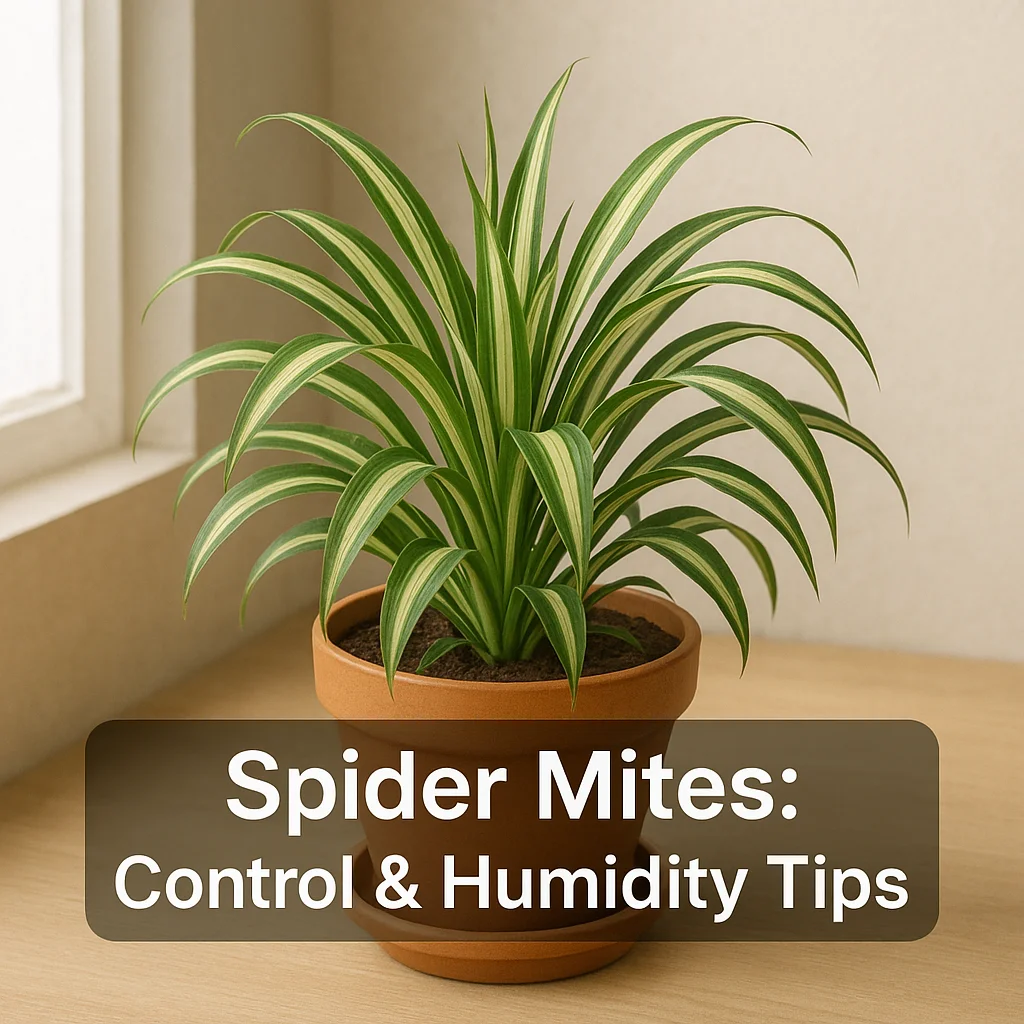
🧾 Quick Facts
- Common names: Spider Mites, Two-Spotted Mites, Red Spider Mites
- Scientific name: Varies; commonly associated with Tetranychus urticae
- Plant type affected: Wide variety, including foliage plants, succulents, flowering plants
- Growth habit: Typically not visible, but plants can appear stunted or unhealthy
- Typical indoor size range: N/A
- Growth speed: Rapid reproduction, can quickly infest new areas
- Origin: Varied; cosmopolitan species
- Light preference: Thrive in dry, warm conditions with ample light causing plant stress
- Water needs: Indirectly influenced; spider mites prefer dry environments
- Temperature & humidity preference: Prefer warm and low humidity
- Pet safety: Not directly toxic, but can cause plant distress
- Difficulty (in managing): Medium to advanced control measures needed
🔍 Identification & Look-Alikes
Spider mites are incredibly small, often less than 1mm in size, and can vary in color from red to brown. Their presence is usually noted by the signs they leave behind rather than visible identification. Look for light dots on leaves, webbing on plant joints, and a general unhealthy appearance in your plants.
These signs can sometimes be confused with other issues such as nutrient deficiencies or other pests. Inspect the plant closely; a magnifying glass can aid in identifying these tiny invaders.
- Very small size, often requiring a magnifying glass to identify
- Fine webbing, more visible when misted
- Leaves with stippled or dusty appearance
- Yellowing leaves and leaf drop
- General decline in plant health
- Commonly mistaken for nutrient deficiencies or other pests like thrips or aphids
🌍 Origin & Natural Habitat
Spider mites are ubiquitous, found across the globe in a range of environments. They are particularly prevalent in regions with warm climates. These mites typically thrive in dry, warm conditions and can be found on a variety of plant species both indoors and out.
Understanding their preference for dry, warm environments helps in adjusting indoor conditions to make your houseplants less hospitable to them. Maintaining higher humidity levels and ensuring your plants are not under stress are key preventive measures.
☀️ Light Requirements
While spider mites themselves do not require light, their proliferation is often connected to dry, stressed conditions that can accompany high light levels. Houseplants that are in bright conditions without enough humidity can create the right environment for spider mites to thrive.
If plants receive too little light, it can weaken them, making them more susceptible to pests like spider mites. Conversely, too much light without adequate humidity can also stress the plant.
- Place plants in bright, indirect light to maintain health
- Ensure adequate humidity levels if in high light environments
- Monitor for signs of stress, which can make plants susceptible
- Avoid direct, harsh sunlight on already stressed plants
- Adjust plant placement if spider mites are detected
- Use sheer curtains to diffuse excessive direct sunlight
- Prefer east or west-facing windows for mild morning or afternoon sun
- Rotate plants to ensure even light exposure
💧 Watering & Humidity
Without direct water needs, spider mites instead thrive in low humidity environments. For plants prone to spider mite infestations, maintaining higher humidity levels can be an effective deterrent. Regular misting, pebble trays, or humidifiers can raise humidity levels and help prevent spider mite colonization.
Over- or underwatering plants can stress them, making them more vulnerable to infestations. Maintain a consistent watering schedule that keeps the plant healthy without leaving the soil soggy.
- Regularly mist plants, especially in dry indoor climates
- Place plants on trays filled with pebbles and water
- Use a humidifier to maintain ideal conditions
- Water thoroughly but allow soil to dry slightly between watering
- Check pot size and adjust if plants are waterlogged or drying too quickly
- Avoid water directly lingering on leaves for too long to prevent fungal issues
- Ensure proper drainage to prevent root rot
- Look for signs of underwatering: drooping leaves, dry soil
- Recognize signs of overwatering: yellow leaves, soggy soil
🐛 Soil, Pot & Repotting
Spider mites do not affect soil directly; however, the plant's overall vigor is vital in resisting infestations. Choose a well-draining potting mix appropriate to the plant type, whether it’s moisture-retentive for foliage plants or very free-draining for succulents.
Ensure pots have adequate drainage holes and consider using terracotta pots that allow for moisture evaporation. Repot plants when they show signs of being rootbound, slowed growth, or if water drains too quickly.
- Select airy, well-draining soil mixes for most houseplants
- Ensure pots have adequate drainage holes
- Inspect roots annually or when growth slows
- Look for tell-tale signs like water running straight through or compacted soil
- Gently remove plants from pots to check root health
- Repot into slightly larger pots to accommodate growing roots
- Avoid shocking the plant by significantly upsizing pots
- Consider terracotta pots to enhance moisture management
🌡️ Temperature, Airflow & Seasonal Care
Spider mites thrive in warm, dry conditions, so maintaining stable temperatures and humidity can help prevent infestations. Aim for indoor temperatures between 65-80°F (18-27°C) for most houseplants. Avoid drafts from air conditioners and heaters, which can change humidity and temperature environments drastically.
During winter, indoor heating can lower humidity levels, making plants more susceptible to spider mites. Consider adjusting watering schedules and increasing humidity during these periods.
- Maintain temperature stability, avoiding extremes
- Increase humidity during dry, heated winters
- Monitor plants closely while indoor climate varies seasonally
- Ensure good air circulation to reduce stagnant air pockets
- Avoid placing plants directly in the path of heating or cooling vents
- Adjust care routines seasonally; reduce watering during slower growth periods
- Keep consistent placement to prevent environmental shock
- Be aware of natural light shifts with changing seasons
🌸 Flowers, Fruit & Growth Cycle
As arachnids, spider mites don’t have a growth cycle similar to plants. They can reproduce rapidly with female mites laying hundreds of eggs over weeks. This fast cycle can make infestations hard to control once established.
For the affected houseplants, maintaining regular pruning and health checks can identify and manage infestations early. General plant vigor can help resist mite damage, preventing stunted growth or other visible decline.
- Regularly examine new growth for signs of stress or infestation
- Prune unhealthy or heavily infested leaves
- Remove webbing gently without damaging plants
- Clean pruners between cuts to avoid spreading pests
- Maintain optimal plant health to fend off mite effects
🧬 Propagation & Reproduction
Spider mites reproduce rapidly and can spread quickly across plants. Houseplants affected by spider mites might have to be pruned or treated to prevent spreading during propagation efforts.
Propagation of houseplants typically involves cuttings or division, depending on the species. It's crucial to ensure the parent plants are healthy and free of pests before attempting propagation.
- Clean leaves and stems before propagation
- Inspect and treat plants for mites before taking cuttings
- Use sterilized tools and containers for propagating plant
- Quarantine new cuttings to monitor for pests
- Maintain proper humidity and environmental conditions for rooting
- Observe new growth closely for mite signs
- Propagate in a clean, pest-free environment
🌿 Common Problems, Pests & Prevention
Spider mites can cause a range of visible issues on plants, from yellowing and browning leaves to severe leaf drop and stunted growth. Other pests such as mealybugs, scale, and fungus gnats can also affect indoor plants.
Prevention is the best strategy against spider mites. Regular plant inspections, maintaining optimal plant health, and ensuring good air circulation are all effective in keeping infestations at bay.
- Isolate new plants before introducing them to your collection
- Regularly clean and mist leaves to discourage mites
- Use sterile pruning tools to prevent pest spread
- Maintain steady care routines to avoid stress-related mite issues
- Ensure adequate airflow around plants
- Address nutrient and watering imbalances to maintain plant health
- Keep foliage dust-free
- Provide adequate lighting to avoid stress conditions
🐾 Pet & Home Safety Notes
Spider mites themselves are not directly harmful to pets or humans, but they can cause significant health issues for plants which may lead to increased irritants like mold if left unchecked. If ingested indirectly via plant leaves, monitoring your pets is prudent but not generally cause for alarm.
Always place plants that may have had pest issues out of reach or secure them from pet access to prevent accidental ingestion of compromised leaves.
- Use plant stands or hanging containers to keep plants out of pet reach
- Flattened boards or barriers can prevent climbing animals from accessing plants
- Train pets to avoid plant explorations via deterrents or alternative positive distractions
- If ingestion occurs, monitor pet behavior and contact professionals if necessary
🏡 Styling Ideas & Best Room Placement
Given the control strategies for spider mites focus on humidity and airflow, bathrooms and kitchens—areas with higher humidity —can be ideal for plant placement. Consider plant pairings that need similar environmental conditions to create appealing plant displays.
Hanging baskets are suitable for trailing varieties, while larger pots can make statements in bright, indirect light conditions in living rooms or offices.
- Consider plant groups with similar light and humidity needs for cohesive displays
- Hanging plants can add vertical interest to a room
- Use wide shelves to display groups without crowding
- Bright bedrooms can accommodate plants needing indirect light
- Offices can benefit from adding air-purifying, low-maintenance plants
📌 Summary
- Recognize spider mites by their fine webbing and stippling damage
- Thrive in dry, warm environments; adjust care to prevent infestations
- Keep humidity levels higher to deter mites
- Ensure plants have access to bright, indirect light
- Choose well-draining pots and soil to promote healthy growth
- Inspect plants regularly to catch early mite infestations
- Propagate with care to avoid spreading pests
- Spider mites can cause significant plant health issues
- Prevention includes maintaining consistent, stress-free care
- Adapt plant placement to use humidity and airflow to your advantage