🌱 Begonia rex-cultorum (Rex Begonia)
🧾 Quick Facts
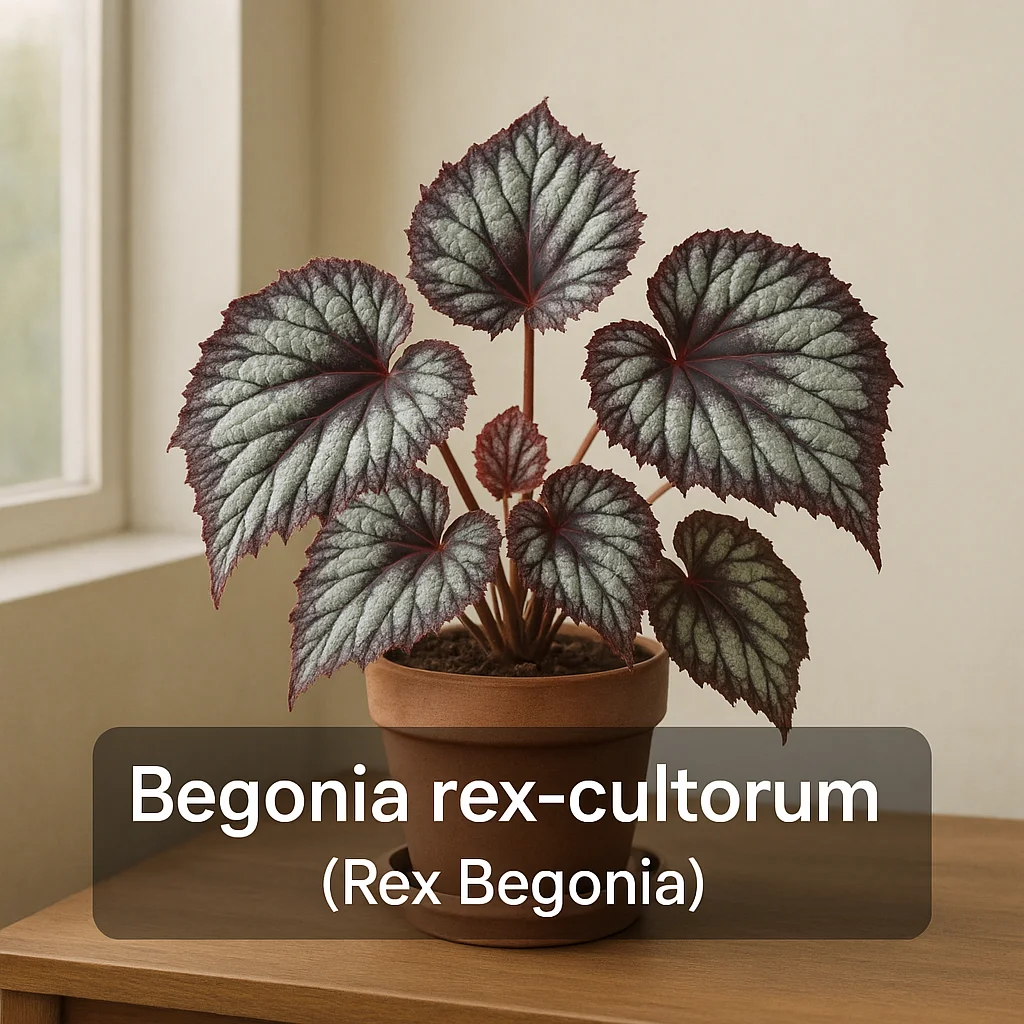
The Begonia rex-cultorum, commonly known as the Rex Begonia, is a group of hybrid begonias admired for their stunning foliage. These plants are primarily grown for their vibrant and diverse leaf patterns, offering a unique addition to any indoor plant collection.
- Common names: Rex Begonia, Painted-leaf Begonia, King Begonia
- Scientific name: Varies / commonly listed as Begonia rex-cultorum
- Plant type: Foliage
- Growth habit: Rosette
- Typical indoor size range: 12-24 inches in height and spread
- Growth speed: Moderate
- Lifespan: Can live many years with care
- Origin: Hybrid origins with Begonia rex from Southeast Asia
- Light preference: Bright indirect light
- Water needs: Moderate; prefers not to dry out completely
- Temperature & humidity preference: Warm temperatures and high humidity
- Pet safety: May be irritating/toxic to pets
- Difficulty: Medium
🔍 Identification & Look-Alikes
Rex Begonias are known for their asymmetrical leaves, which can come in various shapes such as spiral, heart-shaped, or pointed. The leaves are often textured with a mix of colors—ranging from reds, greens, silvers, purples, and even blacks—often with dramatic variegation. The stems are generally short, maintaining a tight rosette form. While they can bloom indoors, they are grown mainly for their foliage. Flowers, if they appear, tend to be small and insignificant. Look-alikes include other cultivated begonias, which can sometimes have more muted coloration or different growth habits.
- Large, colorful, textured leaves
- Leaves may have spiral or heart-shaped patterns
- Bright variegation patterns with silver, red, and purple hues
- Short stems keeping a compact growth form
- Look-alikes include other ornamental begonias
- Mainly grown for foliage, not flowers
- Requires bright indirect light to maintain variegation
- Flowers are small and not typically a focal point
- Leaves feel rough or hairy to the touch
- Distinctive rosette growth habit
🌍 Origin & Natural Habitat
Rex Begonias are hybrid plants, originally deriving from the Begonia rex species native to parts of Southeast Asia, such as the forests of India and China. In their natural habitat, they are typically found growing on forest floors in warm, humid environments where they receive filtered light. This understanding helps gardeners provide similar conditions indoors, ensuring their Rex Begonias receive adequate humidity and indirect light while maintaining warm temperature levels.
☀️ Light Requirements
Rex Begonias thrive in bright, indirect light, which can be achieved by placing them near an east or north-facing window. Direct sunlight can scorch their leaves, while insufficient light can dull their vivid leaf colors. It’s crucial to maintain consistent lighting to preserve the plant’s vibrant variegation.
- Prefer bright, indirect light; avoid direct sun
- East or north-facing windows are ideal
- Leaves may scorch under direct sunlight
- Lack of light dulls leaf colors and can slow growth
- Rotate regularly for even light exposure
- Monitor leaf appearance for signs of light stress
- Light changes with seasons; adjust placement accordingly
- Observe and adjust light based on plant's response
- Filtered light or sheer curtains can help
💧 Watering & Humidity
Rex Begonias require a balanced watering approach. Allow the top inch of soil to dry before watering thoroughly, ensuring excess water drains effectively. In smaller pots, they may dry out faster and need more frequent watering. High humidity is essential, which can be provided through a humidifier or by placing the plant on a pebble tray filled with water. Signs of overwatering include yellowing leaves and root rot, while underwatering may lead to droopy leaves and browning edges.
- Water when the top inch of soil is dry
- Avoid letting soil dry completely
- More frequent watering in smaller pots
- Maintain high humidity levels
- Avoid water on leaves to prevent rot
- Yellow leaves indicate potential overwatering
- Browning edges indicate lack of humidity
- Droopy leaves suggest underwatering
- Use pebble trays or humidifiers for added humidity
🐛 Soil, Pot & Repotting
Rex Begonias prefer a well-draining, slightly acidic soil mix, which might include peat, perlite, and pine bark. Choose a pot with drainage holes to prevent waterlogging. Repotting every couple of years or when the plant becomes rootbound will promote healthy growth. Signs it's time to repot include roots protruding from drainage holes, slow growth, or rapid drying out after watering. To repot, gently remove the plant, shake off excess soil, and place it in a slightly larger container with fresh soil.
- Use well-draining, slightly acidic soil
- Mix peat, perlite, and pine bark
- Ensure pots have drainage holes
- Repot every 2-3 years, or when rootbound
- Look for slow growth and exposed roots as repotting signs
- Repot with care, avoiding harsh root disturbance
- Upsize pot only slightly
- Shake off old soil gently before repotting
- Water thoroughly after repotting
- Avoid overly compacted soil
🌡️ Temperature, Airflow & Seasonal Care
Rex Begonias thrive in temperatures between 60°F and 80°F. Avoid placing them near drafts, AC/heater vents, or areas with sudden temperature changes. In winter, their growth may slow down, reducing the need for frequent watering. Keep an eye on humidity as indoor heating can dry the air, which may require adjustment to avoid stress on the plant.
- Maintain temperatures between 60°F and 80°F
- Avoid exposure to sudden temperature changes
- Growth slows in colder months
- Reduce watering in the winter
- Increase humidity with indoor heating
- Monitor plant for stress from drafts
- Avoid placing near AC/heater vents
- Ensure consistent temperature for health
- Protect from cold during transportation
🌸 Flowers, Fruit & Growth Cycle
While Rex Begonias can flower indoors, it depends on the individual plant and growing conditions, and the flowers are often not the primary attraction. The plant focuses on producing new leaves rather than blooms. Regular pruning of leggy stems can help maintain a bushier, healthier appearance. Pruning should be done with clean tools to avoid disease, and any dead or damaged leaves should be removed promptly.
🧬 Propagation & Reproduction
Propagation of Rex Begonias can be achieved through leaf cuttings, which is a popular method among enthusiasts. Leaf cuttings should include a portion of the petiole and be placed in a moist growing medium until roots and new plantlets form. Division is another method, although it requires a mature plant and careful handling to avoid damaging the roots. Seed propagation is not commonly practiced due to the complexity and time involved.
- Leaf cuttings are a common propagation method
- Include part of the petiole in cuttings
- Place cuttings in a moist, warm environment
- Propagation through division of mature plants
- Avoid seed propagation due to complexity
- Use sterile tools to take cuttings
- Ensure propagation area is warm and humid
- Be patient; new growth takes time
- Manage cuttings gently to prevent damage
🌿 Common Problems, Pests & Prevention
Rex Begonias can suffer from several common issues, including yellow leaves from overwatering, brown tips from underwatering, and leaf drop due to sudden environmental changes. They are also susceptible to pests like spider mites, mealybugs, and fungus gnats. Prevention includes regular cleaning of leaves, maintaining stable care routines, providing adequate airflow, and not overwatering. Isolation of new or affected plants can prevent pest spread.
- Watch for yellowing leaves from overwatering
- Brown leaf tips may indicate underwatering
- Leaf drop often stems from abrupt changes
- Common pests include spider mites and mealybugs
- Fungal issues may arise from excess moisture
- Regularly clean leaves to deter pests
- Quarantine new plants to prevent pest introduction
- Stable light and watering routines are crucial
- Adequate airflow prevents fungal growth
🐾 Pet & Home Safety Notes
Rex Begonias have been noted to have parts that may cause irritation if ingested by pets or children. It is advisable to keep the plant out of reach of curious pets and young children. If ingestion is suspected, it is important to contact a professional or local poison control resources for advice.
🏡 Styling Ideas & Best Room Placement
Rex Begonias can add a burst of color to any room with moderate to high humidity. They thrive particularly well in bathrooms and kitchens. They can be placed on windowsills or shelves with bright, indirect light. Grouping them with other humidity-loving plants like ferns or peace lilies can create a lush indoor garden. Hanging baskets allow their foliage to display beautifully, and they can pair well with trailing plants for a dynamic look.
📌 Summary
- ID highlights include colorful, textured leaves in spiral or heart shapes
- Originates from hybrid mixes involving Begonia rex
- Prefers bright indirect light; avoid direct sun
- Water when topsoil is dry; enjoys high humidity
- Well-draining, slightly acidic soil; repot as needed
- Comfortable between 60°F and 80°F; sensitive to drafts
- Propagation most successful via leaf cuttings
- Common issues include yellow leaves and pests like spider mites
- Considered medium in care difficulty
- Potential irritation risk to pets; keep out of reach