🌱 Caladium bicolor (Caladium)
🧾 Quick Facts
Caladium bicolor, commonly known as Caladiums, is a popular group of tropical foliage plants renowned for their colorful and strikingly patterned leaves. Originating from South America, these plants are mainly cultivated for their aesthetic foliage, which can brighten up any indoor setting.
- Common names: Caladium, Elephant Ear, Angel Wings, Heart of Jesus
- Scientific name: Caladium bicolor (varies / commonly listed as)
- Plant type: Foliage
- Growth habit: Upright
- Typical indoor size range: 12–30 inches tall
- Growth speed: Moderate
- Lifespan: Can live many years with care
- Origin: South America; tropical forests
- Light preference: Bright indirect light
- Water needs: Moderate; prefers to stay slightly moist
- Temperature & humidity preference: Warm temperatures and high humidity
- Pet safety: May be irritating/toxic to pets
- Difficulty: Medium
🔍 Identification & Look-Alikes
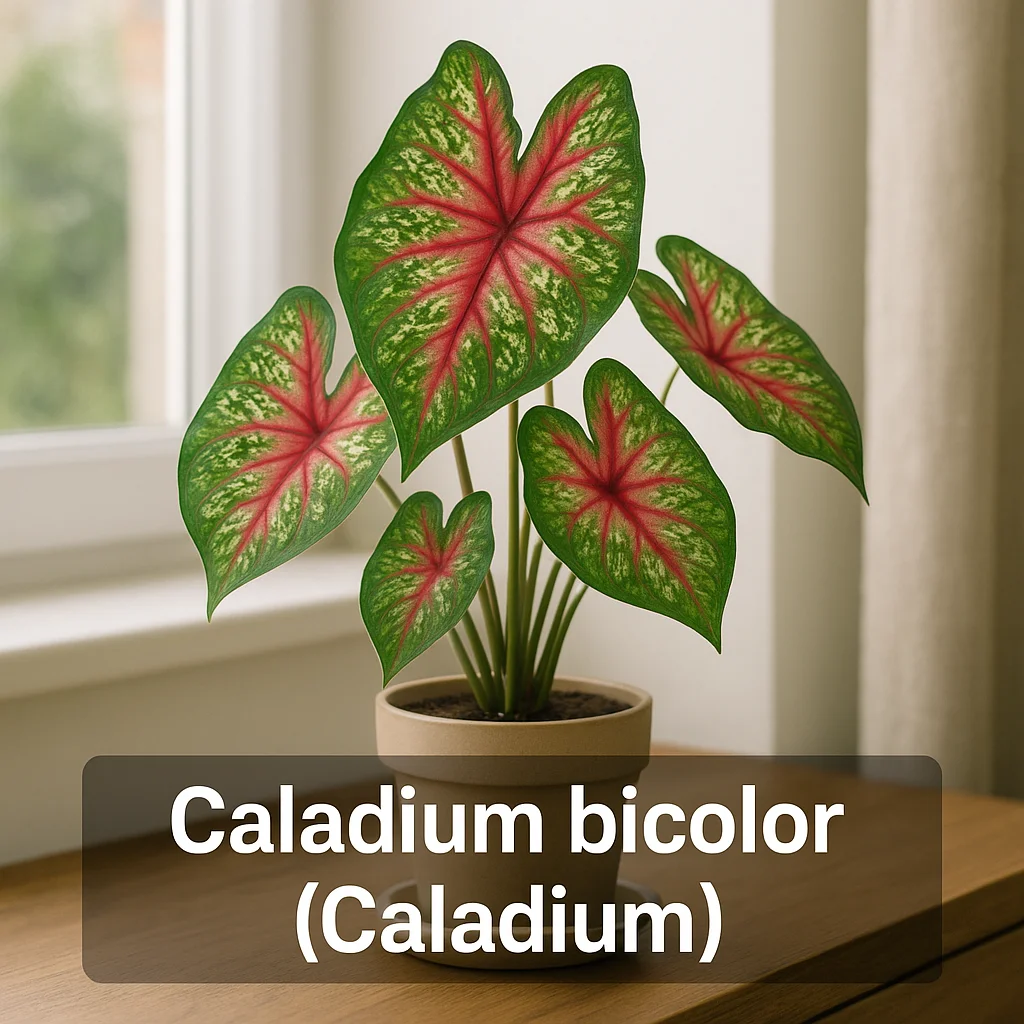
Caladiums are defined by their heart-shaped, paper-thin leaves that showcase a variety of colors including white, red, pink, and green. The leaves are often translucent and exhibit striking veining patterns. Stems are short, making the vibrant foliage the main attraction.
Due to their unique leaf patterns, Caladiums are primarily grown for their foliage rather than flowers. While they can produce small tubular flowers, these are rarely a focal point indoors.
Common look-alikes include other Aroids like Alocasia and Colocasia, which have thicker leaves and different growth habits.
- Heart-shaped, colorful leaves
- Paper-thin, translucent foliage
- Short stems
- Striking leaf veining patterns
- Small, inconspicuous flowers
- Almost upright leaf arrangement
- Variegation prominently affects leaf light exposure
- Unique mix of colors: white, pink, red, green
🌍 Origin & Natural Habitat
Caladiums are native to the tropical forests of South America, thriving in the warm, humid undergrowth of countries like Brazil and Argentina. These plants naturally experience a seasonal cycle of wet and dry periods, adapting their growth and dormancy phases accordingly.
Understanding their natural habitat helps caregivers mimic these conditions indoors, providing the right mix of light, moisture, and warmth to encourage lush growth.
☀️ Light Requirements
Caladiums require bright, indirect light to maintain their vivid colors. Direct sunlight can scorch the leaves, while too little light may result in reduced coloration and stunted growth. It's best to place Caladiums in east or north-facing windows where they can receive ample indirect light.
Signs of insufficient light include fading colors and slow growth, while too much light may cause leaf scorching.
- Place near east or north-facing windows
- Bright, indirect light is optimal
- Avoid direct sun exposure
- Insufficient light leads to fading leaf colors
- Check light intensity throughout the year
- Rotate plant for even light distribution
- Supplement with artificial lights if needed
- Observe and adjust placement based on growth response
💧 Watering & Humidity
Caladiums thrive on consistent moisture but dislike waterlogged conditions. Allow the top few inches of soil to dry out slightly between waterings. The plant may require more frequent watering during the growth period and less during dormancy.
A humidity level of around 60% is ideal, and using a humidifier or pebble tray can help maintain acceptable levels. Overwatering can lead to root rot, while underwatering may cause leaf droop and browning edges.
- Use soak-and-drain method for watering
- Maintain slight soil moisture
- Reduce watering frequency in dormant phase
- Monitor humidity, aim for 60%+
- Increase humidity with a pebble tray or misting
- Keep an eye out for overwatering (yellow leaves)
- Adjust water based on pot size and season
- Check soil moisture regularly
🐛 Soil, Pot & Repotting
An airy, well-draining potting mix is essential for Caladiums, often one with added perlite or coarse sand to improve drainage. A pot with drainage holes is crucial to prevent waterlogging.
Repotting is necessary when the plant becomes root-bound or when growth slows noticeably. Generally, this will be every 1-2 years. Choose a pot one size up and handle the plant gently to avoid damaging tubers.
- Use a well-draining, airy soil mix
- Incorporate perlite or coarse sand
- Ensure pots have drainage holes
- Repot every 1-2 years or as necessary
- Select pots only slightly larger than current size
- Handle tubers gently during repotting
- Check for signs of root-bound conditions
- Avoid compacted soil to prevent rot
🌡️ Temperature, Airflow & Seasonal Care
Caladiums prefer temperatures between 65-75°F (18-24°C) and dislike drafts or sudden temperature changes. In winter, their growth may slow down, and they may enter a dormant period where reduced watering and care are needed.
Ensure good airflow without exposing the plant to harsh drafts from AC or heating vents.
- Maintain 65-75°F indoor temperatures
- Avoid exposure to cold drafts
- Decrease watering in winter dormancy
- Ensure steady airflow without harsh drafts
- Avoid sudden temperature fluctuations
- Adjust care with seasonal changes
- Check plant location relative to temperature sources
🌸 Flowers, Fruit & Growth Cycle
While Caladiums can flower, they are primarily grown for their foliage, and flowers are uncommon indoors. The plant follows a growth cycle where new leaves emerge primarily in spring and summer, entering a dormant phase during cooler months.
Pruning is minimal and mainly involves removing yellow or damaged leaves to maintain health and appearance.
🧬 Propagation & Reproduction
Caladium propagation is commonly achieved through tuber division, which is best done during the plant's dormant period. Stem or leaf cuttings are not typical propagation methods for this plant.
- Best propagated through tuber division
- Timing is ideal during dormancy
- Ensure each tuber has a growing point or "eye"
- Repot divided tubers into fresh soil
- Allow divided tubers to heal before watering
- Propagation rare from seeds indoors
🌿 Common Problems, Pests & Prevention
Common issues include yellow leaves due to overwatering, brown tips from low humidity, and leaf drop from stress. Pests such as spider mites and mealybugs can be deterred by maintaining cleanliness and stable conditions.
Regular checks and cleaning of leaves can prevent infestations, while ensuring proper watering practices can mitigate most common problems.
- Yellow leaves often indicate overwatering
- Brown tips suggest low humidity
- Check for spider mites and mealybugs
- Regularly clean leaves to prevent pests
- Maintain stable care routines
- Quarantine new plants before introducing
- Ensure good plant hygiene
- Avoid waterlogged soil conditions
🐾 Pet & Home Safety Notes
Caladiums can be irritating or toxic if ingested by pets and children. It's advisable to place these plants out of reach of curious mouths and to utilize training or barriers for pets.
If ingestion is suspected, contact a professional or local poison control resources for advice.
🏡 Styling Ideas & Best Room Placement
Caladiums make excellent additions to bathrooms and kitchens where humidity levels are naturally higher. They can also brighten living rooms and offices with sufficient indirect light. Consider using hanging baskets or placing them on shelves to prevent pets from reaching them.
Pair with other foliage plants for a lush, layered look.
📌 Summary
- Distinct heart-shaped, colorful leaves
- Native to South American tropics
- Prefers bright, indirect light
- Keep soil slightly moist; avoid waterlogging
- Use well-draining soil; repot when root-bound
- Enjoys warm temperatures and high humidity
- Propagated via tuber division
- May face issues like yellow leaves and pests
- Medium difficulty; may irritate pets if ingested
- Consider stylish arrangements in humid, light rooms