🌱 Calathea makoyana (Goeppertia makoyana)
🧾 Quick Facts
The Calathea makoyana, commonly known as the Peacock Plant, is cherished for its stunning foliage and tropical appearance. Its leaves are famous for their beautiful patterns, making it a beloved choice for houseplant enthusiasts.
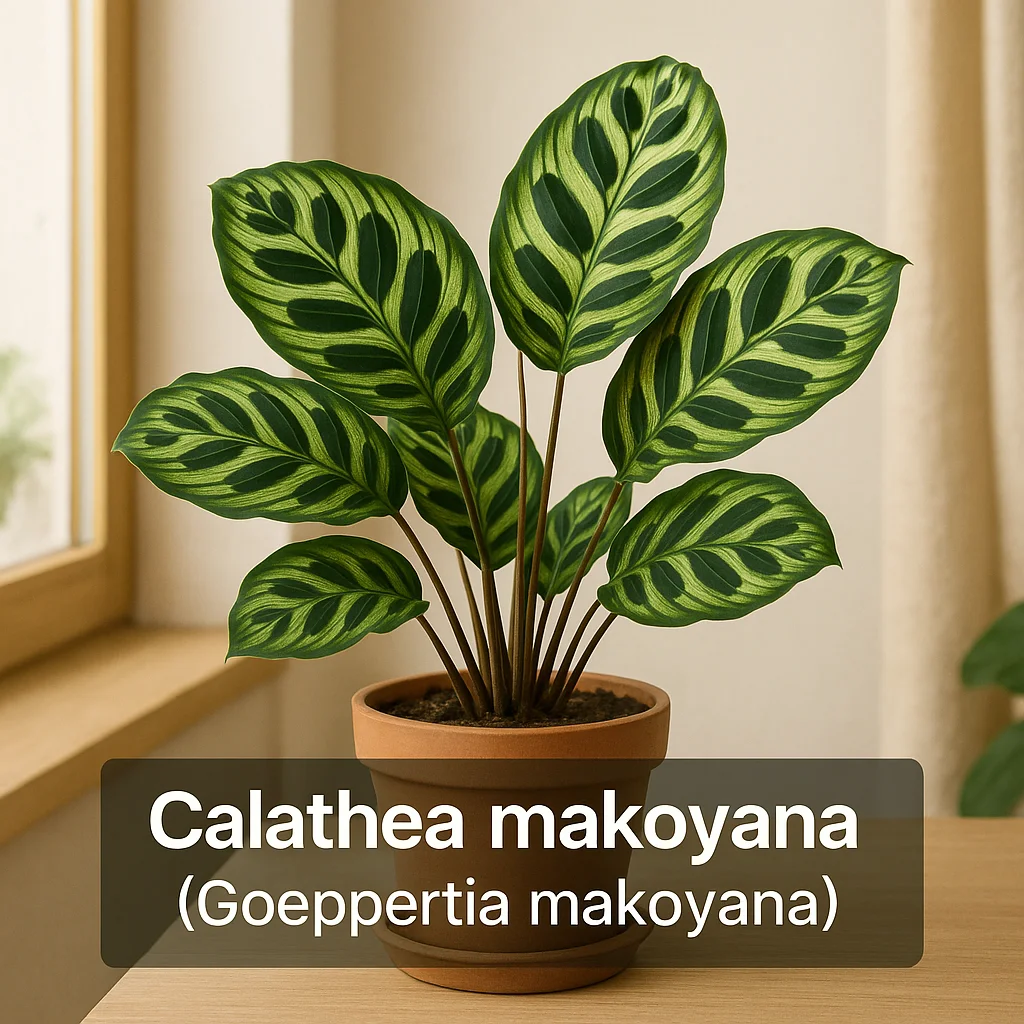
- Common Names: Peacock Plant, Cathedral Windows
- Scientific Name: Calathea makoyana (Goeppertia makoyana)
- Plant Type: Foliage
- Growth Habit: Upright
- Typical Indoor Size: 1–2 feet (30–60 cm) tall
- Growth Speed: Moderate
- Lifespan: Can live many years with care
- Origin: Brazil; rainforest understory
- Light Preference: Bright indirect light
- Water Needs: Moderate; prefers moist but not soggy conditions
- Temperature & Humidity Preference: Warm temperatures; high humidity
- Pet Safety: Generally considered pet-friendlier
- Difficulty: Medium
🔍 Identification & Look-Alikes
Recognized for its ornamental leaves, the Calathea makoyana features elliptical leaves with scalloped edges. The foliage displays a striking pattern of dark green feather-like veins on a lighter green background, resembling the plumage of a peacock. The leaves have a matte texture and typically fold upwards at night, a phenomenon known as nyctinasty.
The plant's stems are relatively short, and it is mainly grown for its foliage as it rarely blooms indoors. Potential look-alikes include other Calathea species and some Marantas, but the intricate variegation of Calathea makoyana's leaves helps distinguish it from others.
- Elliptical leaves with scalloped edges
- Dark green feather-like veins on light green background
- Matte-textured leaves that fold at night
- Short, upright stems
- Grown mainly for foliage
- Easily confused with other Calatheas
- Typical upright growth pattern
🌍 Origin & Natural Habitat
Calathea makoyana is native to Brazil, specifically thriving in the rainforest understory where it benefits from filtered sunlight. This environment provides the plant with high humidity and consistent warmth, conducive to its vibrant growth. Knowledge of its habitat provides insight into care needs such as light, humidity, and temperature.
☀️ Light Requirements
Calathea makoyana thrives in bright, indirect light. Placing it near east or north-facing windows can provide ideal conditions. Bright indirect light can be understood as light that casts a shadow but not harsh enough to cause leaf scorching. Insufficient light can lead to dull coloration, while too much direct sunlight might cause leaf edges to burn.
- East or north-facing windows are ideal
- Avoid direct sunlight to prevent scorching
- Watch for dullness, indicating insufficient light
- Rotate plant periodically for even exposure
- Supplement with artificial lights in dim areas
- Monitor leaf health regularly
💧 Watering & Humidity
Calathea makoyana prefers a watering regime that allows the soil to dry slightly between waterings. The soak-and-drain method is effective: thoroughly water until it drains, then let the top layer of soil dry. Adjust watering frequency based on pot size, season, and room humidity. The plant benefits from a humid environment; consider a humidifier or pebble tray to maintain optimal moisture levels.
- Water when topsoil is slightly dry
- Adjust frequency seasonally
- Increase humidity with a pebble tray or humidifier
- Signs of overwatering: yellow leaves, root rot
- Signs of underwatering: crispy leaf edges
- Monitor room humidity to prevent dryness
🐛 Soil, Pot & Repotting
An airy, well-draining soil mix rich in organic matter is ideal for Calathea makoyana. Pots with ample drainage holes are essential to prevent waterlogging. Repot when the plant becomes rootbound or growth slows, typically every 1–2 years. When repotting, opt for a slightly larger pot to allow room for growth, and gently loosen any compacted roots to encourage new growth in the fresh soil.
- Use airy, well-draining soil
- Ensure pot has drainage holes
- Repot every 1–2 years
- Select pots slightly larger than the current
- Gently loosen compacted roots
- Refresh soil during each repotting
🌡️ Temperature, Airflow & Seasonal Care
Calathea makoyana thrives in warm indoor temperatures ranging from 65°F to 75°F (18°C to 24°C). Protect from cold drafts and sudden temperature changes caused by AC vents or open windows. During winter, growth may slow, so adjust watering to prevent overhydration. Monitor for signs of dormancy and reduce frequency of fertilizing until active growth resumes.
- Optimal temperature: 65–75°F (18–24°C)
- Avoid cold drafts and rapid temperature changes
- Adjust care seasonally
- Limit fertilization in winter
- Prepare for potential dormant phases
🌸 Flowers, Fruit & Growth Cycle
Though flowering indoors is rare for Calathea makoyana, when it does, the blooms are inconspicuous in comparison to its foliage. The plant's primary aesthetic appeal lies in its growth pattern, characterized by the unfurling of new leaves from the center and gradual outward expansion. Pruning is mostly unnecessary but can help maintain shape; ensure any dead or damaged leaves are removed to promote overall vitality.
🧬 Propagation & Reproduction
Propagation of Calathea makoyana is typically done through division. Separate the plant during repotting, ensuring each division has ample roots and leaves. Seed propagation is not commonly pursued in home settings due to challenges in obtaining viable seeds. Attempting stem cuttings is generally ineffective for this species.
- Best propagated by division
- Ensure adequate roots for each division
- Avoid stem cutting methods
- Consider propagation during repotting
- Maintain high humidity for new growth
🌿 Common Problems, Pests & Prevention
Common issues for Calathea makoyana include yellow leaves, brown tips, and leaf margin browning, often due to watering inconsistencies or low humidity. Pests like spider mites and mealybugs can occasionally occur. Prevent infestations with regular leaf cleaning and stable care conditions.
- Avoid overwatering for yellowing prevention
- Increase humidity to avoid brown tips
- Check regularly for pest activity
- Quarantine new plants before introducing them
- Maintain consistent care routines
🐾 Pet & Home Safety Notes
Calathea makoyana is generally considered safer for pets and children compared to other houseplants. However, it is always wise to place plants out of reach to prevent ingestion. If ingestion is suspected, contact a professional or local poison control resources for guidance.
🏡 Styling Ideas & Best Room Placement
Calathea makoyana adds elegance to any indoor space, making it suitable for bathrooms, kitchens, living rooms, or offices where higher humidity can be maintained. Use it in floor pots or elevated on plant stands to showcase its captivating foliage. Pair with other tropical plants that prefer similar conditions for a cohesive display.
📌 Summary
- Distinctive elliptical leaves with peacock-like patterns
- Native to Brazil's rainforest understory
- Thrives in bright, indirect light
- Prefers evenly moist soil and high humidity
- Repot every 1–2 years in airy, well-draining soil
- Comfortable in temperatures between 65°F and 75°F
- Best propagated by division during repotting
- Watch for pests like spider mites and mealybugs
- Generally safer for pets but keep out of reach
- Medium difficulty, ideal for plant enthusiasts