🌱 Coleus (Coleus scutellarioides)
🧾 Quick Facts
The Coleus plant, known scientifically as Coleus scutellarioides, is a favorite among indoor gardeners due to its vibrant foliage. Below are some quick facts about this popular houseplant:
- Common names: Coleus, Painted Nettle, Flame Nettle
- Scientific name: Coleus scutellarioides
- Plant type: Foliage
- Growth habit: Upright, bushy
- Typical indoor size range: 1 to 3 feet tall and wide
- Growth speed: Fast
- Lifespan: Annual, but can live several years indoors with proper care
- Origin: Southeast Asia
- Light preference: Bright indirect light
- Water needs: Moderate; prefers consistently moist soil
- Temperature & humidity preference: Warm temperatures and high humidity
- Pet safety: May be irritating or toxic to pets
- Difficulty: Easy
🔍 Identification & Look-Alikes
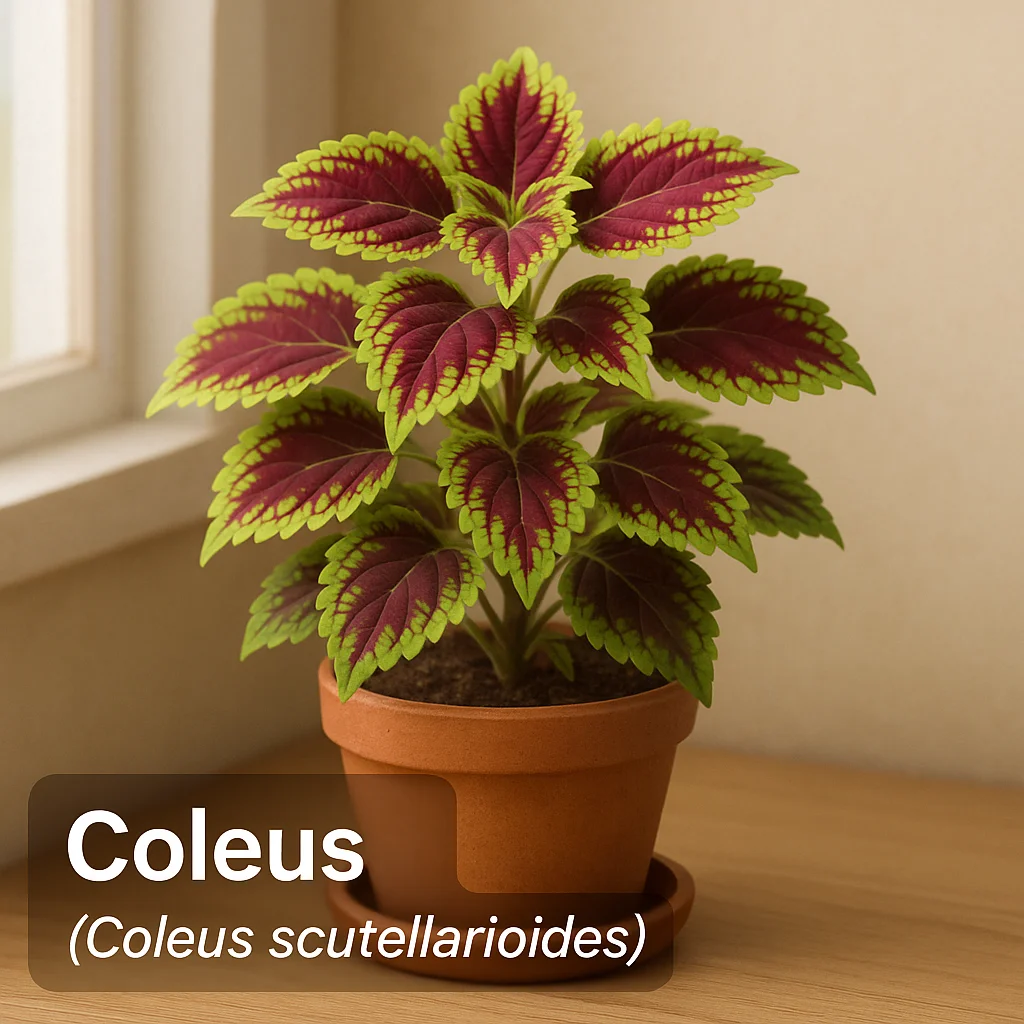
The Coleus plant is easily recognized by its dramatically colored leaves. Leaves come in a variety of shapes, typically serrated, with vibrant patterns of reds, pinks, greens, yellows, and purples. They are oppositely arranged on square stems. Typically, Coleus is grown for its stunning foliage rather than flowers, which tend to be small and less conspicuous.
Common look-alikes for Coleus include plants such as Caladiums and certain types of Begonias. However, Coleus can be distinguished by their square stems and opposite leaf arrangement.
- Bright and varied leaf colors and patterns
- Serrated, ovate leaf shape
- Square stems
- Opposite leaf arrangement
- Grown mainly for foliage, not flowers
- Fast-growing and bushy habit
- Root system forms easily for propagation
- Leaves lose color with too little light
🌍 Origin & Natural Habitat
The Coleus is native to the tropical regions of Southeast Asia and has become popular in many temperate regions around the world. In their natural habitat, Coleus plants thrive in shaded areas with rich, well-draining soil and high humidity.
Understanding the Coleus's native environment can guide indoor care. Mimicking these conditions with warm temperatures, adequate humidity, and indirect light will help the plant flourish indoors.
☀️ Light Requirements
Coleus plants prefer bright indirect light, which helps maintain their vibrant leaf colors. Southern or eastern exposures that receive filtered sunlight are ideal. Too little light and the plant's leaves may become dull, while too much direct sunlight can scorch them.
- Place near a bright, but not directly sunny, window
- Avoid harsh direct sun, which may cause leaf burn
- Variegation fades in low light environments
- Watch for pale, leggy growth indicating low light
- Consider rotating the plant to ensure even growth
- Use sheer curtains to filter direct sunlight
- If growth stalls, adjust lighting conditions
💧 Watering & Humidity
Coleus enjoys consistently moist soil, so water thoroughly when the top inch of soil feels dry. During the growing season, you may need to water more frequently; reduce watering during the cooler months. Increased humidity benefits Coleus; a gentle mist or a nearby humidifier can help.
Signs of overwatering include wilting and yellowing leaves, while underwatered Coleus may develop crispy brown leaf edges.
- Check soil moisture regularly, especially in summer
- Allow top inch of soil to dry out between waterings
- Increase humidity with a tray of water or humidifier
- Avoid waterlogging; ensure proper drainage
- Reduce watering frequency in winter
- Observe plant response for water adjustments
- Use room-temperature water for hydration
🐛 Soil, Pot & Repotting
Coleus thrives in well-draining, nutrient-rich soil. A standard potting mix with added perlite or sand suits the plant well. Pots should have drainage holes to prevent root rot. Repotting may be necessary once the plant becomes rootbound, typically every year or so.
When repotting, choose a pot only slightly larger than the current size to prevent excessive moisture retention. Carefully tease out roots if they are circling the pot, then re-plant in fresh soil.
- Use rich, well-draining soil mix
- Ensure pot has drainage holes
- Consider terracotta for breathability
- Repot annually or when growth slows
- Choose the next pot size up for repotting
- Refresh soil for nutrient boost
- Handle roots gently during repotting
- Water well after repotting
🌡️ Temperature, Airflow & Seasonal Care
The ideal indoor temperature for Coleus ranges from 60°F to 75°F (15°C to 24°C). Avoid exposing the plant to drafts or extreme temperature swings, such as those from AC or heater vents. During the winter, growth tends to slow down, so adjust watering accordingly.
Avoid placing the plant in a space with poor air circulation; gentle airflow will help prevent diseases.
- Keep away from cold drafts and heat sources
- Maintain a consistent temperature environment
- Expect slower growth during cooler months
- Reduce watering in winter to match slower growth
- Ensure good air circulation around plant
- Don't worry about dormancy; Coleus doesn't require it
- Monitor for pests during seasonal transitions
🌸 Flowers, Fruit & Growth Cycle
Coleus is primarily grown for its colorful foliage. While it does produce small, spiky flowers, these can detract from the vibrancy of the leaves when allowed to develop. Many gardeners pinch off flower spikes to encourage the plant to focus energy on leaf production.
Pruning can help maintain the plant's shape and encourage bushier growth. Always use clean tools to avoid disease spread.
🧬 Propagation & Reproduction
Coleus is straightforward to propagate from stem cuttings. Cuttings can be taken any time of year but root more quickly during the growing season. Simply cut a 4-6 inch piece of stem with several leaves, remove the lower leaves, and place the cutting in water or moist soil until roots develop.
- Take cuttings from healthy stem sections
- Roots readily form in water or soil
- Remove flowers to focus energy on root development
- Provide bright, indirect light for cuttings
- Maintain humidity to encourage rooting
- Avoid heavy fertilizing until roots are established
🌿 Common Problems, Pests & Prevention
Coleus is susceptible to pests like spider mites, mealybugs, and aphids. To prevent infestations, practice regular leaf cleaning and provide good air circulation. Common issues include leggy growth from lack of light and leaf drop from inconsistent watering practices.
- Monitor regularly for pest activities
- Maintain stable moisture levels
- Trim back leggy growth for denser foliage
- Clean leaves with a damp cloth periodically
- Avoid crowding; allow space for airflow
- Quarantine new plants before introducing them
- Remove diseased or yellowed leaves promptly
🐾 Pet & Home Safety Notes
All parts of the Coleus plant may be mildly toxic if ingested by pets or children. It can cause minor irritation when touched, so it's best placed out of reach. If ingestion is suspected, contact a professional or local poison control resources promptly.
Use barriers or place plants on higher shelves to ensure they’re out of reach from curious pets and young children.
🏡 Styling Ideas & Best Room Placement
Coleus plants make a striking addition to any well-lit room. Bathrooms or kitchens are ideal because of the higher humidity. They can also thrive in living rooms with ample sunlight. Consider pairing with leafy plants of contrasting textures for visual interest on a shelf or use Coleus as a centerpiece in a decorative pot on a table.
Hanging baskets or placing the plant on a plant stand near a window can also highlight its colorful leaves.
📌 Summary
- Easily identified by its vibrant, serrated foliage
- Originates from Southeast Asia
- Thrives in bright, indirect light conditions
- Prefers consistent moisture; avoid waterlogging
- Use well-draining soil; repot annually
- Enjoys warm, humid environments
- Simple to propagate from stem cuttings
- Be cautious about pests; regular checks advised
- Considered mildly toxic to pets
- Easy to care for, making it suitable for beginners