🌱 Hypoestes phyllostachya (Polka Dot Plant)
🧾 Quick Facts
The Polka Dot Plant, scientifically recognized as Hypoestes phyllostachya, is a popular choice for indoor gardeners due to its vibrant foliage and relatively straightforward care requirements. Known for its striking spotted leaves, it adds a splash of color to any collection.
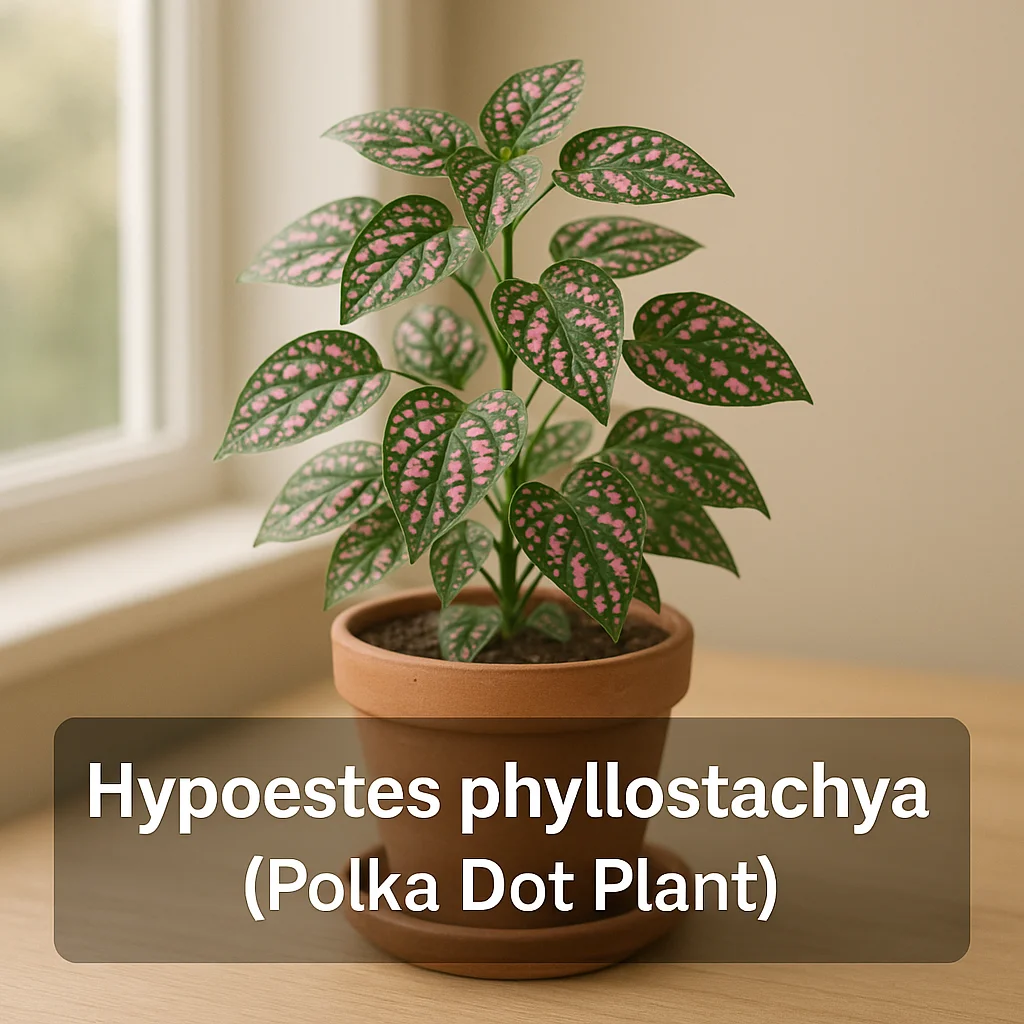
- Common names: Polka Dot Plant, Freckle Face
- Scientific name: Hypoestes phyllostachya
- Plant type: Foliage
- Growth habit: Shrub-like
- Typical indoor size: 10–20 inches high, spreads to a similar width
- Growth speed: Moderate to fast
- Lifespan: Often grown as an annual indoors; can last several years with care
- Origin: Madagascar; tropical forest floor environments
- Light preference: Bright indirect light; tolerates some direct sun
- Water needs: Moderate; allow topsoil to dry out between waterings
- Temperature & humidity: Prefers warm, humid conditions
- Pet safety: May cause mild irritation if ingested
- Difficulty: Medium
🔍 Identification & Look-Alikes
The Polka Dot Plant is easily recognized by its unique leaf patterns that resemble polka dots. The leaves are oval, slightly crinkled, and come in a variety of colors, most commonly green with pink, white, or red spots. Stems are thin and can become leggy if not pruned regularly. This plant rarely flowers indoors, and when it does, the blooms are typically small and inconspicuous.
Common look-alikes include varieties of Fittonia and some types of Begonia, which may also exhibit brightly colored foliage. However, Polka Dot Plants can be distinguished by their specific spotting patterns and leaf texture.
- Oval leaves with colorful spots
- Thin stems prone to legginess
- Available in various color combinations
- Rarely flowers indoors
- Prone to fade if not enough light
- Look-alikes: Fittonia, some Begonias
🌍 Origin & Natural Habitat
Hypoestes phyllostachya is native to Madagascar, thriving naturally in tropical and subtropical environments. It commonly grows in the humid, shaded understory of forests. Knowledge of its habitat is helpful, as this implies the plant's preference for humidity and avoidance of direct, intense sunlight indoors.
Understanding its native habitat can inform optimal indoor care, suggesting a preference for bright indirect light, consistent moisture levels, and warm conditions.
☀️ Light Requirements
Polka Dot Plants thrive in bright, indirect light but can tolerate some direct sunlight. Place them near east or west-facing windows where they receive indirect light for most of the day. To maintain vibrant leaf colors, avoid too much shade, which can cause the colors to fade.
Signs of insufficient light include stunted growth and color fading, while too much light can cause leaf scorching. Adjust positioning based on these cues.
- Prefer bright indirect light
- East or west-facing windows ideal
- Check for color loss as a low-light sign
- Avoid prolonged direct sunlight
- Regularly rotate plant for even growth
- Move closer to light in winter months
💧 Watering & Humidity
Water Polka Dot Plants when the top inch of soil feels dry to the touch. Employ a soak-and-drain method and let any excess water escape from the drainage holes. Adjust watering frequency based on pot size, room temperature, and season.
This species enjoys humidity and will benefit from occasional misting or placement near a humidifier. Signs of insufficient humidity include dry, crispy leaf edges.
- Water when the top inch of soil is dry
- Use well-draining pots
- Increase watering in warmer months
- Humidity-misting benefits the plant
- Leaf edges crisping indicate low humidity
- Avoid standing water on the roots
🐛 Soil, Pot & Repotting
Use a well-draining and slightly acidic potting mix, often a blend of peat moss, perlite, and regular potting soil. Ensure pots have adequate drainage holes to prevent waterlogging. Terracotta pots can be beneficial by allowing excess moisture to evaporate.
Repot every 1–2 years or when the plant becomes rootbound, showing signs such as growth slowing and roots appearing at drainage holes. Choose a pot one size larger during repotting.
- Use well-draining potting mix
- Ensure pots have drainage holes
- Terracotta pots help with moisture levels
- Repot every 1–2 years
- Signs for repotting: slowed growth, roots visible
- Pot up one size larger only
🌡️ Temperature, Airflow & Seasonal Care
Polka Dot Plants prefer temperatures between 65–80°F (18–27°C). Avoid placing them near cold drafts or heat sources. Sudden temperature changes can cause stress, leading to droop or leaf drop.
In winter, expect slower growth and adjust watering accordingly. Ensure continued humidity levels to compensate for drier indoor air.
- Maintain temperatures 65–80°F (18–27°C)
- Avoid cold drafts and direct heat
- Slightly reduce watering in winter
- Keep humidity levels stable year-round
- Avoid sudden temperature changes
🌸 Flowers, Fruit & Growth Cycle
Though primarily grown for its ornate leaves, Hypoestes phyllostachya can occasionally flower indoors. The blooms are small, lavender, and typically appear in summer. However, flowering may redirect energy from foliage, so some growers prefer to pinch off the flowers.
Prune regularly to maintain bushiness and remove leggy growth, stimulating fuller foliage.
🧬 Propagation & Reproduction
The most accessible propagation method for Polka Dot Plants is through stem cuttings. Take cuttings during the growing season, ensuring they have at least two nodes. Place in water or moist soil until roots develop. Regular pinching back can also encourage bushiness.
- Best propagated by stem cuttings
- Use cuttings with two or more nodes
- Root in water or soil
- Prune to encourage bushiness
🌿 Common Problems, Pests & Prevention
Common issues include yellowing leaves, often due to overwatering, and brown tips, usually from low humidity. Watch for pests such as spider mites and mealybugs, which can be mitigated by routine leaf cleaning and ensuring healthy airflow.
Avoid pesticide use indoors and focus on preventive care, such as isolating new plants to prevent pest infestations.
- Yellow leaves may indicate overwatering
- Brown tips are a sign of low humidity
- Prevent pests by cleaning leaves
- Avoid waterlogging the roots
- Isolate new plants to avoid pest transfer
- Maintain stable light and watering practices
🐾 Pet & Home Safety Notes
Polka Dot Plant parts are generally not highly toxic but can cause mild irritation if ingested by pets. Place out of reach of curious pets and children to prevent any interaction. If ingestion is suspected, contact a professional or local poison control resources.
🏡 Styling Ideas & Best Room Placement
Due to their preference for humidity, Polka Dot Plants thrive in bathrooms and kitchens where moisture is higher. For the best display, consider them in hanging baskets or on shelves where their vibrant colors can add aesthetic charm.
Pair with other tropical species like ferns or calatheas for a lush, coordinated look.
📌 Summary
- Polka Dot Plant is known for colorful spotted foliage.
- Originates from the tropical understory of Madagascar.
- Prefers bright indirect light and some humidity.
- Water moderately and keep soil slightly moist.
- Use well-draining soil; repot every 1–2 years.
- Optimal temperature range is 65–80°F (18–27°C).
- Propagate easily via stem cuttings.
- Watch for common pests like spider mites.
- Medium difficulty due to humidity needs.
- Keep out of reach of pets to avoid irritation.