🌱 Maranta leuconeura (Prayer Plant)
🧾 Quick Facts
The Maranta leuconeura, commonly known as the Prayer Plant, is a popular houseplant admired for its fascinating leaf movement and decorative foliage. Below are some quick facts about this intriguing plant:
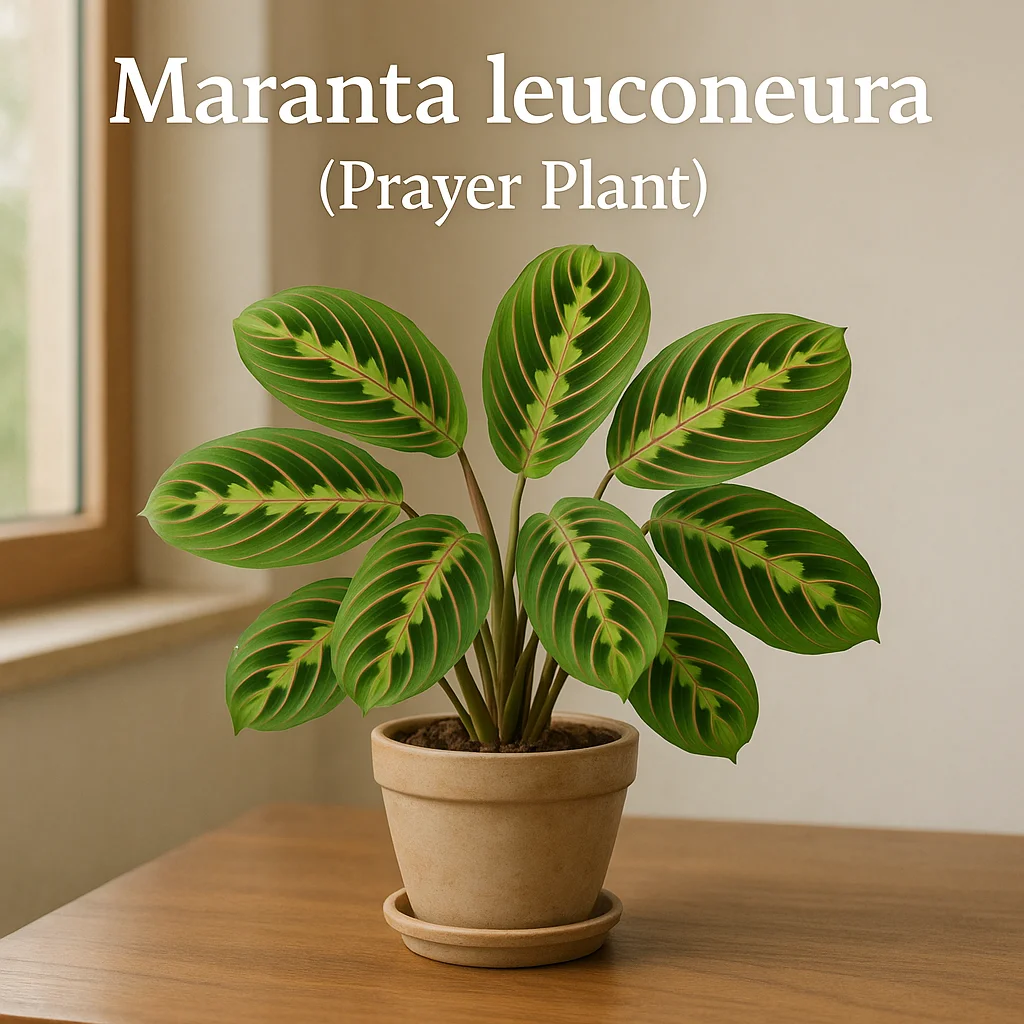
- Common names: Prayer Plant
- Scientific name: Maranta leuconeura
- Plant type: Foliage
- Growth habit: Low-growing, prostrate
- Typical indoor size range: 6 to 12 inches tall; spread may vary
- Growth speed: Moderate
- Lifespan: Can live many years with proper care
- Origin: Central and South America; primarily rainforest understory
- Light preference: Bright indirect light; intolerant of direct sunlight
- Water needs: Moderate; prefers to remain slightly moist but not soggy
- Temperature & humidity preference: Warm and humid
- Pet safety: Generally considered pet-friendly
- Difficulty: Medium
🔍 Identification & Look-Alikes
The Prayer Plant is easily recognizable by its oval-shaped leaves, which can feature varying patterns and colors depending on the cultivar. The leaves often have a prominent dark green background with lighter colored, feather-like veins running parallel. This marbled appearance is complemented by red to dark purple undersides. The plant also behaves distinctively, folding its leaves upward at night as if in prayer, hence its common name.
Maranta leuconeura is grown primarily for its foliage. It is often confused with its close relatives in the Marantaceae family, such as Calathea and Ctenanthe plants. However, the Maranta typically has smaller, more oval leaves and a distinctive folding behavior.
- Leaf shape: Oval with feather-like vein patterns
- Color: Dark green with lighter vein patterns and reddish undersides
- Growth habit: Low-growing, cascading
- Leaf texture: Smooth, slightly glossy
- Stem structure: Soft, trailing stems with roots at nodes
- Variegation: Light sensitive; reduced in low light
- Look-alikes: Calathea, Stromanthe, Ctenanthe
- Distinguishing feature: Leaves fold up at night
🌍 Origin & Natural Habitat
The Maranta leuconeura is native to the tropical rainforests of Central and South America, particularly Brazil. In its natural habitat, it grows in the forest understory where it enjoys filtered light and high humidity. The constant ambient moisture and rich, well-draining soil foster its growth year-round without pronounced seasonal dormancy.
Understanding its natural habitat can help caregivers cultivate similar indoor conditions, ensuring that the Maranta remains lush and vibrant. A key aspect of sustaining its health indoors is providing the humidity and indirect light it naturally receives in the wild.
☀️ Light Requirements
The Maranta leuconeura thrives in bright, indirect light conditions. A suitable indoor spot would be near east or north-facing windows. Direct sunlight can scorch its leaves, leading to fading or spotting of the variegation. Conversely, too little light may cause poor leaf coloration and sluggish growth.
- Place near east or north-facing windows
- Avoid direct sunlight; use curtains to diffuse light if needed
- Regularly rotate plant for even light exposure
- Insufficient light: Faded leaf colors and slower growth
- Excessive light: Browning or sun-scorched leaves
- Adjust lighting seasonally as sunlight intensity changes
💧 Watering & Humidity
Prayer Plants prefer a consistent watering schedule, allowing the top layer of soil to dry slightly between waterings. A soak-and-drain method is ideal, ensuring moisture without waterlogging. Humidity is equally important; aim for high humidity levels by using a humidifier or grouping plants together.
- Water when top inch of soil feels dry
- Avoid allowing the plant to stand in water
- Increase humidity with a humidifier or pebble tray
- Yellow leaves can indicate overwatering
- Crispy brown tips may suggest low humidity
- Adjust frequency based on season and home environment
🐛 Soil, Pot & Repotting
The Maranta leuconeura prefers an airy, well-draining potting mix to prevent root rot. A standard houseplant mix with added perlite or orchid bark works well. Choose pots with drainage holes and consider terracotta for better airflow to roots. Repot every 1–2 years or when growth has visibly slowed.
- Well-draining soil with perlite or bark for airflow
- Use pots with drainage holes
- Opt for terracotta for added root ventilation
- Repot when roots appear crowded or growth stalls
- Increase pot size by only one size at a time
- Handle roots gently during repotting
🌡️ Temperature, Airflow & Seasonal Care
Prayer Plants thrive in temperatures ranging from 65°F to 80°F (18°C to 27°C). They are sensitive to temperature fluctuations, especially cold drafts. Avoid placing them near air conditioners or heating vents. In the cooler months, growth may slow, requiring reduced watering.
- Stable temperatures between 65°F to 80°F
- Avoid cold drafts and direct airflow from AC or heaters
- Reduce watering in winter due to slower growth
- Caution with open windows during temperature swings
- Adjust care based on seasonal light and temperature changes
🌸 Flowers, Fruit & Growth Cycle
While the Maranta leuconeura can bloom, its flowers are small and not particularly showy compared to its vibrant foliage. Blooming indoors is rare and typically occurs under optimal conditions. Growth is characterized by new leaf emergence primarily from spring through summer.
- Lush foliage growth from spring to summer
- Small, insignificant flowers
- Focus on leaf health over flowering potential
- Regular pruning can promote fullness
- Remove any dead leaves to encourage new growth
🧬 Propagation & Reproduction
Prayer Plants can be propagated by stem cuttings or division. For cuttings, select a healthy stem, and ensure roots are present—a necessity given their attachment-node nature. Division is typically done during repotting, ensuring each new section has sufficient roots.
- Propagate via stem cuttings or division
- Select sections with active roots
- Use clean, sharp tools to prevent disease
- Place cuttings in water or moist soil to root
- Monitor humidity for successful propagation
🌿 Common Problems, Pests & Prevention
The Maranta leuconeura can face issues like yellowing leaves or brown tips, often from overwatering or low humidity. It may also fall victim to common houseplant pests such as spider mites, mealybugs, and scale insects. Regular cleaning and monitoring help prevent infestations.
- Avoid overwatering to prevent yellow leaves
- Maintain high humidity to avoid brown leaf tips
- Regularly clean leaves to prevent dust build-up
- Inspect for pests regularly (spider mites, mealybugs)
- Isolate new plants to ensure pest-free integration
- Stable care regime can prevent stress-related issues
🐾 Pet & Home Safety Notes
Generally considered pet-friendly, Maranta leuconeura is a safe choice for homes with animals. It's recommended to place plants out of reach or employ a preventative physical barrier for curious pets or small children. If ingestion is suspected, contacting a professional or local poison control resources is advisable.
🏡 Styling Ideas & Best Room Placement
With its lush, decorative leaves, the Prayer Plant is versatile in home decor. It thrives in humidity-rich environments like bathrooms and kitchens. Its trailing stems complement hanging baskets or shelf arrangements. Pair with other tropical plants like ferns and Calatheas for a cohesive indoor jungle.
📌 Summary
- Easily identified by its oval leaves with distinct variegation
- Native to Central and South American rainforests
- Flourishes in bright indirect light; avoid direct sun
- Requires consistent humidity and moderate watering
- Prefers airy, well-draining soil; repot when rootbound
- Temperature range: 65°F to 80°F (18°C to 27°C)
- Propagate through division or cuttings with established roots
- Common issues: overwatering, pests like spider mites
- Pet and child-friendly, generally safe with care