🌱 Oxalis triangularis (Purple Shamrock)
🧾 Quick Facts
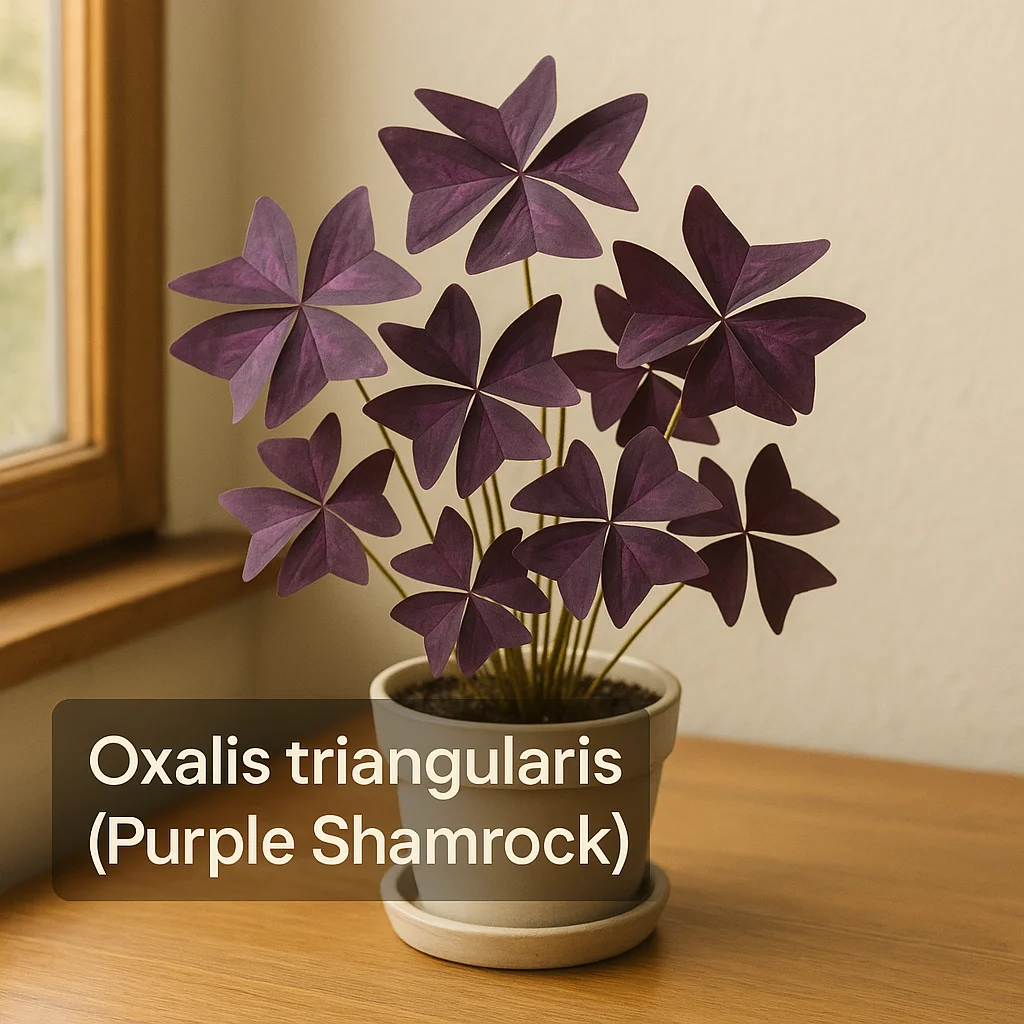
Oxalis triangularis, commonly known as the Purple Shamrock, is a charming indoor plant with its striking purple foliage and delicate flowers. Known for its easy care and unique appearance, it's a favored choice among houseplant enthusiasts.
- Common names: Purple Shamrock, False Shamrock
- Scientific name: Oxalis triangularis
- Plant type: Flowering bulb
- Growth habit: Upright and bushy
- Typical indoor size: 12-15 inches tall and wide
- Growth speed: Moderate
- Lifespan: Can live many years with proper care
- Origin: South America, particularly Brazil
- Light preference: Bright, indirect light
- Water needs: Moderate, preferring to dry out between waterings
- Temperature & humidity preference: Warm temperatures with moderate humidity
- Pet safety: May be irritating to pets
- Difficulty: Easy to medium
🔍 Identification & Look-Alikes
The Oxalis triangularis is easily recognized by its distinct trifoliate leaves, each resembling a butterfly with deep purple or burgundy coloration. The leaves are thin and delicate, and can fold up at night, much like an umbrella plant. It often features small, pale pink or white flowers that bloom intermittently in suitable conditions.
Common look-alikes include other Oxalis species, which may have different leaf colorations but similar leaf shapes. To distinguish them, note the deep purple hue and the triangular shape of the leaves in Oxalis triangularis.
- Three leaflets per leaf, shaped like a butterfly
- Deep purple foliage, almost iridescent in bright light
- Pale, delicate flowers, often pink or white
- Leaves close at night, resembling an umbrella closing
- Contrasts sharply with green Oxalis varieties
- Compact, bushy growth habit
- Thin stems that hold the leaves aloft
- Lacks true thorns or spines
- Small corms under the soil are typical of the species
🌍 Origin & Natural Habitat
The Purple Shamrock hails from the tropical regions of South America, particularly Brazil. In the wild, it thrives in the undergrowth of forests, enjoying a humid and warm environment that is rich in organic material. Its natural habitat is characterized by well-draining soil and bright, dappled sunlight under the forest canopy.
Understanding its native habitat helps in recreating similar conditions indoors by maintaining warmth, moderate humidity, and indirect lighting, which ensures the plant thrives.
☀️ Light Requirements
Oxalis triangularis prefers bright, indirect light. Ideal placements are near east or west-facing windows where the plant can receive morning or afternoon sun without the harsh intensity of direct mid-day rays. Direct sunlight can cause leaf scorch, while too little light can make the plant leggy and reduce its vibrant color.
- Preferably near east or west-facing windows
- Avoid prolonged direct sunlight to prevent leaf burn
- Consider sheer curtains if sunlight is strong
- Variegation and purple hue best seen in bright light
- If leaves fade or become dull, consider repositioning
- Rotate regularly for even growth
- Plant may close leaves if lighting is insufficient
- Observe changes in foliage over weeks, not days
💧 Watering & Humidity
Watering should be moderate, allowing the soil to dry out between sessions. Typically, water every 7-10 days, adjusting for pot size and environmental conditions. Environmental factors like temperature and seasonal changes significantly impact the watering frequency.
While the Purple Shamrock doesn't demand high humidity, maintaining a standard room humidity level is beneficial. You can increase humidity slightly with a tray of water and pebbles or grouping with other plants.
- Water every 7-10 days under normal conditions
- Allow soil to dry between watering to prevent rot
- Reduce watering frequency in cooler months
- Signs of overwatering include soft, mushy foliage
- Underwatering causes leaves to drop or yellow
- Consider pebble trays for a modest humidity increase
- Avoid standing water in pots or trays
- Increase watering during active growth periods
🐛 Soil, Pot & Repotting
An airy, well-draining potting mix is ideal for Oxalis triangularis. A general-purpose houseplant soil, possibly amended with a bit of perlite or sand for extra drainage, is best. Terracotta pots can help with excess moisture retention, but any pot with good drainage holes will suffice.
Repotting is recommended every couple of years or if the soil quality diminishes or the plant becomes rootbound. Signs include dense growth, stunted development, or water running straight through.
- Choose well-draining potting soil, possibly with perlite or sand
- Repot every 2-3 years or when rootbound
- Select pots with adequate drainage holes
- Consider terracotta pots if maintaining moisture balance is difficult
- Gently remove and replant corms during repotting
- Ideal pot size increases 1-2 inches larger than old pot
- Avoid compacted soil to ensure adequate air flow
- Refresh soil with each repotting cycle
🌡️ Temperature, Airflow & Seasonal Care
The Purple Shamrock thrives in temperatures between 60-75°F (15-24°C). It appreciates good airflow but should be protected from drafts and sudden temperature changes. During cooler months, expect slower growth and adjust watering and location accordingly if needed.
- Optimal temperature: 60-75°F (15-24°C)
- Avoid cold drafts and sudden temperature shifts
- In winter, reduce watering and let the plant rest
- Monitor for signs of dormancy and adjust care
- Keep away from air conditioning vents and heaters
- Consider moving to a brighter location in winter
- Expect reduced growth as temperatures fall
- Warm, consistent conditions support continuous growth
🌸 Flowers, Fruit & Growth Cycle
Oxalis triangularis can flower indoors, typically in late winter or spring, with small, pinkish-white blooms. The flowering is less frequent under indoor conditions than outdoors, depending highly on light levels and plant health.
Growth is primarily focused on the foliage, with new leaves consistently emerging throughout the growing season. Regular pruning of old and damaged leaves encourages healthier growth.
🧬 Propagation & Reproduction
Propagation is commonly done via division, given its bulbous nature. Gently separate the corms during repotting and plant them directly in fresh soil. Stem cuttings are generally not suitable for this species.
- Best propagated by bulb division during repotting
- Divide corms and plant separately for new plants
- Ensure each corm has visible growth nodes
- Keep freshly planted corms moderately moist
- Propagation from seeds is rare indoors
- Check for healthy root development before dividing
- Avoid overhandling when separating corms
🌿 Common Problems, Pests & Prevention
Yellow leaves or drooping can result from improper watering. Pests like spider mites, mealybugs, and fungus gnats may infest if conditions are less than ideal. Prevention includes maintaining clean foliage, stable care, and avoiding overwatering.
- Remove yellow or damaged leaves to encourage new growth
- Ensure proper drainage to prevent root rot
- Quarantine new plants to avoid pest spread
- Prune regularly to maintain bushy growth
- Check undersides of leaves regularly for pest activity
- Sticky traps can help monitor pest populations
- Maintain consistent watering habits
- Cleaning leaves can prevent dust and pest buildup
🐾 Pet & Home Safety Notes
Oxalis triangularis is listed as potentially irritating if ingested by pets or children. It is always prudent to position plants out of reach or train pets to avoid plant areas. If ingestion is suspected, contact a professional or local poison control resources for guidance.
🏡 Styling Ideas & Best Room Placement
Ideal for bright spots in your home like kitchens, living rooms, or bathrooms. Smaller specimens can be great for office desks or shelves. They pair well with plants that enjoy similar humidity and light conditions.
- Bright, indirect light is optimal for full color display
- Consider grouped in bright bathrooms with high humidity
- Place near other colorful foliage plants for contrast
- Smaller pots fit well on desktops or windowsills
- Use hanging baskets to maximize space and visual interest
- Pair with other Oxalis varieties for a visual display
📌 Summary
- Distinct purple, trifoliate leaves
- Originates from tropical South America
- Prefers bright indirect light
- Moderate watering needs, allowing soil to dry out
- Well-draining, airy soil mix recommended
- Thrives in controlled indoor temperatures
- Propagates effectively via corm division
- Watch for leaf yellowing and pests as signs of trouble
- Generally considered easy to care for
- Parts of the plant may irritate pets or children