🌱 Pilea cadierei (Aluminum Plant)
🧾 Quick Facts
The Aluminum Plant, known for its distinctive metallic appearance, is a rewarding addition to any indoor garden. It offers unique foliage and is relatively easy to care for, making it popular among both novice and experienced plant enthusiasts.
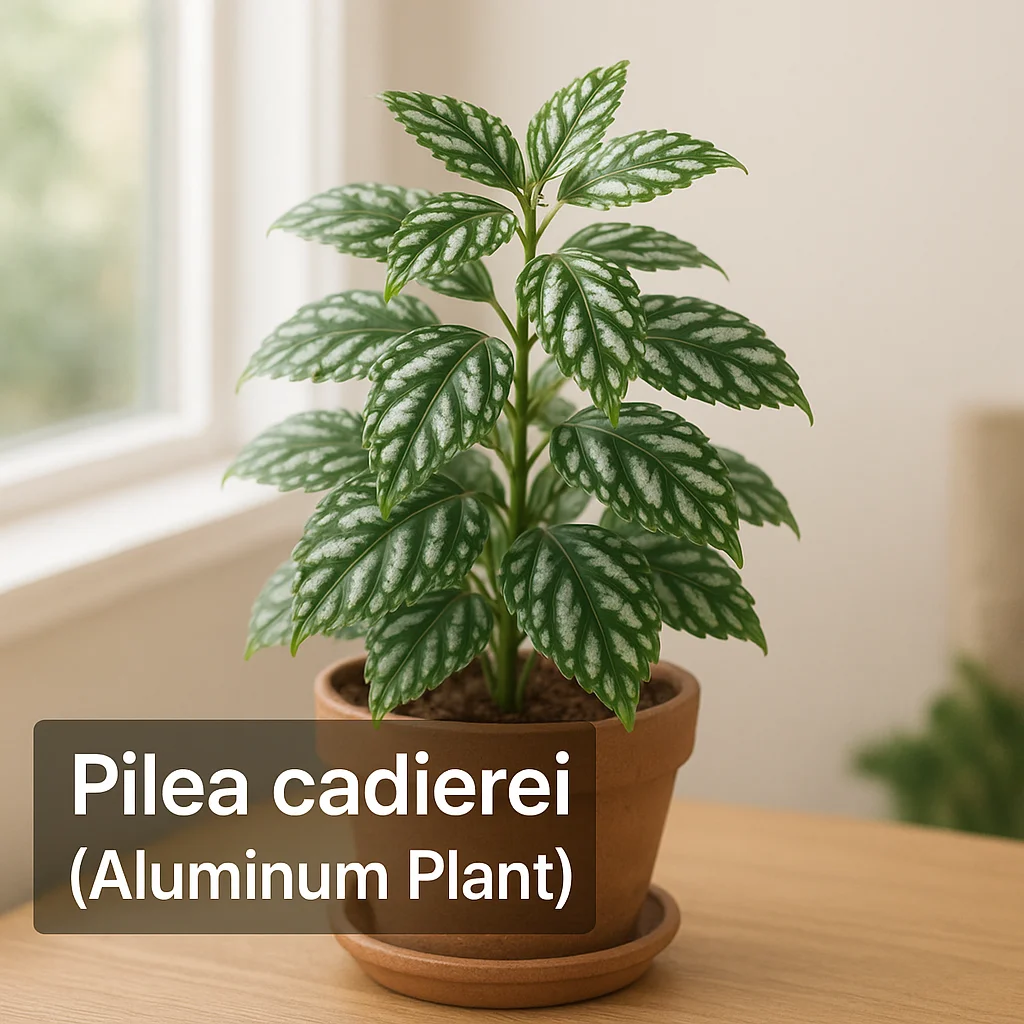
- Common names: Aluminum Plant, Watermelon Pilea
- Scientific name: Pilea cadierei
- Plant type: Foliage
- Growth habit: Upright, shrub-like
- Typical indoor size range: 10 to 12 inches tall, spreads to 8 inches
- Growth speed: Moderate
- Lifespan: Can live many years with care
- Origin: Southeast Asia; mainly Vietnam
- Light preference: Bright indirect light
- Water needs: Moderate; prefers soil to dry slightly between waterings
- Temperature & humidity preference: Warm, high humidity
- Pet safety: May be mildly irritating to pets
- Difficulty: Easy to medium
🔍 Identification & Look-Alikes
The Aluminum Plant is easily recognized by its silvery patches on dark green leaves, resembling aluminum foil. Leaves are oval-shaped, paired oppositely along a slightly hairy, green stem. Although it doesn't often bloom indoors, the plant may produce small, insignificant flowers. Beware of look-alikes such as Pilea nummulariifolia, which shares a creeping habit but lacks the metallic sheen.
- Oval, glossy leaves with silver variegation
- Opposite leaf arrangement
- Green, slightly hairy stems
- Look for silvery leaf patches
- Insignificant indoor flowering; grown for foliage
- Keep an eye out for telltale metallic shine
- Distinction from other Pilea species by leaf pattern
🌍 Origin & Natural Habitat
Native to the tropical forests of Vietnam and other parts of Southeast Asia, the Aluminum Plant thrives in understory environments where damp, humid conditions prevail. This natural habitat provides insight into its care needs indoors, emphasizing the importance of maintaining humidity and avoiding direct sunlight. Understanding the plant's origins helps in mimicking these conditions in home environments.
☀️ Light Requirements
The Aluminum Plant thrives best in bright, indirect light. Placement near a north-facing window or a spot shaded from direct sunlight by sheer curtains works well. Direct sunlight can scorch leaves, while insufficient light leads to dull, leggy growth. Areas too dark may cause the variegation to fade, necessitating a move to brighter conditions.
- Position near a north or east-facing window for optimal light
- Avoid harsh, direct sunlight to prevent leaf burn
- Adjust position if variegation fades; seek brighter spots
- Watch for stretched or leggy stems as a sign of low light
- Can tolerate lower light but maintains best form with more light
- Rotate plant weekly to ensure even growth
- Supplement with artificial grow lights in dim rooms
💧 Watering & Humidity
Maintaining an adequate watering rhythm is crucial for the Aluminum Plant. Allow the top inch of soil to dry slightly between waterings, using a "soak-and-drain" method. During cooler months, reduce watering frequency as evaporation decreases. High humidity, mimicking its native environment, is beneficial. Achieve this by grouping plants, using humidity trays, or placing a humidifier nearby. Signs of overwatering include yellowing leaves and a wilting appearance, whereas underwatering results in crisp, curling leaves.
- Water when the top inch of soil feels dry
- Reduce watering in winter to prevent overwatering
- Use a well-draining potting mix to avoid soggy roots
- Monitor indoor humidity; maintain above 50% if possible
- Position away from heating sources that dry out air
- Notice leaf curl as an indication for increased watering
- Quickly adjust if yellowing leaves are observed
🐛 Soil, Pot & Repotting
Pilea cadierei benefits from an airy, well-draining potting mix, such as a blend containing peat, perlite, and potting soil. Containers should have adequate drainage holes to prevent water logging. Repot the Aluminum Plant annually or when roots become tightly bound, generally indicated by slowed growth or water quickly draining through the pot. When repotting, gently loosen the roots and choose a pot only slightly larger than the previous one to avoid excessive soil retaining too much moisture.
- Use a mix of peat, perlite, and potting soil
- Ensure pots have drainage holes
- Repot in spring when new growth emerges
- Select pots only one size larger to prevent over-soil
- Loosen root ball gently during repotting
- Refresh soil annually to maintain vitality
- Monitor for root-bound symptoms: roots visible at pot base
🌡️ Temperature, Airflow & Seasonal Care
The Aluminum Plant prefers consistent warmth, thriving between 65-75°F (18-24°C). Avoid cold drafts and temperature fluctuations from windows or air conditioning. During winter, the plant may experience slower growth; adjust watering accordingly and avoid fertilization. Ensure moderate air circulation without directed draughts to prevent fungal issues.
- Maintain indoor temperatures between 65-75°F (18-24°C)
- Keep out of cold drafts and sudden temperature shifts
- Provide constant airflow for healthy growth
- Reduce watering in winter; observe plant signs
- Avoid placing near heating or AC vents
- Adjust care as growth slows in colder months
- Stop fertilizing during dormancy
🌸 Flowers, Fruit & Growth Cycle
Pilea cadierei is primarily grown for its striking foliage rather than flowers. While it can produce small white flowers indoors, these are typically inconspicuous. The plant grows through developing new stems and leaves, and may require occasional pruning to maintain shape or remove leggy growth.
🧬 Propagation & Reproduction
The Aluminum Plant propagates easily from stem cuttings. Take cuttings in spring and root them in water or moist soil for best success. While division isn't common, individual stems can be carefully separated for propagation. Seeds are generally not used due to difficulty. Propagation is straightforward, allowing growers to expand their collection with minimal effort.
- Take stem cuttings in spring for new plants
- Root cuttings in water or directly in soil
- Separate individual stems with care for propagation
- Avoid relying on seeds; propagation by cuttings is easiest
- Provide high humidity for successful rooting
🌿 Common Problems, Pests & Prevention
Common issues include yellowing or brown leaf edges, generally caused by watering imbalances. Pests like spider mites and mealybugs may infest if conditions are dry or airflow is poor. Prevent problems with regular inspection, maintaining stable conditions, and proper watering. Ensure leaves are free from dust to allow photosynthesis.
- Check for spider mites and mealybugs regularly
- Wipe leaves clean to prevent pest habitation
- Ensure stable growing conditions for plant health
- Observe leaves for brown edges indicating water issues
- Quarantine new plants before introducing
- Boost humidity to deter typical pests
- Avoid overfertilizing; it can lead to leaf burn
🐾 Pet & Home Safety Notes
While Pilea cadierei isn't known to be toxic, some sources suggest it might be mildly irritating if ingested by pets. To avoid issues, place the plant out of reach or use barriers. If ingestion occurs, seek professional advice.
🏡 Styling Ideas & Best Room Placement
The Aluminum Plant can enhance almost any room with appropriate humidity and lighting, such as bathrooms or kitchens. It also thrives alongside other foliage plants like Ferns and Marantas, adding to its visual appeal as a mid-level shelf or a tabletop plant.
📌 Summary
- Distinctive silver-patterned foliage
- Originates from Southeast Asian rainforests
- Best in bright, indirect light
- Prefers moderate watering with well-draining soil
- Thrives in warm, humid conditions
- Easy propagation from stem cuttings
- Watch for leaf spotting; adjust care as needed
- Minor pet irritant; use caution with placement
- Generally easy indoor plant with proper care