🌱 Echeveria ‘Perle von Nurnberg’
🧾 Quick Facts
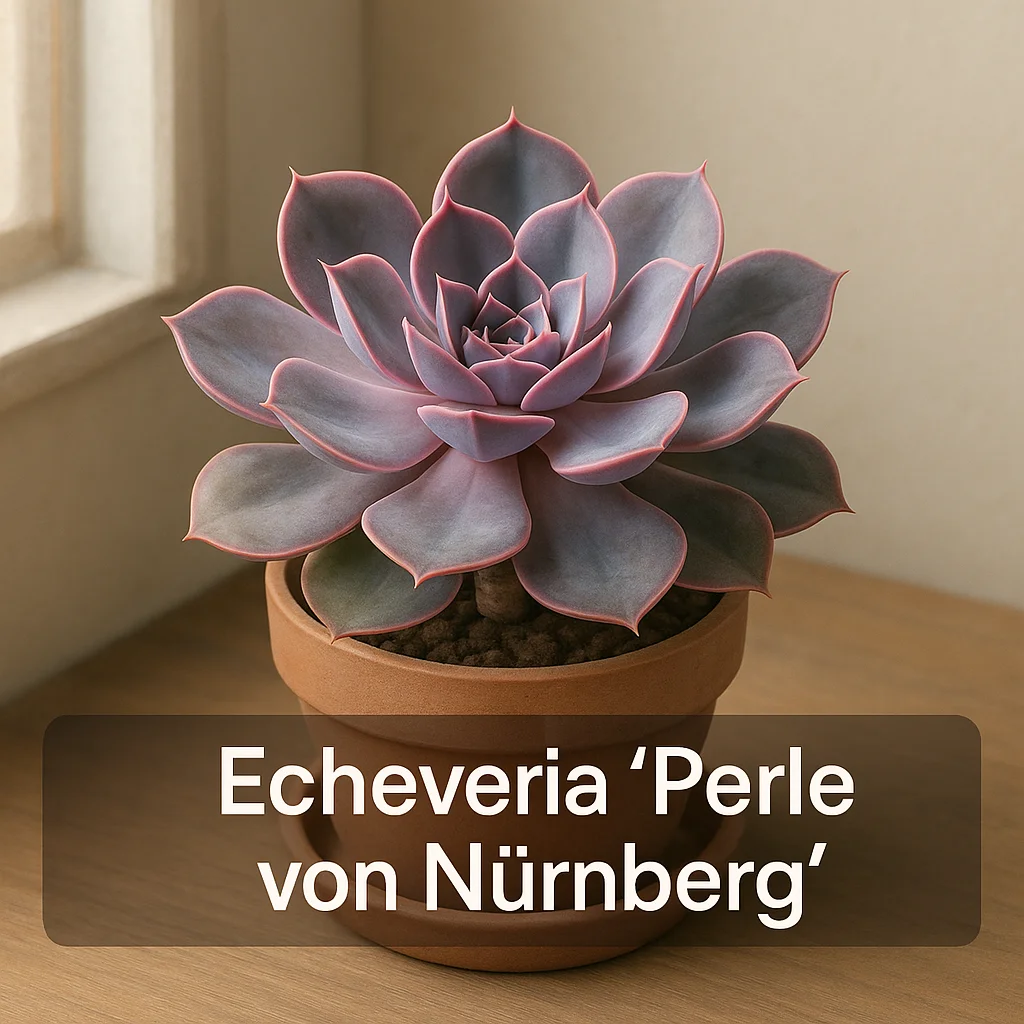
Echeveria ‘Perle von Nurnberg’ is a striking succulent known for its beautiful rosette of leaves that shimmer with a combination of dusty pink and purple hues. This charming plant is popular among indoor gardeners for its easy care and adaptability to indoor conditions.
- Common Names: Perle von Nurnberg
- Scientific Name: Echeveria ‘Perle von Nurnberg’
- Plant Type: Succulent
- Growth Habit: Rosette
- Typical Indoor Size: 4-6 inches in height, 6-8 inches in spread
- Growth Speed: Moderate
- Lifespan: Can live many years with proper care
- Origin: Mexico, Central America
- Light Preference: Bright indirect light; tolerates some direct sunlight
- Water Needs: Low; prefers to dry out between waterings
- Temperature & Humidity: Prefers warm, dry conditions
- Pet Safety: May be irritating to pets if ingested
- Difficulty: Easy
🔍 Identification & Look-Alikes
The Echeveria ‘Perle von Nurnberg’ is easily recognized by its beautiful, symmetrical rosette of fleshy leaves. The leaves are usually dusty lavender or pinkish-purple, highlighted with a subtle silver sheen. The plant's compact form makes it ideal for small spaces. While primarily grown for its foliage, it occasionally blooms with small, bell-shaped pink flowers.
Common look-alikes include other Echeveria species and rosette-forming succulents like Graptopetalum. To tell them apart, note the color intensity and leaf shape, as Echeveria ‘Perle von Nurnberg’ often has deeper hues and a more pronounced rosette pattern.
- Rosette-shaped, compact form
- Dusty pink and purple leaves with a silver sheen
- Fleshy leaves grow optimally with bright light
- Occasionally produces bell-shaped, pink flowers
- Firm, thick leaves typical of succulents
🌍 Origin & Natural Habitat
Native to Mexico and parts of Central America, Echeveria ‘Perle von Nurnberg’ thrives in arid climates. These regions are characterized by warm temperatures and minimal rainfall, mirroring the conditions this succulent prefers indoors.
Understanding its natural habitat helps in providing conditions that imitate its native growth pattern. This knowledge underscores the importance of keeping the plant in bright light and ensuring the soil dries out between watering.
☀️ Light Requirements
Echeveria ‘Perle von Nurnberg’ performs best in bright, indirect light. Position it near a south or east-facing window where it receives plenty of natural light without harsh midday rays. In low light conditions, the leaves may lose their vibrant color, while too much direct sunlight can scorch them.
- Place near bright windows for optimal light
- Avoid intense midday sun exposure
- Check for faded colors as a sign of insufficient light
- Watch for sunburn—pale patches on leaves
- Turn the plant periodically for even light exposure
💧 Watering & Humidity
Adopting a soak-and-dry method is ideal for Echeveria ‘Perle von Nurnberg’. Allow the soil to dry out completely between waterings to prevent root rot. Water more frequently during growing season (spring and summer) and reduce in winter when growth slows.
While average household humidity is typically sufficient, ensure proper airflow. Too much humidity can cause rot, so avoid using humidifiers directly around this plant.
- Permit soil to dry before rewatering
- Water less in winter months
- Craft a comfortable watering rhythm based on season
- Recognize overwatering by soft, mushy leaves
- Identify underwatering through shriveled leaves
🐛 Soil, Pot & Repotting
Choose a well-draining succulent or cactus mix to prevent water retention. Pots with drainage holes are essential. When repotting, look for pot-bound roots or compacted soil as cues. Spring is an optimal time to repot, shifting to a slightly larger pot to accommodate growth.
- Use airy, well-draining soil mix
- Ensure pots have good drainage
- Repot every 2-3 years or when rootbound
- Select a pot one size larger while repotting
- Be gentle during repotting to avoid root damage
🌡️ Temperature, Airflow & Seasonal Care
Preferring temperatures between 65°F to 80°F, Echeveria ‘Perle von Nurnberg’ adapts well to average indoor climates. Avoid placing them in spots with sudden temperature changes like near drafts, air conditioning, or heating vents.
During colder months, reduce watering and allow the plant to enjoy a dormant period. This helps maintain the plant's health year after year.
- Maintain room temperatures: 65°F - 80°F
- Protect from cold drafts and hot air vents
- Reduce watering in the winter
- Avoid exposure to freezing temperatures
- Allow dormancy during cooler months
🌸 Flowers, Fruit & Growth Cycle
Echeveria ‘Perle von Nurnberg’ may occasionally bloom indoors, typically in spring or summer, producing small, beautiful pink flowers. While flowering is a lovely addition, these plants are primarily appreciated for their foliage.
Growth occurs primarily through leaf expansion and new rosette formation. Pruning is rarely necessary, but removing dead or damaged leaves can help maintain aesthetics.
🧬 Propagation & Reproduction
Propagation is best achieved via leaf cuttings or offsets. Carefully twist off a healthy leaf and let it heal for a day. Then, place it on top of soil to encourage root development. Offsets growing from the base of the mother plant can also be separated and replanted.
- Twist leaves gently for propagation
- Allow cuttings to callous over before planting
- Use the same well-draining soil for propagation
- Offsets provide ideal propagation material
- Be patient as rooting can take several weeks
🌿 Common Problems, Pests & Prevention
Watch for common succulent issues like yellowing leaves, which may indicate overwatering, or brown tips that can denote dryness. Pest issues might include mealybugs or spider mites, often managed by quarantining new plants.
Ensure leaves are free of dust and that airflow is adequate. This can help stave off problems before they start.
- Monitor for yellow leaves as water distress
- Spot browning tips as a sign of dryness or heat
- Address mealybugs and spider mites promptly
- Quarantine new plants to avoid pest introduction
- Encourage airflow with breathable spaces
🐾 Pet & Home Safety Notes
Parts of Echeveria ‘Perle von Nurnberg’ may cause irritation if ingested by pets or children. It's advised to place this plant out of reach to prevent curious nibbles. If ingestion is suspected, contact a professional or local poison control.
Use shelves or hanging baskets as safer strategies to keep pets and small children away.
🏡 Styling Ideas & Best Room Placement
Echeveria ‘Perle von Nurnberg’ adds color and texture to living rooms, offices, or kitchens with ample light. Place it alone in decorative pots or pair it with other succulents for a vibrant, varied arrangement.
Consider placing it on windowsills or shelves where it can receive plenty of natural light, or use it as a centerpiece for a succulent garden.
📌 Summary
- Notable for its pink-purple rosette form
- Native to dry, warm climates of Mexico
- Thrives in bright, indirect light conditions
- Requires minimal watering with dry soil intervals
- Prefers well-drained, airy soil
- Optimum temperature range: 65°F - 80°F
- Propagated easily through leaves or offsets
- Watch for usual pests like mites and mealybugs
- Easy to care for, ideal for beginners
- Keep out of reach of pets and small children