🌱 Elephant Bush (Portulacaria afra)
🧾 Quick Facts
The Elephant Bush, known scientifically as Portulacaria afra, is a popular succulent often grown indoors for its attractive foliage. Known for its easy-care nature, it is suitable for beginners and can add a splash of bright green to any home.
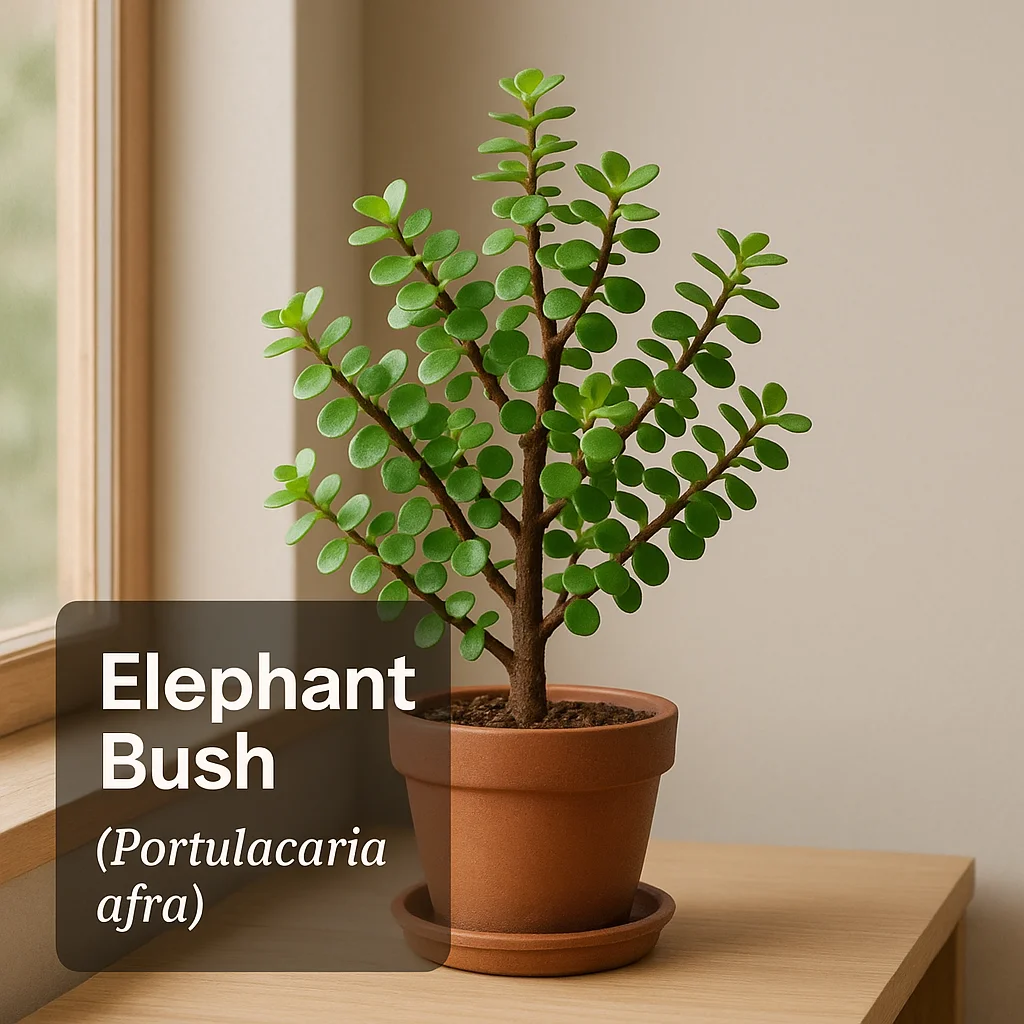
- Common names: Elephant Bush, Miniature Jade, Porkbush
- Scientific name: Portulacaria afra
- Plant type: Succulent
- Growth habit: Shrub-like, can cascade if allowed
- Typical indoor size range: 1-4 feet in height, 1-3 feet spread
- Growth speed: Moderate
- Lifespan: Can live many years with proper care
- Origin: Southern Africa
- Light preference: Bright indirect light, can tolerate some direct sun
- Water needs: Low; prefers to dry out between waterings
- Temperature & humidity preference: Warm, dry conditions are ideal
- Pet safety: Generally considered pet-friendlier compared to other succulents
- Difficulty: Easy
🔍 Identification & Look-Alikes
The Elephant Bush is characterized by its small, fleshy, round leaves that are a vibrant green. Its stems are woody and can take on a reddish hue, particularly when exposed to bright sunlight. Although it is prized for its foliage, it is grown mainly for its leaves as it rarely blooms indoors.
Common look-alikes include the Jade Plant (Crassula ovata), which has thicker leaves and a slightly different growth habit. The Elephant Bush's leaves are generally smaller and rounder.
- Top ID Tips:
- Small, round, glossy green leaves
- Woody, reddish stems
- Compact, shrub-like shape
- May trail or cascade if not pruned
- Rarely produces flowers indoors
- Often confused with the Jade Plant
- Leaves may turn reddish in high light
🌍 Origin & Natural Habitat
Portulacaria afra is native to South Africa, typically found in semi-arid regions. It thrives in warm, dry climates and is adapted to survive long periods without significant rainfall. Understanding its native habitat can help gardeners replicate similar indoor conditions, like providing lots of light and allowing the soil to dry out between waterings.
☀️ Light Requirements
The Elephant Bush prefers bright, indirect light for optimal growth. It can tolerate direct sunlight, especially in the morning, but extended exposure to harsh afternoon sun may cause leaf burn. Placing it near a south or east-facing window is ideal; however, if only lower light conditions are available, ensure that artificial grow lights supplement natural light.
- Light Checklist:
- Place near east or south-facing windows
- Avoid harsh afternoon sun
- Increase artificial light in dim rooms
- Rotate plant regularly for even growth
- Check for leggy growth as a sign of low light
- Leaves may become dull with insufficient light
💧 Watering & Humidity
Water the Elephant Bush using the soak-and-drain method, ensuring the soil dries out completely between waterings. Indoor conditions usually mean watering every couple of weeks in the growing season, and less frequently during winter months. Use a pot with drainage holes to prevent root rot.
Humidity is less of a concern for this succulent; typical household humidity is adequate. Overwatering and stagnant air can lead to issues like fungal growth and root rot.
- Watering Tips:
- Allow soil to dry completely before watering
- Use pots with drainage holes
- Reduce watering in the winter months
- Watch for shriveled leaves as a sign of underwatering
- Yellowing leaves may indicate overwatering
- Adjust watering routine with seasonal changes
🐛 Soil, Pot & Repotting
Opt for a well-draining soil mix, such as one formulated for cacti and succulents. The soil should be airy, allowing water to drain quickly. Terracotta pots are recommended as they help wick moisture away from the soil.
Repotting should occur every couple of years when the plant becomes root bound, noted by slowed growth or roots poking out of the drainage holes. Choose a pot only slightly larger than the current one.
- Repotting Checklist:
- Use cactus or succulent soil mix
- Opt for terracotta pots for better aeration
- Repot every 2-3 years or when root bound
- Ensure new pot is just slightly larger
- Avoid damaging roots during repotting
- Skip fertilizing immediately after repotting
🌡️ Temperature, Airflow & Seasonal Care
Portulacaria afra thrives in warm indoor temperatures, ideally between 65-80°F (18-27°C). Protect the plant from sudden temperature changes, such as drafts from air conditioners or heaters. During winter, growth usually slows, so adjust watering and consider offering supplemental light if the plant receives reduced natural light.
- Seasonal Notes:
- Maintain temperatures between 65-80°F (18-27°C)
- Avoid drafts and sudden temperature changes
- Reduce watering in winter
- Provide supplemental light in darker months
- Watch for leggy growth indicating low light
🌸 Flowers, Fruit & Growth Cycle
Though it may occasionally flower, the Elephant Bush is primarily grown for its foliage indoors. Its small pink or white flowers are more common in its native habitat than inside the home. It grows more vigorously during spring and summer, slowing down in the cooler months.
Pruning is effective for maintaining size and encouraging bushier growth. Use clean tools to avoid introducing diseases.
🧬 Propagation & Reproduction
The Elephant Bush is easy to propagate through stem cuttings. Cut a healthy segment of the stem, let it dry for a day to callus, and plant it in a well-draining soil mix. Water sparingly until new growth is visible, which indicates successful rooting.
- Propagation Tips:
- Choose healthy, disease-free stems
- Let cuttings callus before planting
- Use a well-draining succulent mix
- Water lightly until rooted
- Best to propagate during growing season
🌿 Common Problems, Pests & Prevention
Key issues with the Elephant Bush include yellow leaves from overwatering, leaf drop from poor drainage, and pest infestations from spider mites and mealybugs. Consistent care and maintaining good air circulation help prevent these problems. Regularly check for pests and clean leaves to keep the plant healthy.
- Prevention Basics:
- Do not overwater; ensure proper drainage
- Keep leaves clean and dust-free
- Regularly inspect for pests
- Quarantine new plants before integrating
- Promote airflow around plants
- Avoid overly humid environments
🐾 Pet & Home Safety Notes
While the Elephant Bush is considered less harmful to pets compared to other succulents, it may cause mild irritation if ingested. To be safe, place the plant out of reach of pets and children. If ingestion is suspected, contact a professional or local poison control resources.
🏡 Styling Ideas & Best Room Placement
The Elephant Bush fits well into a variety of interior settings, including living rooms and offices. Given its light preferences, a bright kitchen or bathroom window can be an ideal spot. It can be grown in hanging baskets for a cascading effect or kept in small pots for desktops. Pair it with other succulents for a harmonious group display.
📌 Summary
- Recognizable by small, round green leaves
- Native to Southern Africa's semi-arid regions
- Prefers bright indirect light, tolerates some direct sun
- Low water needs; let soil dry between waterings
- Well-draining succulent soil essential for health
- Warm temperatures and good airflow support growth
- Easy propagation from stem cuttings
- Common issues include overwatering and pest infestations
- Generally pet-friendlier than some succulents
- Excellent choice for decorators seeking low-maintenance greens