🌱 Graptopetalum paraguayense (Ghost Plant)
🧾 Quick Facts
The Graptopetalum paraguayense, commonly known as the Ghost Plant, is a succulent adored for its intriguing leaf color and resilient nature. This plant is an ideal choice for both novice and experienced indoor gardeners. Learn some quick facts to get started with its care:
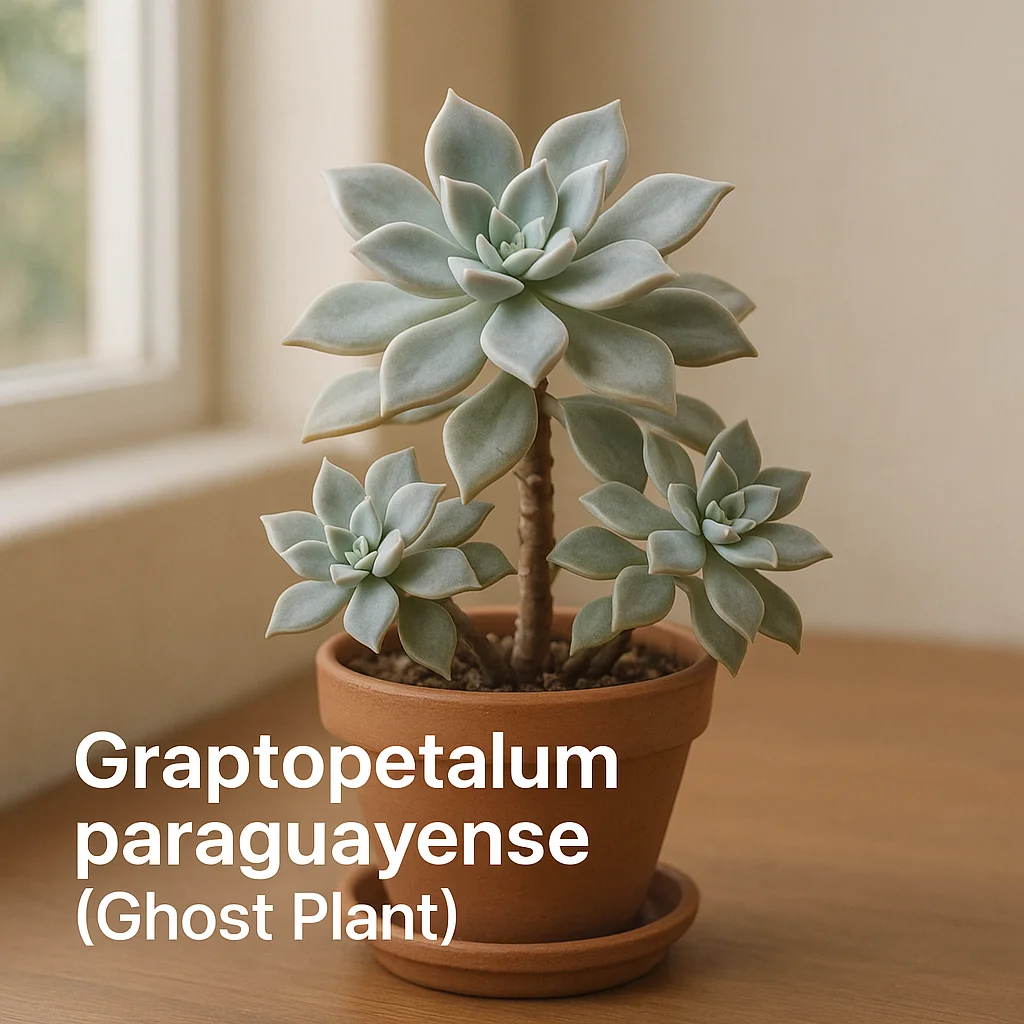
- Common names: Ghost Plant, Mother-of-Pearl Plant
- Scientific name: Graptopetalum paraguayense
- Plant type: Succulent
- Growth habit: Rosette forming and trailing
- Typical indoor size range: 6-12 inches tall, 12-24 inches spread
- Growth speed: Moderate
- Lifespan: Can live many years with proper care
- Origin: Mexico
- Light preference: Bright indirect light; tolerates direct sun
- Water needs: Low; prefers to dry out between waterings
- Temperature & humidity preference: Prefers dry air and temperatures between 60-80°F (16-27°C)
- Pet safety: May be irritating to pets if ingested
- Difficulty: Easy
🔍 Identification & Look-Alikes
The Graptopetalum paraguayense is easily recognized by its rosette-patterned, fleshy leaves that have a pearlescent sheen. Leaves are oblong to oval, with a waxy texture that reflects a variety of colors such as bluish-gray, blush, and sometimes a hint of purple, depending on light exposure. Its stems tend to elongate as the plant matures, allowing the leaves to cascade gracefully.
While it primarily showcases its unique foliage, it can occasionally produce small, star-shaped flowers on long stems. The flowers are usually white with a hint of red or yellow. The plant is sometimes confused with Echeveria or Sedum species due to similar leaf arrangements. Graptopetalum tends to have a more pointed leaf tip compared to Echeveria's rounder forms and often has a waxier coating than Sedum.
- Top ID Tips:
- Rosette leaf arrangement
- Pearly, waxy leaf surface
- Color shifts in response to light
- Pointed leaf tips
- Trailing stems as it matures
- Produces star-shaped flowers infrequently
- Leaf cuttings root easily
🌍 Origin & Natural Habitat
Graptopetalum paraguayense hails from Mexico, where it naturally thrives on rocky cliffs and in arid, well-drained soils. Its resilience comes from adaptations to the regions' dry climate and variation in temperature. The plant is accustomed to long periods of drought, punctuated by brief downpours.
Understanding its habitat is crucial for indoor care, especially regarding light and watering needs. Mimicking its natural conditions by offering ample light and allowing the soil to dry completely between waterings can significantly enhance its vitality and coloration indoors.
☀️ Light Requirements
Graptopetalum paraguayense prefers bright indirect light for optimal growth and color. It can tolerate some direct sun, which may intensify its colors, but too much can scorch the leaves. A south or east-facing window usually provides an ideal light balance.
Inadequate light may cause the plant to become leggy and lose its vibrant color, while too much direct sunlight can cause sunburn on the foliage. Adjust its position gradually to find the right light level.
- Light Checklist:
- Place near a south or east-facing window
- Avoid prolonged midday direct sun
- Faded color or legginess indicates low light
- Sunburn or scorched tips suggest too much direct sun
- Rotate the plant for even light exposure
- Supplement with grow lights if necessary
💧 Watering & Humidity
As a succulent, the Ghost Plant prefers a soak-and-dry method of watering. Allow the soil to dry out completely between thorough waterings. The frequency will depend on room temperature, light levels, and the season, but typically, watering every 1-2 weeks is sufficient.
Higher humidity is not necessary, and typical indoor humidity levels are usually adequate. Overwatering is a common mistake, leading to root rot. Conversely, underwatered plants may have wrinkled or shriveled leaves.
- Watering Tips:
- Allow soil to dry completely before re-watering
- Adjust watering based on light and temperature
- Avoid watering leaves directly
- Reduce watering frequency in winter
- Droopy, wrinkled leaves indicate underwatering
- Mushy leaves indicate overwatering
🐛 Soil, Pot & Repotting
The Ghost Plant thrives in a well-draining, gritty soil mix. A cactus or succulent mix is ideal, often amended with additional perlite or pumice. Pots should have ample drainage holes to prevent water accumulation, and terracotta pots can help wick excess moisture away, supporting root health.
Consider repotting every 2-3 years, or when growth slows down and roots become cramped. Repot during the spring or summer for best results, and choose a pot only slightly larger than the current one to discourage overwatering.
- Repotting Checklist:
- Use a well-draining cactus mix
- Choose pots with drainage holes
- Consider terracotta for better moisture control
- Repot in early growing season
- Only slightly increase pot size
- Ensure roots are not compacted
🌡️ Temperature, Airflow & Seasonal Care
This succulent is comfortable in temperatures between 60-80°F (16-27°C) and prefers a dry environment. Protect it from drafts and sudden temperature changes, such as those from heating or cooling vents.
During winter, growth naturally slows down, requiring less water and no fertilizer. Ensure good airflow around the plant to prevent pests and mold.
- Seasonal Notes:
- Maintain consistent temperatures
- Avoid placing near cold drafts or heat vents
- Decrease watering in winter
- No need for extra humidity
- Expect slower growth in cooler months
- Confirm airflow to prevent mold
🌸 Flowers, Fruit & Growth Cycle
While Graptopetalum paraguayense can bloom indoors, it's not overly common. When it does, expect small, starry white flowers, usually emerging in spring and summer. Its growth focuses more on developing new rosettes and extending stems.
Pruning is minimal, generally limited to removing dead leaves or shaping its length if desired. Keep cuts clean and sharp to avoid damage to the plant.
🧬 Propagation & Reproduction
Ghost Plants are easily propagated through leaf or stem cuttings. Simply set a leaf or cut stem on well-draining soil, mist occasionally, and wait for roots to develop. This process can take a few weeks. It's also possible to propagate from offsets, which form naturally at the base of mature plants.
- Propagation Tips:
- Use healthy leaves or stems
- Lay cuttings on dry soil until roots form
- Mist cuttings lightly; avoid soaking
- Separate offsets gently when they appear
- Avoid overwatering new cuttings
🌿 Common Problems, Pests & Prevention
Common issues include yellowing leaves or leaf drop from overwatering, and legginess from insufficient light. Pests like spider mites, mealybugs, and scale are occasional. Regularly inspect the plant and maintain stable care to prevent issues.
- Prevention Basics:
- Inspect new plants before introducing
- Maintain regular watering schedule
- Ensure adequate lighting
- Provide good air circulation
- Regularly clean leaves gently
🐾 Pet & Home Safety Notes
Some sources indicate that the Graptopetalum paraguayense may be irritating if ingested by pets or children. Thus, it’s recommended to place it out of reach of curious pets and young children. If ingestion occurs, contact a professional or local poison control resources promptly.
🏡 Styling Ideas & Best Room Placement
The Ghost Plant fits well in various spaces. Its trailing nature makes it ideal for hanging baskets or placed on shelves where it can cascade down. It thrives in brightly lit rooms like the kitchen or living room and pairs beautifully with other succulents and cacti. Consider its drought-tolerant nature in areas with fluctuating humidity, such as bathrooms with sufficient sunlight.
📌 Summary
- Cascading rosettes with pearlescent leaves
- Originates from dry regions in Mexico
- Thrives in bright, indirect light
- Prefers soak-and-dry watering method
- Best in well-draining cactus mix soil
- Maintain consistent temperature and airflow
- Propagation is straightforward with leaves or offsets
- Watch for common pests and manage them promptly
- Exercise caution with pets and young children
- Ideal for diverse indoor placements, including hanging displays