🌱 Haworthia attenuata (Zebra Haworthia)
🧾 Quick Facts
The Zebra Haworthia, known for its striking appearance and ease of care, is a popular choice among indoor plant enthusiasts. Here's a quick overview of its characteristics and care requirements:
- Common names: Zebra Plant, Zebra Haworthia
- Scientific name: Haworthia attenuata
- Plant type: Succulent
- Growth habit: Rosette
- Typical indoor size: 4-8 inches tall, 4-6 inches wide
- Growth speed: Slow
- Lifespan: Can live many years with proper care
- Origin: Southern Africa (dry areas)
- Light preference: Bright indirect light; some direct sun is beneficial
- Water needs: Low; prefers to dry out between waterings
- Temperature & humidity: Prefers moderate indoor temperatures and low humidity
- Pet safety: Often listed as non-toxic to pets, though ingestion can cause irritation
- Difficulty: Easy
🔍 Identification & Look-Alikes
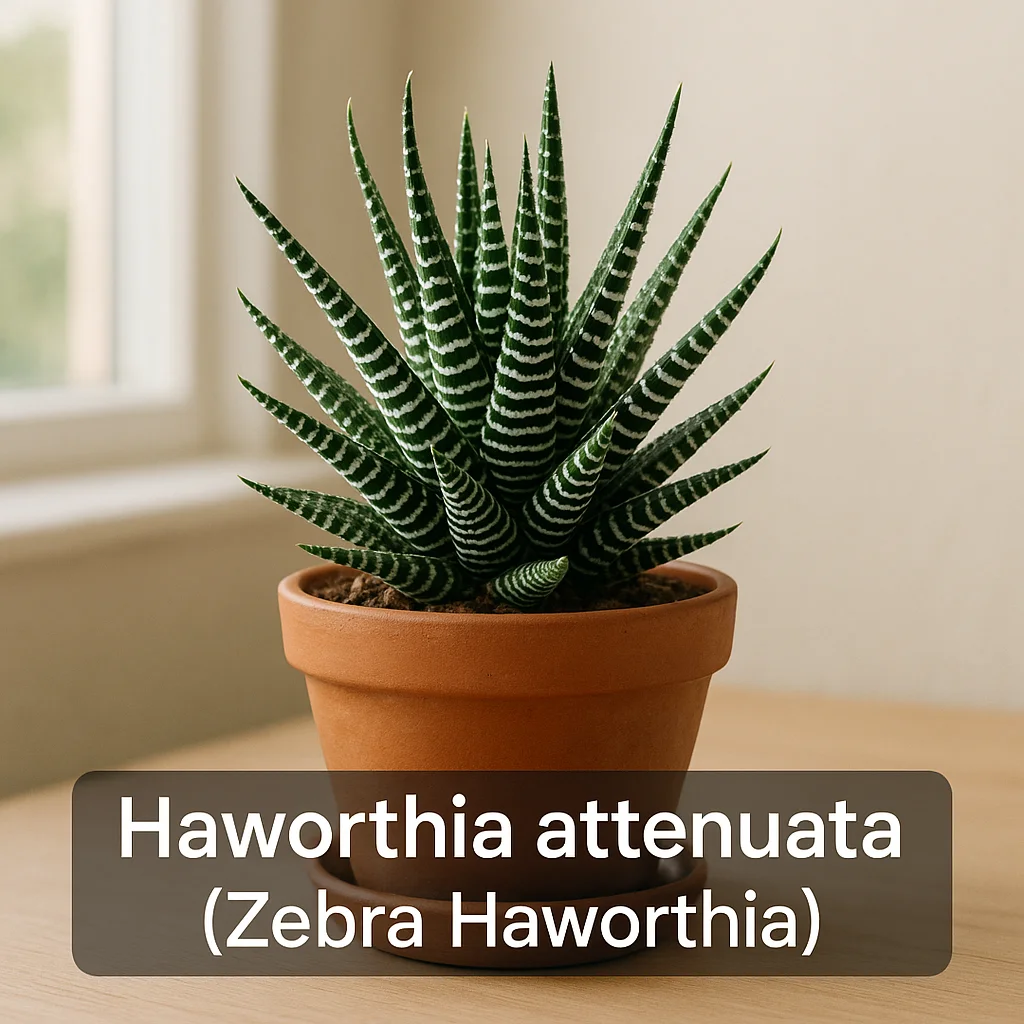
The Zebra Haworthia is easily distinguished by its rosette form of thick, pointed leaves featuring horizontal white stripes or "tubercules" on a dark green background. Unlike some succulents, its leaves grow in a layered fashion without a central stem. Variegation and color can deepen when exposed to more bright light.
This plant is primarily grown for its foliage and rarely blooms indoors. When it does flower, expect small, tubular, white flowers on long stems.
Common look-alikes include Haworthia fasciata, which lacks the tubercles on the underside of the leaves. To tell them apart, observe the texture of the leaf surfaces and the dense clustering of leaves.
- Leaves are thick and pointed with horizontal white stripes.
- No central stem; leaves grow as a compact rosette.
- Leaf texture is ridged due to tubercules.
- Primarily dark green with white variegation.
- Small white flowers may appear on long, slender stems.
- Grown mainly for its striking foliage.
- Often confused with Haworthia fasciata; observe leaf undersides for differences.
- Offsets tend to grow tightly around the mother plant.
🌍 Origin & Natural Habitat
Haworthia attenuata hails from Southern Africa where it thrives in dry, arid environments. It is typically found growing in rocky outcrops and sandy soils, enduring the heat and prolonged dry spells common to its native desert habitat. Understanding its natural growth conditions helps with indoor care, as this plant is well-adapted to endure periods of drought and prefers a well-draining soil mix.
This plant's natural tolerance to drier conditions makes it quite manageable in indoor settings, as it doesn't require high humidity or constant moisture.
☀️ Light Requirements
The Zebra Haworthia enjoys bright indirect light. Some direct sunlight, particularly in the morning, can enhance its color and structure. However, prolonged exposure to intense afternoon sun may lead to leaf burn. A windowsill with filtered light or indirect light will suffice.
Insufficient light may cause stretching (etiolation), with leaves becoming elongated and less compact. Conversely, too much direct light can lead to yellowing or brown patches on the leaves.
- Place near east or south-facing windows for best results.
- Ensure filtered or indirect light; sheer curtains can diffuse sunlight.
- Rotating the plant regularly encourages even growth.
- Insufficient light results in stretching and dull color.
- Excessive light leads to leaf burn; monitor for changes.
- Adjust placement if leaves show signs of sunburn or light deprivation.
💧 Watering & Humidity
The key to watering Haworthia attenuata is balance. Allow the soil to dry completely between waterings, then water deeply, allowing excess water to drain. As a succulent, it stores water in its leaves, so overwatering can lead to root rot.
Water requirements vary with pot size, light, and season, with less frequent watering needed in lower light and cooler temperatures. It thrives in average indoor humidity and doesn't require extra environmental moisture.
- Water thoroughly, then let the soil dry out completely.
- Increased watering may be needed during summer growth periods.
- Decrease watering significantly in winter or dormant months.
- Use a moisture meter or check soil dryness with your finger.
- Signs of overwatering include soggy soil and mushy leaves.
- Underwatering signs include wilting or wrinkled leaves.
- Avoid misting, as it does not require extra humidity.
🐛 Soil, Pot & Repotting
This plant requires a well-draining soil mix, typically a cactus or succulent blend. A gritty composition prevents water retention and supports root health. Choose pots with drainage holes to avoid waterlogging.
Repotting is not frequent, often needed every 2-3 years or when the plant becomes rootbound. Indications for repotting include slowed growth, noticeable roots through drainage holes, or trouble retaining soil moisture. When repotting, upgrade to a pot just one size larger.
- Use a well-draining cactus or succulent soil mix.
- Ensure pots have drainage holes.
- Repot infrequently, only as needed.
- Look for roots poking through drainage holes as a sign to repot.
- Choose terracotta pots for better breathability, or plastic for lighter weight.
- Repot gently, minimizing root disturbance.
- Water sparingly after repotting, resume regular schedule gradually.
- Consider adding grit like perlite or sand to improve drainage.
🌡️ Temperature, Airflow & Seasonal Care
Zebra Haworthia enjoys temperatures between 65-80°F, typical of the average home environment. It dislikes sudden temperature changes or drafts, so avoid placing it near air conditioning or heating vents.
During winter, growth slows, and watering should be adjusted to prevent rot. While the plant doesn’t require a dormant period, reducing watering and light can simulate seasonal changes found in its natural habitat.
- Maintain consistent temperatures, avoiding extremes.
- Prevent exposure to drafts or strong air flows.
- Reduce watering frequency during winter.
- Keep away from direct sources of heat or cold air.
- Gradually adjust care as seasons change to support health.
- Be alert for temperature-related stress signs like leaf curling.
🌸 Flowers, Fruit & Growth Cycle
Flowering is infrequent indoors, occurring under ideal conditions typically in spring or summer. If it does bloom, expect dainty, white tubular flowers on long, slender stalks. Indoor fruiting is uncommon.
The plant’s slow growth produces new leaves from the center of the rosette, expanding outward over time. Offsets or "pups" may appear at the plant's base, which can mature into individual plants over time.
Pruning is minimal; simply remove dead or damaged leaves to maintain appearance and health.
🧬 Propagation & Reproduction
Propagation of the Zebra Haworthia is most easily achieved through division or by removing offsets. Patience is key, as it grows slowly.
For offset separation, wait until pups have developed a few of their own roots. Carefully separate from the mother plant using a clean knife, allowing the cut end to dry before planting in a suitable soil mix.
- Best propagation method is division of offsets.
- Ensure offsets have roots prior to separation for best success.
- Use sterile tools to avoid disease spread during propagation.
- Allow cut ends to heal before planting offsets.
- Keep newly potted offsets in indirect light until established.
- Water sparingly until roots are firmly established in new soil.
🌿 Common Problems, Pests & Prevention
While generally resilient, Haworthia attenuata can occasionally face issues like yellowing leaves or root rot, often due to overwatering. Brown tips may indicate underwatering or low humidity.
Common pests include spider mites and mealybugs, which can be managed by cleaning leaves with a damp cloth or utilizing safe pest control practices. Inspect plants regularly to spot infestations early.
Best practices for healthy growth include stable care routines, avoiding overwatering, and maintaining sufficient airflow.
- Yellowing foliage often indicates overwatering; check soil moisture.
- Brown tips may suggest dry conditions or low humidity.
- Inspect regularly for spider mites, mealybugs, and scale.
- Quarantine new plants to prevent introducing pests.
- Wipe leaves clean to deter pests and maintain appearance.
- Monitor and adjust care to prevent common succulent issues.
🐾 Pet & Home Safety Notes
While Zebra Haworthia is generally non-toxic to pets and children, ingestion can still lead to digestive discomfort or irritation. Place plants out of reach where pets and small children tend to roam and be mindful of unusual behavior that may indicate ingestion.
If ingestion is suspected, it's prudent to contact a professional or local poison control resources for guidance.
🏡 Styling Ideas & Best Room Placement
The compact nature and striking looks of the Zebra Haworthia make it suited to a variety of settings. Place on shelves, desks, or windowsills to capitalize on indirect light.
Positioning the plant in the kitchen or bathroom, where humidity may naturally be higher, can work well, provided there's ample light. Group with other succulents or low-water plants for a cohesive arrangement.
📌 Summary
- Zebra Haworthia is easy to identify with its characteristic striped foliage.
- Native to Southern Africa, it thrives in dry, rocky environments.
- Enjoys bright, indirect light; tolerates some direct morning sun.
- Prefers to dry out completely between waterings; watch for overwatering signs.
- Uses a well-draining succulent soil mix; repot infrequently.
- Stable indoor temperatures are best; protect from drafts.
- Propagation is simple by separating offsets; allow roots to establish.
- Watch for common succulent pests and prevent overwatering.
- Non-toxic to pets, but ingestion may cause irritation.
- Easy-care plant suitable for shelves, kitchens, and office settings.