🌱 Haworthia cooperi
🧾 Quick Facts
Haworthia cooperi is a fascinating succulent prized for its distinctive rosette of translucent leaves. This delightful plant is ideal for beginners due to its forgiving nature and minimal care requirements.
- Common names: Window Haworthia, Cooper's Haworthia
- Scientific name: Haworthia cooperi
- Plant type: Succulent
- Growth habit: Rosette
- Typical indoor size range: 3-5 inches in height, 4-6 inches in diameter
- Growth speed: Slow
- Lifespan: Can live many years with proper care
- Origin: Southern Africa; rocky and arid habitats
- Light preference: Bright indirect light
- Water needs: Low, prefers dry-out periods
- Temperature & humidity preference: Thrives in average household conditions; low humidity preferred
- Pet safety: Generally considered pet-friendlier
- Difficulty: Easy
🔍 Identification & Look-Alikes
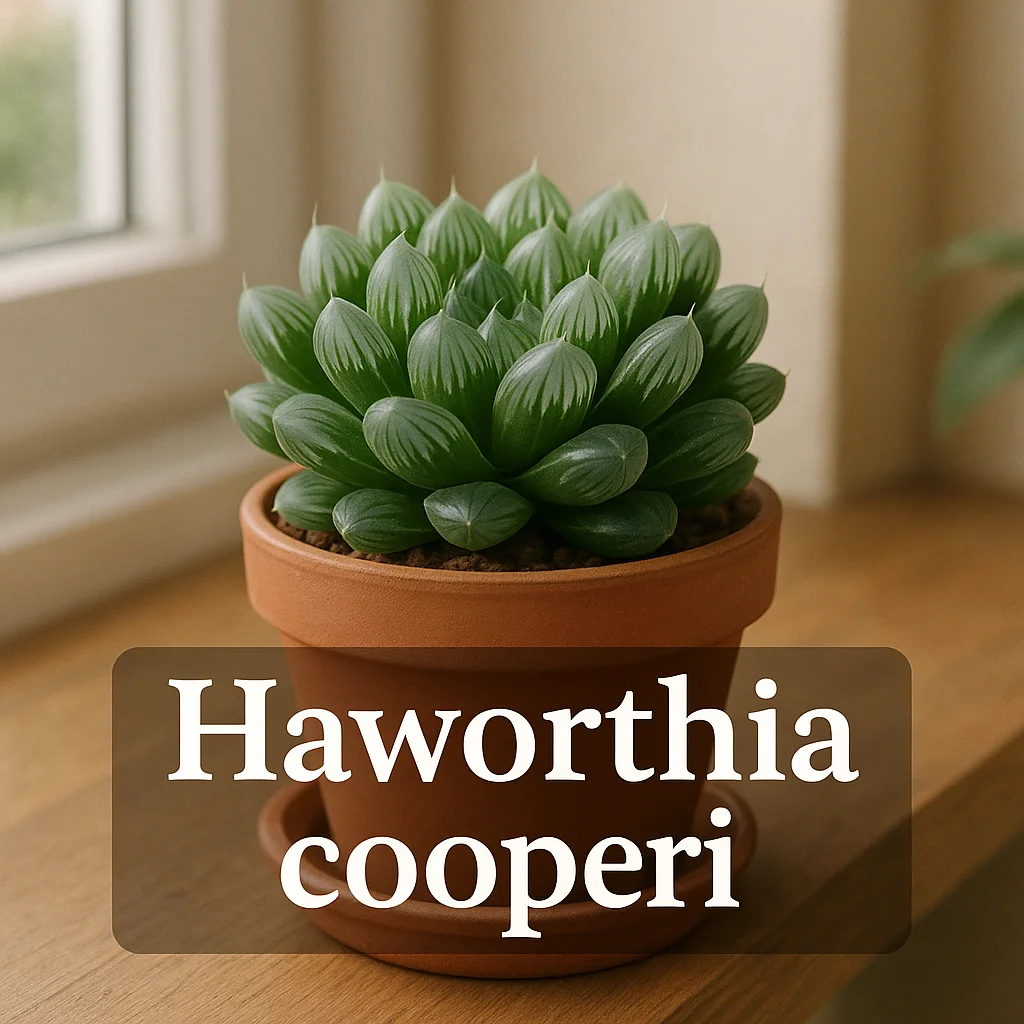
Haworthia cooperi is easily recognized by its compact rosette of fleshy, translucent leaves that often resemble small jewels. The leaves are generally bluish-green with transparent "windows" at their tips, allowing sunlight to pass through and aiding photosynthesis. The plant lacks a typical stem, forming a dense cluster at the soil level.
Common look-alikes include other Haworthia species such as Haworthia retusa and Haworthia cymbiformis, which feature similar leaf windows but differ in leaf shape and arrangement. They are often confused with Aloes due to their similar appearance, but Aloes grow larger and form thicker leaves.
- Rosette arrangement with fleshy, translucent leaves
- Leaf windows that allow sunlight through
- Blue-green color with a shiny, semi-transparent texture
- Minimal stem; mainly basal foliage
- Rarely blooms indoors; grown primarily for foliage
- Look-alikes include Haworthia cymbiformis and Aloes
- Compact and small-growing, ideal for small spaces >
🌍 Origin & Natural Habitat
Haworthia cooperi hails from the rocky terrains of Southern Africa, specifically in regions such as Eastern Cape Province. These areas are characterized by arid conditions and well-drained soils. The succulent nature of the plant allows it to survive prolonged dry spells by storing water in its fleshy leaves.
Understanding its natural habitat provides valuable insights into its care. The rocky substrates and well-drained soils indicate a preference for airy, fast-draining potting mixes indoors, mimicking its natural growing conditions.
☀️ Light Requirements
Haworthia cooperi thrives best in bright, indirect light. A north or east-facing window usually provides optimal light conditions. Direct sunlight, especially during the intense afternoon hours, can cause leaf scorching. Bright indirect light encourages healthy leaf coloration and compact growth.
In inadequate light, the plant may become elongated, with pale leaves. Conversely, too much intense light can bleach the leaves or cause browning at the tips.
- Place near north or east-facing windows
- Bright indirect light is ideal
- Avoid intense, direct afternoon sun
- Watch for signs of leaf elongation from low light
- Monitor for leaf scorching under too much light
- Consider supplemental lighting in dark rooms >
💧 Watering & Humidity
Water Haworthia cooperi sparingly, allowing the soil to dry out completely between waterings. A thorough soak and drain approach works well, ensuring proper hydration without waterlogging the roots. Watering should be adjusted based on pot size, indoor conditions, and seasons.
This succulent prefers low humidity environments, typical of average indoor settings. Avoid frequent misting or placing the plant in overly humid areas.
- Allow soil to dry thoroughly before re-watering
- Water less frequently in winter
- Avoid leaving water in the saucer
- Low humidity is adequate
- Signs of overwatering: mushy, yellowing leaves
- Signs of underwatering: shriveled leaves >
🐛 Soil, Pot & Repotting
Haworthia cooperi demands a well-draining, sandy potting mix, ideally designed for cacti and succulents. A terracotta pot with drainage holes promotes healthy airflow and water drainage.
Repotting is necessary when the plant becomes root-bound or water drains too quickly. It's typically repotted every 2-3 years, with a slight increase in pot size to accommodate healthy root growth.
- Use gritty, well-draining soil
- Terracotta pots with drainage holes are preferred
- Repot every 2-3 years or when root-bound
- Opt for a slightly larger pot when repotting
- Gently remove the plant to avoid root damage >
🌡️ Temperature, Airflow & Seasonal Care
This succulent thrives in temperatures ranging from 65°F to 85°F. Avoid cold drafts and sudden temperature changes. During seasonal shifts, especially winter, growth slows, and watering should be reduced accordingly.
Ensure good airflow around the plant to prevent fungal issues and promote healthy growth.
- Keep between 65°F and 85°F
- Avoid cold drafts and temperature fluctuations
- Reduce watering in winter
- Adequate airflow prevents fungal problems
- Not frost-tolerant; avoid exposure to near-freezing temperatures >
🌸 Flowers, Fruit & Growth Cycle
Haworthia cooperi may occasionally flower indoors, producing small, tubular white blooms on long, slender stalks during spring or summer. Flowering is inconsistent indoors and varies greatly with light and care conditions.
Growth is typically centered on producing new rosettes or offsets, expanding the plant's diameter rather than its height.
Prune off any dead or dying leaves to maintain the plant's aesthetics and ensure good health.
🧬 Propagation & Reproduction
The most common method to propagate Haworthia cooperi is through division or offsets. As the plant grows, it naturally produces offsets or "pups" at its base, which can be separated and potted individually.
Leaf propagation is less successful with Haworthias compared to other succulents, and seed propagation is rare indoors due to flowering inconsistencies.
- Separate offsets carefully for propagation
- Allow offsets to dry before potting
- Pine needle method for best results
- Leaf propagation is uncommon
- Seed propagation is impractical for home growers
- Best propagated during the growing season (spring/summer) >
🌿 Common Problems, Pests & Prevention
While generally resilient, Haworthia cooperi can face issues such as yellowing or brown tips, often from improper lighting or watering. Underwatering leads to shriveled leaves, while overwatering causes root rot.
Common pests include spider mites, mealybugs, and scale. Prevent these with regular inspection and cleaning leaves without using harsh chemicals.
- Yellow leaves signal overwatering
- Brown tips may result from too much sun or underwatering
- Inspect regularly for pests
- Encourage airflow to deter fungal issues
- Quarantine new plants to prevent pest introduction >
🐾 Pet & Home Safety Notes
Haworthia cooperi is generally considered safe for pets, though ingestion in large quantities might cause mild digestive upset. It is wise to place the plant out of reach to avoid accidental ingestion by pets or children.
If ingestion is suspected, contacting a professional or local poison control resource is recommended.
🏡 Styling Ideas & Best Room Placement
Thanks to its compact size, Haworthia cooperi fits perfectly in a variety of indoor settings. It brightens tabletops, shelves, or window sills. Ideal places include offices, living rooms, and kitchens with adequate indirect light.
Pair with larger foliage plants to add texture and diversity to your indoor garden. Its small size makes it perfect for smaller arrangements or terrarium settings.
📌 Summary
- Identify by rosette of translucent, jewel-like leaves
- Native to Southern Africa's arid regions
- Thrives in bright indirect light; avoid intense sun
- Low water needs; allow soil to dry between waterings
- Prefers gritty, well-draining soil; terracotta pots
- Ideal indoor temperatures 65°F–85°F
- Propagate through offsets; seeds uncommon
- Common issues include yellowing or brown tips
- Generally safe for pets; place out of reach
- Easy-care succulent perfect for beginners >