🌱 Kalanchoe blossfeldiana (Flaming Katy)
The vibrant and colorful Kalanchoe blossfeldiana, often known as Flaming Katy, is a popular flowering houseplant cherished for its bright blooms and ease of care. It’s commonly seen in homes and offices where its cheerful flowers can bring a touch of brightness even during the colder months. Here's a comprehensive guide to understanding and caring for this unique succulent.
🧾 Quick Facts
Here are some essential insights into the Kalanchoe blossfeldiana:
- Common names: Flaming Katy, Christmas Kalanchoe, Widow’s-thrill
- Scientific name: Kalanchoe blossfeldiana
- Plant type: Flowering succulent
- Growth habit: Upright, bushy
- Typical indoor size range: 6–18 inches tall and wide
- Growth speed: Moderate
- Lifespan: Can live many years with proper care
- Origin: Madagascar; rocky, dry regions
- Light preference: Bright indirect light; can tolerate some morning sun
- Water needs: Moderate; allow soil to dry slightly between waterings
- Temperature & humidity preference: Prefers warmer temperatures; thrives in moderate humidity
- Pet safety: May be irritating/toxic to pets if ingested
- Difficulty: Easy
🔍 Identification & Look-Alikes
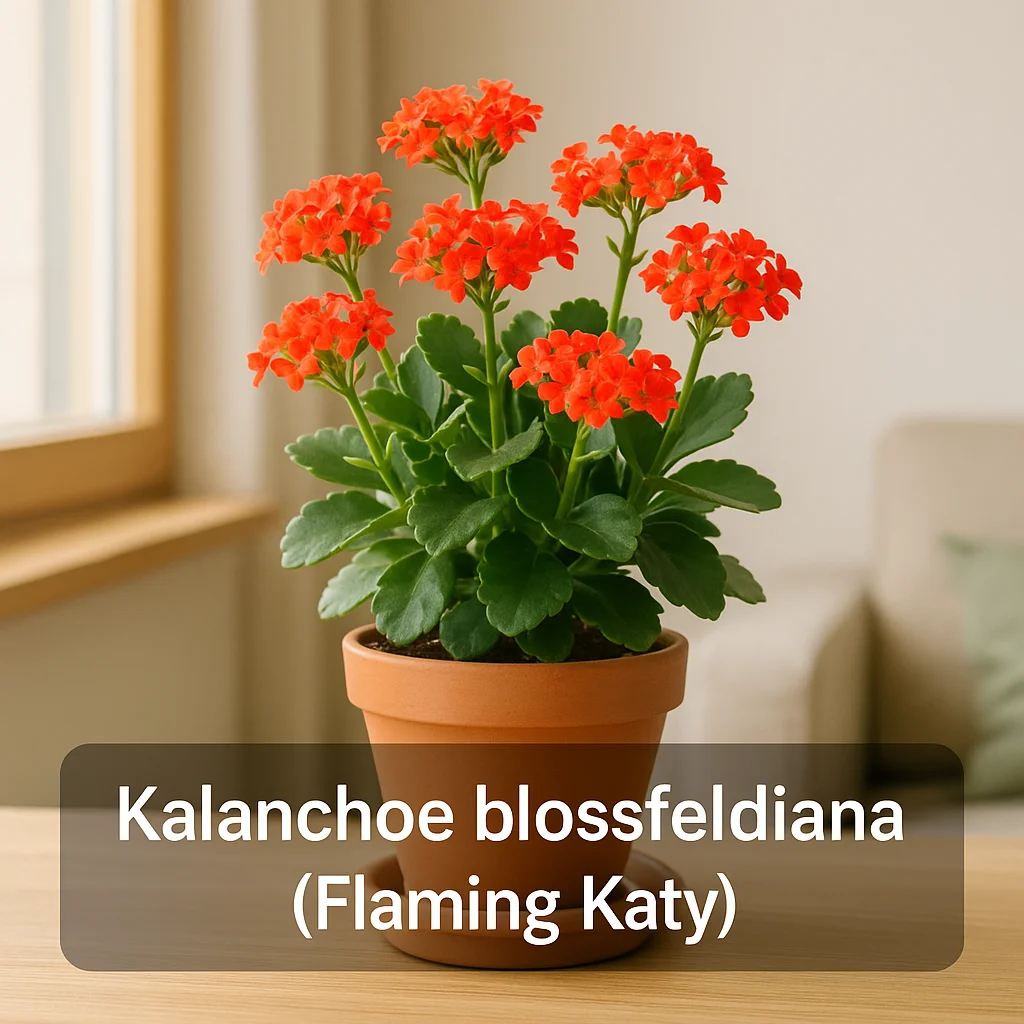
The Kalanchoe blossfeldiana is easily identified by its glossy, green leaves and dense clusters of small, vibrant flowers that come in various colors, including reds, pinks, oranges, yellows, and whites. The leaves are typically scalloped and fleshy, a characteristic feature of its succulent nature.
The upright, bushy form of the plant distinguishes it from other similar succulents. While it is mostly confused with other Kalanchoe species, its characteristic flowers and bushy appearance in an indoor environment help set it apart.
- Top ID Tips:
- Look for dense clusters of small flowers in various bright colors.
- Check for glossy, scalloped, fleshy leaves.
- Upright, compact, and bushy growth habit.
- Flowers typically bloom at the top of the plant.
- Leaf color is solid green, occasionally with a slight sheen.
- Grown mainly for its vibrant flowers, but foliage is also attractive.
- Compare with other succulents; note flower differences.
- Kalanchoe flowers tend to have a prolonged blooming period.
🌍 Origin & Natural Habitat
Native to the rocky, dry regions of Madagascar, Kalanchoe blossfeldiana thrives under sunny conditions in its natural habitat. Understanding these conditions offers insights into the specific care requirements for indoor cultivation. In the wild, they often grow in harsh, arid environments, which informs their drought-tolerant nature, making them suitable for indoor settings that mimic these circumstances.
The regions where these plants flourish naturally are characterized by distinct wet and dry seasons, which helps Kalanchoe establish an inherent adaptability to less frequent watering schedules indoors.
☀️ Light Requirements
For optimal growth, place your Kalanchoe blossfeldiana in a location that receives bright, indirect light. A south or west-facing window is ideal, but make sure it's filtered to prevent scorching. Bright indirect light means the plant receives plenty of ambient light but is shielded from direct sun rays, akin to the dappled light found under tree canopies.
If the light is too low, you may notice fewer blooms and a leggy growth habit. Conversely, too much direct sunlight could result in leaf burn or sunscald.
- Light Checklist:
- Choose a bright window or a room with good natural light.
- Avoid harsh, direct afternoon sun.
- Observe leaf color; a healthy green indicates good light levels.
- Rotate the plant periodically for even light distribution.
- Consider supplemental lighting if blooms are sparse.
- Bright, indirect light helps maintain vibrant flower colors.
- Monitor for signs of sunburn: brown spots on leaves.
💧 Watering & Humidity
Water your Flaming Katy using the soak-and-drain method, ensuring the potting mix is drenched and excess water drains away entirely. Allow the compost to dry out slightly between waterings. Adjust the watering frequency depending on pot size, season, and light conditions—water less during the winter or if the plant is in a dimmer space.
Average indoor humidity is typically suitable; however, if your home is particularly dry, especially in winter, consider modest measures to raise humidity, such as using a pebble tray or grouping plants together.
- Watering Tips:
- Ensure pot drains well after each watering.
- Allow the top inch of soil to dry before watering again.
- Reduce watering frequency in cooler months.
- Use room-temperature water for best results.
- Check for wilting or leaf drop as signs of incorrect watering.
- Both over and underwatered plants may show similar stress symptoms.
🐛 Soil, Pot & Repotting
Use a well-draining potting mix, commonly recommended for succulents, which can include perlite or pumice for added aeration. Terracotta pots are preferred for their breathability, but any pot with drainage holes can suffice. Repot only when the plant shows signs of being rootbound, evident when roots emerge from drainage holes or when growth slows markedly.
When repotting, handle the root ball gently, and choose a pot just one size larger. This practice avoids overwhelming the root system with too much new soil, which retains excessive moisture.
- Repotting Checklist:
- Check roots annually for signs of crowding.
- Use a light, well-draining potting mix.
- Choose a pot with adequate drainage.
- Repot in spring or early summer for best results.
- Beware pot-bound roots; they restrict growth.
- Avoid pots that are too large after repotting.
🌡️ Temperature, Airflow & Seasonal Care
Kalanchoe blossfeldiana prefers a comfortable range of 60–75°F. Avoid placing them near drafts, heating vents, or air conditioning units where temperature fluctuations are common. During the winter, as growth naturally slows, adjust watering frequency accordingly, allowing more time for the soil to dry out between waterings.
- Seasonal Notes:
- Maintain stable temperatures; avoid extremes.
- Move plants away from cold windows in winter.
- Expect reduced growth during dormant months.
- Fine-tune watering in response to cooler temperatures.
- Promote airflow to prevent mold but avoid drafts.
🌸 Flowers, Fruit & Growth Cycle
The Flaming Katy is celebrated for its vivid, long-lasting flowers which typically bloom in late fall to spring indoors. While the plant can sometimes produce small fruit, it is cultivated mainly for its ornamental flowers. New growth emerges as a compact bush with succulent leaves, rarely requiring pruning except to remove spent flower stalks or to maintain shape.
🧬 Propagation & Reproduction
Propagation of Kalanchoe blossfeldiana is primarily achieved through stem cuttings. Cut a healthy stem section including at least two sets of leaves, and allow it to dry for a day to callus. Once callused, the cutting can be planted in a well-draining potting mix.
While propagation through seeds is possible, it is less common among home growers due to variable results and lengthier timelines.
- Propagation Tips:
- Best time for cuttings is spring or early summer.
- Ensure cuttings are healthy and disease-free.
- Allow cut ends to dry before planting.
- Avoid direct sun on new cuttings until established.
- Rooting hormone can boost success, but is optional.
🌿 Common Problems, Pests & Prevention
Common issues faced by this plant include yellowing leaves, brown leaf tips, and droop or leaf drop often due to watering errors. Additionally, pests like spider mites, mealybugs, and scales can appear, especially in conditions of high humidity and poor airflow.
- Prevention Basics:
- Inspect plants regularly for signs of stress or pests.
- Routinely clean leaves to remove dust.
- Avoid overwatering; allow soil to slightly dry.
- Quarantine new plants to prevent pest introduction.
- Maintain stable care to avoid stress symptoms.
- Ensure adequate air circulation around plants.
🐾 Pet & Home Safety Notes
While Kalanchoe blossfeldiana brings joy with its bright blooms, all parts of the plant can be irritating or toxic to pets and small children if ingested. It's advisable to keep this plant out of reach or consider teaching pets to avoid contact. In case of ingestion, contacting a professional or local poison control resources is strongly recommended.
🏡 Styling Ideas & Best Room Placement
Flaming Katy makes a wonderful addition to bright spots in living rooms or offices. Its colorful blooms complement neutral décor, adding a pop of color without overwhelming the space. It can also thrive in kitchens near bright windows. Pair with non-succulent houseplants to create textural contrast and color interest.
📌 Summary
- Vibrant flowering succulent appreciated for its ease of care.
- Native to Madagascar; features glossy, scalloped leaves.
- Requires bright, indirect light for lush blooms.
- Allow soil to dry slightly between waterings; moderate humidity.
- Pot with adequate drainage; repot when rootbound.
- Prefers stable temperature; keep away from drafts.
- Propagated via stem cuttings; seeds less common.
- Watch for common pests and overwatering issues.
- Toxic if ingested; keep away from pets and children.
- Ideal for living rooms and offices with good light.