🌱 Lithops spp. (Living Stones)
🧾 Quick Facts
Often referred to as "Living Stones", Lithops spp. comprise a fascinating group of succulents that mimic the appearance of pebbles or stones. These unique plants are native to Southern Africa and are adapted to thrive in extremely arid conditions. Indoors, they make intriguing conversation pieces and require specific care to flourish.
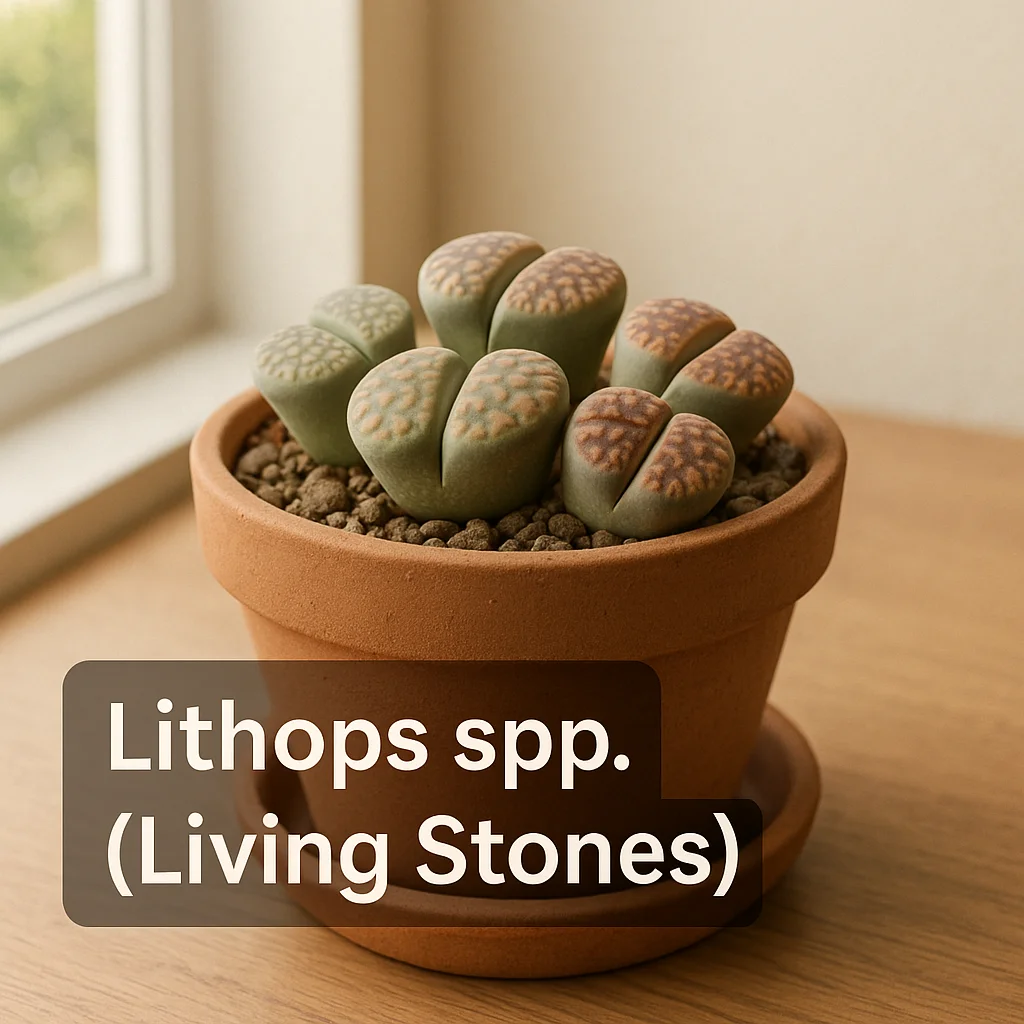
- Common names: Living Stones, Pebble Plants, Lithops
- Scientific name: Lithops spp. (varies by species)
- Plant type: Succulent
- Growth habit: Compact, rosette-like
- Typical indoor size range: 0.5 to 1.5 inches tall, similar spread
- Growth speed: Slow
- Lifespan: Can live many years with proper care
- Origin: Southern Africa, particularly desert regions
- Light preference: Bright indirect light, tolerates some direct sun
- Water needs: Low; prefers to dry out between watering
- Temperature & humidity preference: Warm temperatures, low humidity
- Pet safety: Some sources note potential for irritation; supervise pets
- Difficulty: Medium
🔍 Identification & Look-Alikes
Lithops are characterized by their stone-like appearance with paired, stone-like leaves that form a fleshy, rounded top. Their leaf colors can vary, including shades of gray, green, brown, and pinkish hues, often with intricate patterns or spots. They may bloom with daisy-like white or yellow flowers, typically in autumn. Lithops can sometimes be confused with other "stone-looking" succulents like Conophytum, but their distinct split leaves and lack of stems help differentiate them.
- Top ID Tip: Look for split pairs of fleshy, rounded leaves.
- Observe intricate patterns that mimic stones.
- Note the absence of stems; leaves grow directly from the soil.
- Leaf colors range from brownish to greyish green.
- Flowers resemble small daisies, appearing from the split center.
- Check for seasonal flowering, usually in autumn.
- No aerial growth; all parts are low to the ground.
- Feel the texture; leaves should be firm and not overly soft.
- Avoid plants with significant stretching or soft leaves, as these indicate poor light or watering conditions.
- Examine leaf tops for natural camouflage patterns, similar to rocky backgrounds.
🌍 Origin & Natural Habitat
Native to the arid regions of Southern Africa, Lithops grow in areas with sparse rainfall and abundant sunlight. They thrive in rocky, gritty soils where they blend into their surroundings to avoid herbivores. Understanding their natural habitat helps in recreating similar conditions indoors to support their growth and mimic their dormancy cycles.
☀️ Light Requirements
Lithops require bright indirect light and can tolerate some direct sunlight, especially morning light. Place them near a south or east-facing window for optimal growth. Without sufficient light, Lithops may stretch or lose their characteristic patterns, while too much harsh sun can lead to scorching.
- Place near south-facing windows for best results.
- Avoid prolonged intense direct sun to prevent burning.
- Indirect light ensures vibrant leaf patterns.
- Monitor for stretching or fading colors, signs of low light.
- Supplement with grow lights if natural light is insufficient.
- Rotate pot periodically to ensure even light exposure.
- Protect from afternoon sun in hotter climates.
- Observe seasonal changes; adjust placement as needed.
💧 Watering & Humidity
Water Lithops sparingly, allowing the soil to dry completely between waterings. During their winter dormancy, watering should be minimal to prevent root rot. Increase watering slightly when new growth is visible in summer. High humidity is unnecessary and may be harmful, so these plants are ideal for dry indoor conditions.
- Water sparingly, ensuring thorough drying between sessions.
- Reduce watering in winter dormancy.
- Resume watering when new growth is prominent in midsummer.
- Use a soak-and-drain method to prevent stagnation.
- Observe soil moisture; never let it remain damp.
- Avoid high humidity settings like bathrooms.
- Signs of overwatering: soft, splitting leaves.
- Underwatering signs: prolonged shrinkage without plump recovery.
- Adjust frequency based on pot size and material; terracotta dries out faster.
- Consider substrate moisture meter for precise monitoring.
🐛 Soil, Pot & Repotting
Opt for a gritty, well-draining soil mix, often with a composition similar to cactus soil. A pot with drainage holes is essential to prevent water accumulation. Repotting is rarely needed due to their small size but can be done if the plant becomes too crowded or the soil needs refreshing. Always use a pot only slightly larger than the current one to avoid excessive moisture retention.
- Use a gritty, well-draining soil mix.
- Choose pots with drainage holes.
- Repot every few years or as needed.
- Do not oversize pots to prevent water retention.
- Opt for terracotta pots to encourage drying.
- Gently dislodge plants from pot during repotting.
- Fill new pots with fresh soil, allowing roots to spread naturally.
- Avoid disturbing the roots excessively.
- Consider repotting if water runs through pot too quickly.
- Repot during active growth seasons for minimal stress.
🌡️ Temperature, Airflow & Seasonal Care
Lithops prefer warm indoor temperatures ranging from 65 to 75°F. They are tolerant of occasional colder spells, but prolonged exposure to cold should be avoided. Ensure good airflow around the plant to prevent pests and diseases. During winter dormancy, reduce watering and keep plants in a cooler zone to mimic their natural rest period.
- Avoid placing near drafts or fluctuating temperatures.
- Maintain a consistent warm temperature environment.
- Facilitate airflow to prevent pests like mealybugs.
- Reduce watering in cooler months to prevent rot.
- Increased ventilation in summer helps with airflow.
- Sudden temperature changes can stress plants.
- Keep away from AC or heater vents.
- Use fans to improve circulation in enclosed spaces.
- Resume normal care after dormancy period ends in spring.
🌸 Flowers, Fruit & Growth Cycle
Under ideal conditions, Lithops can bloom indoors, producing daisy-like flowers usually in yellow or white that emerge from the split between the leaves. Blooming typically occurs in autumn. The plant's growth cycle is characterized by periods of dormancy and active leaf renewal, with older leaves often shrinking to nourish new growth.
🧬 Propagation & Reproduction
Propagation of Lithops can be challenging due to their slow growth, but it is primarily achieved through seed sowing. Seeds require patience and monitoring for germination. Division is rarely practiced due to their compact nature, and cuttings are typically impractical. Propagating from seed is best suited for experienced hobbyists.
- Use high-quality seeds for better germination rates.
- Sow seeds on sandy soil surface; do not bury.
- Keep soil slightly moist but not wet during germination.
- Provide bright light and warmth for seedling development.
- Patience is key; growth from seed is slow.
- Protect seedlings from overwatering.
- Avoid overcrowding seedlings during early stages.
- Propagation by seed is most common for Lithops.
🌿 Common Problems, Pests & Prevention
Lithops can face issues like yellowing or brown leaves, often due to incorrect watering. Overwatering is a common problem, leading to rot. They may be susceptible to pests such as spider mites, mealybugs, and fungus gnats. Prevent problems by maintaining consistent care routines, reducing humidity, and ensuring good airflow.
- Quarantine new plants to prevent introducing pests.
- Avoid wet soil to reduce fungal and pest risks.
- Inspect leaves regularly for pests and early signs of issues.
- Provide steady care to minimize stress-related problems.
- Use neem oil or insecticidal soap for light pest infestations.
- Improve air circulation with strategic fan placement.
- Stable environmental conditions deter pests and stress.
- Limit fertilization to avoid nutrient burn or leaf drop.
- Regularly clean pot and environment to prevent buildup.
🐾 Pet & Home Safety Notes
Lithops contain compounds that may cause mild irritation if ingested by pets or children. It is recommended to keep them out of reach of curious pets. If ingestion is suspected, contact a professional or local poison control resources. Placing plants on higher shelves or creating barriers can help promote safer environments.
🏡 Styling Ideas & Best Room Placement
Lithops are excellent for sunny windowsills, desks, or shelves that receive ample light. Their compact size makes them ideal for small indoor displays or terrariums. Pair with other succulents like Haworthia or Echeveria for a diverse collection. Avoid high-moisture areas like bathrooms, as they prefer dry, airy spaces.
📌 Summary
- ID highlights: Resemble small stones with split, patterned leaves.
- Origin: Arid regions of Southern Africa.
- Light: Bright indirect, tolerates some direct sun.
- Watering: Infrequent, only when soil is fully dry.
- Soil/repotting: Well-draining, infrequent repotting.
- Temperature: Warm, consistent, low humidity preferred.
- Propagation: Primarily from seeds, challenging but rewarding.
- Common issues: Overwatering, pests like spider mites.
- Difficulty: Medium; requires specific care conditions.
- Key cautions: Potential mild irritation if ingested by pets.