🌱 Alocasia micholitziana ‘Frydek’
🧾 Quick Facts
Alocasia micholitziana ‘Frydek’, often simply referred to as 'Frydek', is a captivating houseplant admired for its striking foliage. Known for its velvety leaves with contrasting white veins, this plant adds a touch of exotic elegance to any indoor space.
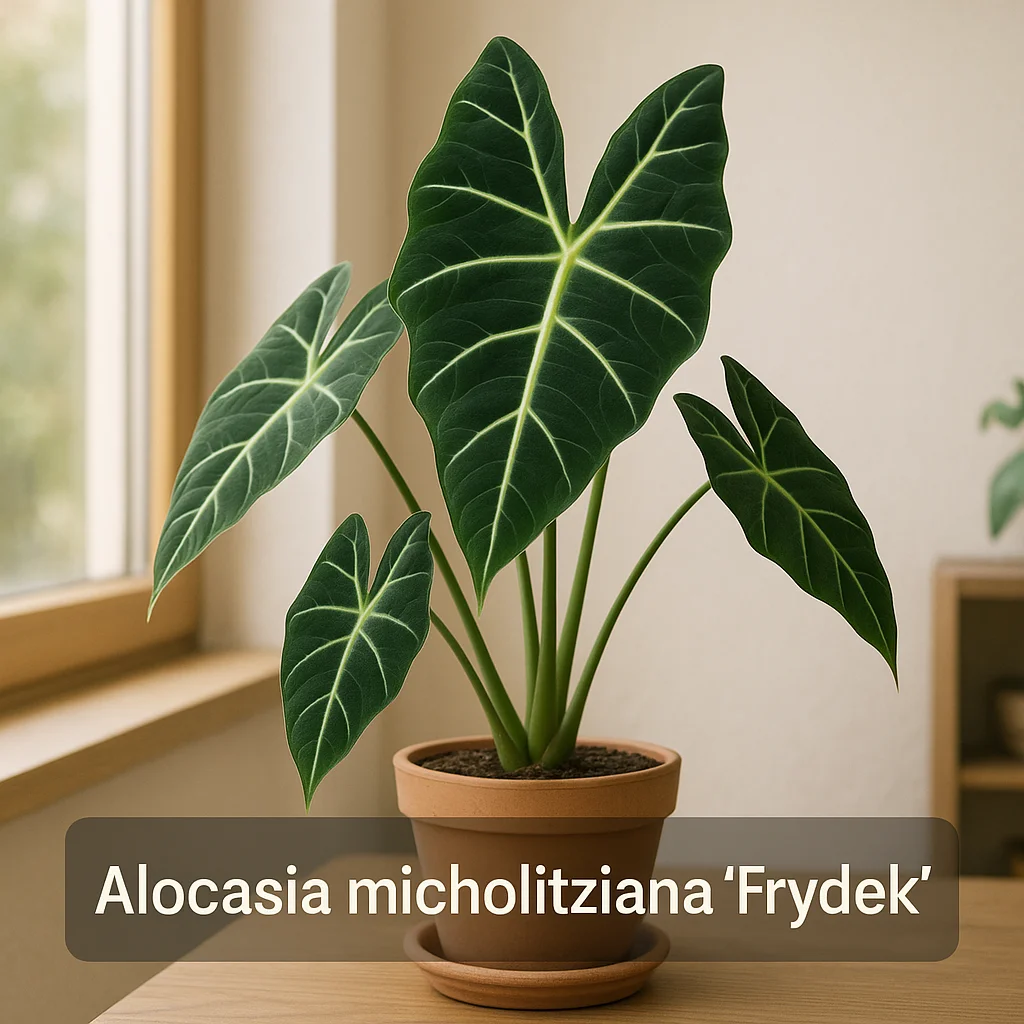
- Common Names: Frydek, Green Velvet Alocasia
- Scientific Name: Alocasia micholitziana ‘Frydek’ (sometimes listed as Alocasia Frydek)
- Plant Type: Foliage
- Growth Habit: Upright
- Typical Indoor Size Range: 1–3 feet tall
- Growth Speed: Moderate
- Lifespan: Can live many years with care
- Origin: Southeast Asia
- Light Preference: Bright indirect light
- Water Needs: Moderate, allow top inch to dry out
- Temperature & Humidity Preference: Warm, high humidity
- Pet Safety: May be irritating/toxic to pets
- Difficulty: Medium
🔍 Identification & Look-Alikes
The Alocasia micholitziana ‘Frydek’ is easily recognized by its large, deep-green leaves that have a velvety texture. The prominent white or light green veins create an eye-catching contrast against the darker leaf backdrop. The leaves are arrow-shaped and are held on long, sturdy petioles.
While it's primarily grown for its foliage, the Frydek can occasionally produce inconspicuous inflorescences typical of the Alocasia genus. However, indoor blooming is rare and doesn't contribute much to its appeal.
Look-alikes include other Alocasia species and hybrids, such as Alocasia ‘Polly’ or the African Mask Plant. These can be differentiated by their different leaf shapes or vein colors.
- Leaves are arrow-shaped and velvety to the touch
- Prominent white or light green veins
- Dark green foliage
- Sturdy petioles supporting the leaves upright
- No significant blooms indoors
- Comparable to other Alocasias but distinguished by leaf texture and vein pattern
- Sensitive to light exposure impacting the leaf color richness
- Compact growth habit suitable for pots
🌍 Origin & Natural Habitat
The Alocasia micholitziana ‘Frydek’ hails from the tropical regions of Southeast Asia, where it naturally grows in the understory of rainforests. This habitat is characterized by high humidity, poorly lit forest floors, and warm temperatures throughout the year.
Understanding this natural habitat assists plant owners in creating similar conditions indoors, promoting healthy growth. Emulating the dappled light and consistent moisture found in its native environment helps the plant thrive.
☀️ Light Requirements
For optimal growth, the Frydek requires bright but indirect light. Direct sunlight can scorch the leaves, while too little light may hinder growth and result in fading colors. East or north-facing windows are ideal, where the plant receives filtered light. The plant's variegation will stand out best with sufficient light.
If the leaves start yellowing or drooping, this could indicate inadequate lighting. Conversely, crisp, sunburned patches on leaves suggest excessive direct sunlight exposure.
- Position near a window with filtered light
- Avoid direct sunlight to prevent leaf burn
- Consider artificial grow lights in dim environments
- Monitor leaf color as light quality indicator
- Adapts to moderate light but grows slower
- Rotate plant periodically for even growth
- East-facing windows are preferable
- Protect from intense afternoon sun
💧 Watering & Humidity
The watering needs of Alocasia micholitziana ‘Frydek’ revolve around keeping the soil moderately moist but not soggy. Allow the top inch of soil to dry out slightly before watering. During the growing season, more frequent watering might be necessary compared to the plant's slower growth in winter.
High humidity is beneficial for Frydek, with levels ideally above 60%. Using a humidifier, pebble trays, or grouping plants can increase humidity around the plant. Signs of underwatering include wilting or droopy leaves, while overwatering can lead to root rot and yellowing leaves.
- Let the top inch of soil dry before watering
- Avoid waterlogging the soil
- Increase watering frequency during the spring and summer
- Decrease watering when growth slows in winter
- Regular humidity boosts via misting or pebble trays
- Watch for root rot signs (yellowing leaves, mushy stems)
- Ensure proper drainage to prevent water accumulation
- Overwatering is a common issue—adjust if needed
🐛 Soil, Pot & Repotting
Alocasia micholitziana ‘Frydek’ thrives in well-draining, aerated potting mixes to accommodate its roots and prevent waterlogging. A mixture containing peat, perlite, and orchid bark or similar ingredients works well.
Opt for pots with drainage holes to allow excess water to escape. Terracotta pots can help wick moisture, although they require more frequent watering. Repotting should occur every 1–2 years or when the plant becomes root-bound. Potting in a container only one size larger helps manage water balance.
- Use a well-draining potting mix
- Pots must have drainage holes to prevent root rot
- Terracotta or plastic: consider moisture levels and care habits
- Repot every 1–2 years or once root-bound
- Avoid excessively large pots to prevent overwatering
- Be gentle when handling roots during repotting
- Refresh old soil to maintain nutrient availability
- Monitor for stunted growth as a repotting signal
🌡️ Temperature, Airflow & Seasonal Care
The Frydek thrives in warm indoor temperatures between 65–75°F (18–24°C). It dislikes cold drafts and sudden temperature changes. Ensure it's placed away from air conditioning vents or heaters.
In winter, the plant's growth slows, requiring less water but consistent humidity. Avoid exposing Frydek to temperatures below 60°F (15°C) to prevent stress and damage.
- Maintain warm temperatures; avoid cold drafts
- Place away from AC or heating vents
- Consistent humidity year-round helps growth
- Reduce watering during winter dormancy
- Preferred temperature range: 65–75°F
- Keep away from sudden temperature swings
- Avoid temperatures below 60°F (15°C)
- Regular air circulation without strong drafts
🌸 Flowers, Fruit & Growth Cycle
Alocasia micholitziana ‘Frydek’ is primarily grown for its beautiful foliage rather than flowers. While it may produce flowers, these are rare indoors and generally not ornamental. The plant's main growth consists of new leaves unfolding as it develops.
Pruning is largely unnecessary, except to remove dead or damaged leaves to encourage new growth and maintain a tidy appearance.
🧬 Propagation & Reproduction
Propagation of Alocasia micholitziana ‘Frydek’ is best accomplished through division, usually during repotting. Carefully separate offsets from the main plant, ensuring each division has a good amount of roots attached.
Propagation via seeds is possible but not commonly practiced by home growers due to its complexity and slower results.
- Utilize division of mature plants during repotting
- Ensure each division has sufficient roots
- Handle rhizomes gently to avoid damage
- Avoid unnecessary disturbance if the parent plant is stressed
- Patience required for soil propagation in low light
- Propagation via seeds is uncommon in homes
- Monitor new divisions for signs of stress
🌿 Common Problems, Pests & Prevention
Common problems for Alocasia micholitziana ‘Frydek’ include yellowing leaves, brown leaf tips, and leggy growth. These issues often arise from inappropriate watering, light, or humidity conditions.
Frydek is susceptible to pests like spider mites and mealybugs. Regularly inspect the foliage and maintain plant hygiene to prevent infestations. Quarantine new plants to prevent the spread of any pests.
- Yellow leaves often signify improper watering
- Brown tips indicate low humidity or fertilization issues
- Avoid overwatering by ensuring adequate drainage
- Spider mites and mealybugs are common pests
- Quarantine new plants to detect pest presence
- Consistently clean leaves to discourage pests
- Maintain stable environmental conditions
- Regular inspection of leaves for early pest detection
🐾 Pet & Home Safety Notes
Alocasia micholitziana ‘Frydek’ may be toxic if ingested by pets and children due to its calcium oxalate crystals, which can cause irritation. It is prudent to place the plant out of reach of curious pets or children.
If ingestion is suspected, contacting a professional or local poison control resource is advised. Consider barriers or elevated placements as preventive measures.
🏡 Styling Ideas & Best Room Placement
With its striking foliage, Alocasia micholitziana ‘Frydek’ can be a standout piece in rooms with adequate humidity and light, such as bathrooms and kitchens. It can also thrive in bright living spaces.
The plant works well on shelves or as a statement floor plant in larger rooms. Pairing Frydek with other humidity-loving plants like ferns or Marantas creates a lush, tropical aesthetic.
📌 Summary
- Alocasia micholitziana ‘Frydek’ is known for its velvety, dark green leaves with white veins
- Native to Southeast Asian tropical rainforests
- Thrives in bright, indirect light; avoid direct sun
- Keep soil moderately moist; do not allow waterlogging
- Prefers well-draining soil; repot every 1–2 years if root-bound
- Temperature range: 65–75°F with high humidity
- Propagate through division during repotting
- Monitor for yellow leaves and common pests like spider mites and mealybugs
- Medium difficulty due to humidity and light needs
- Toxic to pets: keep out of reach and contact professionals if ingested