🌱 Hoya linearis
🧾 Quick Facts
Hoya linearis, known for its unique trailing habit and delicate foliage, is a captivating addition to any houseplant collection. It's admired for its needle-like leaves and cascading growth, making it perfect for hanging arrangements. Though primarily grown for its lush foliage, it sometimes can bloom indoors, showcasing clusters of charming flowers.
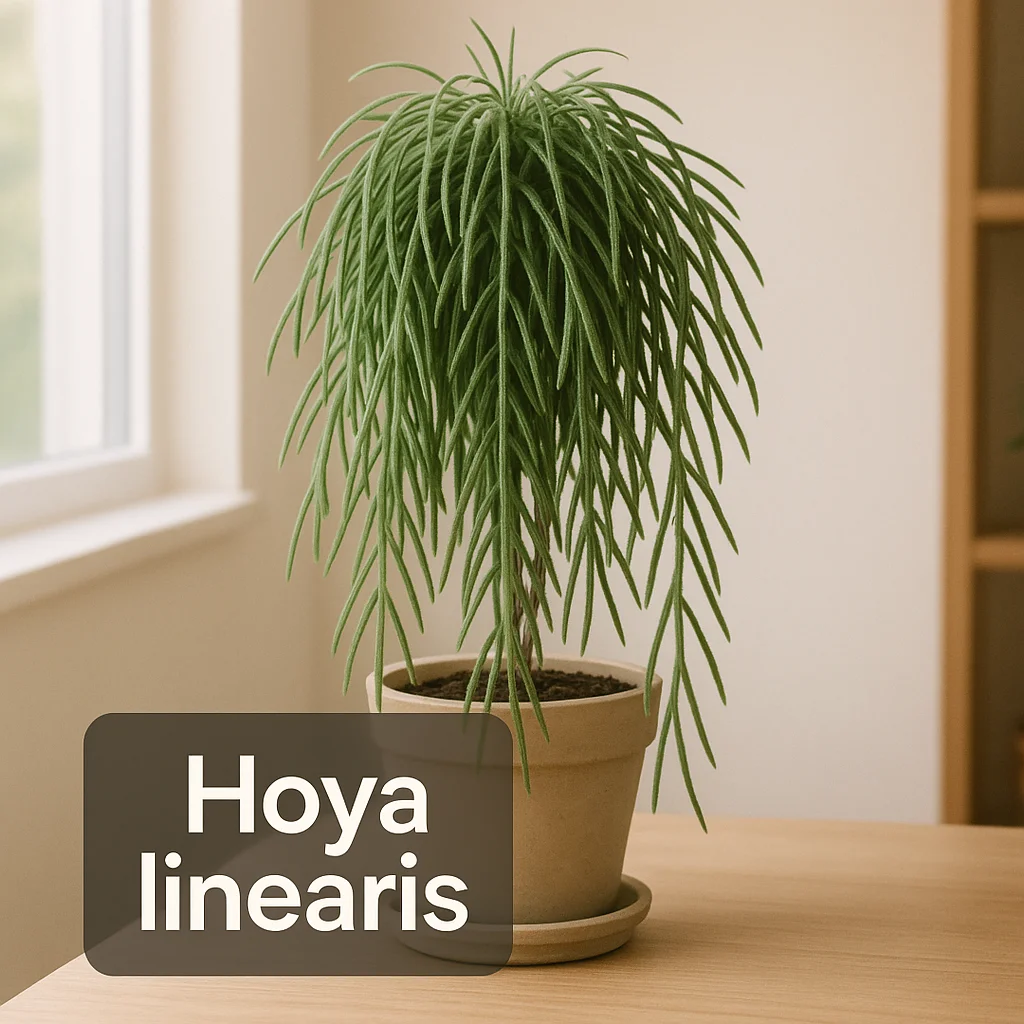
- Common names: Wax Vine, Hoya linearis
- Scientific name: Hoya linearis
- Plant type: Vine, Flowering
- Growth habit: Trailing
- Typical indoor size range: Can trail up to several feet
- Growth speed: Moderate
- Lifespan: Can live many years with care
- Origin: Eastern Himalayas
- Light preference: Bright indirect light
- Water needs: Moderate; allow topsoil to dry
- Temperature & humidity preference: Warm and humid
- Pet safety: Some sources list it as irritating to pets
- Difficulty: Medium
🔍 Identification & Look-Alikes
Hoya linearis can be easily identified by its slender, needle-like leaves that hang densely from its trailing stems. The leaves are typically a soft green with a subtle, velvety texture. This species can produce clusters of star-shaped, creamy-white flowers that emit a mild fragrance when they bloom.
Its trailing nature and leaf structure might be confused with Rhipsalis or other trailing cacti, but Hoya linearis differs in its unique foliage texture and flowering characteristics.
- Needle-like, soft green leaves
- Trailing stem structure
- Star-shaped, creamy-white flowers
- Soft, velvety leaf texture
- Cascading growth habit
- Foliage remains dense with proper light
- Flowers appear in clusters
🌍 Origin & Natural Habitat
Hoya linearis is native to the cool, moist higher elevations of the Eastern Himalayas. In its natural habitat, it often grows as an epiphyte, clinging to trees in the humid, dappled light of the forest understory. Understanding its native environment helps to mimic conditions indoors, such as providing good airflow, moderate humidity, and bright but indirect light.
☀️ Light Requirements
Hoya linearis thrives in bright, indirect light. It's important to place it near a window where it can receive plenty of filtered sunlight, avoiding direct sun, which might scorch its delicate leaves. A north or east-facing window is often suitable. Low light conditions can lead to sparse growth and reduced vitality.
- Place near north or east-facing windows
- Avoid direct sunlight exposure
- Maintain bright but diffused lighting
- Watch for leggy growth; indicates low light
- Leaf scorching signals too much direct sun
- Regularly rotate plant for even growth
- Utilize sheer curtains for light diffusion
💧 Watering & Humidity
Efficient watering is crucial for Hoya linearis. It's best to allow the top inch of the soil to dry out before re-watering. Try a soak-and-drain approach, ensuring that excess water escapes freely to prevent root rot. During the growing season, maintain moderate humidity, perhaps by grouping with other plants or using a humidity tray, especially in dryer indoor environments.
- Water when the top 1 inch of soil is dry
- Ensure a soak-and-drain watering approach
- Increase humidity with a tray or plant groupings
- Mist lightly for additional humidity boost
- Reduce watering frequency during winter
- Check soil moisture regularly with a finger test
- Watch for yellowing leaves (overwatering)
- Wrinkled leaves indicate under-watering
🐛 Soil, Pot & Repotting
For potting, choose a light, well-draining mix. A combination of potting soil, orchid bark, and perlite works well. Ensure the pot has adequate drainage holes, and remember that terracotta pots can wick moisture away, helping to prevent overwatering. Repotting is advised every 2-3 years or when visibly root-bound, gently moving up to a pot just one size larger.
- Use a well-draining potting mix
- Include elements like bark and perlite
- Opt for pots with good drainage
- Consider terracotta for its breathability
- Repot every 2-3 years
- Move up only one pot size
- Check for roots circling the pot as a repot cue
- Repot in spring when growth resumes
🌡️ Temperature, Airflow & Seasonal Care
Hoya linearis enjoys warm temperatures ranging from 60-80°F (15-27°C). Avoid exposure to cold drafts, air vents, or rapid temperature fluctuations, which can stress the plant. During the winter months, it may experience slower growth, so adjust watering accordingly, and maintain a consistent temperature to avoid shock.
- Keep temperatures between 60-80°F (15-27°C)
- Avoid cold drafts and direct vent exposure
- Maintain consistent temperature during winter
- Expect slower growth during cooler months
- Adjust watering frequency when dormant
- Use a fan for gentle airflow if stagnant air is a problem
- Ensure stable indoor environment year-round
- Transition gradually when moving plant locations
🌸 Flowers, Fruit & Growth Cycle
Indoors, Hoya linearis may flower given optimal conditions, typically in late summer to early autumn. The blooms are small, star-shaped, and appear in clusters, exuding a gentle fragrance. While it doesn’t fruit indoors, it continuously grows new vines and foliage, filling out over time and creating a lush canopy. Prune to maintain shape and promote fuller growth.
🧬 Propagation & Reproduction
Propagation is most commonly done through stem cuttings. Select a healthy segment with at least a few nodes, and allow it to root in water or damp soil. Patience is key, as rooting can take several weeks. Division is another option if the plant has developed multiple clumps.
- Use stem cuttings for propagation
- Select healthy stems with 2-3 nodes
- Root cuttings in water or soil mix
- Allow several weeks for root development
- Consider division if the plant is clump-like
- Keep new cuttings humidified for best results
- Avoid overhandling cuttings during establishment
🌿 Common Problems, Pests & Prevention
Common issues include yellowing leaves (overwatering), brown tips (low humidity or under-watering), and leggy growth due to poor lighting. Pests such as spider mites, mealybugs, and scale can occur. Prevention includes maintaining cleanliness, regular monitoring, and ensuring proper airflow around the plant.
- Watch for yellow leaves (overwatering)
- Brown tips signal humidity issues
- Leggy growth suggests inadequate light
- Inspect regularly for spider mites and scale
- Quarantine new plants temporarily
- Clean leaves gently to remove dust
- Maintain airflow to deter pests
- Avoid frequent disturbances to stability
- Trim off affected parts promptly
🐾 Pet & Home Safety Notes
While not considered highly toxic, some parts of Hoya linearis are noted by sources to potentially be irritating to pets if ingested in large quantities. It's advisable to keep plants out of reach of curious pets and children. In cases of ingestion, consult a professional or contact local poison control resources for guidance.
🏡 Styling Ideas & Best Room Placement
Hoya linearis is an excellent choice for hanging baskets due to its trailing habit, allowing it to cascade elegantly. It thrives in bathrooms or kitchens, where higher humidity is typically present. When placing it, consider spots in bright rooms that aren't directly sunny, such as living rooms or offices. Pair it with other trailing or even upright plants to create a diverse indoor green space.
📌 Summary
- Identified by its needle-like leaves and trailing growth
- Native to the Eastern Himalayas as an epiphyte
- Requires bright indirect light for best results
- Moderate watering; allow topsoil to dry between waters
- Prefers a light, airy potting mix with good drainage
- Warm, humid indoor environments are ideal
- Propagation mainly through stem cuttings
- Common issues include yellow leaves and pest infestations
- Medium difficulty for indoor care
- May irritate pets if ingested; maintain careful placement