🌱 Monstera deliciosa ‘Albo Variegata’
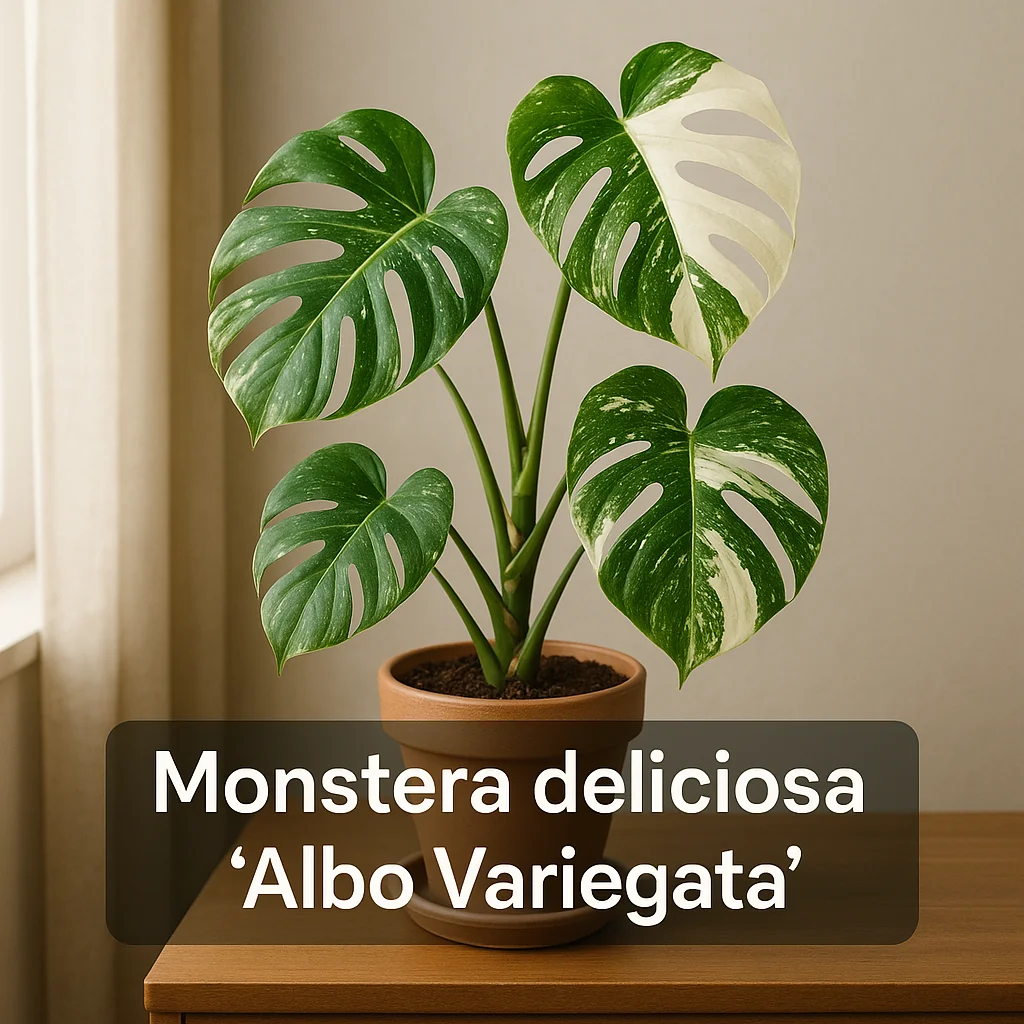
The Monstera deliciosa ‘Albo Variegata’ is a stunningly attractive houseplant cherished for its striking white-variegated leaves. Known for both its aesthetic appeal and moderate care requirements, this plant has become a favorite among indoor gardening enthusiasts. This field guide provides insights into identification, care, propagation, and potential issues associated with this popular plant.
🧾 Quick Facts
Before diving deeper into the care and maintenance of the Monstera deliciosa ‘Albo Variegata,’ here are some essential facts about this captivating houseplant:
- Common names: Variegated Monstera, Monstera Albo
- Scientific name: Monstera deliciosa ‘Albo Variegata’
- Plant type: Foliage
- Growth habit: Climbing
- Typical indoor size range: 3 to 6 feet tall
- Growth speed: Moderate
- Lifespan: Can live many years with proper care
- Origin: Central America; tropical forest habitats
- Light preference: Bright indirect light
- Water needs: Moderate
- Temperature & humidity preference: Warm temperatures, high humidity
- Pet safety: May be irritating/toxic to pets
- Difficulty: Medium
🔍 Identification & Look-Alikes
Recognizing the Monstera deliciosa ‘Albo Variegata’ is relatively straightforward once you know what to look for. The plant features large, glossy leaves with dramatic white variegation that can vary significantly in pattern. Leaves are usually heart-shaped with distinct fenestrations or holes, and the variegation can range from stark white to creamy yellow. The plant grows as a climbing vine, supported by aerial roots that emerge from the stems. It is primarily grown for its foliage, as flowers are uncommon indoors.
While many plants may seem similar, such as the regular green Monstera deliciosa or other variegated Monstera types, the ‘Albo Variegata’ is distinct in its specific white variegation pattern. The main differences include the distribution and prevalence of white patches, which can help identify this plant among similar varieties.
- Top ID Tips:
- Look for large, fenestrated, heart-shaped leaves.
- Note the unique white variegation pattern.
- Identify climbing growth habit supported by aerial roots.
- Feel the glossy texture of the leaves.
- Spot irregular variegation, sometimes varying leaf-to-leaf.
- Observe for any sign of flowers indoors, though rare.
- Check for differentiation from other Monstera types.
- Distinguish from similar tropical houseplants by variegation.
🌍 Origin & Natural Habitat
The Monstera deliciosa ‘Albo Variegata’ originates from tropical regions of Central America, particularly in the rainforests of southern Mexico and Panama. It naturally grows as an epiphyte, thriving in the dappled light of the forest understory and climbing up the trunks of larger trees. These conditions provide ample humidity and warm temperatures, key factors in its growth.
Understanding its natural habitat aids in replicating similar conditions indoors. For optimal care, ensuring warm temperatures, high humidity, and stable support structures to mimic its jungle environment allows this plant to thrive.
☀️ Light Requirements
The Monstera deliciosa ‘Albo Variegata’ prefers bright indirect light, which mimics its natural understory environment. East or west-facing windows are ideal spots, where it can receive abundant filtered sunlight. Bright indirect light helps maintain the vibrant variegation on its leaves.
Direct sunlight can scorch the variegated areas, while too little light might cause the plant to become leggy and its variegation to fade. Adjust positioning as necessary, depending on the time of year and light levels in your home.
- Light Checklist:
- Place near east or west-facing windows for best results.
- Avoid direct sunlight to prevent leaf burn.
- Variegation may fade in low light, adjust accordingly.
- Evaluate light intensity seasonally.
- Consider supplemental lighting during darker months.
- Monitor for leggy growth as a sign of inadequate light.
- Provide consistent lighting environment for healthy growth.
- Avoid shifting between extreme light conditions quickly.
💧 Watering & Humidity
Maintaining an appropriate watering schedule is crucial for the Monstera deliciosa ‘Albo Variegata’. The soak-and-drain method works well: water it thoroughly, allowing the excess to drain out, and let the top inch of soil dry out before watering again. Watering frequency can vary with pot size, light levels, and season, so it's important to adjust as needed.
Given its tropical origins, this plant loves humidity. While it can adapt to average indoor environments, maintaining higher humidity levels will encourage optimal growth. Grouping plants together, using a humidifier, or placing the pot on a pebble tray with water can help increase humidity.
- Watering Tips:
- Use soak-and-drain method for effective watering.
- Allow top inch of soil to dry between watering.
- Consider humidity adjustments during dry seasons.
- Avoid overwatering, which causes root rot.
- Watch for drooping leaves as a sign of underwatering.
- Adapt watering frequency to season and environment.
- Increase humidity with plant groupings or a pebble tray.
- Monitor leaf health as an indicator of watering success.
- Use filtered or distilled water to avoid mineral buildup.
- Adjust based on plant response to water and humidity changes.
🐛 Soil, Pot & Repotting
The Monstera deliciosa ‘Albo Variegata’ thrives in a well-draining, moisture-retentive soil mix, such as one that combines potting soil, perlite, and orchid bark. This prevents excess moisture retention and allows proper air circulation around the roots. Pots with drainage holes are essential to prevent waterlogging.
Repotting may be necessary every two to three years or when growth slows, and roots begin to circle the pot or grow out of the drainage holes. When repotting, choose a pot that is one size bigger than the current one to ensure space for growth.
- Repotting Checklist:
- Ensure soil is well-draining with materials like perlite and bark.
- Choose pots with drainage holes to prevent root rot.
- Repot during spring or early summer for best results.
- Check for root-bound plants indicated by circling roots.
- Move to a pot one size larger when repotting.
- Handle roots gently during the process.
- Avoid overly large pots to prevent excess moisture.
- Refresh soil to provide nutrients and support growth.
- Keep plant well-supported with stakes or trellis after repotting.
🌡️ Temperature, Airflow & Seasonal Care
Monstera deliciosa ‘Albo Variegata’ prefers temperatures between 65°F and 85°F (18°C to 29°C), with a stable environment avoiding sudden temperature changes. Keep the plant away from cold drafts, AC vents, or direct heat sources that could stress it.
Growth typically slows in winter, requiring less water as the plant semi-dormant. Adjust care in response to seasonal changes, ensuring consistent care throughout the year for optimal health.
- Seasonal Notes:
- Maintain a stable, warm temperature range.
- Avoid cold drafts and direct heat sources.
- Anticipate slower growth in winter; adjust watering accordingly.
- Ensure adequate airflow to prevent fungal issues.
- Protect from temperature shocks by avoiding sudden changes.
- Prepare for seasonal humidity drops by using a humidifier.
- Adjust care routine based on visible plant responses.
- Consider reduced fertilizing in non-growing seasons.
- Monitor for seasonal light adjustments as daylight changes.
🌸 Flowers, Fruit & Growth Cycle
While Monstera deliciosa ‘Albo Variegata’ is grown mainly for its foliage, it can flower under ideal conditions, though blooms are rare indoors. The plant typically grows by producing new leaves and climbing vines supported by aerial roots. Regular pruning helps shape the plant, encourage fuller growth, and remove any damaged or dead leaves.
Pruning involves cutting above a node (only the stem not the leaf stem) to promote new growth. Keep pruning non-invasive and maintain hygiene by sterilizing cutting tools to prevent infections.
🧬 Propagation & Reproduction
Propagation of the Monstera deliciosa ‘Albo Variegata’ can be achieved through stem cuttings, which is the most common method. Select a healthy cutting with at least one node and aerial root, and place it in water or a moist potting mix to root. If successful roots develop, transfer to a potting medium to grow on.
Though propagation through division or seeds is not typical for home growers due to the plant's growth habits and variegation issues, stem cuttings remain popular for expanding or sharing this plant.
- Propagation Tips:
- Select healthy stem cuttings with visible nodes.
- Root cuttings in water or moist soil mix.
- Ensure cutting has an aerial root for quicker establishment.
- Transition to soil once roots are established.
- Avoid propagating variegated plants solely by division.
- Gradually acclimate cuttings to ambient conditions.
- Prune appropriately to maintain desired plant shape.
- Consider sterile tools to prevent infection during cutting.
- Monitor light and humidity carefully during propagation.
🌿 Common Problems, Pests & Prevention
Several common issues can impact the Monstera deliciosa ‘Albo Variegata’, including yellowing leaves, browning tips, drooping, and leggy growth due to inadequate light. Common pests include spider mites, mealybugs, and fungus gnats.
Prevent issues by regularly cleaning leaves, ensuring proper air circulation, avoiding overwatering, and maintaining stable growing conditions. Quarantining new plants can also prevent the spread of pests or diseases.
- Prevention Basics:
- Regularly clean leaves to prevent dust and pests.
- Quarantine new plants to avoid pest infestation.
- Provide consistent light levels to prevent legginess.
- Ensure steady airflow to reduce fungal issues.
- Monitor for pests and act swiftly upon discovery.
- Maintain proper watering techniques to prevent root rot.
- Check for and eliminate any drafts affecting the plant.
- Refresh soil annually to keep nutrients balanced.
- Inspect plant regularly for any unusual behaviors or signs.
🐾 Pet & Home Safety Notes
The Monstera deliciosa ‘Albo Variegata’ is known to contain calcium oxalates that can be irritating or toxic if ingested by pets or children. It is best placed out of reach or in spaces where it's less accessible to curious pets and little ones. In case of ingestion, contact a professional or local poison control resources for advice rather than attempting home remedies.
For pet safety, consider using barriers or training pets to avoid the plant, and ensure the plant is positioned securely on shelves or other elevated spots.
🏡 Styling Ideas & Best Room Placement
This plant's dramatic appearance makes it a centerpiece in any room. Its high humidity preference suggests placing it in environments like bathrooms or kitchens if light allows. Alternatively, living rooms with bright indirect light or offices can also be suitable.
Using moss poles helps support its climbing nature, while placing it in large floor pots accentuates its height. Hanging baskets can work if sufficient support and light are ensured. Monstera deliciosa ‘Albo Variegata’ pairs well with other lush, green houseplants to create an attractive indoor jungle aesthetic.
📌 Summary
- Variegated foliage with large, fenestrated leaves.
- Originates from tropical Central American rainforests.
- Prefers bright indirect light to maintain variegation.
- Water thoroughly and allow the top inch of soil to dry out.
- Use well-draining soil with perlite and bark.
- Keeps thriving between 65°F and 85°F in consistent humidity.
- Propagated most effectively through stem cuttings.
- Watch for common pests and watering issues.
- Medium difficulty level for indoor gardeners.
- Place carefully to avoid pet or child irritation.