🌱 Philodendron ‘Birkin’
🧾 Quick Facts
The Philodendron ‘Birkin’ is a striking houseplant known for its unique variegation and modern appeal. Often sought after by plant enthusiasts, it brings a touch of elegance to any interior space.
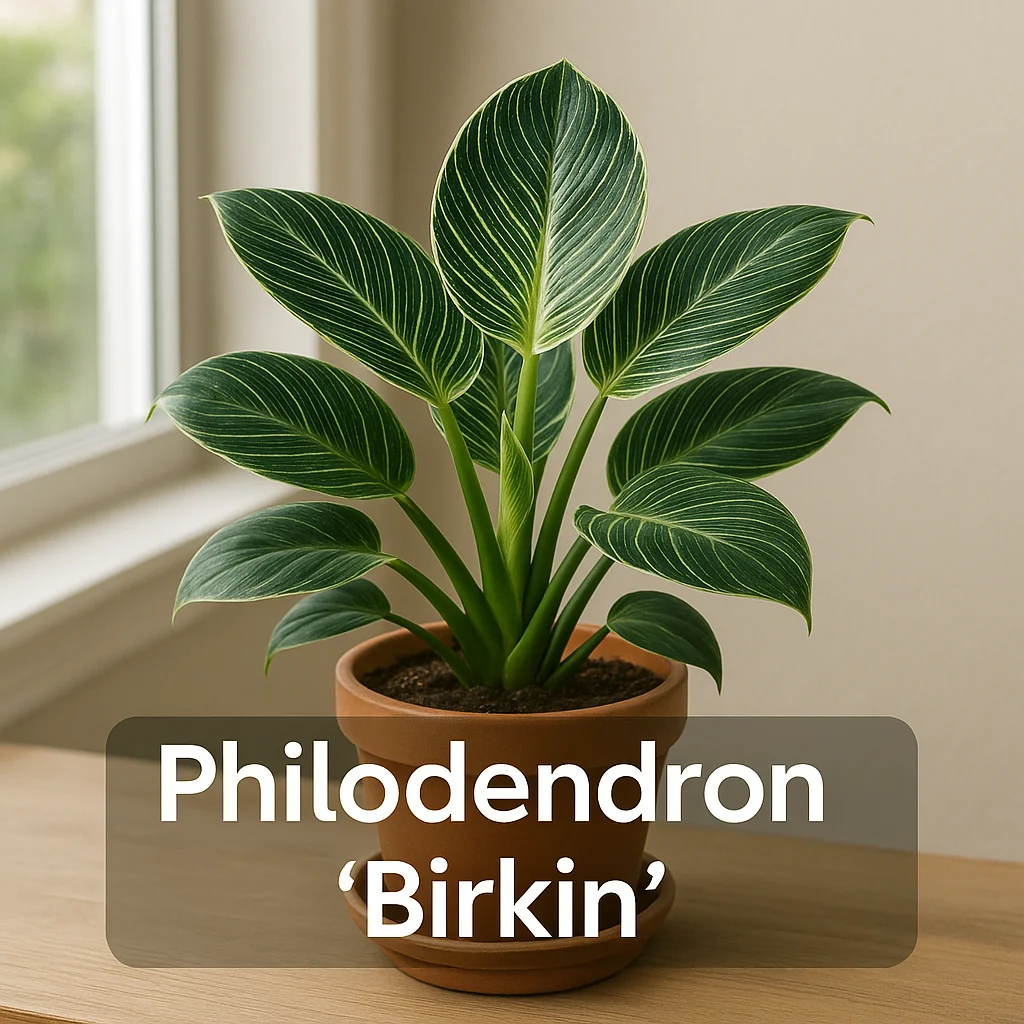
- Common Names: Birkin, White Measure
- Scientific Name: Philodendron ‘Birkin’ (often sold as)
- Plant Type: Foliage
- Growth Habit: Upright
- Typical Indoor Size Range: 12-24 inches (30-61 cm) in height
- Growth Speed: Moderate
- Lifespan: Can live many years with care
- Origin: Hybrid, commonly cultivated
- Light Preference: Bright indirect light
- Water Needs: Moderate; prefer drying slightly between waterings
- Temperature & Humidity Preference: Warm, humid environments
- Pet Safety: May be irritating/toxic to pets
- Difficulty: Easy to medium
🔍 Identification & Look-Alikes
The Philodendron ‘Birkin’ is easily identifiable by its distinctively marked leaves, which feature bright white pinstripes on a deep green background. The leaves are glossy, oval-shaped, and become more intricate as the plant matures. It stands on upright stems, and this structured habit differentiates it from many trailing or climbing philodendron types.
The plant is mainly grown for its foliage, as flowering indoors is rare. Look-alike species include other philodendrons and pothos, but the variegation pattern of the ‘Birkin’ is unique and a reliable identifier.
- Look for pinstriped variegation
- Oval and glossy leaves
- Upright growth habit
- Usually does not flower indoors
- Distinguish from pothos by lack of vining
- Leaf variegation may vary with light
- Flexible yet strong stems
- Dense leaf growth compared to climbing types
🌍 Origin & Natural Habitat
The Philodendron ‘Birkin’ is a cultivated hybrid and does not occur naturally in the wild. However, philodendrons as a genus are native to Central and South America, flourishing in the understory of rainforests. They typically thrive in warm, humid environments with dappled light—conditions that inform the care requirements for ‘Birkin’ as a houseplant.
Understanding this habitat helps in mimicking these conditions indoors, providing the right blend of light, moisture, and humidity for optimal growth.
☀️ Light Requirements
The Philodendron ‘Birkin’ thrives in bright, indirect light. A north or east-facing window is suitable, where it receives ample light without direct sun which can scorch its leaves. It can tolerate lower light but might grow more slowly and develop less vibrant variegation.
If your Birkin’s leaves start to lose their bright pinstripe or seem to fade, it may be an indicator of insufficient light. Conversely, too much direct sunlight can lead to scorched leaves.
- Place near bright, indirectly lit windows
- Avoid direct sun to prevent leaf burn
- Insufficient light results in less variegation
- Low light tolerated, but with slower growth
- Adjust positioning seasonally if needed
- Use sheer curtains to diffuse harsh rays
- Rotate pot regularly for even light exposure
💧 Watering & Humidity
For watering, let the top inch of soil dry out between waterings. Use a soak-and-drain method: water thoroughly until it drains from the bottom, ensuring full soil saturation, then allow it to dry down. In lower light or cooler conditions, the time between watering will lengthen.
Moderate to high humidity mimics its natural preferences. A humidity tray or regular misting can raise ambient moisture without overcomplicating care.
Signs of overwatering include yellowing leaves and mushy stems, while underwatering reveals as crispy leaf edges and drooping.
- Water thoroughly, then dry down
- Let top inch of soil dry before re-watering
- Use humidity trays for extra moisture
- Misting can help in dry environments
- Avoid waterlogged soil—ensure drainage
- Adjust watering frequency seasonally
- Look for wilting or yellow leaves as indicators
🐛 Soil, Pot & Repotting
An airy, well-draining potting mix is essential for the Philodendron ‘Birkin’, preventing water retention and root rot. A typical indoor tropical plant soil mixture with added perlite or orchid bark works well. Use pots with drainage holes, and if using terracotta, be aware they dry out faster than plastic.
Repotting every 1-2 years is ideal, or when you notice roots poking from drainage holes. Choose a pot only one size larger to avoid overwhelming the plant.
- Use airy, well-draining potting mix
- Add perlite or orchid bark for breathability
- Select pots with drainage holes
- Repot every 1-2 years, or when root-bound
- Choose pot slightly larger than the current one
- Water thouroughly after repotting
- Slow growth can signal need for repotting
🌡️ Temperature, Airflow & Seasonal Care
The Philodendron ‘Birkin’ prefers indoor temperatures between 65-80°F (18-27°C). Avoid cold drafts, as well as locations near AC or heater vents that cause temperature fluctuations. Seasonal care adjustments include reducing watering in winter when growth slows.
Ensure good airflow around the plant but protect from sudden temperature swings. Regular pruning of dead leaves encourages healthier growth.
- Maintain 65-80°F (18-27°C)
- Avoid drafty spots
- Keep away from heater/AC vents
- Reduce watering in cooler months
- Ensure adequate airflow without direct drafts
- Prune dead or yellow leaves regularly
- Monitor for inconsistent growth patterns
🌸 Flowers, Fruit & Growth Cycle
Though primarily grown for its foliage, the Philodendron ‘Birkin’ rarely flowers indoors. Its main attraction lies in its dynamic leaf growth, with each new leaf showcasing distinct white striping. Prune as needed to maintain shape, keeping tools sterilized to prevent disease.
- Focus is on variegated foliage
- New leaves provide continually changing patterns
- Indoor flowering is uncommon
- Regular pruning helps shape and health
🧬 Propagation & Reproduction
Philodendron ‘Birkin’ is best propagated by stem cuttings. Choose a healthy stem with at least one node, place it in water or directly into moist, well-draining soil until roots develop. Division may be possible when repotting if multiple stems are present, but care should be taken not to overly disrupt the root system.
- Propagate via stem cuttings with nodes
- Can root in water before soil planting
- Dividing during repotting can work if careful
- Ensure cuttings have a node for successful rooting
- Avoid using leaves without stems/nodes
- Keep soil moist, not soggy, for young plants
🌿 Common Problems, Pests & Prevention
Common issues with Philodendron ‘Birkin’ include yellowing leaves from overwatering and brown leaf tips from low humidity or underwatering. Spider mites, mealybugs, and scale are typical pests seen in suboptimal conditions.
Prevent pest infestations and common plant problems by keeping the foliage clean, maintaining consistent care, and avoiding overwatering. Regularly inspect plants when adjusting their positions or watering schedules.
- Keep leaves clean to prevent pests
- Yellow leaves signal overwatering
- Brown tips suggest dry air or underwatering
- Avoid placing near drafty windows
- Quarantine new plants to avoid spreading pests
- Ensure even watering habits
🐾 Pet & Home Safety Notes
While the Philodendron ‘Birkin’ is not considered highly toxic, it contains compounds that can be irritating if ingested by pets or children. Keep the plant out of reach or consider using plant stands or shelves to ensure safety.
If ingestion is suspected, contact a veterinarian or poison control center for guidance. Symptoms may include mild stomach discomfort and mouth irritation.
🏡 Styling Ideas & Best Room Placement
The Philodendron ‘Birkin’ can adapt to various home settings. It suits bright bathrooms or kitchens due to humidity or as a statement piece in living rooms and offices. The plant pairs well with other tropical foliage plants, creating a lush indoor garden. Consider using decorative pots that complement its foliage.
- Perfect accent piece for living and office spaces
- Adaptable to humid environments like bathrooms
- Pair with contrasting foliage such as ferns or succulents
- Use elevated stands or shelves for display
- Avoid direct sunlight exposure by windows
📌 Summary
- Philodendron ‘Birkin’ is celebrated for its distinctive white pinstriped leaves.
- Originates from the horticultural development, not a natural habitat.
- Thrives in bright, indirectly lit rooms; avoid direct sunlight.
- Let soil dry out slightly between waterings; prefers well-draining mix.
- Ideal indoor temperatures: 65–80°F.
- Propagates easily from stem cuttings with nodes.
- Watch for common pests: spider mites, mealybugs, scale.
- Easy to medium difficulty; adaptable to indoor care.
- May irritate pets and children; position carefully.