🌱 Philodendron ‘Pink Princess’
🧾 Quick Facts
The Philodendron ‘Pink Princess’ is a popular plant, sought after for its stunning pink variegated foliage. It's known for adding a touch of exotic beauty to any indoor space.
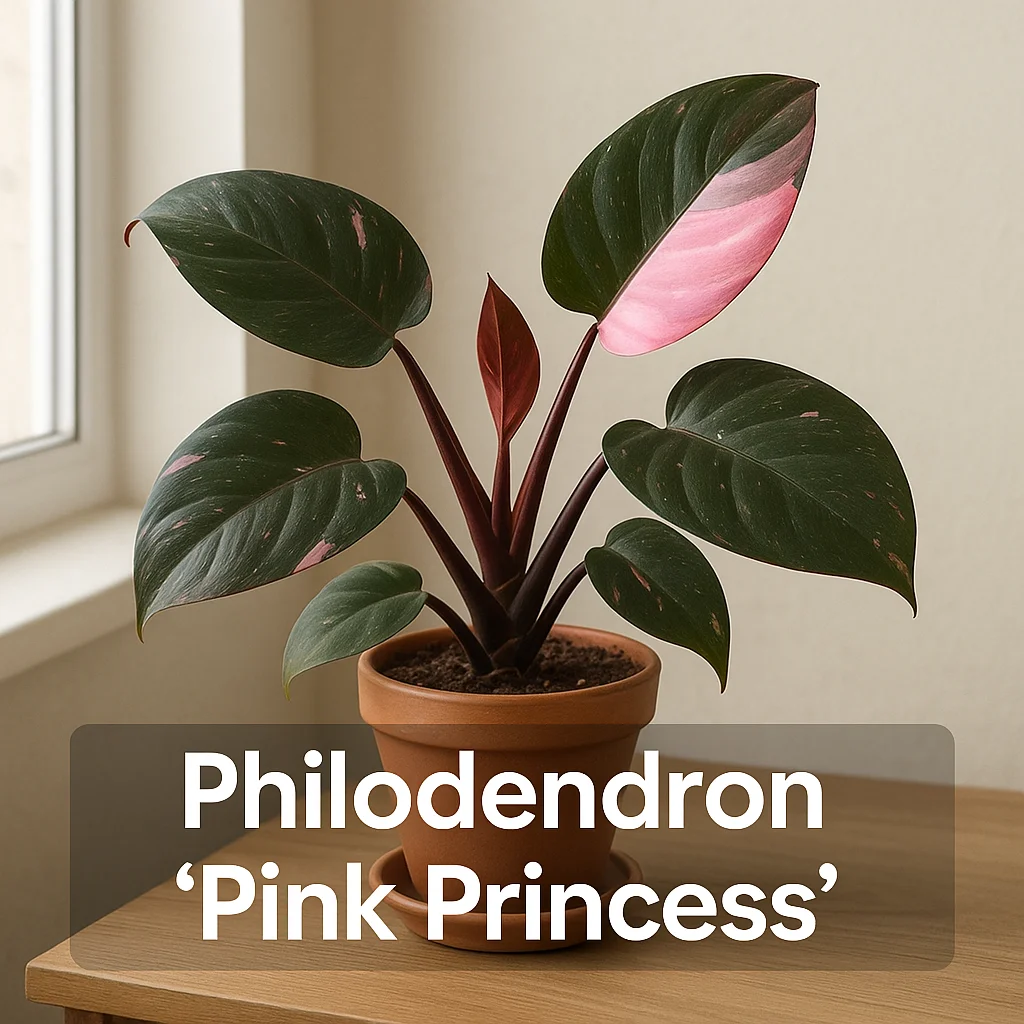
- Common names: Pink Princess Philodendron
- Scientific name: Philodendron erubescens (often listed as)
- Plant type: Foliage
- Growth habit: Climbing vine
- Typical indoor size range: 2 to 4 feet tall, 2 feet wide
- Growth speed: Moderate
- Lifespan: Can live many years with proper care
- Origin: South America, particularly the rainforests of Colombia
- Light preference: Bright indirect light
- Water needs: Moderate; allow top inch of soil to dry out
- Temperature & humidity preference: Warm and humid, typical of tropical climates
- Pet safety: May be irritating/toxic to pets
- Difficulty: Medium
🔍 Identification & Look-Alikes
The Philodendron ‘Pink Princess’ can be recognized by its strikingly variegated leaves, combining deep green with pops of bright pink. The leaves are typically heart-shaped with a glossy texture. The pink variegation can vary in pattern, sometimes appearing as splashes or speckles. The plant grows as a vine, with long slender stems and an alternating leaf arrangement.
It is often compared to other variegated philodendrons, such as the ‘White Knight’ or ‘White Wizard’. The key distinguishing feature is the pink coloration, which is absent in the look-alikes.
- Top ID Tips:
- Look for pink and green variegated foliage.
- Heart-shaped leaves with a glossy finish.
- Stems can have a pinkish tint.
- Alternating leaf pattern on the stem.
- No significant indoor flower production.
- Climbing habit suitable for moss poles.
- Distinctive from Marble Queen Pothos by leaf shape and color patterns.
- Pink variegation often reduced or lost in low light conditions.
🌍 Origin & Natural Habitat
Originating from the humid rainforests of Colombia, the Philodendron ‘Pink Princess’ thrives in warm, shaded environments with high humidity. In its natural habitat, it is an understory plant that often climbs up trees, receiving dappled sunlight through the forest canopy. Understanding its natural habitat helps guide its care in homes, where it requires similar humidity and light conditions to thrive.
☀️ Light Requirements
The ‘Pink Princess’ prefers bright, indirect sunlight to maintain its variegation and healthy growth. East or west-facing windows are ideal, where the plant can receive morning or afternoon light without the harsh midday sun. Direct sunlight can scorch the leaves, while too little light may reduce the pink variegation, leaving the leaves predominantly green.
- Light Checklist:
- Place near east or west-facing windows.
- Ensure bright but indirect light exposure.
- Avoid direct sun to prevent leaf scorch.
- Monitor for fading variegation as a sign of low light.
- Rotate the plant each week for even light exposure.
- Supplement with artificial grow lights if natural light is insufficient.
- Variegation might diminish in low light conditions.
- Observe leaf size reduction as a signal of insufficient light.
- Adjust placement slowly to prevent shock.
💧 Watering & Humidity
Water the Philodendron ‘Pink Princess’ when the top inch of soil feels dry. Employ the soak-and-drain method, allowing excess water to run off to prevent root rot. This plant enjoys a humid environment. To increase humidity, place it near a humidifier or on a pebble tray. Overwatering can cause yellowing leaves and root rot, while underwatering can lead to brown leaf edges.
- Watering Tips:
- Water when the top inch of soil is dry.
- Use the soak and drain method for watering.
- Ensure the pot drains well to avoid root rot.
- Mist occasionally or use a humidifier for humidity.
- Avoid letting the soil stay waterlogged.
- Adjust watering frequency based on season and pot size.
- Brown leaf edges indicate underwatering.
- Yellowing leaves can signal overwatering.
- Increase watering during active growth seasons (spring/summer).
🐛 Soil, Pot & Repotting
An airy and well-draining soil mix is ideal for the ‘Pink Princess’. A mix of regular potting soil, perlite, and orchid bark works well. Choose pots with drainage holes to prevent waterlogging. Repot every 1-2 years or when roots circle the bottom of the pot, indicating it's root-bound. Carefully lift the plant, trim any dead roots, and replant in fresh soil in a pot one size larger.
- Repotting Checklist:
- Use well-draining soil (potting soil, perlite, orchid bark).
- Ensure pots have adequate drainage holes.
- Repot when roots appear bound or growth slows.
- Select a pot only one size larger.
- Gently remove and shake off old soil from roots.
- Cut away dead or mushy roots.
- Avoid compacting the new soil too tightly.
- Repot during the growing season for best results.
🌡️ Temperature, Airflow & Seasonal Care
The Philodendron ‘Pink Princess’ thrives in temperatures between 65°F and 80°F (18°C - 27°C). It's sensitive to cold drafts and sudden temperature changes, so keep it away from AC vents and heaters. Growth may slow during the cooler months of fall and winter, at which time watering should be reduced to prevent rot.
- Seasonal Notes:
- Maintain temperatures between 65°F and 80°F.
- Protect from cold drafts and sudden temperature shifts.
- Water less frequently in winter as growth slows.
- Avoid positioning directly in AC or heater airflow.
- Monitor for foliage droop as a sign of temperature stress.
- Provide more light during shorter days.
- Expect a pause or slow down in growth during cool months.
🌸 Flowers, Fruit & Growth Cycle
While highly regarded for its foliage, the ‘Pink Princess’ rarely, if ever, blooms indoors. When it does flower, typical in a natural habitat rather than indoors, its blooms are non-scented and not particularly showy. The main focus remains on its leaves, which expand over time, contributing to its climbing nature. Regular pruning is unnecessary but can be done to manage shape and size.
🧬 Propagation & Reproduction
Propagating the Philodendron ‘Pink Princess’ is commonly done through stem cuttings. Cut just below a node using sterile scissors, and place the cutting in water or moist soil. Ensure warm, humid conditions for root development. It's a straightforward plant to propagate, although achieving the same level of pink variegation can be unpredictable.
- Propagation Tips:
- Use stem cuttings with at least one node.
- Place cuttings in water or directly in soil.
- Keep cuttings in warm and humid conditions.
- Avoid overwatering young cuttings.
- Patience is needed as roots develop slowly.
- Watch for new growth after 4-6 weeks.
🌿 Common Problems, Pests & Prevention
Common issues with the ‘Pink Princess’ include yellowing leaves and brown tips, often due to watering errors. Leggy growth can result from insufficient light. Pests such as spider mites, mealybugs, and fungus gnats are common, and preventive care involves maintaining cleanliness and avoiding overwatering.
- Prevention Basics:
- Ensure stable watering routines.
- Regularly clean leaves to remove dust.
- Isolate new plants before introducing them to your collection.
- Maintain good airflow around plants.
- Inspect regularly for pests under leaves and in the soil.
- Avoid waterlogged conditions to prevent gnats.
- Use preventative pest management like neem oil if needed (sparingly).
🐾 Pet & Home Safety Notes
The Philodendron ‘Pink Princess’ may be irritating or toxic if ingested by pets or children. It contains calcium oxalate crystals that can cause oral irritation and digestive discomfort. To keep everyone safe, place the plant out of reach of curious pets and children, or use barriers. If ingestion is suspected, contact a professional or local poison control resources promptly.
🏡 Styling Ideas & Best Room Placement
The striking foliage of the ‘Pink Princess’ makes it an excellent accent in a variety of settings within the home. It's well suited for bright bathrooms and kitchens where higher humidity is typical. You can also place it in living rooms or offices if kept away from direct sun and drafts. Use moss poles or trellises to showcase its climbing nature, or let it trail elegantly from a hanging basket.
📌 Summary
- Identifiable by its pink and green variegated leaves.
- Originates from the rainforests of Colombia.
- Prefers bright but indirect sunlight.
- Requires moderate watering; avoid waterlogging.
- Thrives in high humidity environments.
- Best potted in well-draining soil mixes.
- Propagation is possible through stem cuttings.
- Watch for common pests like spider mites and mealybugs.
- Medium difficulty, suitable for intermediate plant enthusiasts.
- Exercise caution with pets as parts can be irritating.