🌱 Philodendron ‘White Wizard’
🧾 Quick Facts
The Philodendron ‘White Wizard’ is a popular houseplant admired for its stunning variegated foliage and easy care. It's a definite favorite among plant enthusiasts looking to add a touch of magic to their home.
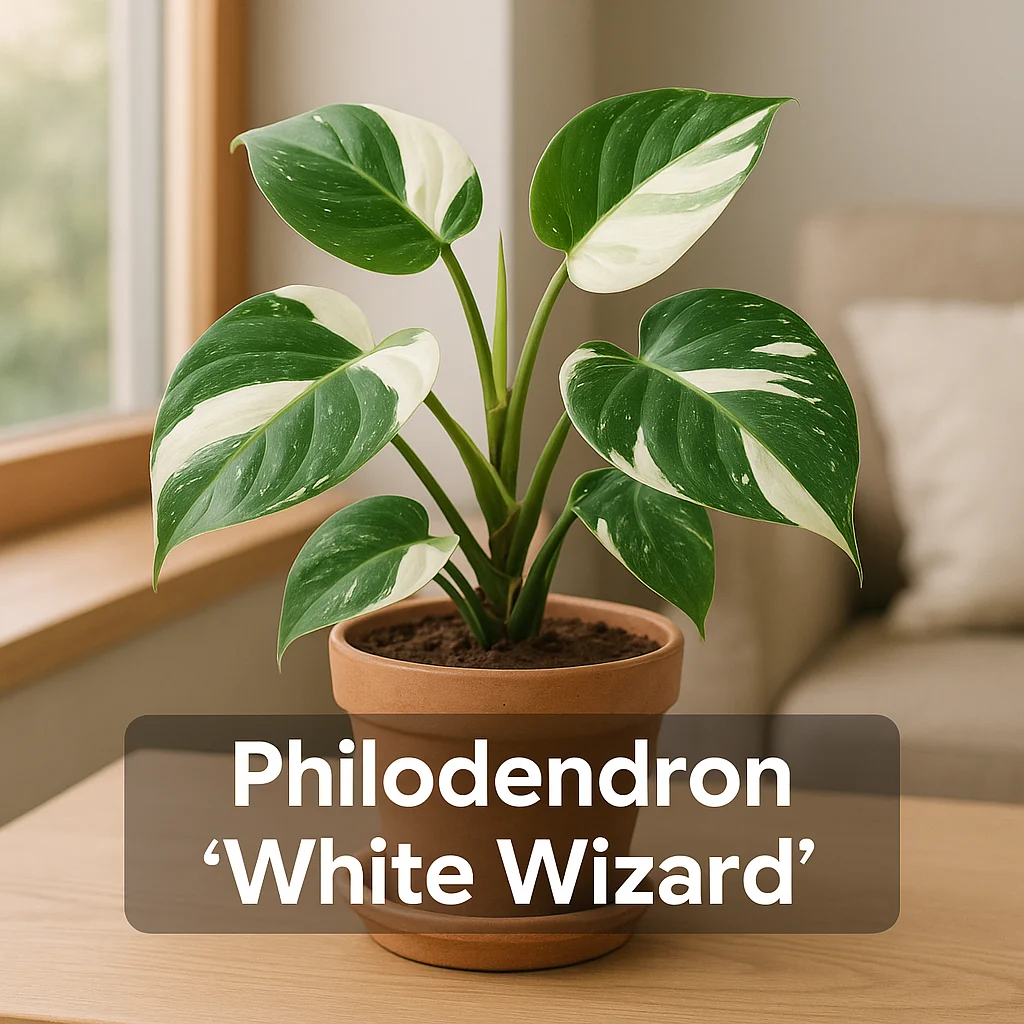
- Common names: White Wizard Philodendron
- Scientific name: Commonly listed as Philodendron erubescens ‘White Wizard’
- Plant type: Foliage
- Growth habit: Climbing
- Typical indoor size range: 1 to 3 feet tall, 1 to 2 feet wide
- Growth speed: Moderate
- Lifespan: Can live many years with appropriate care
- Origin: Native to Central and South America; typically found in rainforest environments
- Light preference: Bright indirect light; tolerates lower light conditions
- Water needs: Moderate; prefers slightly drying out between waterings
- Temperature & humidity preference: Warm temperatures and high humidity
- Pet safety: May be irritating/toxic to pets if ingested
- Difficulty: Medium
🔍 Identification & Look-Alikes
The Philodendron ‘White Wizard’ is best recognized by its oval-shaped leaves, each elegantly splotched with white variegation. The plant's striking color contrast is most pronounced when it receives ample bright but indirect light. Its leaves are generally glossy and leathery to the touch, arranged alternately along its slender climbing stems.
Unlike many other plants that flower, the ‘White Wizard’ is primarily grown for its foliage. It might resemble other variegated Philodendron varieties like the ‘White Knight’ or ‘Birkin,’ but it has distinctive more significant and random white patches.
- Top ID Tips:
- Oval leaves with significant white variegation
- Glossy, leathery leaf texture
- Climbing habit when given support
- White variegation more pronounced in bright indirect light
- Distinct from ‘White Knight’ by lack of reddish stems
- Look for alternating leaf arrangement along stems
- Thick, robust stems
- Prefers support structures like moss poles when grown indoors
- Foliage-only plant; not grown for blooms
🌍 Origin & Natural Habitat
In its native range, the Philodendron ‘White Wizard’ thrives in the rainforests of Central and South America. Typically, it occupies the understory of these lush environments, where it benefits from the warm, humid air and filtered light. The plant often grows as an epiphyte, anchoring onto trees as it climbs toward light.
Understanding its natural habitat helps indoor growers replicate similar conditions, emphasizing the need for high humidity and avoiding direct sunlight, which can scorch its leaves.
☀️ Light Requirements
For optimal growth, place your Philodendron ‘White Wizard’ where it can enjoy bright, indirect light. A spot near an east or north-facing window is ideal, as this provides gentle morning or soft filtered light. If light levels are too low, growth may slow, and variegation will diminish.
Conversely, excessive direct sun can result in leaf burn. Always monitor your plant for signs of receiving too much or too little light and adjust its location as needed.
- Light Checklist:
- Prefers bright, indirect sunlight
- Avoid prolonged direct sunlight
- Too much light can cause leaf burn
- Insufficient light reduces variegation intensity
- Best positioned near east or north-facing windows
- Monitor for yellowing leaves as a sign of lighting issues
- Can tolerate lower light but won't thrive
- Rotate plant occasionally for even growth
💧 Watering & Humidity
The Philodendron ‘White Wizard’ appreciates a watering rhythm that allows the top inch of soil to dry between waterings. Practice the soak-and-drain method: water thoroughly until water exits through the pot's drainage holes, then allow it to dry.
Humidity is crucial for this tropical plant. If your home is dry, consider placing your Philodendron near a humidifier or use a pebble tray with water. It's essential to differentiate signs of overwatering, such as yellowing leaves and root rot, from underwatering signs, like dry brown edges.
- Watering Tips:
- Let the top inch of soil dry before watering
- Increase frequency in warmer months
- Decrease watering during cooler months
- Monitor pot size and adjust watering accordingly
- High humidity promotes healthier growth
- Signs of overwatering: yellow, droppy leaves
- Signs of underwatering: dry, brown leaf tips
- Humidity trays or portable humidifiers are beneficial
🐛 Soil, Pot & Repotting
Choose a loose, well-draining potting mix for the Philodendron ‘White Wizard,’ such as one designed for aroids, which typically contains orchid bark, perlite, and peat. The pot you select should have drainage holes to prevent waterlogged soil.
Repot this plant when it becomes rootbound, usually every 1-2 years. Signs that repotting is necessary include roots growing through drainage holes or water rushing straight through the pot. Opt for a pot that's only slightly larger, as too much extra space can lead to moisture retention issues.
- Repotting Checklist:
- Use loose, airy potting mixes like aroid blends
- Ensure the pot has adequate drainage holes
- Repot when roots become bound or visible
- Choose a new pot only 1-2 inches larger
- Gently loosen roots when transferring
- Repot during spring or early growing season
- Trim damaged roots during repotting for health
🌡️ Temperature, Airflow & Seasonal Care
The Philodendron ‘White Wizard’ thrives in temperatures between 65°F to 80°F. While it's stable within common indoor temperature ranges, keep the plant away from cold drafts or direct exposure to heating elements that can dry out its leaves.
In autumn and winter, the plant's growth naturally slows, requiring less frequent watering. While it doesn't enter a true dormancy, maintaining airflow around the plant and reducing water during this time is beneficial.
- Seasonal Notes:
- Optimal temperature range: 65°F to 80°F
- Avoid exposure to cold drafts
- Keep away from heat or AC vents
- Reduce watering frequency in winter
- Watch for slow growth in cooler months
- Ensure good airflow around and below leaves
🌸 Flowers, Fruit & Growth Cycle
The Philodendron ‘White Wizard’ is mainly grown for its ornamental foliage rather than its flowers, which are rare indoors. Instead, expect a regular growth cycle characterized by the unfolding of new leaves at the tip of its climbing stems.
Regular pruning isn't necessary, but gentle trimming can encourage bushier growth. Clean, sterile tools should be used to prune any damaged or dying leaves to maintain plant health and aesthetics.
🧬 Propagation & Reproduction
Though patience is required, propagation of the Philodendron ‘White Wizard’ is achievable through stem cuttings. Begin with a healthy cutting that includes at least one leaf and a node. Place it in water or a moist potting mix until roots form.
Propagation through seeds or division is not typically recommended for this species due to the plant’s slow growth and complex propagation needs.
- Propagation Tips:
- Best propagated via stem cuttings
- Ensure cuttings have at least one node
- Use water or moist soil to root cuttings
- Change water regularly if rooting in water
- Delay major propagation attempts until spring
- Propagate in a room with adequate humidity
🌿 Common Problems, Pests & Prevention
The Philodendron ‘White Wizard’ can develop yellow leaves or brown tips if it experiences inconsistent watering or poor care. Ensure stable light exposure and maintain a balanced water schedule to prevent these issues.
Common pests include spider mites, mealybugs, and scale. Regularly inspect your plant and clean its leaves to reduce infestations. Prevention hinges on maintaining hygiene and not overwatering, as a damp environment can attract fungus gnats.
- Prevention Basics:
- Ensure consistent watering techniques
- Check for pests regularly and clean leaves
- Avoid overwatering to prevent fungus gnats
- Address yellowing leaves promptly
- Prune dead or damaged leaves regularly
- Quarantine new plants before introducing them to your collection
🐾 Pet & Home Safety Notes
Some sources indicate that Philodendron ‘White Wizard’ may be irritating if ingested by pets or children. All plant parts contain calcium oxalate crystals, which can cause mild discomfort. Place it out of reach of small children and curious pets.
If ingestion is suspected, it's advised to consult a professional or contact local poison control resources for advice.
🏡 Styling Ideas & Best Room Placement
The Philodendron ‘White Wizard’ makes for an elegant statement piece in any room. Ideal areas include living rooms and offices where its climbing habit can be showcased on moss poles or totems. Its preference for humidity makes it suitable for bathroom placements if light conditions are appropriate.
Pair this plant with other tropical houseplants like the Monstera or Pothos to create a lush indoor jungle effect.
📌 Summary
- Distinguished by its large, oval leaves with striking white variegation
- Native to the rainforests of Central and South America
- Thrives in bright indirect light, avoid direct sunlight
- Moderate watering and prefers high humidity environments
- Use an airy, well-draining soil mix; repot when rootbound
- Comfortable in temperatures between 65°F and 80°F
- Easiest to propagate through stem cuttings
- Watch for common pests: spider mites, mealybugs, and scale
- Potentially toxic to pets and children if ingested
- Medium care requirement: suited for indoor plant enthusiasts