🌱 Syngonium ‘Albo Variegatum’
🧾 Quick Facts
The Syngonium ‘Albo Variegatum’ is a popular cultivar known for its striking variegated foliage. This plant, often referred to by a variety of common names, is cherished by plant enthusiasts for its beauty and relatively easy care. Below are some quick facts to help you understand this plant better:
- Common names: Arrowhead Plant, Goosefoot Plant
- Scientific name: Syngonium podophyllum 'Albo Variegatum'
- Plant type: Foliage
- Growth habit: Climbing/Vine
- Typical indoor size range: 1 to 3 feet tall, similar spread
- Growth speed: Moderate
- Lifespan: Can live many years with proper care
- Origin: Central and South America
- Light preference: Bright indirect light
- Water needs: Moderate; prefers to dry out slightly between waterings
- Temperature & humidity preference: Prefers warm temperatures and high humidity
- Pet safety: May be irritating/toxic to pets if ingested
- Difficulty: Easy to medium
🔍 Identification & Look-Alikes
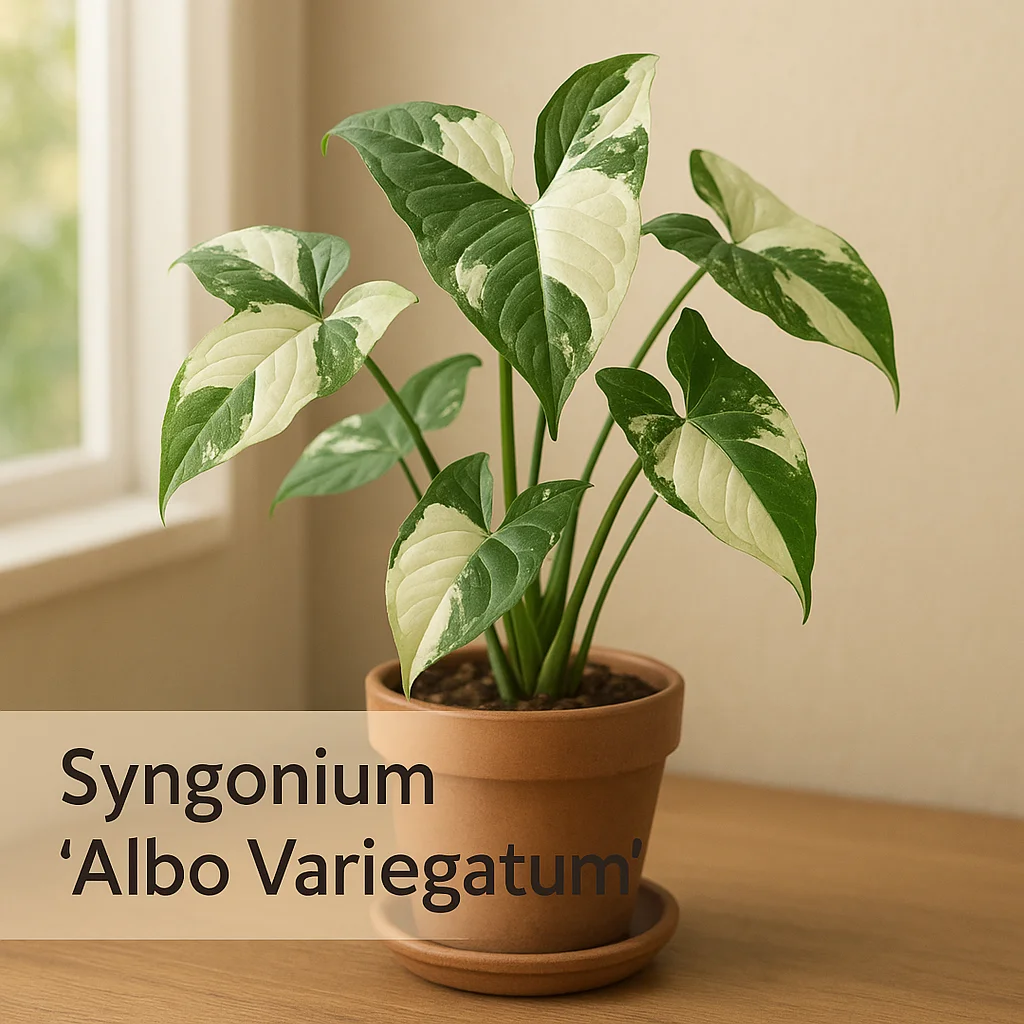
Recognizing the Syngonium ‘Albo Variegatum’ is relatively easy once you know what to look for. Its leaves are typically arrowhead-shaped, with a unique pattern of variegation that includes splashes of white or cream against a green background. The plant has trailing vines, making it an excellent choice for hanging baskets or climbing supports. It’s grown mainly for its foliage and does not commonly flower indoors.
Common look-alikes include other Syngonium species and some pothos varieties. To distinguish it, focus on its distinct variegation patterns and the arrowhead shape of young leaves which can become more lobed as they mature.
- White and green variegated leaves
- Arrowhead-shaped foliage
- Trailing vine habit
- No notable indoor flowers
- Compare variegation: distinct and irregular patterns
- Keep an eye out for the straight, slender vines
- Young leaves are less divided; older foliage may lob
- Notice its glossy texture
🌍 Origin & Natural Habitat
Syngonium ‘Albo Variegatum’ originates from the tropical rainforests of Central and South America. These areas are characterized by a warm, humid climate, which is ideal for its growth. In the wild, Syngonium typically grows as an understory plant, climbing trees with the support of its aerial roots.
Understanding its natural habitat helps to recreate suitable indoor conditions. In low-light forest areas, this plant thrives with indirect light and a humid environment. Such knowledge is crucial for its adaptation in homes, ensuring that your Syngonium is placed away from direct sun and in environments with adequate humidity.
☀️ Light Requirements
For optimal growth indoors, place Syngonium ‘Albo Variegatum’ in bright, indirect light. Avoid direct sunlight which can scorch the leaves, impacting its vibrant variegation. East or north-facing windows are ideal, or use sheer curtains to diffuse harsher light from west or south exposures.
The plant’s variegation thrives in bright indirect light; insufficient light may reduce the variegation, causing the foliage to become more solid green. Conversely, too much direct light can lead to foliage burn.
- Bright indirect light is preferred
- Avoid direct sunlight to prevent leaf scorch
- East or north-facing windows work well
- Sheer curtains can help diffuse intense light
- Observe leaves: fading indicates too little light
- Scorched edges indicate excessive light
- Rotating the plant encourages even growth
- Watch the variegation for light adjustment cues
💧 Watering & Humidity
Water the Syngonium ‘Albo Variegatum’ when the top inch of soil feels dry, allowing for a soak-and-drain approach. Adjust the watering frequency based on the season and plant size—larger plants or those in active growth may need more frequent watering, while smaller or dormant ones require less.
The plant thrives in higher humidity levels, reminiscent of its native habitat. Increasing ambient humidity can be done through regular misting, using a pebble tray, or employing a room humidifier. Be mindful of overwatering, as this can lead to root rot, whereas underwatering may cause wilted or dried leaves.
- Allow the top soil to dry before watering
- Adapt watering frequency by season
- High humidity preferred but avoid soggy soil
- Misting, pebble trays, or humidifiers boost humidity
- Overwatering can cause root rot
- Wilting indicates underwatering
- Avoid waterlogged soil; ensure drainage
- Observe to fine-tune watering schedule
🐛 Soil, Pot & Repotting
The optimal soil for Syngonium ‘Albo Variegatum’ is a well-draining potting mix that retains some moisture. A mix of peat moss, perlite, and potting soil usually works well. Use pots with drainage holes to prevent waterlogging.
Repotting every 1 to 2 years, or when the plant becomes rootbound, is advisable. Signs include slowed growth and water passing through the pot quickly. When repotting, gently remove the plant from its current pot, untangle any circling roots, and place it in a slightly larger pot with fresh soil.
- Use well-draining, moisture-retentive soil
- Ensure pots have drainage holes
- Repot when rootbound for healthier growth
- Check for slowed growth as a repotting sign
- Choose a slightly larger pot for repotting
- Be gentle with root handling
- Refresh soil with each repot
- Conserve potting mix for initial stability
🌡️ Temperature, Airflow & Seasonal Care
Syngonium ‘Albo Variegatum’ prefers temperatures between 60°F to 80°F (15°C to 27°C). It’s sensitive to cold drafts and sudden temperature changes, so ensure stable conditions away from air conditioners or heaters.
In winter, growth may slow, requiring less frequent watering. While the plant doesn’t enter dormancy, its activity reduces, adjusting care accordingly will ensure healthy continued growth.
- Maintain temperatures between 60°F-80°F
- Avoid drafts from windows or doors
- Protect from sudden temperature changes
- Reduce watering in winter months
- Monitor temperature near heat sources
- Regular care adjustments foster plant health
- Consistent temperatures promote year-round growth
🌸 Flowers, Fruit & Growth Cycle
Syngonium ‘Albo Variegatum’ is primarily appreciated for its foliage, rather than its flowering capability. Indoors, it rarely blooms, and its flowers are inconspicuous. The focus remains on the ornamental leaves which rotate with growth cycles, producing new leaves regularly.
Prune regularly to maintain the desired shape and to remove any leggy or damaged growth. Use sterile tools to prevent plant infections and maintain healthy growth.
🧬 Propagation & Reproduction
Propagation of Syngonium ‘Albo Variegatum’ is commonly done through stem cuttings. Take cuttings with a few leaves and at least one node, place them in water or soil, and ensure a warm, humid environment for rooting.
- Use stem cuttings for propagation
- Ensure cuttings have at least one node
- Water propagation allows visible root growth
- Keep cuttings in warm, humid conditions
- Change water regularly if propagating in water
- Handle cuttings gently to avoid damage
🌿 Common Problems, Pests & Prevention
The Syngonium ‘Albo Variegatum’ can face common issues like yellow leaves, brown tips, or droopy growth, often linked to improper watering, light conditions, or humidity levels. Pests such as spider mites, mealybugs, and scale can also be problematic, but regular cleaning and inspection can help prevent infestations.
Prevention involves consistent care, maintaining stable conditions, and cleaning foliage to prevent dust accumulation and pest attraction.
- Yellowing may indicate improper watering
- Brown tips often signal low humidity
- Regular cleaning prevents dust build-up
- Inspect for pests regularly
- Stable light and watering conditions reduce issues
- Quarantine new plants to prevent pest spread
- Increase airflow to discourage fungal issues
- Avoid overwatering to prevent root problems
🐾 Pet & Home Safety Notes
Parts of the Syngonium ‘Albo Variegatum’ are listed as potentially irritating or toxic to pets if ingested. This plant produces calcium oxalate crystals that can cause irritation. It’s advisable to place the plant out of reach or use deterrents if pets are prone to chewing on indoor plants.
If ingestion occurs, contact a professional or local poison control resources for advice.
🏡 Styling Ideas & Best Room Placement
Syngonium ‘Albo Variegatum’ thrives in various indoor settings with appropriate conditions. Ideal for bathrooms or kitchens with higher humidity, it can also accent living rooms or offices. Consider placing in hanging baskets, using moss poles, or positioning on shelves to allow trailing or climbing.
This plant pairs aesthetically with other tropical species, enhancing your indoor jungle feel.
📌 Summary
- Identification: White-green variegated, arrowhead foliage
- Origin: Tropical rainforests of Central and South America
- Light: Prefers bright indirect light, avoid direct sun
- Watering: Moderate, let topsoil dry before rewatering
- Soil & Repotting: Well-draining soil; repot when rootbound
- Temperature: 60°F to 80°F; stable temperatures preferred
- Propagation: Easy via stem cuttings
- Common Issues: Monitoring pest and humidity issues
- Difficulty: Easy to medium care level
- Key Cautions: Toxic to pets, handle with care