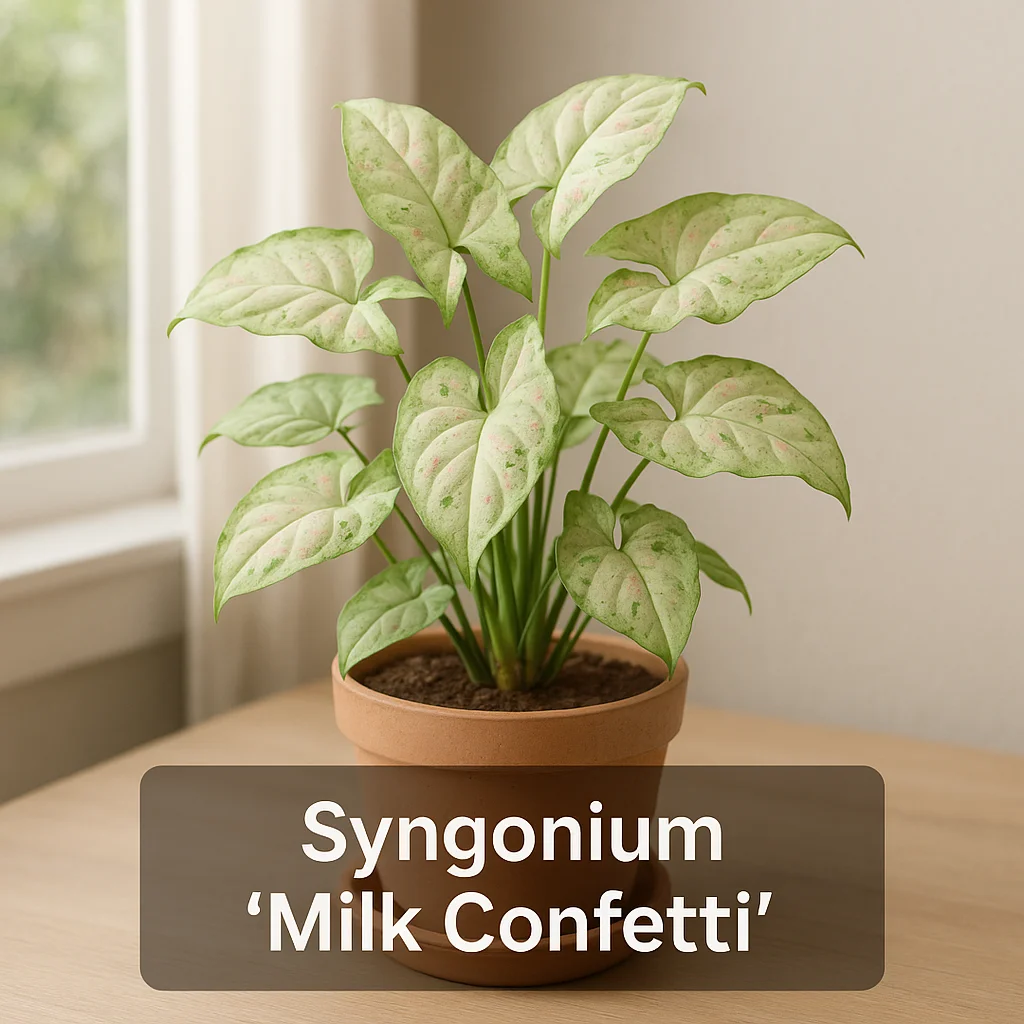
🌱 Syngonium ‘Milk Confetti’
🧾 Quick Facts
Syngonium ‘Milk Confetti’ is a captivating and trendy choice for houseplant enthusiasts. Known for its unique variegation and vibrant colors, it can become a centerpiece in your collection. Offering versatility in growth habits, it’s suitable for various indoor settings.
- Common names: Milk Confetti Arrowhead Plant
- Scientific name: Syngonium podophyllum (variety 'Milk Confetti')
- Plant type: Foliage
- Growth habit: Climbing/vining
- Typical indoor size range: 1-3 feet in height, with similar spread
- Growth speed: Moderate
- Lifespan: Can live many years with care
- Origin: Central and South America, primarily in rainforests
- Light preference: Bright indirect light
- Water needs: Moderate; prefers partial drying out between waterings
- Temperature & humidity preference: Warm climates; loves higher humidity
- Pet safety: May be irritating/toxic to pets
- Difficulty: Easy to medium
🔍 Identification & Look-Alikes
Syngonium ‘Milk Confetti’ is characterized by its arrowhead-shaped leaves, which showcase a blend of creamy white and pastel pink speckles. The leaves have a unique combination of soft and firm texture, giving them a velvety feel. As the plant matures, the leaves may become more lobed or divided. It grows as a climbing vine, often requiring support as it matures. This variety of Syngonium is mainly grown for its striking foliage, and typically does not bloom indoors.
Common look-alikes include other Syngonium varieties like 'Pink Allusion' and 'Neon Robusta', which have similar shape but different coloring. To distinguish 'Milk Confetti', focus on its distinct confetti-like variegation.
- Top ID Tips:
- Arrowhead-shaped leaves
- Creamy white and pink variegation
- Velvety leaf texture
- Vining/climbing growth pattern
- May require support poles
- Primarily admired for foliage
🌍 Origin & Natural Habitat
Native to the tropical rainforests of Central and South America, Syngonium ‘Milk Confetti’ thrives in humid, warm conditions. It is accustomed to the forest understory environment, where it climbs trees and shrubs in search of dappled sunlight. Understanding its natural habitat is crucial for mimicking suitable indoor growing conditions. Awareness of its native environment can help determine optimal watering, humidity, and light requirements, ensuring it thrives indoors.
☀️ Light Requirements
Syngonium ‘Milk Confetti’ performs best in bright indirect light. Place it near east or west-facing windows where it can receive filtered sunlight. Direct sunlight should be avoided as it may scorch the leaves, while insufficient light can cause loss of vibrant variegation and leggy growth.
- Light Checklist:
- Bright indirect light is ideal
- Avoid direct sunlight
- Keep out of deep shade to maintain variegation
- Signs of too much light: leaf burn, faded color
- Signs of too little light: slow growth, loss of variegation
- Use sheer curtains to diffuse strong sunlight
💧 Watering & Humidity
Water Syngonium ‘Milk Confetti’ using a soak-and-drain method, allowing the top inch of soil to dry out between waterings. Adjust watering frequency based on the pot size, season, and indoor lighting. This plant appreciates higher humidity levels typical in bathrooms and kitchens or near humidifiers.
- Watering Tips:
- Water when the top 1 inch of soil is dry
- No standing water in the pot
- Mist occasionally to boost humidity
- Overwatering signs: yellowing leaves, root rot
- Underwatering signs: leaf curling, browning edges
- Use a humidity tray for added moisture
🐛 Soil, Pot & Repotting
A light, airy, well-draining potting mix works best for Syngonium ‘Milk Confetti’. Choose pots with adequate drainage holes to avoid waterlogged soil. Repot every 1-2 years or when roots push out of drainage holes or plant growth slows. Gently move to a pot that’s an inch larger in diameter than the current one.
- Repotting Checklist:
- Use an airy, well-draining mix
- Ensure good pot drainage
- Repot when roots become visible out of the pot
- Increase pot size gradually
- Do not compact soil around roots
- Allow plant recovery time post-repotting
🌡️ Temperature, Airflow & Seasonal Care
Syngonium ‘Milk Confetti’ thrives in temperatures between 60-85°F (16-29°C). Avoid drafts, sudden temperature changes, and direct placement near AC or heater vents. In winter, growth may slow; hence, reduce watering accordingly.
- Seasonal Notes:
- Maintain warm temperatures
- Avoid cold drafts
- Growth may slow in cooler months
- Reduce watering in winter
- Monitor plant near heaters for dehydration signs
- Move to brighter spots during darker days
🌸 Flowers, Fruit & Growth Cycle
While Syngonium ‘Milk Confetti’ has the potential to flower, it rarely blooms indoors and is primarily grown for its attractive foliage. The plant exhibits a climbing growth pattern, producing new leaves as it develops. Regular pruning is beneficial to maintain a manageable size and encourage bushier growth.
🧬 Propagation & Reproduction
Propagation of Syngonium ‘Milk Confetti’ is achievable mainly via stem cuttings. Cuttings should have at least one node and be placed in water or soil to root. Division upon repotting is another option, especially when multiple stems are present.
- Propagation Tips:
- Take cuttings with at least one node
- Root in water or directly into soil
- Division upon repotting is possible
- Best time for propagation is spring to early summer
- Monitor humidity levels for successful rooting
🌿 Common Problems, Pests & Prevention
Common physiological issues include yellowing leaves (often from overwatering), brown tips (underwatering), and leggy growth (insufficient light). Pests like spider mites, mealybugs, and scale can occasionally affect the plant. Good hygiene, such as regular leaf cleaning and stable environmental conditions, helps in prevention.
- Prevention Basics:
- Monitor watering routine to avoid root issues
- Use insecticidal soap for early pest control
- Keep foliage clean and dust-free
- Ensure good airflow around plants
- Isolate new plants to prevent pest spread
🐾 Pet & Home Safety Notes
Some components of Syngonium ‘Milk Confetti’ can be irritating or toxic if ingested by pets or children. Place the plant out of reach or use deterrents. If ingestion is suspected, contact a professional or local poison control resources for advice.
🏡 Styling Ideas & Best Room Placement
Styling Syngonium ‘Milk Confetti’ is versatile. It can enhance bathroom or kitchen aesthetics with its humidity-loving nature. Place it in hanging baskets, atop shelves, or support with a moss pole for vertical interest. It pairs well with other tropical plants like Monsteras and Philodendrons for a lush indoor jungle feel.
📌 Summary
- Popular for unique confetti variegation
- Native to tropical rainforests
- Thrives in bright indirect light
- Moderate watering routine
- Prefers airy, well-draining soil
- Optimal temperatures: 60-85°F
- Propagation by stem cuttings is effective
- Common pests: spider mites, mealybugs
- Considered easy-medium to care for
- Keep out of reach of pets/children