🌱 Zamioculcas ‘Raven’ (ZZ Raven)
🧾 Quick Facts
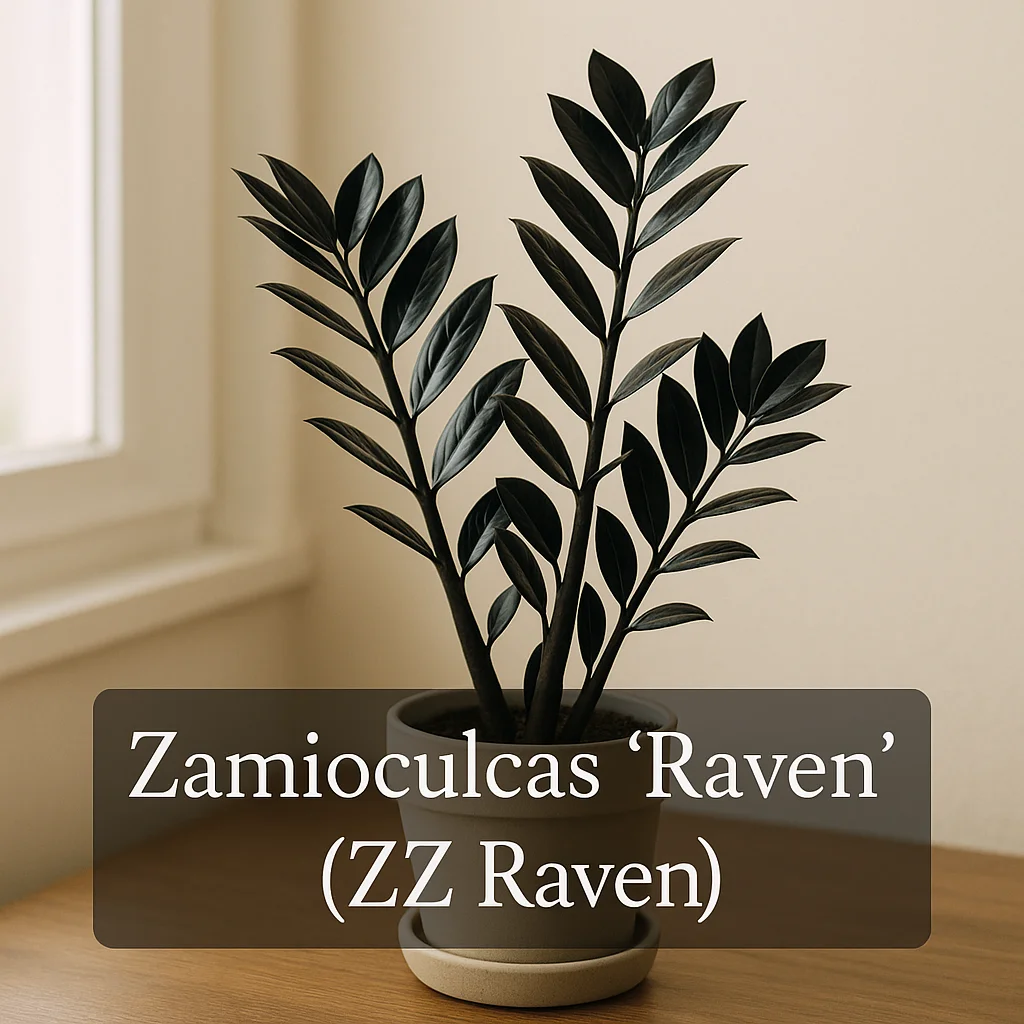
The Zamioculcas ‘Raven’, commonly known as the ZZ Raven plant, is a striking houseplant notable for its dark, nearly black foliage. This plant is not just attractive but also quite resilient, making it a popular choice for both beginners and seasoned plant enthusiasts. Here's a comprehensive breakdown:
- Common Names: ZZ Raven, Raven ZZ Plant
- Scientific Name: Varies; commonly listed as Zamioculcas zamiifolia ‘Raven’
- Plant Type: Foliage plant
- Growth Habit: Upright
- Typical Indoor Size Range: 2-3 feet tall, 2-3 feet wide
- Growth Speed: Slow to moderate
- Lifespan: Can live many years with proper care
- Origin: Eastern Africa; thrives in dry regions
- Light Preference: Low to medium indirect light
- Water Needs: Low; prefers drier conditions between waterings
- Temperature & Humidity Preference: Prefers warm, dry conditions; low humidity is tolerated
- Pet Safety: May be irritating/toxic to pets if ingested
- Difficulty: Easy
🔍 Identification & Look-Alikes
The Zamioculcas ‘Raven’ is distinguished by its distinctive glossy, dark leaves that can range from deep green to near black. These leaves are pinnate, growing alternatingly, and attached to thick, succulent-like stems. Despite its luxuriant appearance, it is grown mainly for its foliage and seldom blooms indoors.
- Top ID Tips:
- Long, waxy, compound leaves
- Thick, fleshy stems indicating moisture storage
- Leaf color changes from bright green to black as newly emerged leaves mature
- Heavy, tuberous rhizomes beneath the soil
- No observable flowers typically, grown mainly for foliage
- Subtle zig-zag growth of leaflets along rachis
- Different from other ZZ plants by its color; check for the darkest leaf to confirm
🌍 Origin & Natural Habitat
The ZZ Raven hails from the dry grassland and forest floors of Eastern Africa, spanning regions from Kenya to South Africa. In its native environment, it thrives on minimal rainfall and poor soil conditions, adapting by storing water in its fleshy leaves and roots. Understanding this native adaptation helps in providing low-water indoor care, with occasional thoroughly drenching followed by a drying period to mimic natural wet and dry cycles.
☀️ Light Requirements
While Zamioculcas ‘Raven’ is a low-light tolerant plant, it performs best in medium to bright indirect light. Ideal placements include north or east-facing windows that provide gentle light. Avoid direct sunlight, which can scorch its leaves or lead to faded coloring. Insufficient light results in slower growth and potentially legginess, whereas too much light can sully the deep color of its leaves.
- Light Checklist:
- Avoid direct midday sun; morning or evening indirect light is optimal
- Place near bright but filtered windows
- Monitor leaf color changes for light adequacy
- Shaded spots are tolerable, but might slow growth
- Consider artificial grow lights in low-light rooms
- Rotate the plant occasionally to ensure all sides receive light
💧 Watering & Humidity
Watering the ZZ Raven requires a careful balance; allow the soil to dry out significantly between watering sessions. The soak-and-drain method works well, ensuring the root ball is thoroughly moist, followed by drought-like dry spells. Overwatering leads to root rot and yellowing leaves, while underwatering can cause leaf curling or browning. As a plant preferring dry conditions, it does not demand high humidity, and average room conditions suffice.
- Watering Tips:
- Allow soil to dry out between waterings, 2-3 inches deep
- Use pots with proper drainage to avoid water-logging
- Water less frequently during winter dormancy
- Adapt watering frequency based on seasonal temperature changes
- Monitor leaves for signs of dehydration or overwatering
🐛 Soil, Pot & Repotting
Opt for well-draining potting soil mixed with perlite or sand to replicate its native sandy soils. As for pots, those with generous drainage holes are vital to prevent excess moisture retention. Repotting should occur only when roots have outgrown their container or become visible above the soil surface. Typically, this happens every couple of years unless growth is particularly rapid. Gradual pot size increases minimize stress on the plant.
- Repotting Checklist:
- Repot every 2-3 years in spring
- Choose a pot 1-2 inches bigger in diameter than its current container
- Gently loosen and inspect the root system for damage
- Refresh potting mix to replenish nutrients
- Ensure the plant is centered and stable in its new pot
🌡️ Temperature, Airflow & Seasonal Care
Preferring a range of 60-75°F (15-24°C), ZZ Ravens thrive in consistent room temperatures. They are tolerant of occasional lower temperatures but should be shielded from frosty drafts and sudden drops which can stress them. In the winter months, as growth slows, adjust watering frequency and monitor for reduced humidity due to indoor heating.
- Seasonal Notes:
- Move away from cold drafts during winter
- Summer positioning—shaded outdoor patios are well-suited
- Reduce watering as temperatures drop
- Avoid placement near air conditioning vents
- Heating systems can dry out the air, use a humidity tray if necessary
- Expect slower growth in cooler seasons
🌸 Flowers, Fruit & Growth Cycle
Flowering in ZZ Ravens is rare in indoor settings, focusing instead on luxuriant leaf production. New growth emerges as lime-green shoots that darken with age. Its primarily foliage-based growth means pruning is seldom needed beyond removing damaged leaves. When shaping, use clean tools to prevent disease transfer.
🧬 Propagation & Reproduction
Propagation is mainly accomplished via division or leaf cuttings. Leaf cuttings can take months to develop new rhizomes, demanding patience. Division during repotting is practical and more successful due to existing root systems. Propagation via seeds is uncommon and generally not pursued by amateur gardeners.
- Propagation Tips:
- Best attempted during spring for active growth
- Use healthy, mature leaves for leaf propagation
- Ensure cut sections dry slightly before planting
- Keep cuttings in a warm, bright indirect light setting
- Avoid direct sunlight on new or sensitive cuttings
🌿 Common Problems, Pests & Prevention
While a hardy plant, ZZ Raven can fall prey to pests such as spider mites and mealybugs. Maintain plant health by periodically cleaning leaves with a damp cloth and ensuring proper drainage to prevent root rot. Stable environmental care and airflow discourage pest habitats and maintain vibrant growth.
- Prevention Basics:
- Regularly clean leaves to deter dust and pests
- Avoid prolonged soggy soil conditions
- Isolate new plants before introducing to established collections
- Encourage air circulation by not overcrowding plant spaces
- Act promptly on the first sign of pests; mechanical removal often works
- Maintain stable care routines to avoid stress-induced vulnerabilities
🐾 Pet & Home Safety Notes
The ZZ Raven contains calcium oxalate crystals, which may cause irritation if consumed by pets or children. Plants should be placed out of reach of curious pets and children. If ingestion occurs, contact a professional or local poison control resources promptly.
🏡 Styling Ideas & Best Room Placement
ZZ Raven plants suit a variety of indoor settings, from desks and bookshelves to shaded corners of living rooms where their dark foliage contrasts lighter surroundings. They are excellent for offices, bathrooms, or kitchens due to their low-light tolerance, with potential placement on tables or window sills. Pair with lighter-leaved plants for visual contrast.
📌 Summary
- Dark, striking foliage native to Eastern Africa's dry climates
- Low to medium indirect light preferences
- Adaptable to low humidity and temperature fluctuations
- Requires well-draining soil and infrequent watering
- Slow growing, with occasional need for repotting
- Propagates through division or leaf cuttings
- Watch for pests but generally resilient
- Handle with care as may irritate if ingested
- Easy to care for; suitable for various indoor environments