🌱 Cebu Blue Pothos (Epipremnum pinnatum ‘Cebu Blue’)
🧾 Quick Facts
The Cebu Blue Pothos, a popular houseplant, is admired for its striking blue-green foliage and easy care requirements. Known for its climbing and trailing habits, this plant has become a favorite among both novice and experienced indoor gardeners.
- Common names: Cebu Blue Pothos, Blue Pothos
- Scientific name: Epipremnum pinnatum ‘Cebu Blue’
- Plant type: Foliage, Vine
- Growth habit: Trailing, Climbing
- Typical indoor size range: 4-8 feet long, depending on training
- Growth speed: Fast
- Lifespan: Can live many years with proper care
- Origin: Southeast Asia, specifically the Philippines
- Light preference: Medium to bright indirect light
- Water needs: Moderate; prefers to dry out slightly between waterings
- Temperature & humidity preference: Enjoys warm temperatures and moderate to high humidity
- Pet safety: May be irritating/toxic to pets if ingested
- Difficulty: Easy
🔍 Identification & Look-Alikes
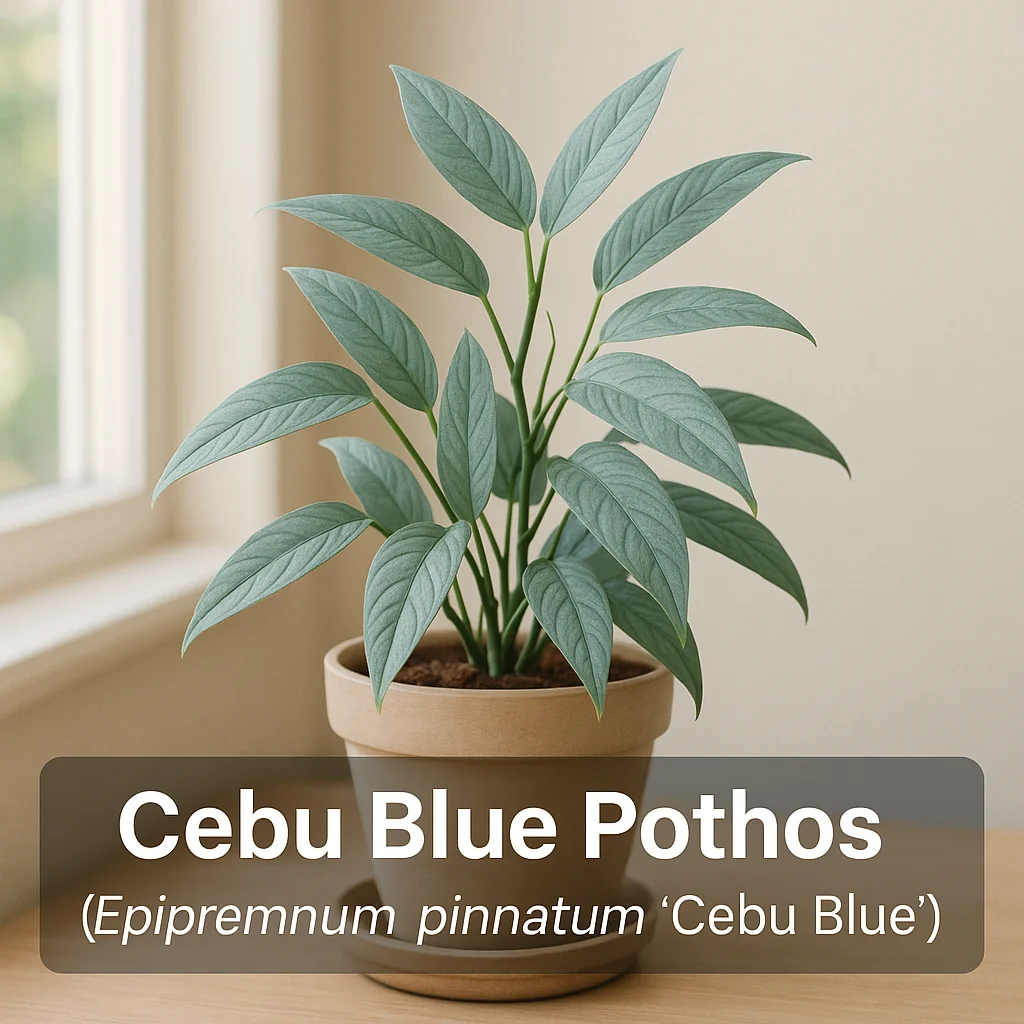
The Cebu Blue Pothos is distinct for its elongated, lanceolate leaves that exhibit a unique blue-silver sheen. The leaves typically range in size from three to four inches long and grow in an alternating pattern along the vine. Unlike some other pothos varieties, it lacks variegation but may develop splits or fenestrations when mature, especially if given a supporting structure to climb.
This plant is sometimes confused with the standard Epipremnum aureum (golden pothos) or the Epipremnum pinnatum due to its climbing nature. However, its bluish tint and slender foliage differentiate it. Outdoors or in optimal conditions, it can develop larger leaves with fenestrations similar to those seen in Monstera species.
- Elongated, lance-shaped leaves with blue-silver hue
- Climbing and trailing vine habit
- Lack of variegation but possible fenestrations with maturity
- Slender leaves of 3-4 inches
- Alternate leaf arrangement
- Distinct from golden pothos due to its leaf color and shape
- No blooms indoors; grown primarily for foliage
🌍 Origin & Natural Habitat
Native to the tropical rainforests of Southeast Asia, particularly in the Philippines, the Cebu Blue Pothos thrives in warm, humid environments. In its natural habitat, it often grows as an epiphyte, climbing trees and rocks to access sunlight under the dense canopy.
Understanding its habitat helps emulate proper care solutions indoors, such as providing support for climbing and maintaining high humidity to mimic its native rainforest conditions.
☀️ Light Requirements
The Cebu Blue Pothos prefers medium to bright indirect light for optimal growth. It thrives near east or west-facing windows where it can receive filtered light. In low-light conditions, growth may slow, and the leaves might lose some of their blue hues. While it can tolerate lower light, it will most vigorously grow and maintain its vibrant color with ample indirect light.
Avoid direct sunlight as it can scorch the leaves, causing them to dry or develop brown patches. Conversely, inadequate light may lead to leggy growth as the plant stretches toward available sources.
- Best near east or west-facing windows
- Bright indirect light ideal for vibrant foliage
- Can tolerate low light but may grow slowly
- Avoid direct sunlight to prevent leaf scorch
- Monitor color intensity to gauge light sufficiency
- Adjust position if leaves become leggy
💧 Watering & Humidity
The Cebu Blue Pothos benefits from a regular watering schedule that allows the soil to dry out slightly between waterings. Typically, this means watering every 1-2 weeks, more frequently in warmer months and less often in cooler ones. Overwatering can lead to root rot, while underwatering might cause leaf curling or browning at the tips.
High humidity enhances its growth, but it adapts to typical indoor levels. You can increase humidity by placing a tray of water nearby, using a humidifier, or grouping with other plants. Signs of insufficient watering include sagging stems or dull, limp leaves, while excessive water may cause yellowing leaves.
- Water every 1-2 weeks, based on season
- Allow soil to dry slightly between waterings
- Avoid overwatering to prevent root rot
- Increase humidity with trays or humidifiers
- Watch for signs: droopy leaves (underwatering), yellowing (overwatering)
- Adjust frequency according to plant's response
🐛 Soil, Pot & Repotting
Cebu Blue Pothos thrives in a well-draining, airy soil mix that retains some moisture. A blend of potting soil, perlite, and orchid bark works well. Ensure the pot has drainage holes to allow excess water to escape, preventing waterlogging.
Repotting is typically needed every 1-2 years or when the plant shows signs of being root-bound, such as slowed growth or roots emerging from drainage holes. When repotting, gently shake the old soil from the roots and move to a pot 1-2 inches larger in diameter.
- Use a well-draining, airy soil mix
- Ensure pots have drainage holes
- Repot every 1-2 years or when root-bound
- Increase pot size gradually
- Handle roots gently when repotting
- Refresh soil during repotting for nutrients
🌡️ Temperature, Airflow & Seasonal Care
The Cebu Blue Pothos prefers temperatures between 65-85°F (18-29°C) and should be kept away from cold drafts or temperatures below 50°F (10°C). Sudden temperature changes can stress the plant and cause issues such as leaf drop.
In winter, when growth typically slows, reduce watering frequency and ensure the plant still receives adequate indirect light. Maintaining consistent airflow without exposing it to direct drafts helps keep it healthy.
- Ideal temperature range: 65-85°F (18-29°C)
- Avoid cold drafts and rapid temperature changes
- Reduce watering in winter
- Keep air circulating for plant health
- Monitored for drafts near windows or doors
🌸 Flowers, Fruit & Growth Cycle
Cebu Blue Pothos is primarily grown for its foliage indoors and rarely flowers under typical home conditions. When cultivated under ideal circumstances, especially outdoors in its native habitats, it may produce small, inconspicuous flowers.
The plant's growth is characterized by new leaves emerging from nodes along the vines. Regular pruning and shaping can help manage its length and encourage bushier growth.
- Rarely flowers indoors
- Growth focused on foliage
- Vines can be pruned to manage shape
- Encourage bushiness through regular trimming
🧬 Propagation & Reproduction
Propagation of the Cebu Blue Pothos is straightforward and is commonly achieved through stem cuttings. Choose a healthy vine and cut just below a node. Place the cutting in water or directly into soil to root. When using water, transfer to soil once roots are well developed.
Propagation through division is less common but possible if the plant has multiple stems. Leaf propagation is not applicable for this species.
- Best propagated through stem cuttings
- Cut below a node for success
- Root in water or directly in soil
- Transfer water-rooted cuttings to soil early
- Propagation by division is an option
🌿 Common Problems, Pests & Prevention
The Cebu Blue Pothos, like many houseplants, can face problems such as yellowing leaves (often due to overwatering), browning tips (suggesting underwatering or low humidity), and leggy growth due to insufficient light.
Common pests include spider mites, mealybugs, and fungus gnats. To prevent infestations, keep the leaves clean and check regularly for early signs. Providing stable care and good airflow helps minimize pest issues.
- Monitor for yellowing leaves (check watering)
- Check for pests: spider mites, mealybugs, gnats
- Clean leaves regularly
- Ensure stable care routines for prevention
- Avoid overwatering to prevent pests
🐾 Pet & Home Safety Notes
The Cebu Blue Pothos contains compounds that may be irritating or toxic if ingested by pets or children. Symptoms can include oral irritation or vomiting if consumed. It is advisable to place the plant out of reach of pets and children, perhaps on a high shelf or hanging basket.
If ingestion occurs, contact a professional or local poison control resources for guidance.
🏡 Styling Ideas & Best Room Placement
The Cebu Blue Pothos thrives in various indoor environments, such as bathrooms or kitchens where humidity levels are naturally higher, or in living rooms and offices where it can be displayed in hanging baskets or on shelves.
For best results, pair it with other humidity-loving plants like fittonias and ferns to create an attractive and cohesive plant arrangement.
📌 Summary
- Recognizable for its blue-silver lance-shaped leaves
- Originally from the tropical rainforests of Southeast Asia
- Thrives in medium to bright indirect light
- Moderate water needs with dry-out in between
- Prefers airy, well-draining soil
- Propagation is easy using stem cuttings
- Watch for pests like spider mites and mealybugs
- Potentially irritating/toxic to pets if ingested
- Ideal for bathrooms, kitchens, or living rooms with a damp climate